
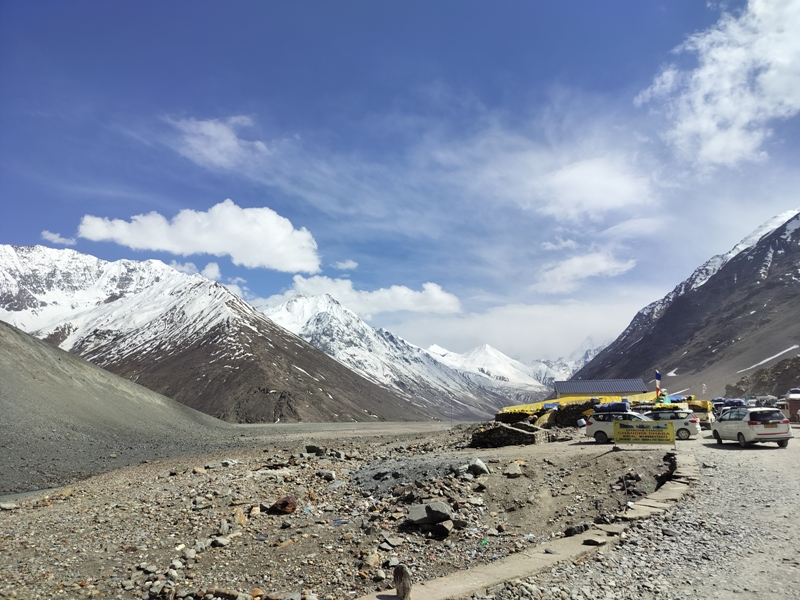
We traveled as part of a group tour from Manali, covering most of Spiti in the month of June, during peak summer. The whole tour was that of 4 days, starting and ending at Manali, in a Tempo Traveller. Here is a day by day breakdown of our itenarry, but most importantly, it’s a journal of the experience we had as we navigated one of the highest and tortorous route of the Himalayas.
The post here is a summarized version of what we went through. If you want to check out my completely unfiltered, detailed harrowing experience, feel free to switch to my detailed Day by Day experience:
Day 1 – Manali to Kaza
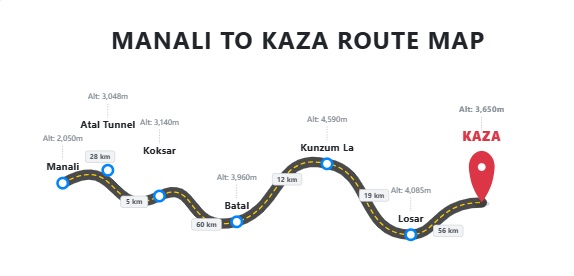
Pitstop 1: Koksar
The moment we went past the Atal Tunnel, a splendid place called Koksar invited us into its lap. It was a landscape dominated by huge mountains, mostly covered by small shrubs; a sharp contrast to the towering pine laden hills we had witnessed in Manali.
Koksar is a small settlement, with shops and restaurants lined up beside the side of the only road. This place serve as the last point on this route where you can enjoy modern amenities. It is a lovely place, because it’s mostly devoid of the typical hill station commercial tropes. No big hotels, no body trying to sell you any sort of medicinal herbs (Ahem! Ahem!), No sad yaks chauffeuring tourists around, etc. It’s pretty much how nature had originally built it.
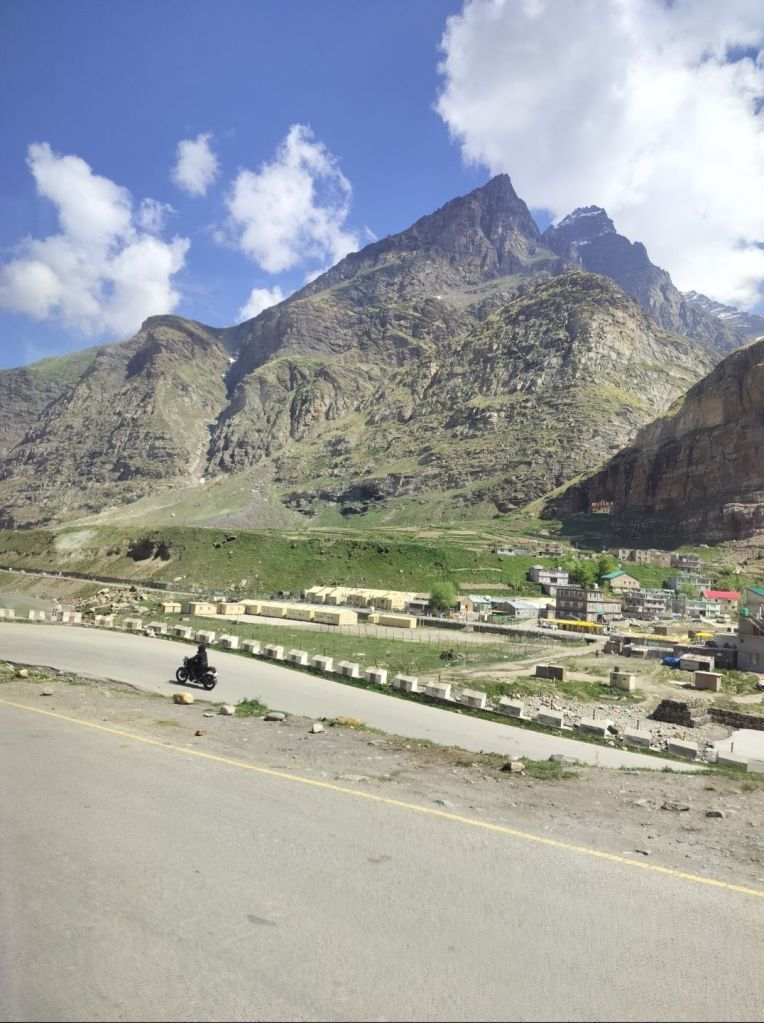
We were instructed to have food, buy munchies for the road, use the washroom and complete all communications with our loved ones here itself. Because after this, for least the rest of the day, it will be a test of our mental and physical endurance.
Koksar to Batal
Within the first 30 minutes of our drive, the asphalt had vanished completely, replaced by a ruthless trail of jagged shale and massive boulders. The road, if one can call it that, was a narrow shelf carved into the cliff-side with a sheer drop to the riverbed below. Absolute focus and nerves of steel is the basic requirement to navigate this stretch.
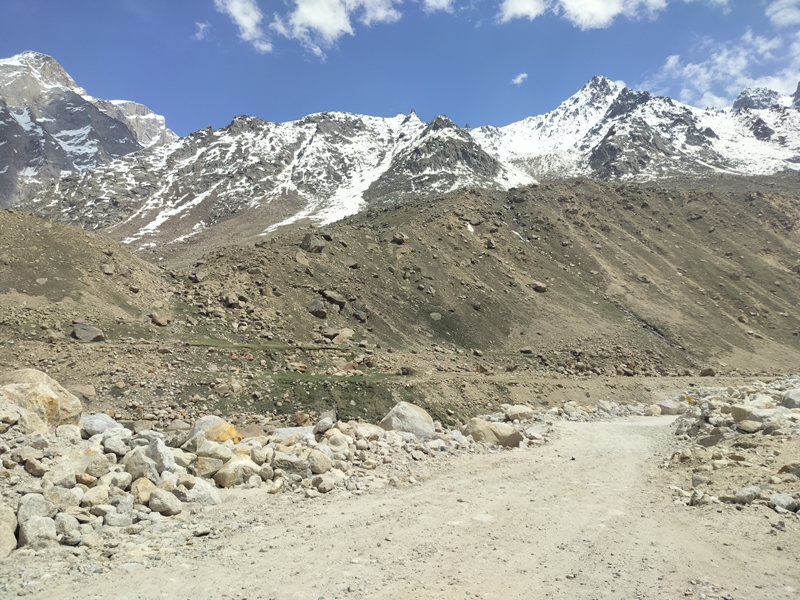
All sort of modern amenities had by now become a thing of bed time stories. No mobile network, no shops, no washrooms – decent or otherwise. In this deserted land; large boulders are the only walls one can afford if one has to relieve themselves.
Vehicles, no matter what make, model, age were all relegated to a slow painful crawl, dancing to the tunes of the boulder ridden road. Glacier melt streams—nallahs—crash directly across the dirt tracks. Every water crossing was a high-stakes gamble against underbody scrapes and loose gravel.
Pit Stop 2: Batal – the home of Chacha Chachi Dhaba
The only respite on this route is the Chacha Chachi Dhaba (Chandra Dhaba), which as per Google Maps is a mere 54 KM away from Koksar, but trust me it took us more than 2 hours to cover this stretch. By the time we pulled up to the legendary Dhaba in Batal, our nerves were completely frayed, our backs cursing us and our heads spun like a Top.
Batal is at a dizzying 13,122 ft and that Dhaba, a humble stone shack under a blue tin roof is the only real lifeline in this desolate void. After having a hot plate of Rajma Chawal, and cupicous amount of tea, the nerves settled down a bit. Taking a look around showcased a landscape unlike anything I have seen in my life.
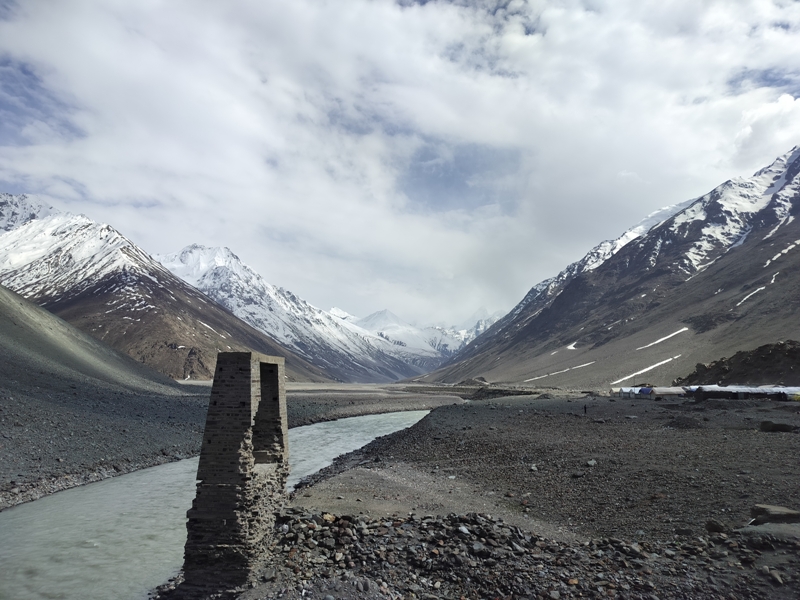
It’s was like standing on the edge of the earth watching the surface of the moon. Large open landscape, with far away snowcapped mountains and absolutely no vegetation.
Batal – Kunzum La – Losar
The road out of Batal doesn’t announce itself. It just rises.
We started the climb with our stomachs full and heads steady, only to find ourselves growing increasingly dazed within mere minutes. The track to Kunzum La was an agonizing maze of hairpin turns made entirely of shifting gravel, flanked by a sheer drop of hundreds of feet on one side and an insurmountable wall of rock on the other.
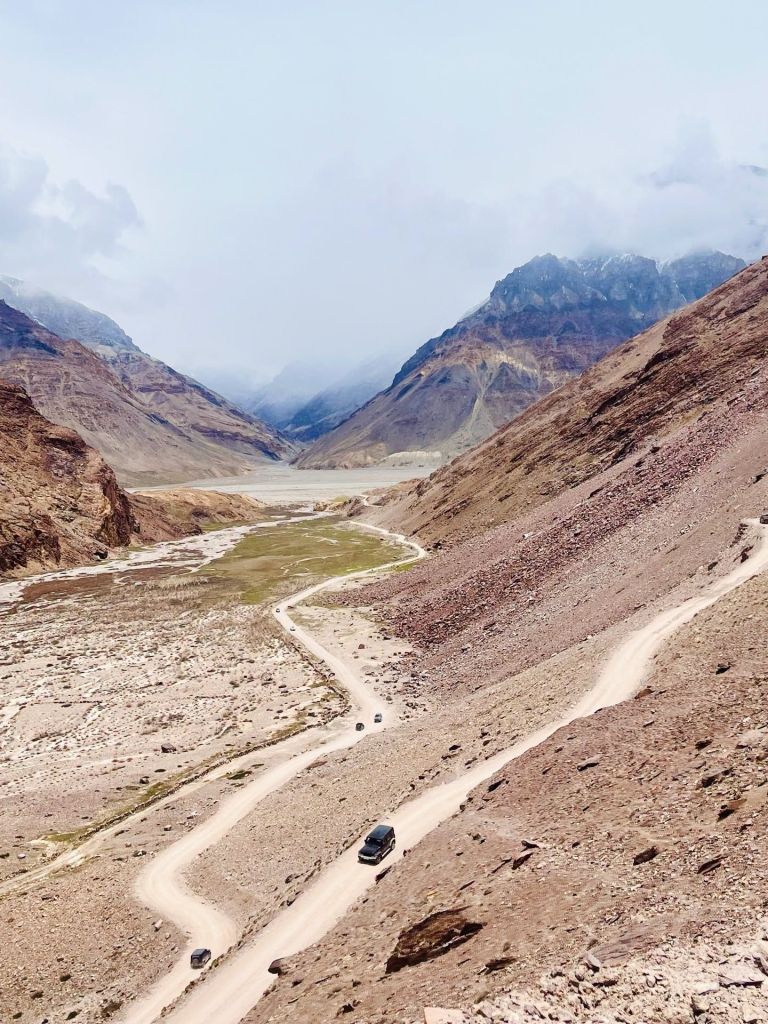
Towering at a dizzying 14,000 feet and surrounded by a massive, frozen glacier, Kunzum La stands as the highest mountain pass on this entire route. At that extreme altitude, the air became dangerously thin, and along with it, our conversations completely evaporated. I silently noticed strange, alarming changes happening to my own body, yet I felt entirely unable to put the terrifying sensations into words.
Our fragile, sea-level bodies were simply not yet acclimatized to this brutal elevation. Because of this, we made a collective, unspoken pact not to stop at the top of the frozen pass, choosing instead to press hard toward Losar. We postponed this monumental conquest to Day 3, saving the rematch for our return journey.
A sharp, brake-burning descent from Kunzum La took us through a dizzying variety of landscapes, each looking entirely as alien as the last. Some views were a monochrome world of grim grey and stark white, while others morphed into shades of deep brown and muddy sediment. At certain bends, we could catch a fleeting glimpse of occasional green framed against a piercingly clear blue sky. It was as though nature had applied instagram filters in real life.
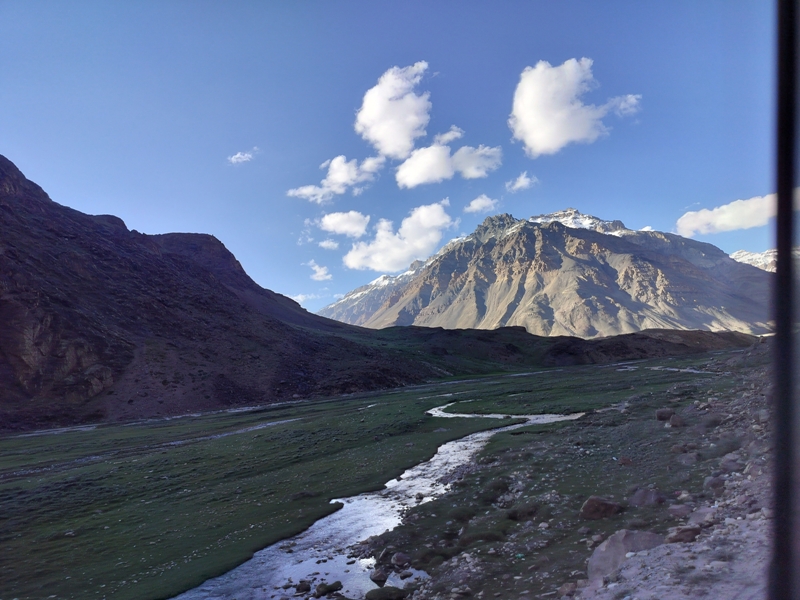
The vibrant greens gradually expanded as Losar closed in, offering us pockets of cultivated fields, crystal-clear streams of water, and ancient houses that looked as though they had literally grown right out of the parched ground. I stared out of the window, mesmerized by this sudden burst of life thriving in the dead center of an otherwise dystopian wasteland.
Pit Stop 3 : Losar
Losar marks the official civilian threshold as the very first major village of Spiti. We ground to a halt at the mandatory police checkpoint, where all of our travel permits and official documents had to be verified before our expedition was permitted to venture any further into the valley.
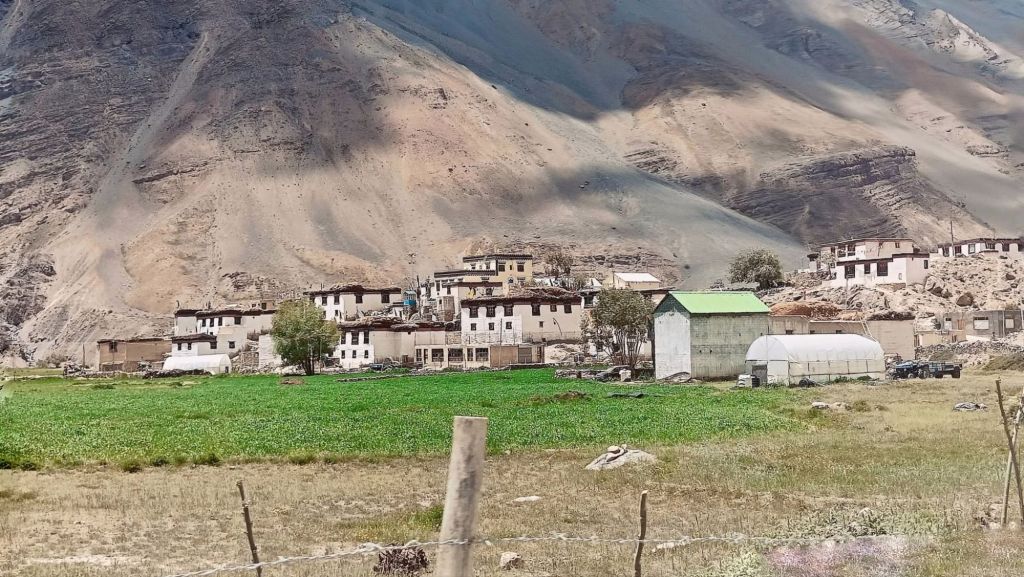
After brutal hours of being aggressively thrown around like ragdolls in the back of that tempo traveler, this sudden halt felt like stepping through the gates of heaven. Our modern lifelines suddenly flickered back to life as our phones found a signal, while the glorious luxury of walled washrooms and piping hot tea awaited us. Our battered bodies silently thanked us for the reprieve, but I could feel the thin, oxygen-deprived mountain air quietly waging a stealthy war on my physical stamina.
Destination (Day 1) : Kaza
By the time we finally arrived at Kaza—the high-altitude administrative heart of Spiti—the sun had already vanished past the jagged peaks, plunging the entire valley into an icy, pitch-black expanse. Sitting at a staggering 12,500 feet, Kaza is absolutely no joke of a place. It was supposed to play host to our expedition for the next couple of days, but I quickly realized that merely surviving here required an herculean effort.
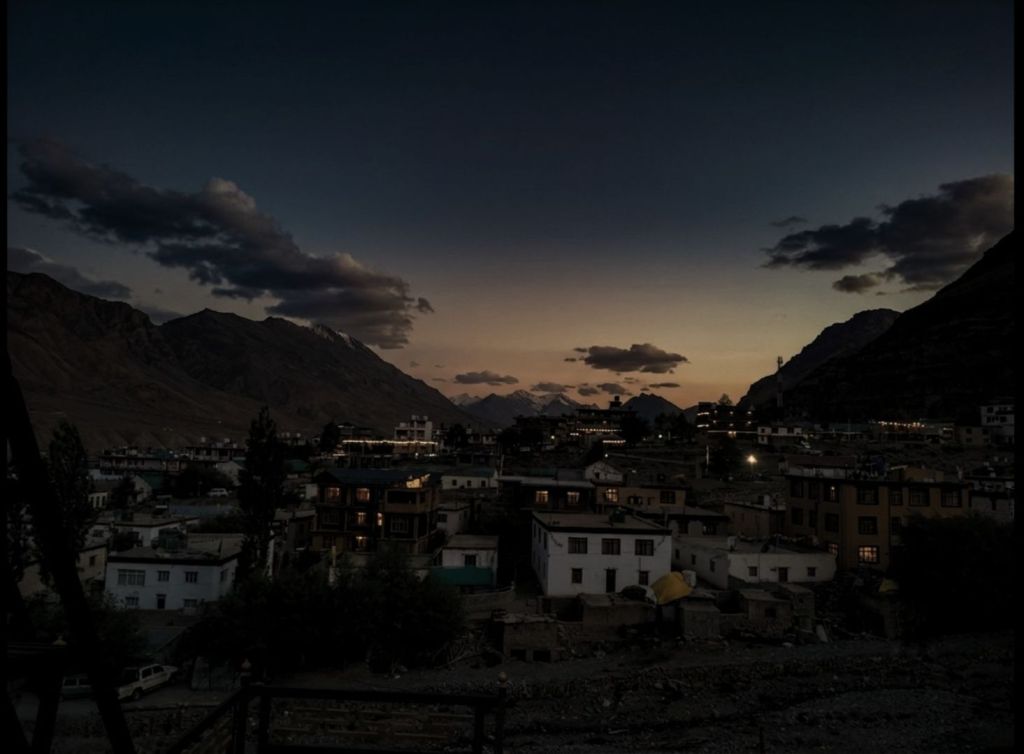
Attempting to walk up a few flights of stairs made me pant like a desperate dog, and the freezing wind was so vicious that walking in the open felt like a personal insult to my skin. We huddled around the dining area in the guesthouse, eagerly devouring a steaming, freshly cooked dinner that felt like the ultimate soulful antidote to the freezing void outside.
But once the plates were cleared and we retreat under two heavy layers of blankets, the true weight of the mountains settled in. Laying completely frozen in the dark, listening to an absolute stillness so profound that the only sound I could hear was the frantic, echoing thump of my own racing heart, utterly overwhelmed by the realization of how remote I truly was.
Day 2 : Kaza local sightseeing
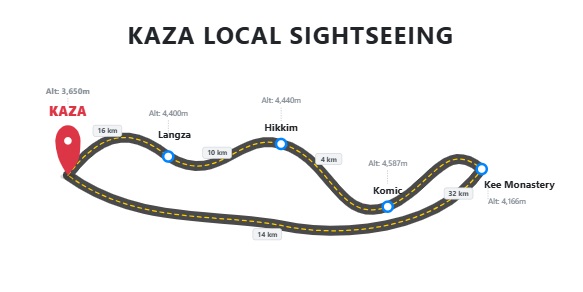
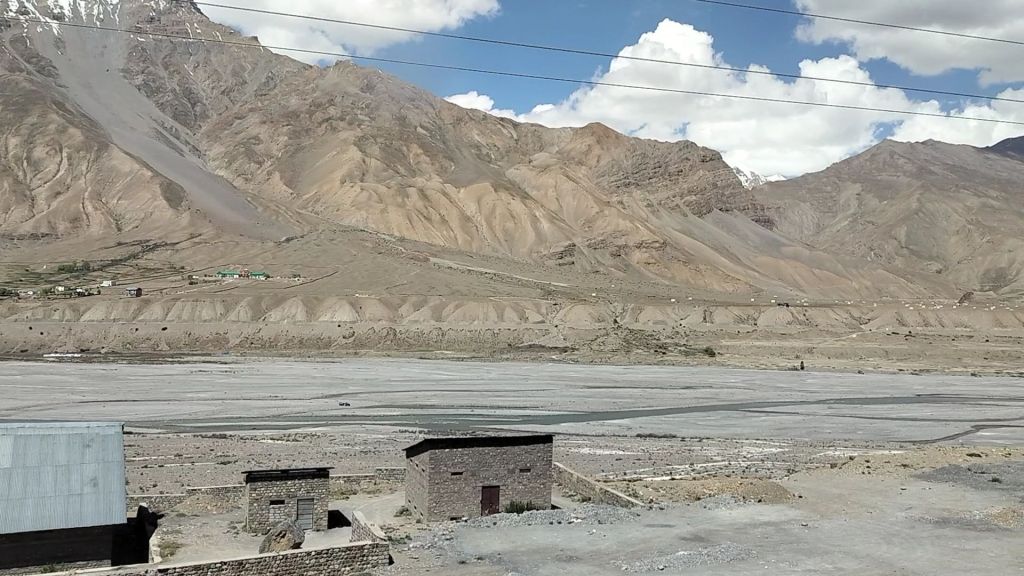
This was our day for exploring in and around Kaza. The itinerary was a scenic drive to some of the highest places in the country. First up was Langza. The drive from Kaza to Langza was pretty smooth as most parts of the road is well paved. The views are breathtakingly beautiful, with desolate mountains on one side, followed by a deep valley on the other.
Langza
Drive of about an hour, and we were at Langza. A massive Golden Buddha statue helmed the skyline of that ancient village, surrounded by numerous colourful prayer flags. The sight is one to behold. Our Tempo parked at the designated parking area and we had to now walk about 200 meters till the statue. That 200 meters proved a challenge like no other.
Langza is at 13000 ft and our bodies simply refused to co-operate. Walking even 10 steps proved to be tasking as we were stopping over time and again to catch our breath. The wind was cold and strong, which added to our woes.
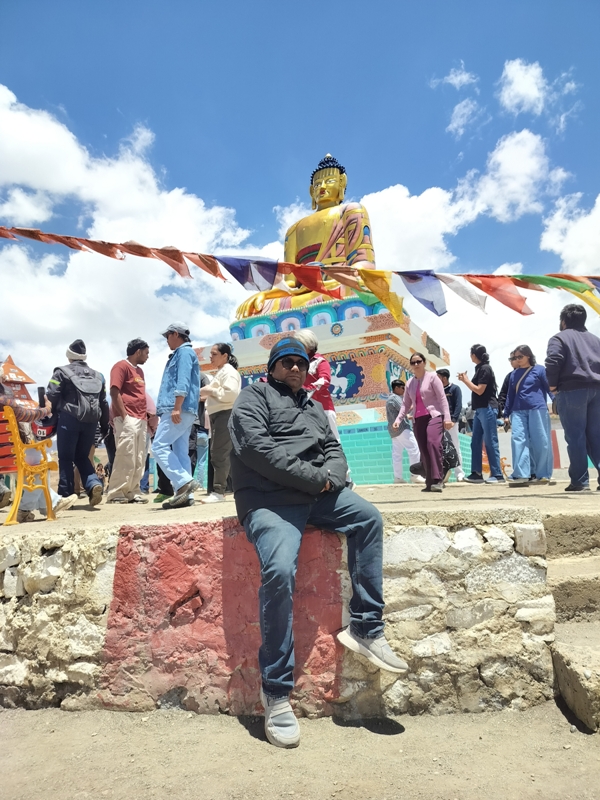
Visiting the statue brought a sense of calm in our minds as we sat on metal benches lined up around the statue, soaking in the peace and solitude Langza had on offer. Apart from the statue, this place is also known as the Fossil Village, because it is not uncommon to find marine fossils around this area.
The origin of these fossils is linked to the origin of the Himalayas, which hypotheses that the Indian Techtonic plate crashed with the Eurasian plate, millions of years ago, which birthed the Himalayas. During this massive geological event, the tethys sea bed rose to become what is Spiti today, and that is why we find Fossils here.
We left Langza and the Traveller started to ascend further into the sky. We were just going up and up with no signs of coming down. We were heading to Komic.
Komic
Standing proudly at an astronomical 15,027 feet, Komic holds the coveted title of the highest village in the world connected by a motorable road. Beyond a welcoming local cafe serving comforting hot food and a few strategic vantage points for clicking pictures, the stark, panoramic views here felt beautifully similar to what we had already witnessed in Langza.
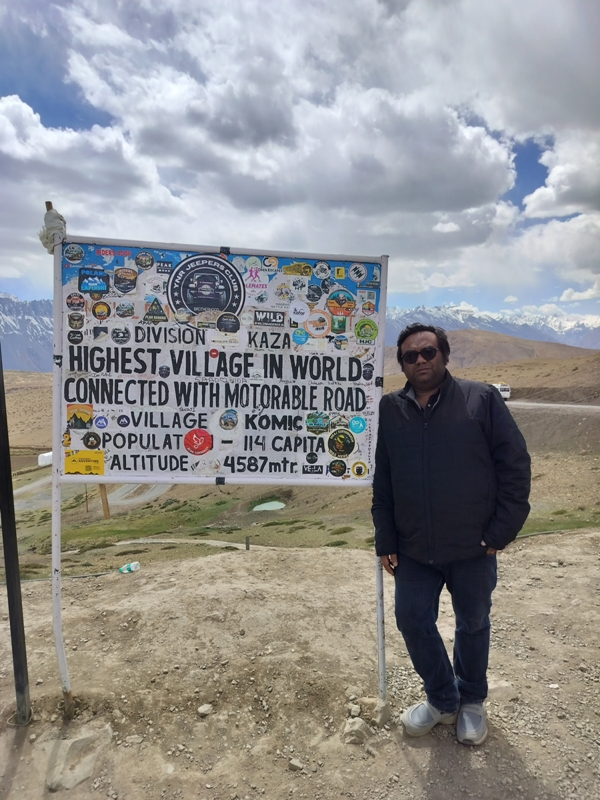
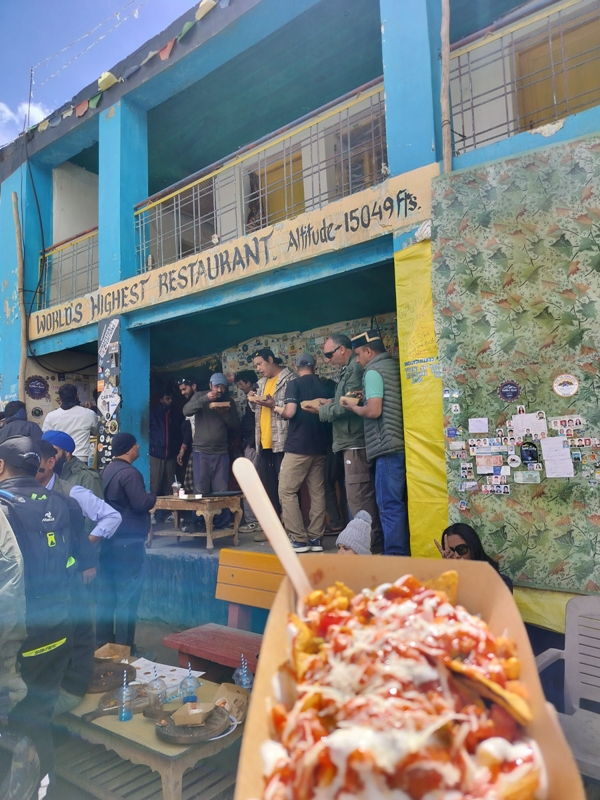
However, at this extreme altitude, the sheer atmospheric pressure on our physical bodies reached an entirely new level of hostility. If walking a mere twenty meters had been a toiling task for us back in Langza, attempting to walk even ten meters here felt like an absolute, gasping punishment for my lungs. I stood completely rooted to the spot, privately deciding that my ambitions of exploring further were officially canceled in favor of staying alive.
We had a light lunch at Komic and stared a bumpy descent to Hikkim. After a day of decent roads we were again reminded that we were literally in the land of off-roading.
Hikkim
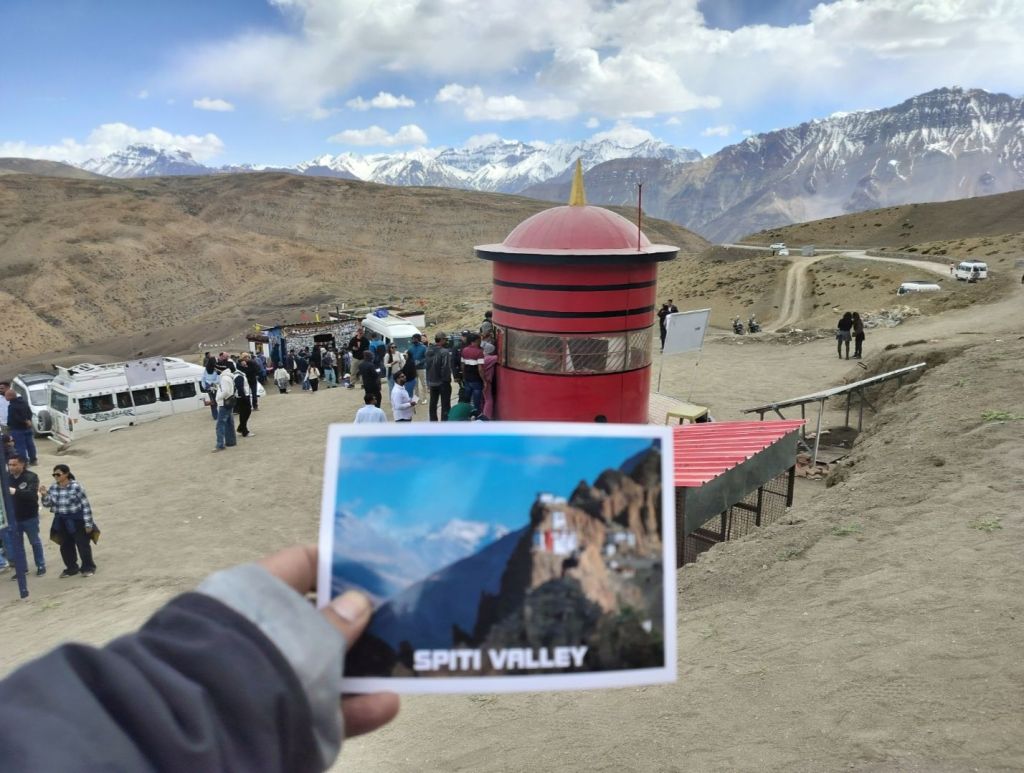
Standing at a dizzying 14,567 feet, the tiny village of Hikkim proudly houses the highest post office on the planet. It has become a sacred ritual for almost every weary traveler who makes it up here to send a handwritten postcard to their loved ones.
While we all knew the actual statistical probability of these flimsy cards ever navigating the treacherous mountain passes to reach their destination was razor-thin, the temptation of posting a physical note from the roof of the world was entirely irresistible. I stood clutching my pen with freezing fingers, smiling at the beautiful irony that in an age of instant digital communication, my most heartfelt message was about to be trusted to a lonely red mailbox in the middle of a cosmic desert.
Kee (Key) Monastery
Emerging from a bend in the road, Kee Monastery didn’t look like a building; it looked like a giant, surreal pyramid of white mud-brick homes clinging desperately to a monolithic volcanic cone.
Suspended at 13,668 feet against a backdrop of barren, windswept mountains, this ancient fortress of faith loomed over us like something straight out of a fantasy novel. As our tempo traveller pulled into the shadow of its thousand-year-old walls, we walked toward the entrance with quiet, respectful steps, our voices naturally dropping into hushed whispers.
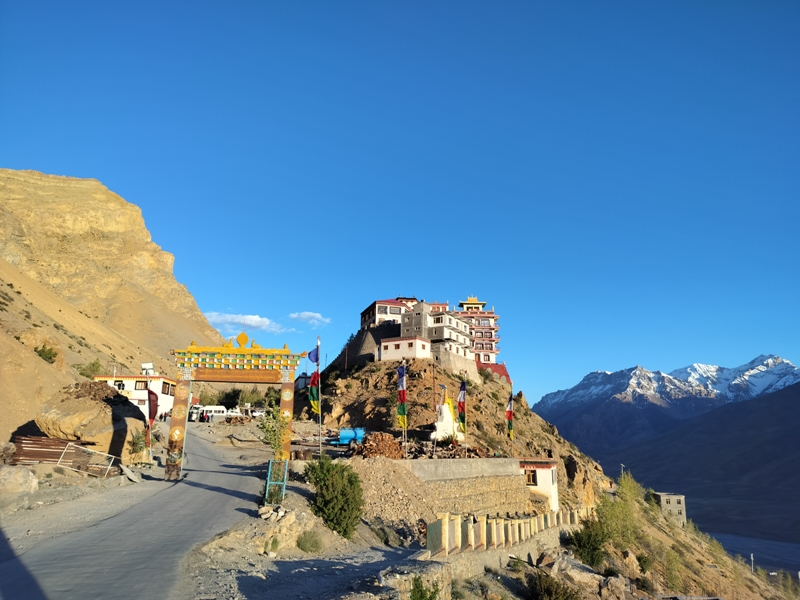
I looked up at the labyrinth of tiny windows stacked precariously atop one another, and my mind was instantly overwhelmed by the sheer, staggering history of a place that had stubbornly survived all the atmospheric challenges, Spiti had thrown it’s way.
It’s a long walk from the parking area to the actual shrine, climbing up multiple steps and inclines. A journey my body simply refused to undertake. I paid my respect from the gate and retired to a cafe nearby.
That marks the end of our Day 2. By the end of the day, we were back at Kaza, and I could feel, that I was able to climb the stairs more easily, breathing didn’t feel as tasking as it felt on the day before. May be, just may be, I was getting used to this altitude.
Day 3 – Off To Chandrataal
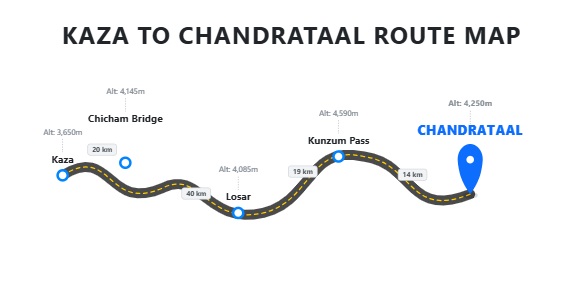
It was time to bid Kaza adieu as we packed our bags and loaded onto that Tempo Traveller for our next adventure, a drive through one of the most notorious roads of the country. The road to Chandrataal.
Pitstop 1: Chicham Bridge
On our way to Chandrataal, Chicham Bridge was our first stop. Suspension bridges are meant to connect two pieces of land, but standing on the edge of Chicham Bridge felt like staring directly into a structural geometric nightmare.
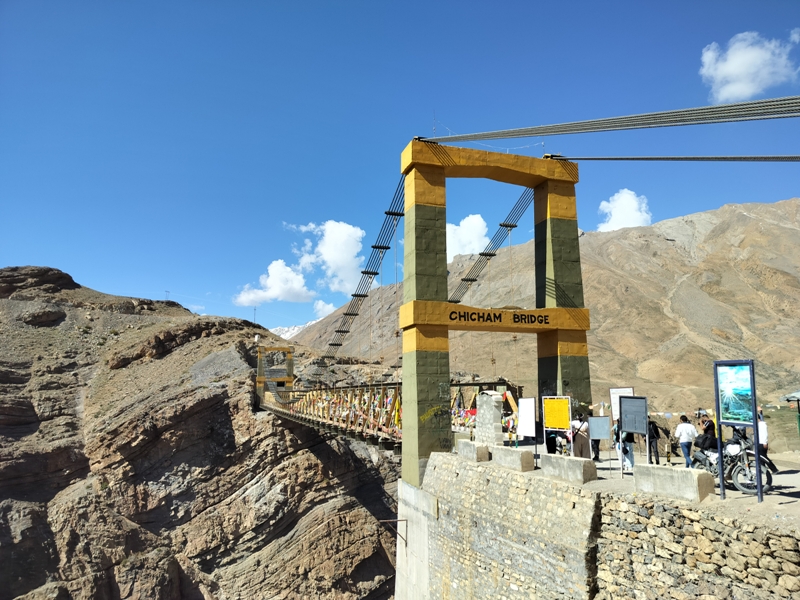
Suspended at a dizzying height of 13,596 ft, our tempo traveller cautiously rolled onto what is officially the highest bridge in Asia, spanning a terrifyingly deep, narrow gorge that looked like a jagged scar on the face of the earth. I cautiously peered over the railing into the absolute abyss of the 1,000-foot drop below, and my survival instinct instantly began frantically screaming that a few steel cables and bolts were a terribly flimsy shield against gravity.
The fierce, high-altitude wind howled through the gorge, causing the massive iron structure to gently sway, sending a jolt of pure adrenaline straight through our spines. While our group huddled together to strike epic, heroic poses for the camera—desperately trying to mask our shared terror with confident smiles—the pure grandeur of the surrounding landscape hit me like a physical wave.
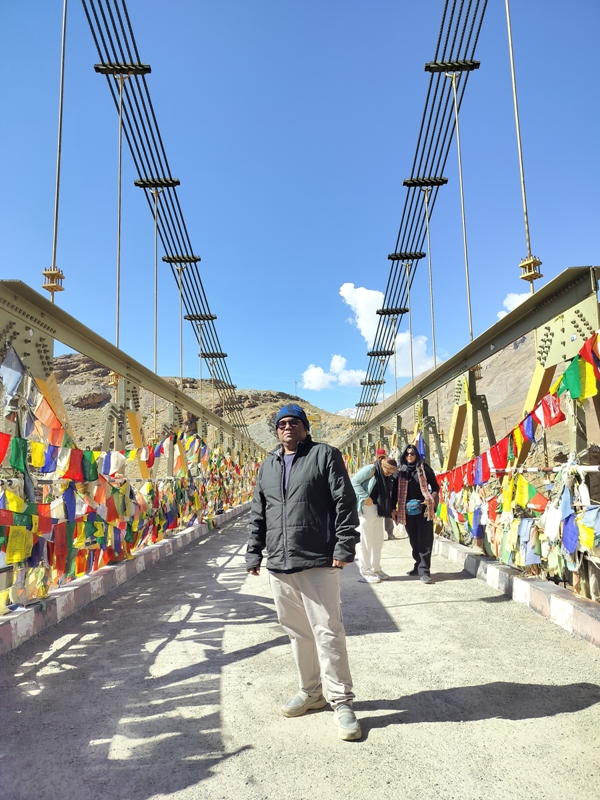
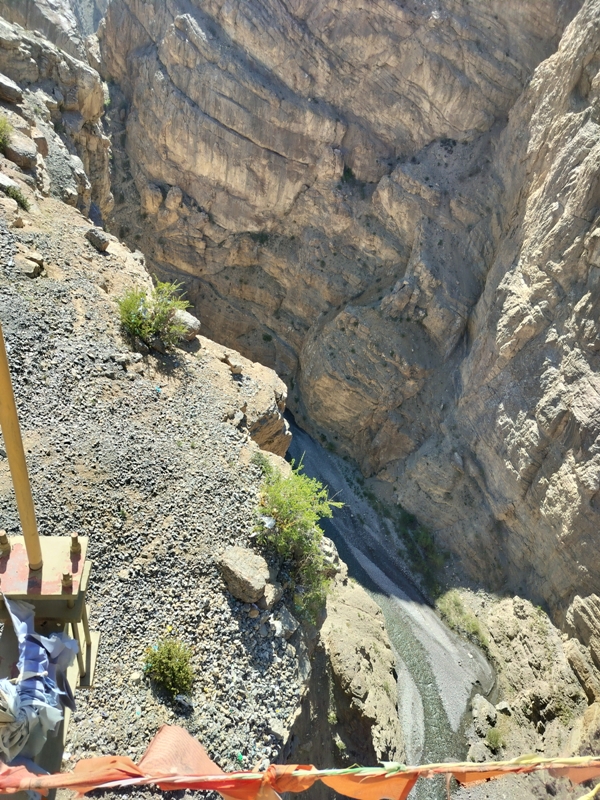
I looked past the smiling faces of my friends toward the stark, barren peaks surrounding us, silently laughing at the sheer absurdity of human engineering daring to exist in this hostile paradise.
Next stop Kunzum La, the high mountain pass, we had postponed on day 1.
Pitstop 2: Kunzum La
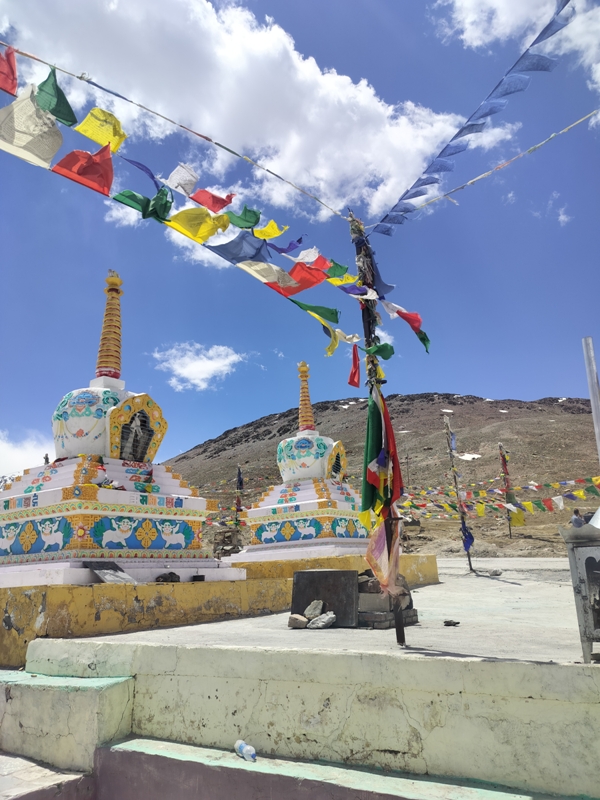
Reaching the actual crest of Kunzum La at 14,931 feet felt less like a standard high-altitude highway stop and more like stepping onto an altar built for ancient mountain gods. As our battered tempo traveller finally ground to a halt at the absolute summit, we were greeted by the hypnotic, windswept sight of hundreds of vibrant prayer flags snapping violently in the freezing air, circling the sacred shrines of Goddess Kunzum.
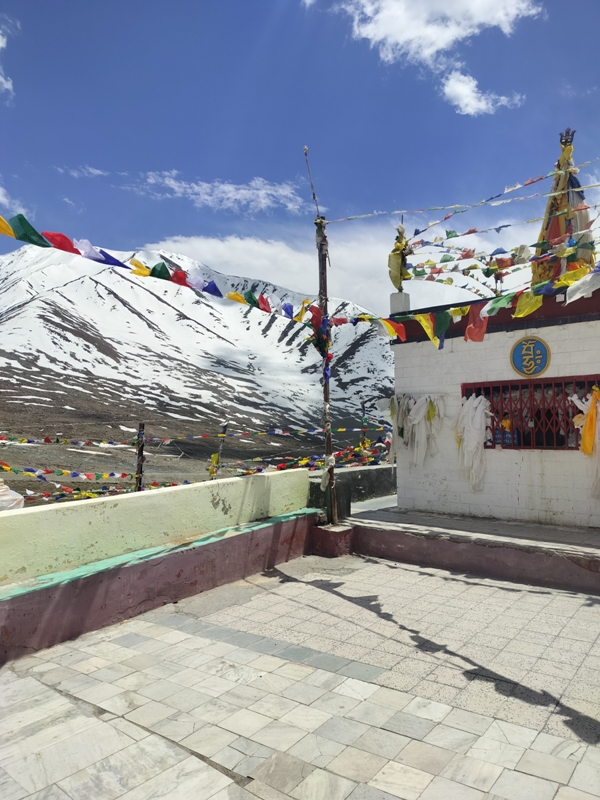
Step-by-step, we carefully disembarked into the thinning atmosphere, our shoulders instantly hunching against the biting, sub-zero winds that swept down from the surrounding glaciers. I stood completely still, watching my own breath freeze into thin mist, profoundly humbled by the realization that we were standing at the undisputed gateway where the lush world of Lahaul officially surrenders to the stark, cosmic desert of Spiti.
The sheer scale of the landscape was terrifyingly beautiful, with the towering, snow-dusted peaks of the Bara Shigri glacier chain closing in on us from every direction. We paid out respect at the shrine and silently prayed for safe passage through the treacherous valleys ahead.
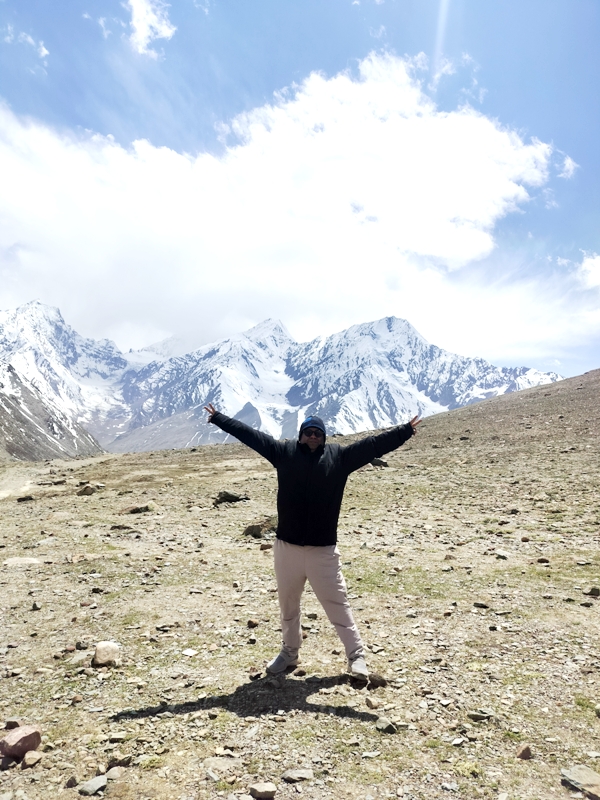
My lungs by now had begun desperately bargaining for whatever trace amounts of oxygen were left in the air. I looked at my friends, all of us smiling through chattering teeth for a quick group photo, and I privately chuckled at the sheer cosmic absurdity of our fragile, sea-level bodies daring to loiter on the literal roof of the world. By the time we piled back into the safety of the vehicle, my fingertips were entirely numb, but my mind was completely intoxicated by the wild, raw energy of the pass.
Chandrataal
Hidden away like a guarded secret behind a wall of crumbling peaks, Chandrataal didn’t look like a standard water body; it looked like a drop of the sky had fallen and pooled into a perfect, shimmering crescent on the valley floor.
However, reaching this legendary “Moon Lake” at a breathless 14,100 feet exacted a brutal, non-negotiable tax on our physical stamina. The final one-kilometer hike transformed into an agonizing gauntlet, forcing our group to halt every few steps as our thighs burned and our chests heaved violently in the oxygen-deprived air. I could feel my pulse hammering like a frantic drum inside my temples, and my throat felt as parched as sand as I desperately sucked in thin, freezing drafts of mountain wind.
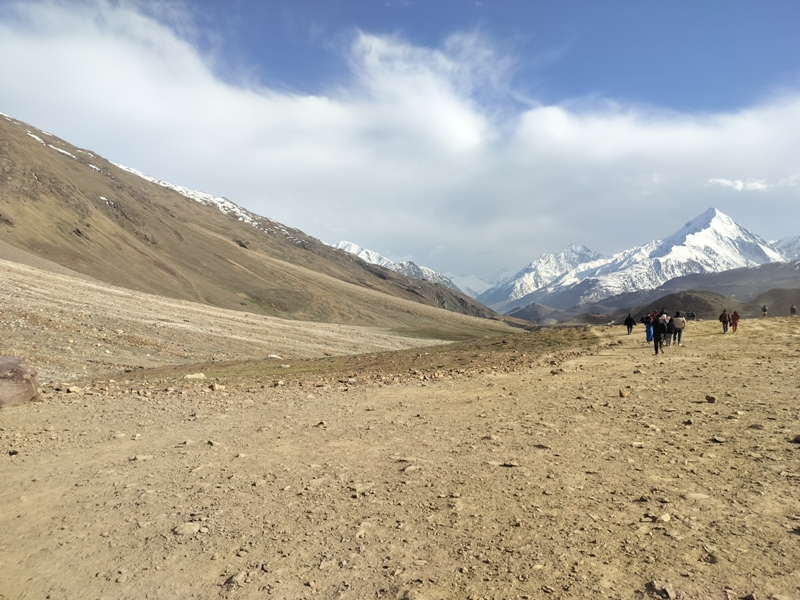
But the moment we crested the final ridge and the sapphire water revealed itself, the collective suffering evaporated. Our group stood entirely transfixed along the banks, watching the glacier-fed water dramatically morph right before our eyes, shifting seamlessly from a deep sapphire to an incandescent turquoise. I privately smiled at the sheer irony that a simple walk on flat ground now felt like a Herculean feat, yet a single body of water could make a loud, chaotic group of city-dwellers collectively hold their breath.
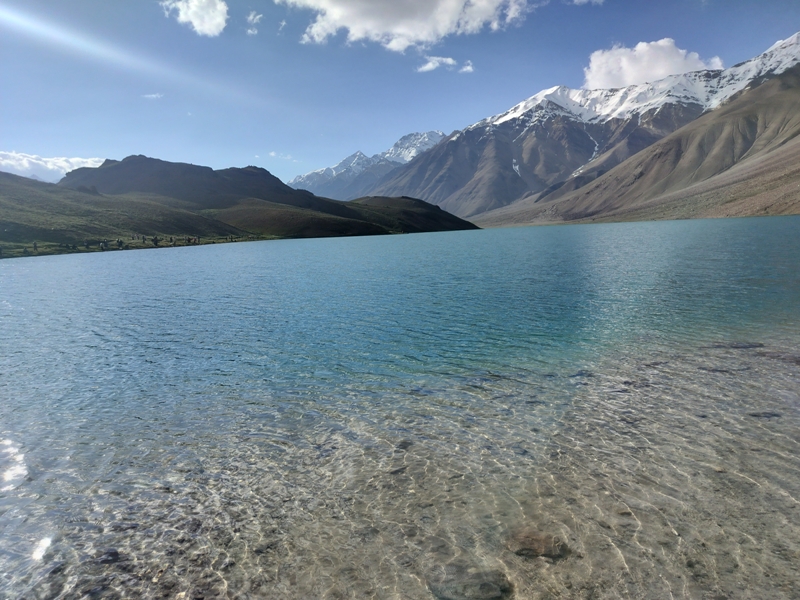
By the time we reluctantly turned back toward the parking area, my shoes were caked in mud and my lower back was screaming in protest, but my heart was forever captivated by the otherworldly magic of the lake.
Stargazing at Chandrataal base camp
The moment the sun dropped behind the peaks, a freezing twilight took over. The temperature plummeted through the floor to a brutal -5°C. The fabric layers of the tent felt like it was radiating frost, and our fingers stiffened the second we pulled off our gloves. The communal dining tent turned into our ultimate sanctuary, where we huddled tightly around the traditional bukhari wood furnace, with a steady stream of hot, garlic-infused vegetable soup and endless refills of boiling tea. That hot broth wasn’t just food; it was a physical lifeline that thawed us from the inside out before we tackled the long, freezing dark.
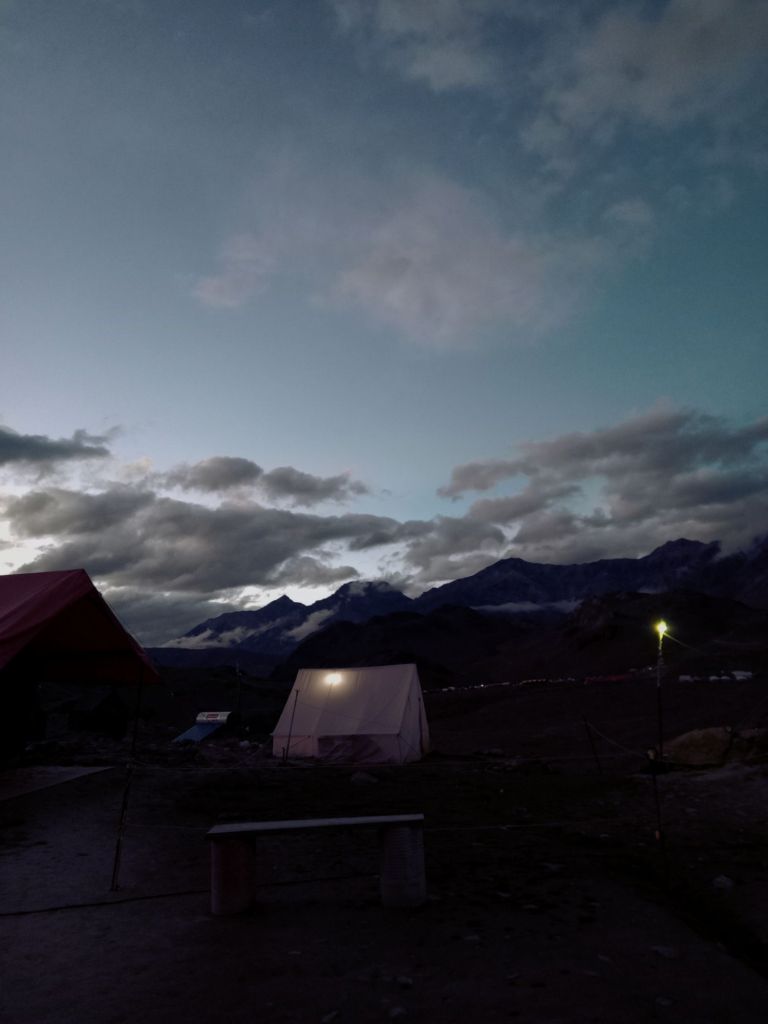
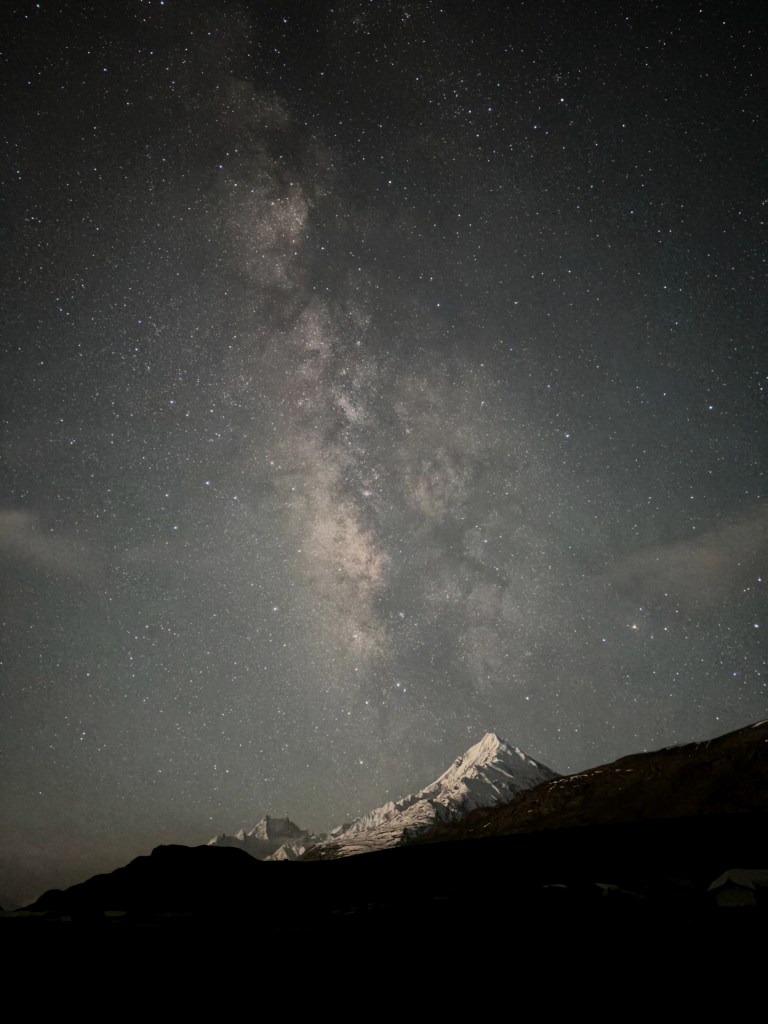
Far removed from urban light pollution, Chandrataal is a highly rated destination for star gazing in India. While our bodies had already given up, a piece of our mind was still pushing us to come out of our tents at 2 AM in the night, to watch the sky come alive, while the world around us was completely dead.
It took a lot of courage to get out in the open, but one look at the sky and that feeling of dread has vanished. The ink-black night sky above had transformed into a brilliant canvas crowded with billions of pulsing stars, constellations, and the vivid, glowing band of the Milky Way galaxy. The absolute stillness of the trans-Himalayan cold desert enhanced the experience, beyond imagination.
Return and closing thoughts
It was a grueling, marathon drive from the banks of Chandrataal back to Manali. As we crossed the familiar, tire-shredding dirt tracks leading toward the mouth of the Atal Tunnel, the atmosphere inside the vehicle shifted dramatically. We were returning to the crowded, green tourist traffic of civilization entirely sunburnt, thoroughly exhausted, and completely caked in layers of mountain dust—yet an overwhelming sense of collective accomplishment bound us together.
We had willingly pushed our physical bodies to their absolute limits, realizing that such exhaustion is merely the non-negotiable price of admission for views that belong on another planet. I looked out at the fading peaks, deeply aware that while our bodies had made it out, a permanent piece of my soul stayed behind, forever trapped in that silent, cosmic desert.
You have reached the end of an epic Spiti road trip. If you want to do a deep div and live the Day by Day experience of our group, feel every bump along the road and the breathlessness that come with it, do checkout the detailed slow burn of our experience:

