

- Koksar to Batal : Bumps and more
- Batal
- Chacha Chachi Dhaba (Chandra Dhaba)
- Navigating the Batal-to-Losar Dirt Tracks
- Losar – the Oasis
- Rolling into Kaza
- Closing thoughts
Looking past the single row of restaurants and cafes lining the only street in Koksar, which is a small village on the outskirts of Manali, we could see that the hills beyond were no longer dotted with human settlement. They rose before us unadulterated and raw—just how nature intended them to be, which was a pleasant contrast to the heavily commercialised hill stations of this state of Himachal Pradesh.
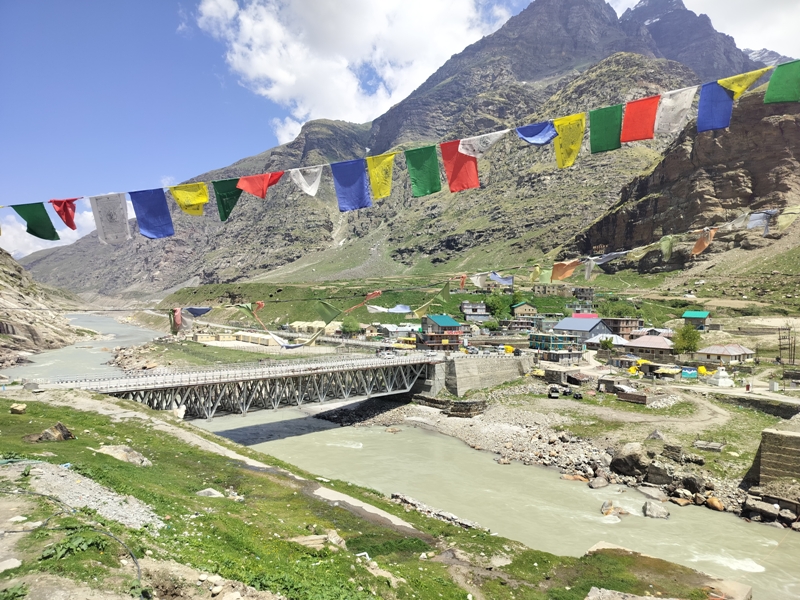
As we stood atop a rickety cafe, satisfying our bellies with a quick snack, we could already notice the landscape transitioning. The surrounding hills no longer featured the towering pine trees of Manali; instead a desperately thin layer of small shrubs covered them. The bustling markets, crowded streets, and the luxury of buying anything at a moment’s notice were now a distant memory. I looked down at my plate, suddenly wondering if this lukewarm Maggi and decent Aloo Paratha was destined to be my final culinary triumph before entering the void. Koksar, as per our trip captain, was the gateway to Spiti, and past this point, modern amenities were going to be a thing of a distant memory, including cellphone network signals.
Homo sapiens were originally hunter-gatherers, but I had never realized, until that very moment, that a simple road trip could wake up that dormant gene within my own mind. Faced with the daunting, unpredictable journey ahead, we instantly tapped into our ancient roots and started gathering. We hoarded everything from a well-deserved bottle of Old Monk to packets of wafers in every shade of the rainbow. We even packed a single, desperately lonely, leftover Aloo Paratha. By the time we finished cramming it all onto the back row of our Tempo Traveller, our magnificent stockpile looked like a nutritionist’s absolute worst nightmare.
Koksar to Batal : Bumps and more
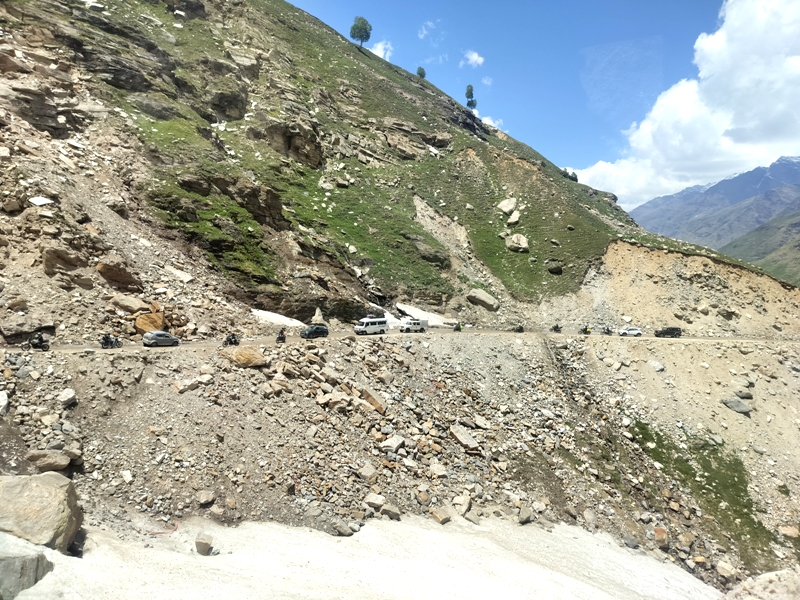
We started rolling down the mountainside with our vehicle dancing to the tune of the boulder-strewn road. My eyes remained fixed on a narrow river flowing carelessly a thousand feet below, right at the edge of a sheer, dizzying drop-off. It was hard to digest that within a few hours we had drove past, the pine-scented air of Manali to a world where civilization systematically crumbled away, leaving us face-to-face with the raw bones of earth.
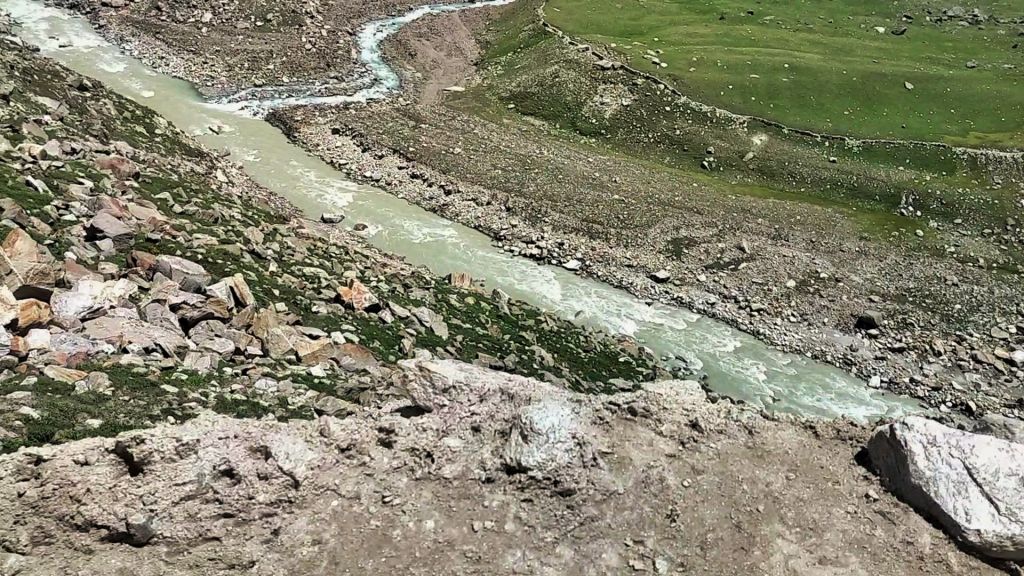
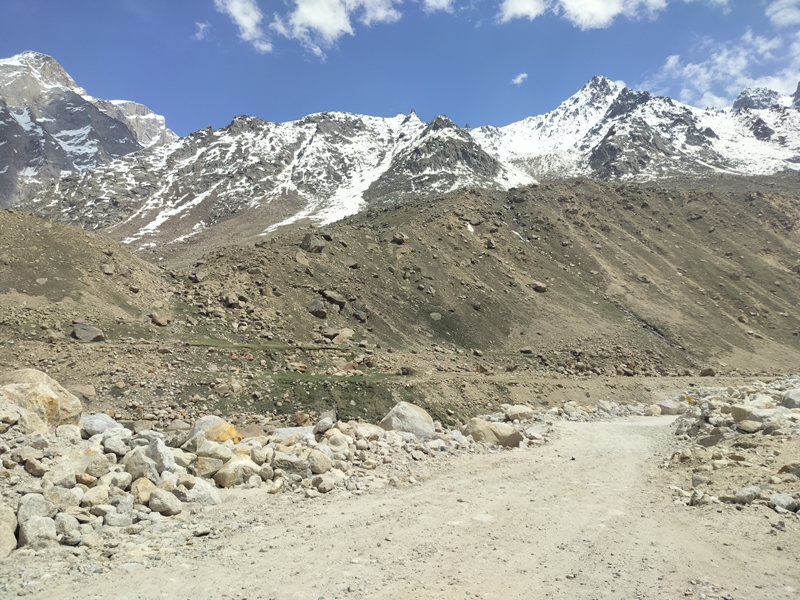
The elements ruled this route, leaving striking icy footprints along the way. Frozen waterfalls hung like giant, sculpted glass waves suspended in mid-air down the cliff faces. Alongside the path, the road shoulders were caked in thick, shimmering ice crusts, these were glacial runoff that had frozen solid in the shadows.
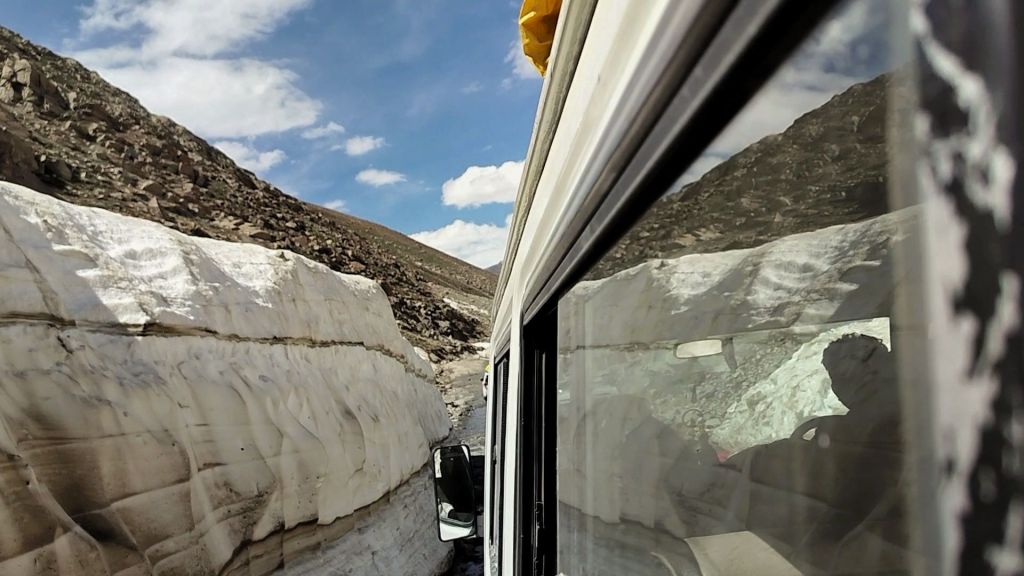
Needless to say, the network signal had gone for a toss, no connection to the modern world for at least the rest of the day. There is absolutely nothing on that road besides rocks and dust. If one needs to use the washroom, the only walls available here are the giant boulders along the side of the road.
Batal
A few agonizing hours and a million bone-crushing bumps later, our vehicle finally screeched to a halt in an empty, vast valley. Our trip captain loudly announced lunch break, and we frantically hopped off the vehicle. This desperate mass exodus had far less to do with actual food and everything to do with our primal need to touch solid ground after those brutal hours of riding.
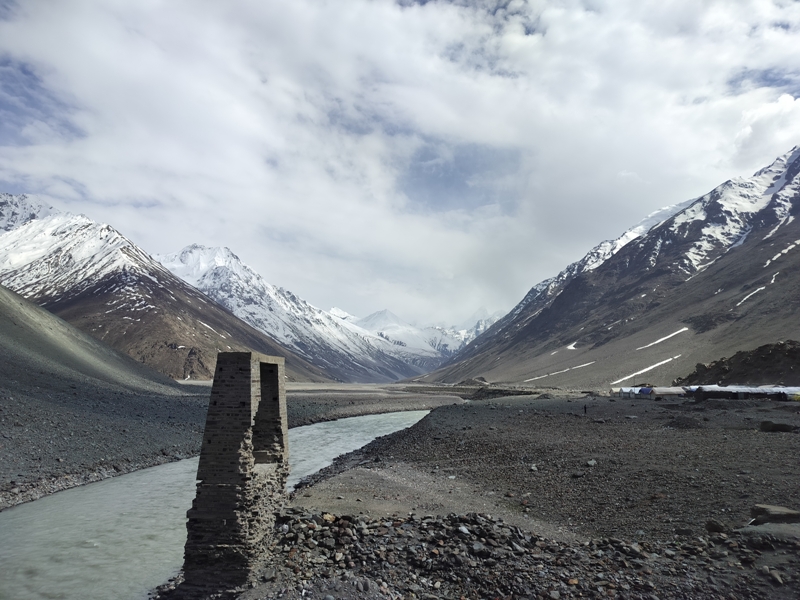
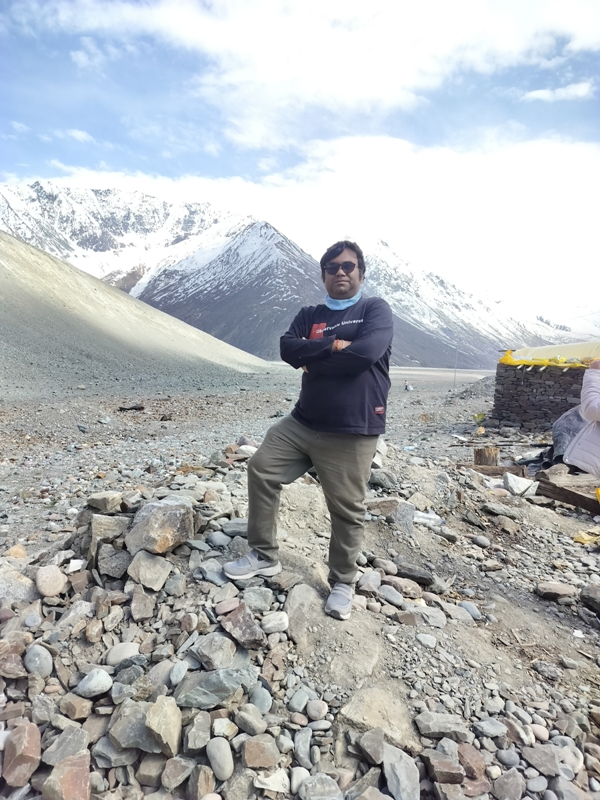
Stepping out into the freezing, dry air, taking a look around, we realized that Batal isn’t a village, it isn’t even a proper settlement. It is a harsh, wind-battered frontier sitting at 13,123 ft, acting as a lonely geographic checkpoint where the terrain suddenly fractures open.
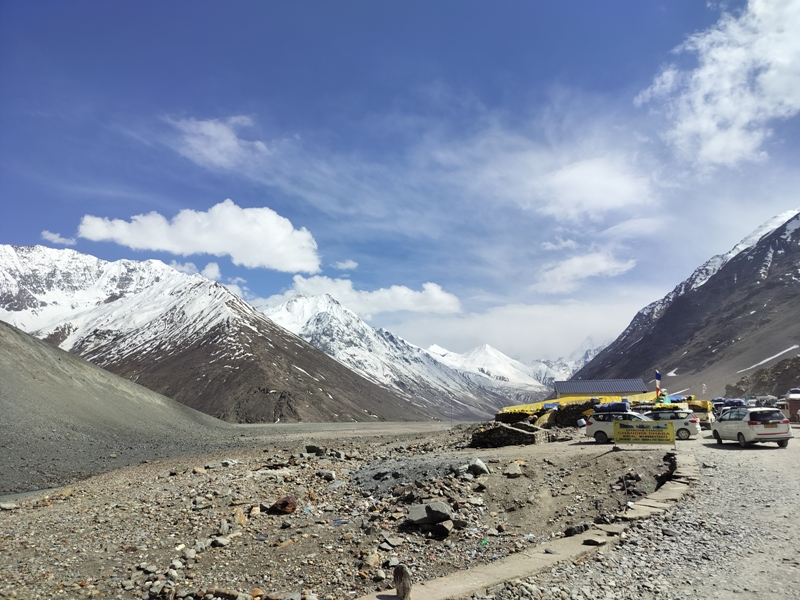
I stood frozen as my jaw dropped at the sheer unreality of the landscape. It felt as if nature had violently stripped away all excess to reveal a striking, lunar-like beauty. Towering, snow-dusted Himalayan peaks contrasted sharply against the stark, rust-colored scree slopes, while the fierce, glacial waters of the Chandra River carved forcefully through the rocky terrain. I closed my eyes, letting the vast silence wrap around me.
This harsh yet mesmerizing landscape felt entirely untouched by time, offering us with a profound sense of isolation and a glimpse into the majestic, quiet grandeur of the remote Himalayas.
Chacha Chachi Dhaba (Chandra Dhaba)
Right in the middle of this desolate void sits a low-slung, ramshackle structure built out of roughly stacked river stones. This is the iconic Chandra Dhaba, much better known to generations of Himalayan travelers as Chacha Chachi Dhaba. This humble dhaba serves as the absolute life support system of the entire route, operated for decades by Dorje Bodh and Hishe Chhomo—the legendary Chacha and Chachi. I looked at the fragile shack, deeply humbled that the survival of our entire ragtag expedition now rested in the hands of two beautiful, smiling elders.
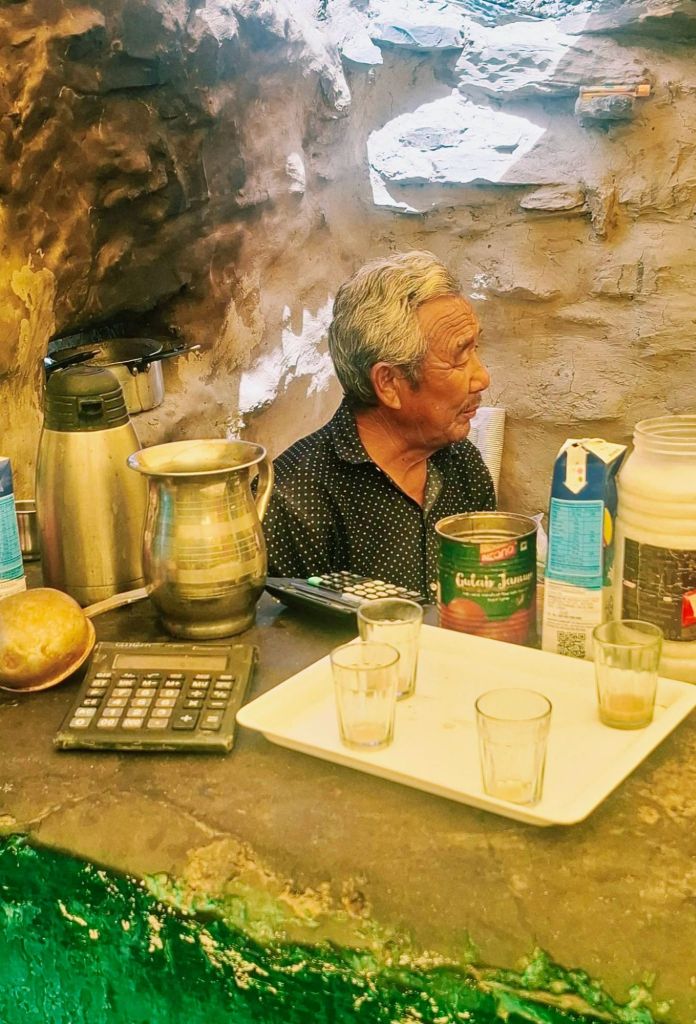
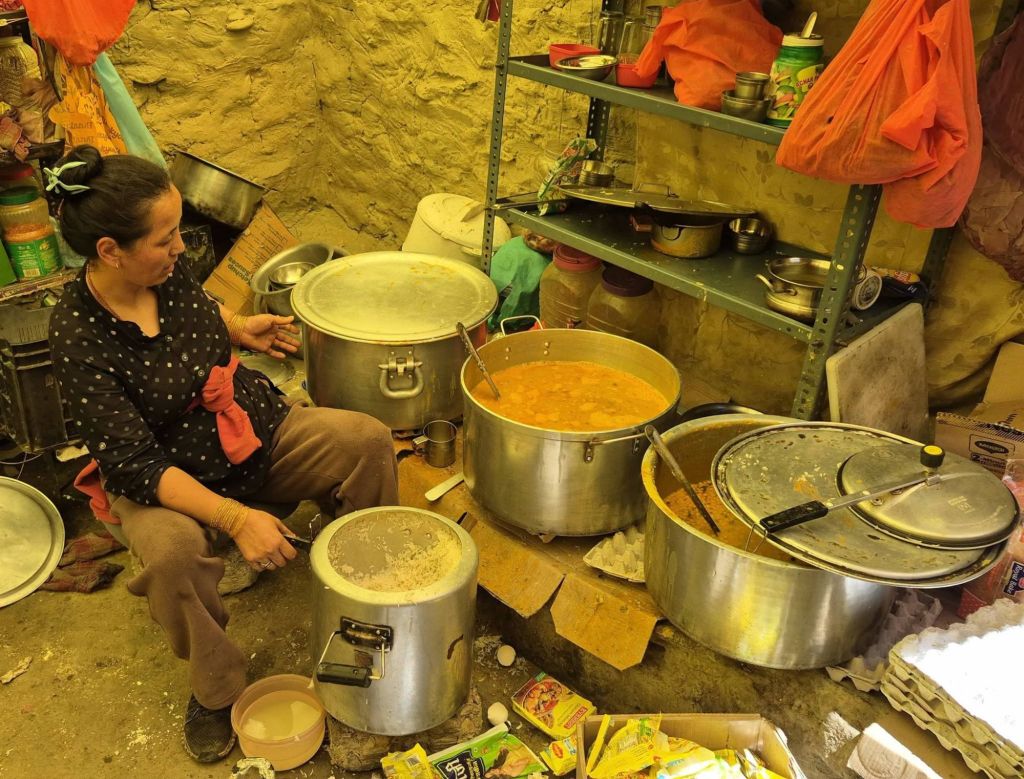
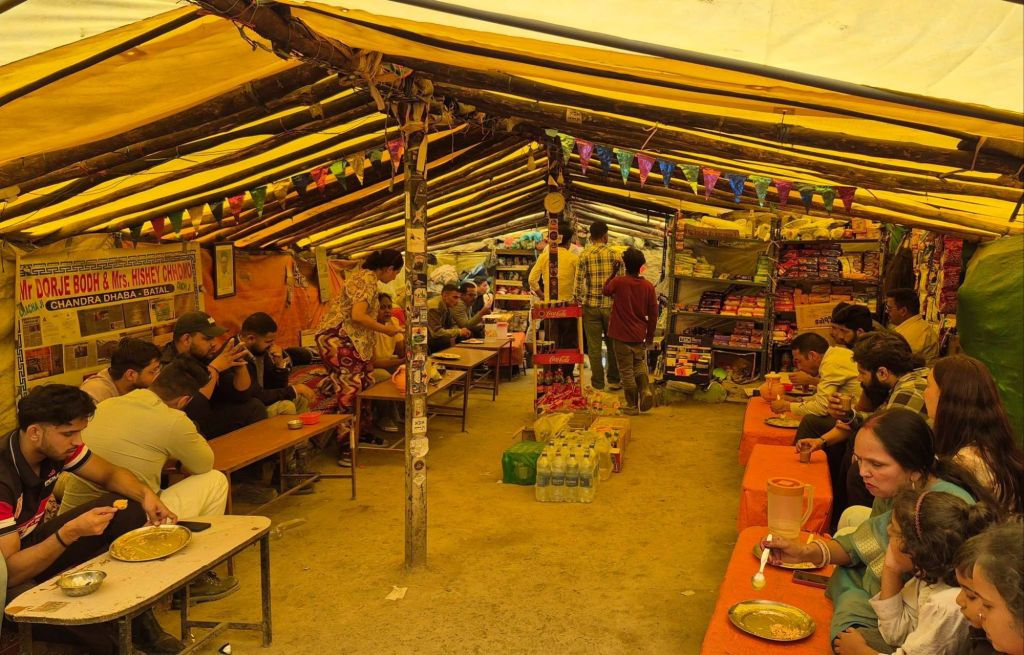
Walking through the low doorway felt like stepping into a warm, breathing sanctuary. Inside, the air is thick with the scent of boiling tea leaves, burning wood, and decades of travel folklore. The stone walls are tightly packed with old photographs, handwritten notes from grateful backpackers, and stickers left behind by motorcycle clubs who survived the same brutal tracks.
As I sat down on the basic stone benches, the ground beneath my feet felt like it was moving. There definitely was no earthquake; the oxygen deprivation was likely playing tricks on my mind. I took a few deep breaths and drank some water, which calmed the sensation but did not stop it entirely.
At those altitudes, after hours of being violently tossed around in a tempo traveler, luxury dining means nothing. Survival and pure joy taste like hot lentils over rice, washed down with a glass of boiling tea. It was a poignant reminder that the grandest hospitality does not belong to five-star hotels. It belongs to an elderly couple serving hot food from a stone shack at the edge of the world.
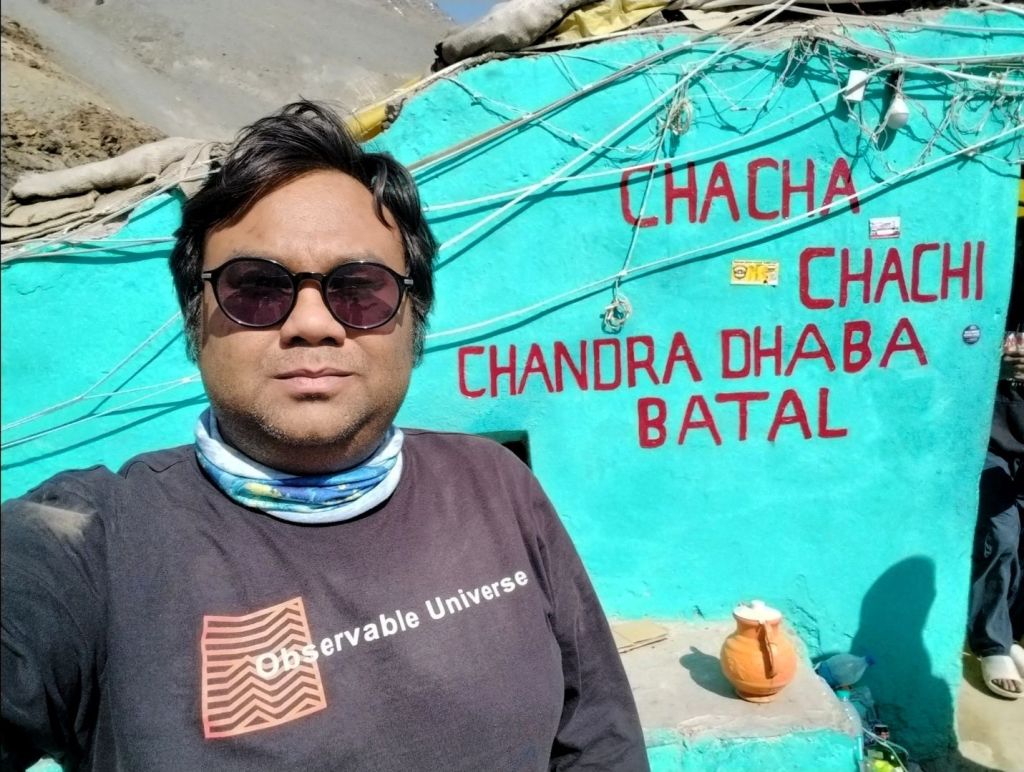
Tip: Do not just pass by Batal. Stop, order the Rajma Chawal, ask Chacha about the old winter rescue stories, and leave a small token of gratitude. They are the heartbeat of this route.
Navigating the Batal-to-Losar Dirt Tracks
Leaving the comforting warmth of Chacha Chachi’s shack behind meant we had to mentally brace ourselves for the most brutal stretch of our entire existence. The upcoming track from Batal to Losar instantly transformed into a relentless, bone-rattling assault on our vehicle, our sanity, and our collective spines.
Being on the last row guaranteed extra bumps. I clutched the top of the seats in front of me, silently praying that my doctor would never find out what I was willingly subjecting my lower lumbar to.
Every single twist of the steering wheel required absolute focus; the track was terrifyingly narrow, the drops were sheet-sheer, and the surrounding landscape was so unimaginably grand it felt like we were driving a toy bus through a prehistoric canyon. Our vehicle moved at a painfully slow crawl, its engine groaning and wheezing against the brutal combination of steep inclines and rapidly dropping oxygen levels. I sat completely motionless, firmly convinced that the oxygen deprivation was starting to make my brain cells pack their bags and leave, one by one.

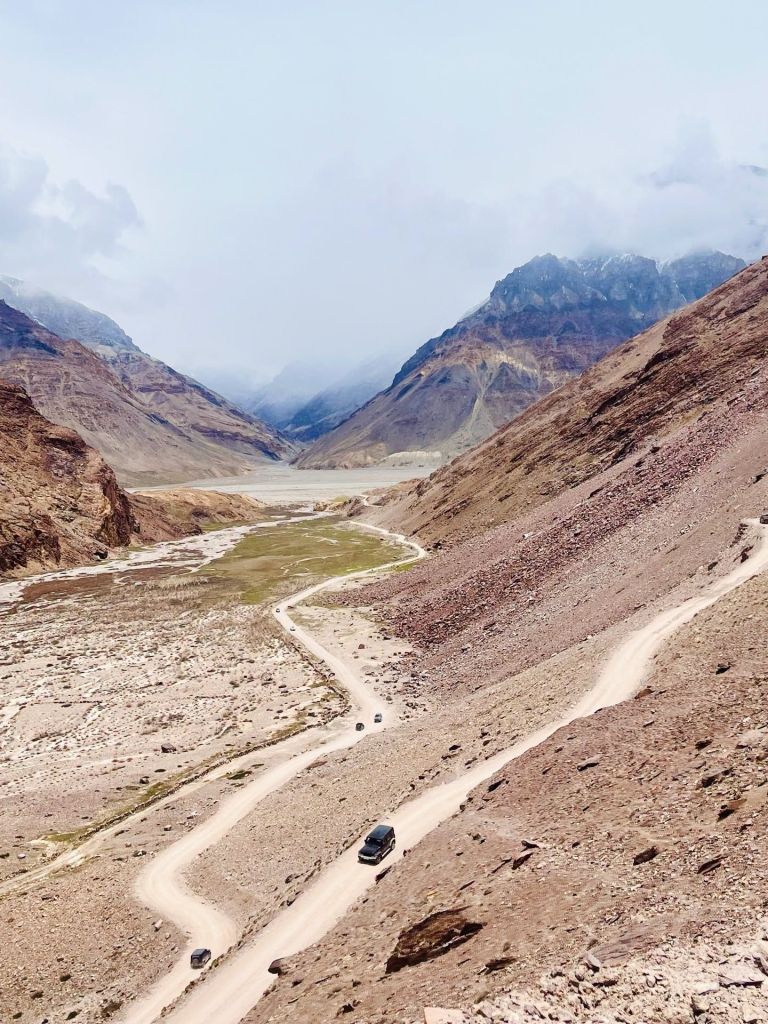
The real climax begins as the road coiled upward toward Kunzum La. Grinding through tight hairpins, the altitude spikes to a dizzying 14,931-ft. The air thins dramatically, making sitting still feel like a workout as the temperature plunges. Yet, as the physical toll worsens, the visual reward expands.
The valley floor falls away, revealing the massive, snow-capped Bara Shigri glacier range. Pushing through this mountain wall feels like crossing a true geographical border—leaving Lahaul behind for the isolated wilderness of Spiti.
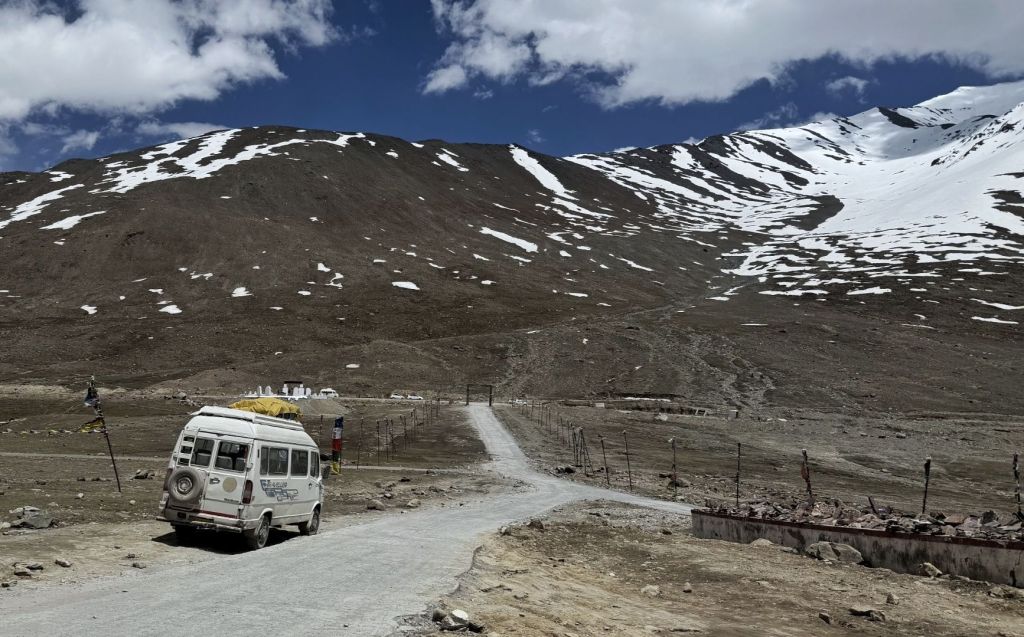
We didn’t dare stop over at Kunzum La; our sea-level bodies had stubbornly refused to acclimatize to the thin air just yet. General common sense dictated that we postpone that particular conquest and stop at the pass on our return journey instead. I silently thanked our captain for the decision, privately convinced that if my lungs had to process any more altitude right then, they would have filed a formal grievance and quit on the spot.
Losar – the Oasis
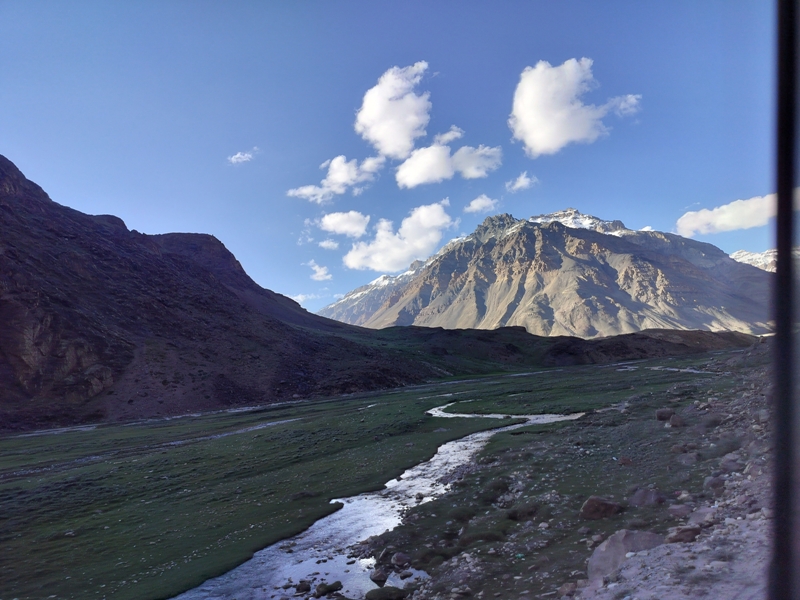
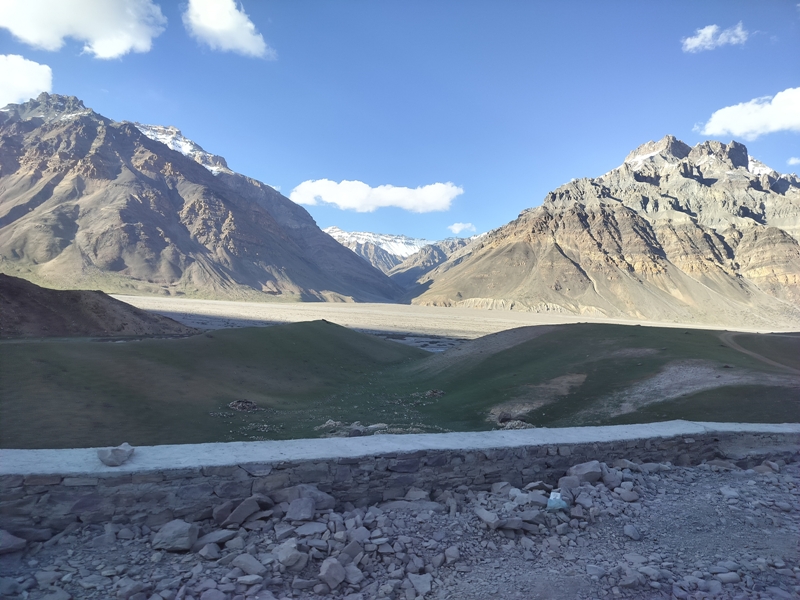
At the end of that dusty descent from Kunzum La sits Losar—the very first inhabited village on the Spiti side of the pass. Rolling into Losar felt like finding an oasis in the middle of an absolute wasteland, as the monochrome grey landscape was broken up by bright green patches and a cluster of traditional, whitewashed mud-brick homes with black-framed windows.
I could hear my stomach growling; it was time for a quick snack. I felt that single, desperately lonely packed Aloo Paratha we had hoarded was uniquely apt for this solemn occasion. I frantically searched all around my throne on the last row of our tempo traveller, but alas, the legendary paratha was nowhere to be found. Deeply disappointed and feeling utterly betrayed by our collective inventory management, I quietly settled down with a packet of wafers, slowly licking through the spicy masala to soothe my wounded soul.
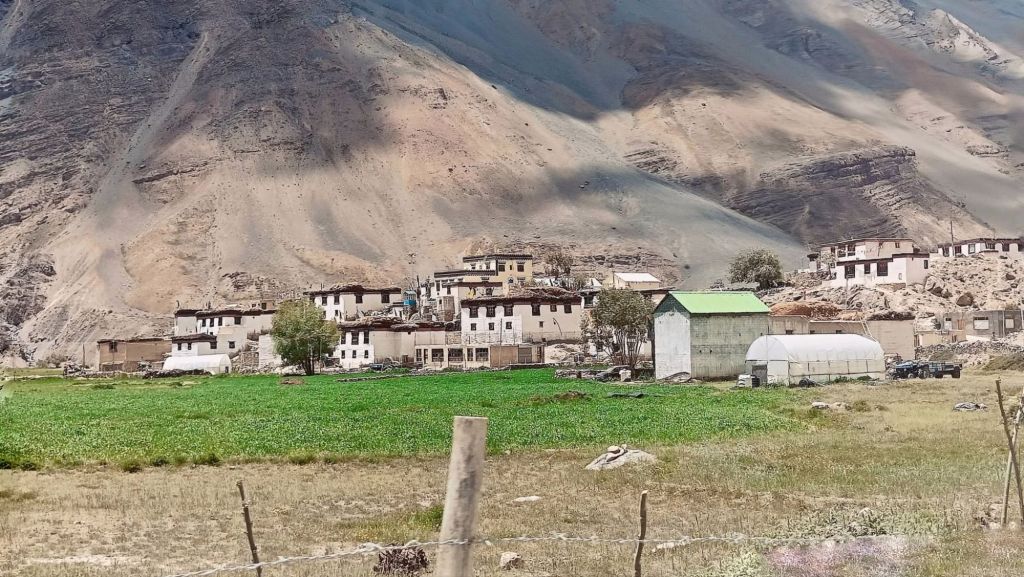
Pushing through the mandatory police check-post here was a massive psychological milestone for us. We could finally stretch our cramped legs, feel the sun warming up the biting wind, and realize that we had successfully survived the toughest mountain pass on the entire route. Kaza was finally within arm’s reach.
Unlike the absolute isolation of Batal, Losar is a bustling mountain hub lined with a surprising number of local shops, homestays, and vibrant, tiny eateries.We pulled over here for a desperately needed tea and washroom break, and it felt like absolute luxury. Cellular network was back, the washrooms had walls and a roof. Walking into a clean, solid structure after hours of rough tracks is a feeling only road-trippers understand.
Losar didn’t just offer food and shelter; it gave us our second wind just when we needed it most. As the steaming lemon ginger tea thawed my frozen throat, I felt my frayed nerves slowly unraveling, realizing that we had actually made it through the wildest gauntlet the mountains could throw at us.
Rolling into Kaza
By the time the sun dipped behind the jagged peaks, painting the sky in deep bruises of purple and slate, we finally reached Kaza. Sitting at 11,980 ft, this settlement is the administrative capital and the pulsating heart of Spiti. However the moment we step out of the vehicle, the valley gives us a cold, sharp reality check.
With the Sun out of the equation, the temperature didn’t just drop; it plummeted. The low oxygen levels truly hit us, as simple tasks like lifting our luggage or walking up a short flight of stairs suddenly felt like running a marathon.
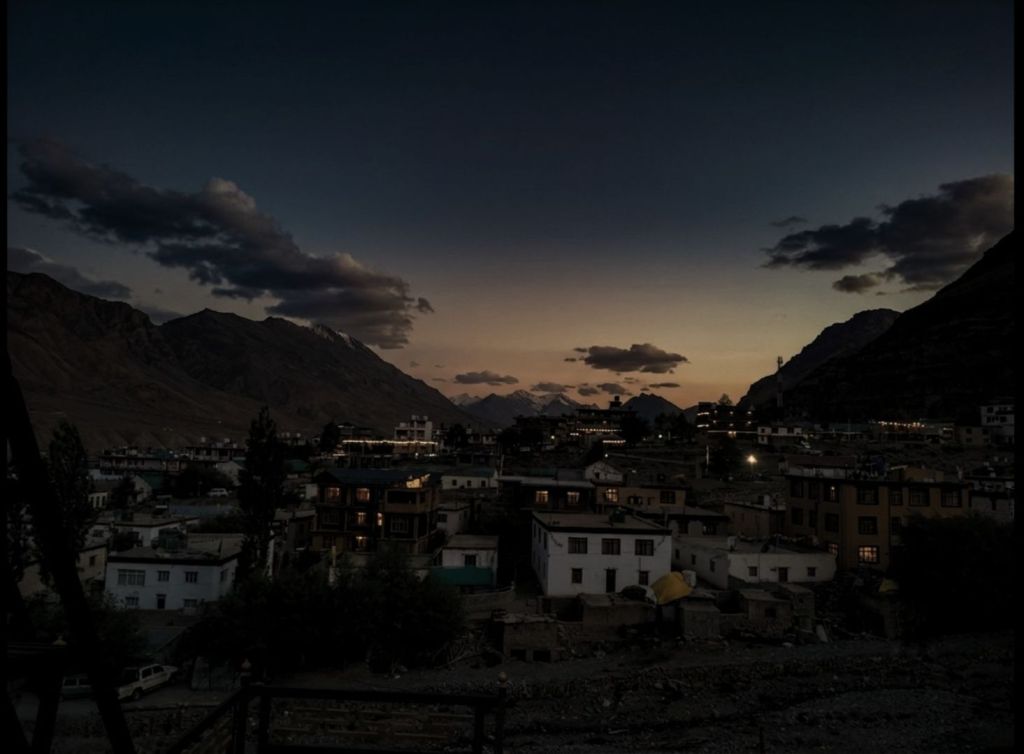
To make matters worse, my room was on the fifth floor. Every step felt like a battle, my chest heaved, pulse thumped loudly in the ears, and a slight, dull tightness gripped the temple. I stopped at every third step of the guesthouse, gasping for breath like a stranded fish, privately wondering if my heart was trying to violently escape through my ribcage. These were all reminders from the mountains that I and everyone around me were guests, in a very different world.
To be honest, at that very moment I started to question my decision to come to Spiti. Living at those temperatures with famished level of oxygen for 3 more days seemed like an absolute nightmare.
In about an hour, dinner was served, as all of us huddled together for a comforting meal. The steaming, freshly cooked dinner felt like the ultimate antidote to the freezing void outside. But once the plates were cleared and we retreated to our rooms, the true weight of the mountains settled in.
SURVIVAL BLUEPRINT: YOUR FIRST NIGHT IN KAZA
Do Absolute Nothing: No matter how excited you are, dedicate your arrival evening entirely to rest. Let your body fight the low oxygen levels while lying flat.
Closing thoughts
As I finally crawled under two layers of heavy blankets, and the night advanced, all worldly sounds faded into a dead, absolute silence. Outside our window, the giant, moonlit silhouettes of mountains stood like ancient guardians over Kaza. I lay awake in the dark, listening to absolute stillness outside, the only sound for company was the frantic, echoing thump of my own racing heart, utterly overwhelmed by the realization of how remote I truly was.
We had survived the brutal boulders of Batal, crossed the high, intimidating barrier of Kunzum La, and firmly earned our place at the table. Day 1 had been a relentless, beautiful reality check for our entire group. But as our breathing finally slowed down in the thin desert air, I looked out into the pitch-black void of the valley and smiled. I knew, with absolute certainty, that the real adventure was only just beginning.
Jump to Day 2, where we explored Kaza, met with the guardian of Spiti and found Marine Fossils
Read Day 2 East Indian Traveller