

- Kaza
- Scaling the Cliffs: The Drive from Kaza to Langza
- The Breakdown: Making the Best of a Bad Situation
- Langza
- The mystery of fossils
- Komic: The Highest Motorable Village on Earth (15,027 Feet)
- The highest restaurant in the world
- The curious case of the last row
- Hikkim: Snail Mail from the Clouds
- Kee (Key) Monastery
- Winding Down: Return to Kaza and the identity of Zukesh
- Concluding thoughts
Kaza
If the intimidating, pitch-black silence of the night before had convinced me that we were stranded in a frozen planet, the Day 2 morning sun in Kaza brought a hilariously chaotic plot twist. I unpeeled my stiff body from beneath the suffocating weight of the heavy blankets, stepped out into the crisp air, and stared in absolute disbelief.
The cosmic desert wasteland that had made my heart race in fear a few hours ago was now bathed in a blindingly bright, cinematic gold, revealing massive, dramatic peaks that looked less like a threat and more like a theatrical backdrop. We huddled on the porch, nursing steaming mugs of chai with our red, sunburnt faces, silently laughing as we watched the locals effortlessly sprint up the steep inclines—completely mocking our pathetic, sea-level lungs that were still loudly gasping for oxygen just from standing upright.

Scaling the Cliffs: The Drive from Kaza to Langza
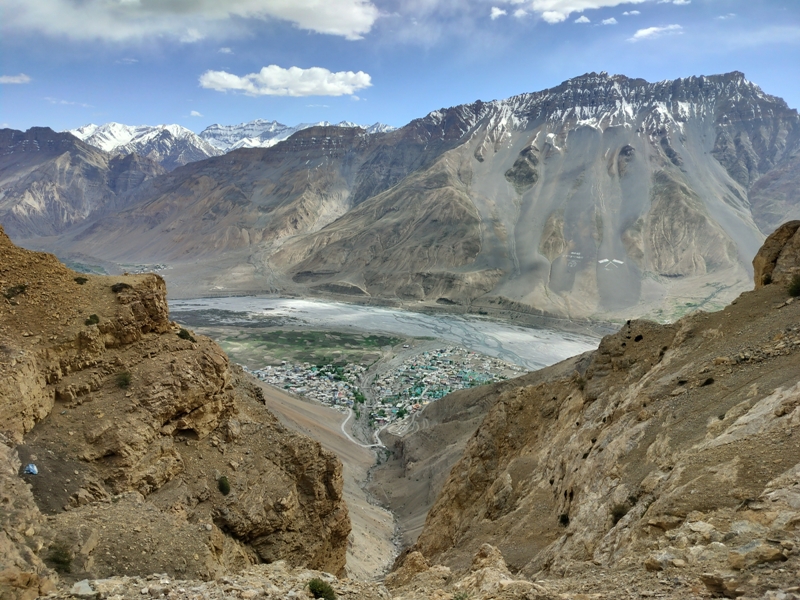
The journey from Kaza up to Langza was a vertical ascent that wasted no time in making us feel the altitude. With every hairpin bend, the Spiti River on the valley floor shrank into thin silver ribbons, and the mountains across the chasm rose up to meet us at eye level. The incline is unforgiving; we could hear the engine roaring and groaning throughout.
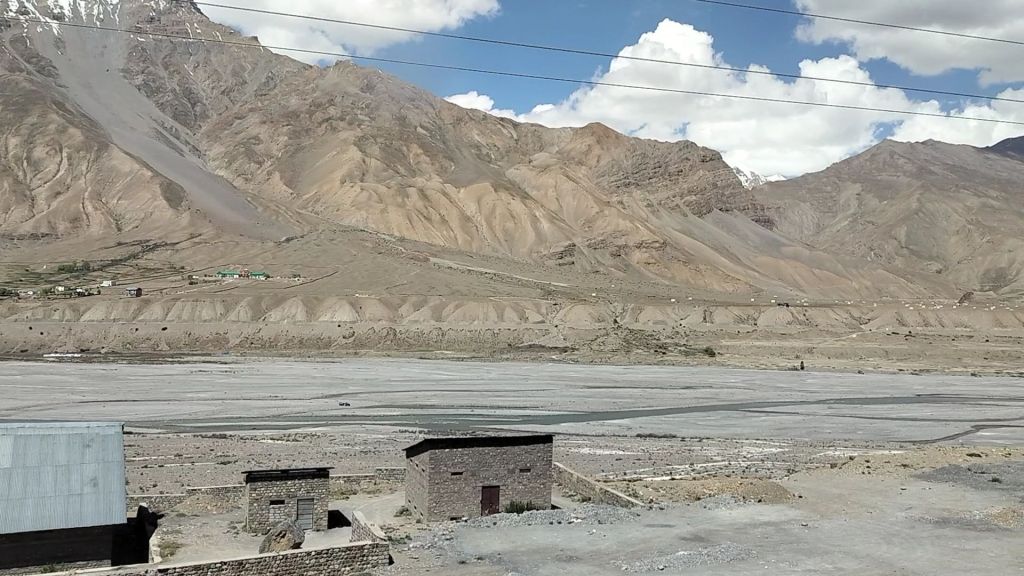
Just as we were getting used to the dizzying altitude, the mountain gods decided to throw a wrench in our plans. Right in the middle of the route, with absolutely nothing around us, our vehicle groaned, shuddered, and came to a dead halt. The engine had given up, choked by the thin air and the relentless climb.
The Breakdown: Making the Best of a Bad Situation
In a place like Spiti, a vehicle breakdown at 14,000 odd ft with feeble network bars on the phone is the ultimate reality check. It is the exact moment where panic usually sets in. But when you are traveling with the right crew, a crisis quickly turns into a comedy. While our drivers were busy popping the hood to stare blankly at a dead engine, the rest of the team looked around at the towering, desolate moonscape and realized we had the entire mountain to ourselves.
Instead of pacing around in stress, we pulled out our mobile phones and turned the deserted road into our personal stage. We spent the next hour throwing ourselves into the most random, ridiculous poses we could think of. Gasping for air between fits of laughter, we realized that Spiti has a strange way of stripping away your control, leaving you with two choices: stress out, or stand in the dirt and laugh with your friends.
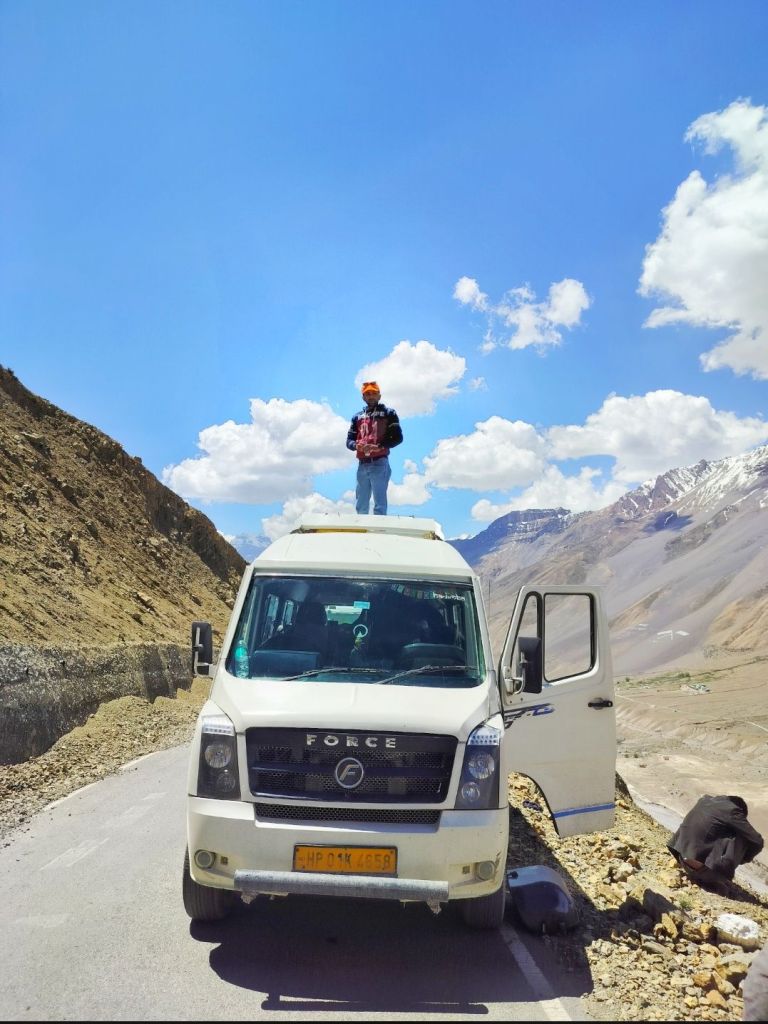
By the time the engine got nursed back to life, our clothes were coated in white mountain dust, our lips were chapped from the dry wind, and our camera roll was full of absolute gold. The breakdown didn’t ruin the day; it became the highlight of it.
It reminded us that the “magical” side of travel isn’t about surviving the rough elements—it’s about having a crew that can turn a disaster into an opportunity.
Dust-covered and smiling wide, we jumped back inside and finally rolled into the high valley of Langza.
Langza
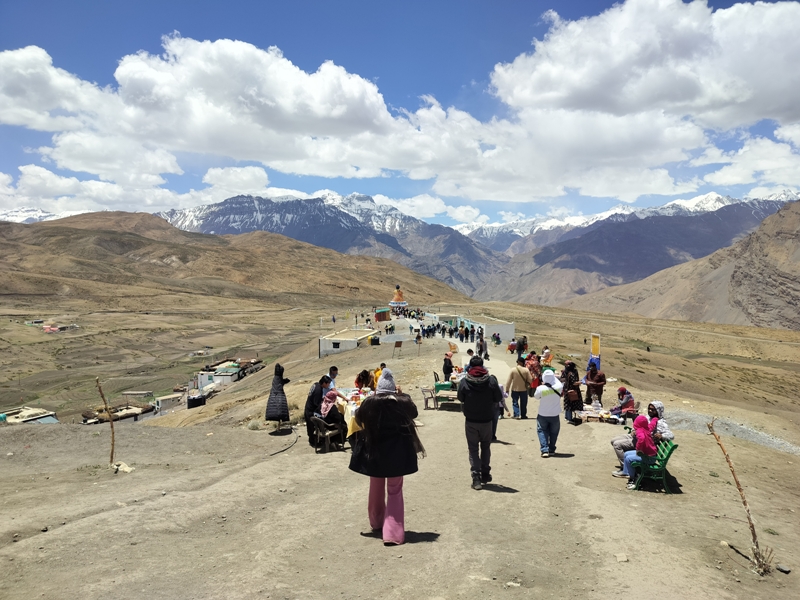
As we got down from the Tempo Traveller, we got our first glimpse of the giant Buddha statue that dominated the skyline at this settlement. It was a good 200 meters from where the tempo was parked and we had to walk the distance. Low oxygen level made that 200 meters into a 2 kilometer stretch as we huffed and puffed our way up to it.
The giant, brightly colored Buddha sat in absolute meditation, watching over a sprawling, barren clay valley that looked like the surface of Mars. Standing at his feet with the wind howling past our ears, the sheer contrast between the golden deity, the deep blue sky, and the snow-dusted peaks behind him was completely overwhelming. It felt less like a tourist spot and more like a sacred outpost at the edge of time.
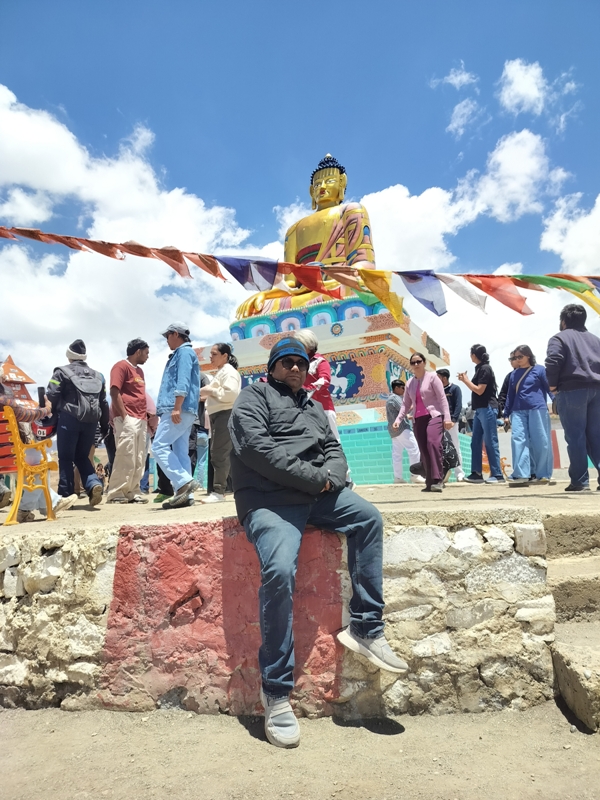
Walking back to the traveller was even more challenging, as the route was now completely uphill. It now rose like a mountain wall, demanding a heavy price from our unacclimatized bodies. I dragged my leaden legs forward step by step, stopping every few meters for air and to calm my racing heart down.
On our way back we stopped at a cafe for a cut of tea, and there we saw something that if I had not seen with my own eyes I would not have believed. There were locally sourced prehistoric marine fossils. Yes! Marine Fossils.
The mystery of fossils
While the giant golden Buddha dominates the skyline of Langza, the real magic of this village was buried right beneath our shoes. Langza is globally renowned as the “Fossil Village” of the Himalayas. If one has the time and physical ability to walk into the dry, clay stream beds or look closely at the dark sedimentary rocks scattered around the village, one may find Chauduas—the local name for perfectly preserved, spiral-shaped marine fossils.
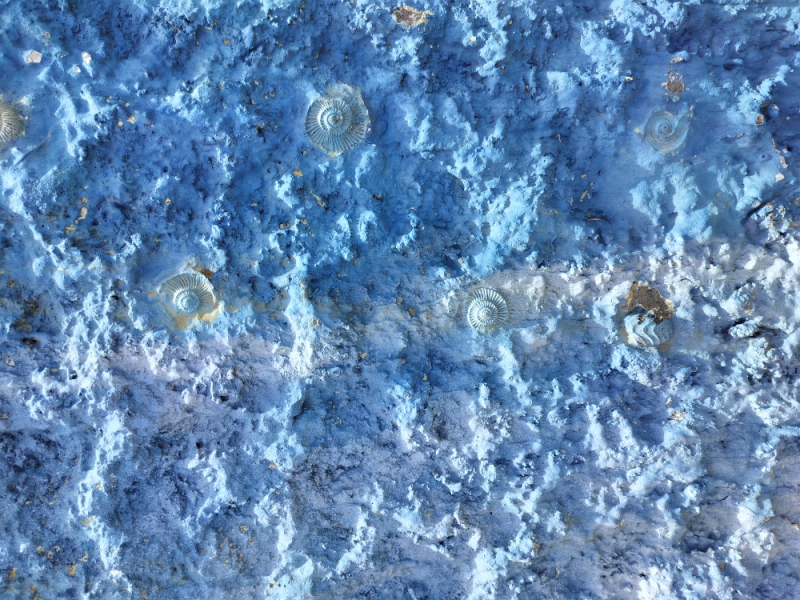
It is a complete mind-bending paradox. We were standing at 14,500 feet above sea level, surrounded by some of the tallest, most barren, and frozen mountain peaks on earth, yet there are remains of prehistoric sea creatures.
Roughly 140 million years ago, this entire region sat submerged under the ancient Tethys Ocean. Marine creatures died and sank, burying their shells deep within layers of ocean sediment. Millions of years later, a violent collision between the Indian and Eurasian tectonic plates folded, compressed, and thrust that ancient ocean floor straight into the sky—giving birth to the Himalayas.
Today, millions of years of wind, snow, and glacier erosion have slowly peeled back the mountain layers, exposing these ancient deep-sea fossils to the open air.
Traveling has a funny way of completely shattering our small-world perspectives, we scaled one of the highest peaks on Earth only to find the remnants of an ocean floor sitting on top of it. Amazing!
Komic: The Highest Motorable Village on Earth (15,027 Feet)
From Langza, the dirt tracks coiled even higher. We pushed upward until we reached 15,027 feet. Welcome to Komic, the highest village in the world connected by a motorable road.
At 15,000 feet, reality gets rewritten. The air is so thin it feels entirely hollow. Walking just five steps on a slight incline leaves you gasping, your chest heaving violently as your lungs scramble for oxygen that isn’t there.
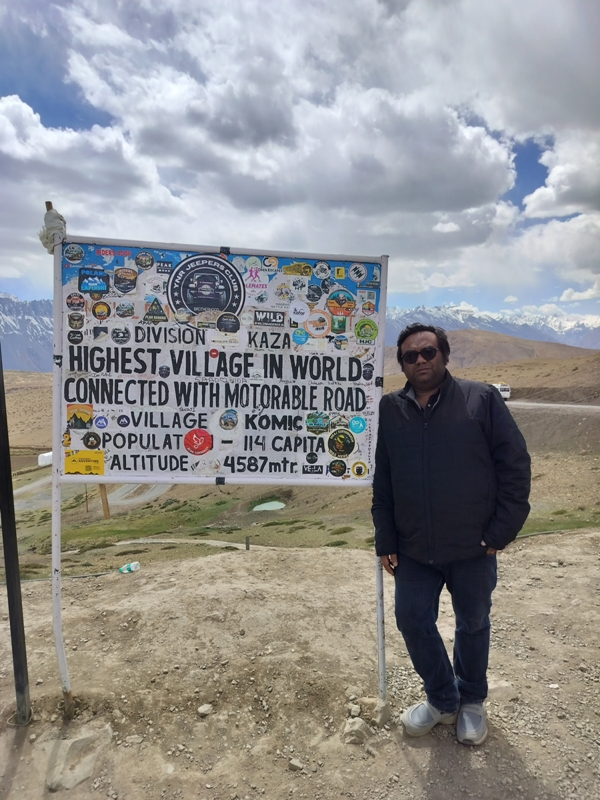
Many of us suffered from sudden headaches, dizziness and vomiting. The low oxygen levels, the tourtorous road, the chilly air, all extracted heavy toll on our bodies. Though we had stayed at Kaza the night before, which helped in the aclamatization, but our bodies were simply not built to withstand so much in such a short span of time.
This is the exact moment where the “Raw & Real” side of a Spiti road trip cuts through the romantic travel imagery. There are no hospitals up here, the only real medicine is to get to a lower altitude. Falling sick here is an absolute nightmare. We were advised to drink plenty of water, eat a respectable amount of food, and keep a close eye on our body’s inner voice. Komic has a population of about 114 people, which is a beautiful reminder of how resilient the local people truly are.
The highest restaurant in the world
Yes, there is a restaurant at Komic. We were told about it earlier by our trip captain. I was expecting a shack, on the similar lines of the Chandra Dhaba, but little did I know that I was in for a pleasant shock. A grueling 20-30 steps later, we were greeted by a solid, brightly painted building standing proudly against the barren peaks: The iconic Himalayan Nectar Kitchen.
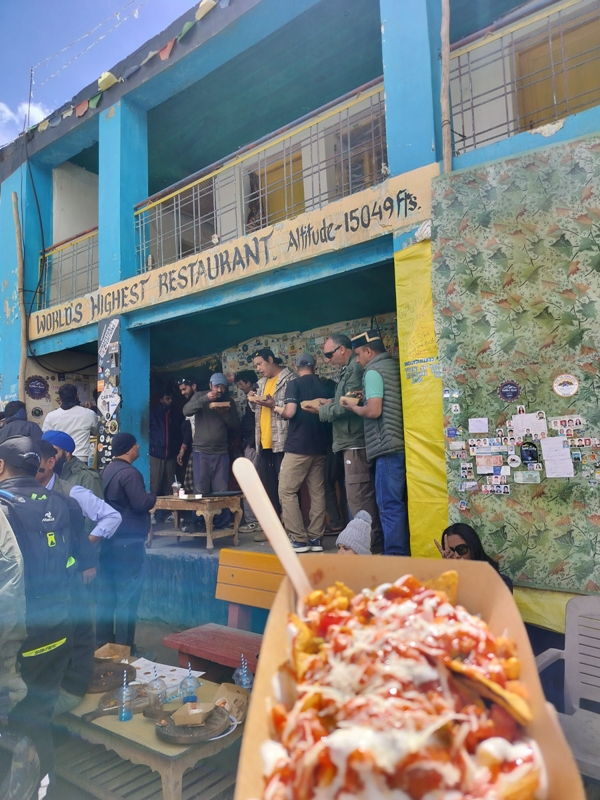
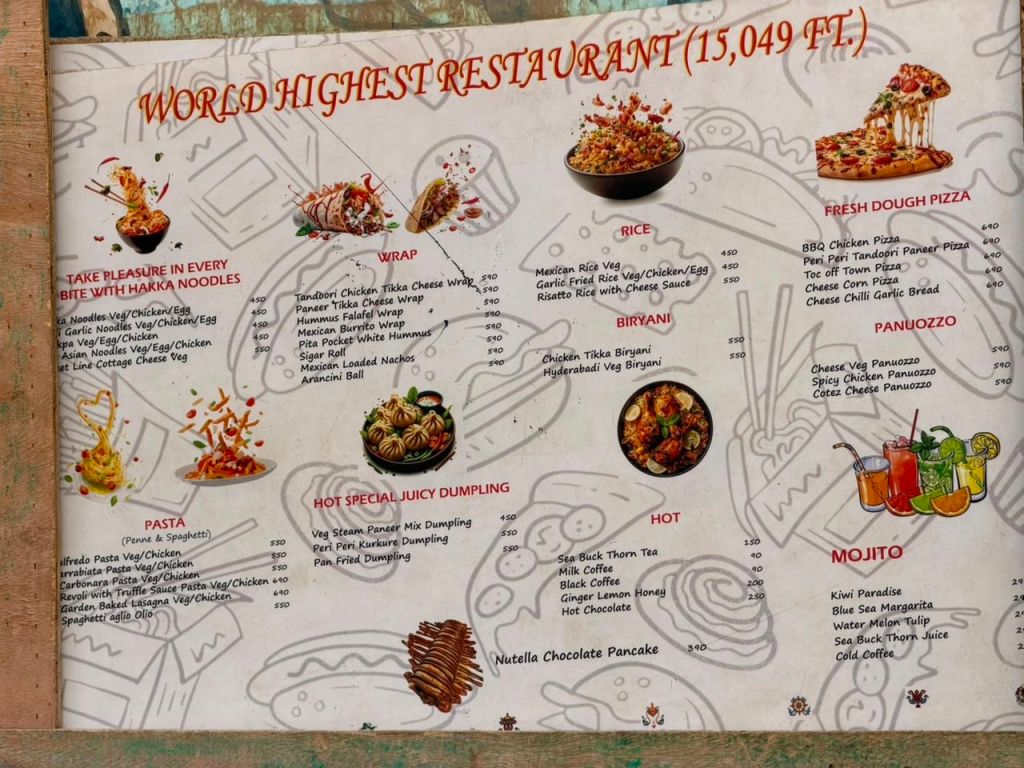
We expected basic packets of instant noodles, maybe momo and tea, but the menu card told a completely different story. They served anything but basic food. We huddled around the outdoor tables, baking in the sun and treated ourselves to an absolute mountain feast.
Eating a slice of pizza, crunching down cheesy nachos, sipping tea while staring at the vast Himalayan panorama felt entirely surreal. Water boils incredibly slowly at this extreme altitude, meaning the food took its time to prepare—but every single bite felt like an earned luxury.
The curious case of the last row
While we drove down from Komic, our driver took a detour from the road, claiming it to be a short cut. There was no road, that vehicle was literally driving over an open field of gravel and dirt. One of our trip members rightfully looked at our driver and quoted, “rasta hai ya rasta bana rahe ho?“, meaning “is there even a road or are you making one?”

As already established I had a throne cemented on the last row of the Tempo Traveller, which ensured I felt all the small and large bumps with utmost sincerity. While bumping down, I felt the urge to wear my face mask to protect myself from the flying dust. Alas!! It was missing.
I looked around the hoarded wafers, rolling empty water bottles, but it was no where to be found. The day before we lost the lonely alloo paratha, today I had lost my mask. At this point I was convinced, there existed a black hole around that last row that transported stuff beyond space and time.
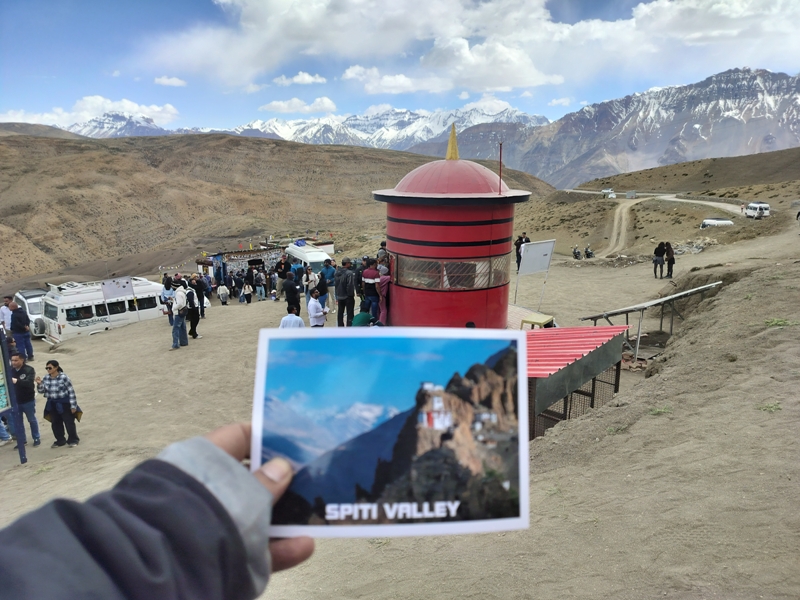
There was something else as well that seemed out of space and time, a post office posting physical postcards in 2026. It is exactly where we stopped next. The highest functioning post office in the world.
Hikkim: Snail Mail from the Clouds

Hikkim is pure nostalgia wrapped in extreme altitude. The post office itself is shaped like a huge letter box, bright red in color. We lined up around small shops trying to buy that perfect physical postcard. Some of us had bought those the day before, but most of them lined up for more. Our trip captains were kind enough to get physical stamps for us, so that we could beat the queue.
Writing notes to our family by hand while shivering in the cold, knowing these postcards would travel by local buses over landslide-prone mountain passes just to reach civilization, felt incredibly grounded. Dropping those postcards into the post box felt like leaving a small breadcrumb of our existence at the roof of the world.
Kee (Key) Monastery
We ended our high-altitude gauntlet by dropping back down slightly and heading toward Key (Kee) Monastery. If you have ever seen a picture of Spiti Valley, you have seen Key. It is a majestic, whitewashed, 1,000-year-old Buddhist monastery that cascades down a monolithic cone-shaped hill like a giant fortress of stone.
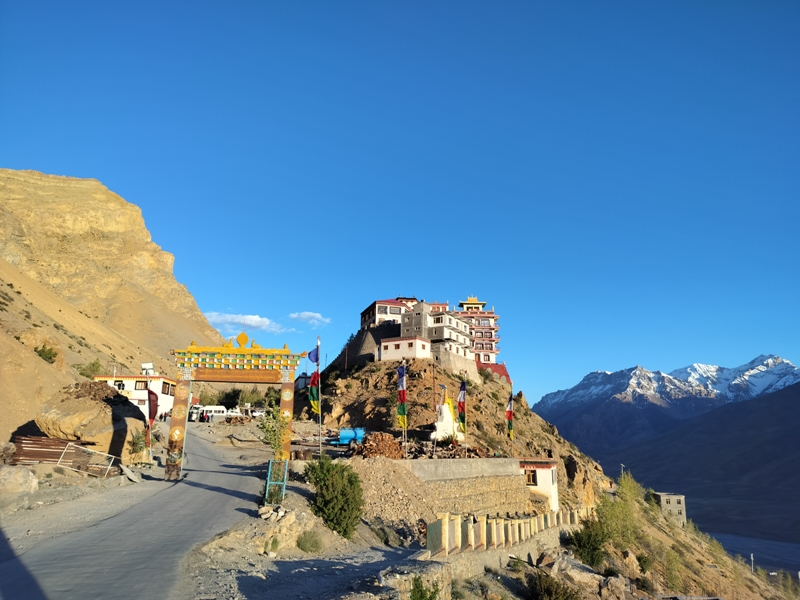
While walking towards the monastery we realised it needed a long climb, a feat that seemed entirely undoable for me. I therefore paid my respect from the entry point of the monastery and retreated in a nearby cafe. For those who went, described the monastery as a place of devine. Walking through the, narrow corridors inside the monastery felt like stepping into a living museum. The air smelt of old copper, incense sticks and burning lamps. Topped with a statue of Buddha that exuded calm among the chaotic windy atmosphere outside.
For lazy blokes like me and a few of my friends, chatting and gulping down tea soothed our inner chaos the best. We spent an eternity in that cafe, enjoying the beautiful sunset through the glass window, sharing stories and friendly banter.
Walking back to the Tempo Traveller we were greeted by the sights of the golden hour light painting the vast Spiti River valley below. It seemed almost unreal. The uncountable number of prayer flags danced vigorously as the deep burgundy robes of young monks fluttered in the freezing wind.

After a day of fighting for breath, Key gave us total peace. For those who went to the monastery as well as for those who spent the afternoon chatting endless stories.
Winding Down: Return to Kaza and the identity of Zukesh
By the time we walked back through the doors of our hotel, the adrenaline of the day had completely evaporated, leaving our bodies entirely drained. The bone-chilling desert wind was rattling the windowpanes outside, but inside, the kitchen was alive with the crackle of something getting fried and the rich, comforting aromas of a slow-cooked Himalayan dinner.
The spread was simple, rice, lentils, chapati, semolina pudding and a mystery curry that initially seemed like pumpkin, but tasted like something else entirely. Intrigued I went and asked the kitchen staff as to what that vegetable was, to which they casually responded “zukesh”, a local vegetable.
I had accepted Zukesh, until one of my friends had a culinary tastebud, reveal that it was in fact Zukini. The existence of Zukini curry is not something I had imagined in my wildest dreams. Even after 2 days of jaw dropping surprises, Spiti was still throwing curve balls.
Concluding thoughts
Eating that dinner felt like a collective exhale for the entire crew. The hot rice and lentils thawed us from the inside out, Zukesh curry felt like a gift from the cold desert soil, and the rich sweetness of the pudding was the ultimate reward for surviving a day that tested both our vehicle and our lungs.
The night still felt the same, cold, silent and lonely, but my body was now more accustomed. I could still hear my pulsating heartbeat, but I could feel that it wasn’t as violent as it was the night before. Tucked under layers of heavy quilts, waiting for it to warm up, my chapped lips were smiling.
I had achieved too much in a single day. We had conquered the highest roads, mailed letters from the clouds, eaten at the ceiling of the world, and looked out for each other when the mountains pushed back. I and my tribe were ready for the next challenge, the ultimate Survival test, the ride to the infamous Chandrataal and surviving the night in a cold canvas tent.
Checkout the Day 1. The road to Kaza
Go to PostDay 3: Off to Chandrataal, the moon lake
Read
