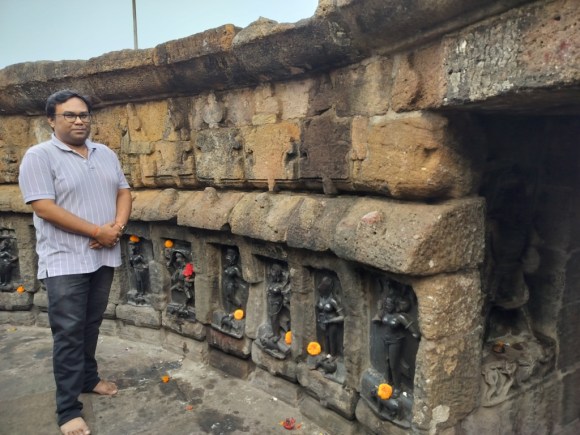
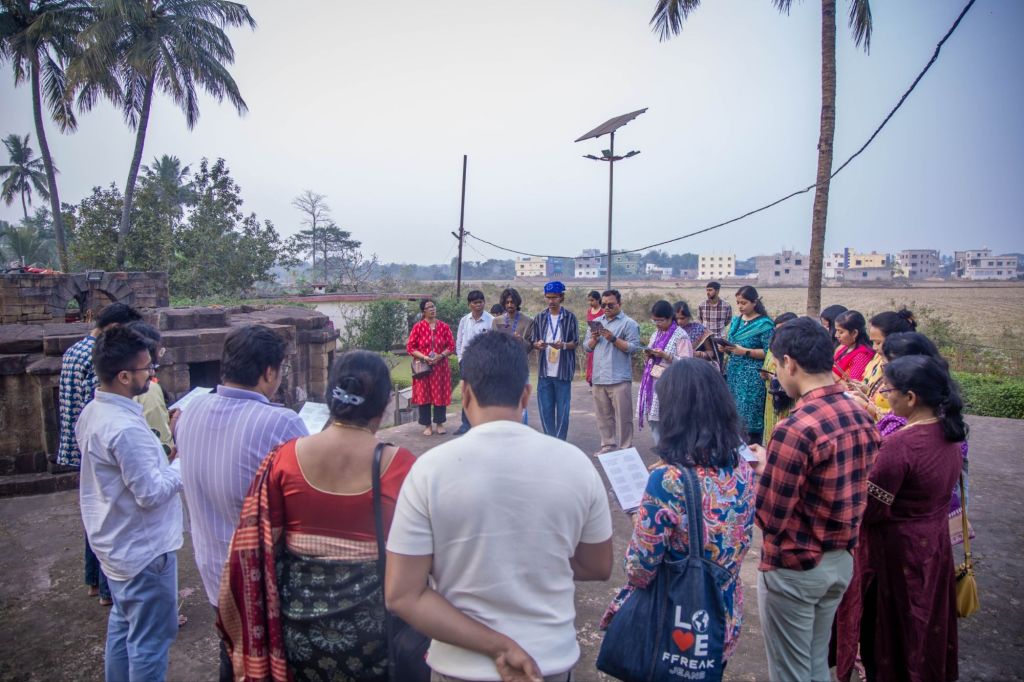
In the flickering amber glow of the setting sun, we stood shoulder-to-shoulder, forming an almost perfect circle. The air is thick with the scent of crushed hibiscus, burning camphor, and parched earth. Our voices, a resonant blend of deep baritones and soaring sopranos, weave together to chant the “Chausath Yogini Devi Strotam”. Each Sanskrit syllable delivered with sharp, percussive precision, raising in the air rippling through in all the direction.
Wrapping up our tour of the Chusathi Yogini temple, I couldn’t help but feel a sense of quiet awe. This ancient shrine, dedicated to Devi Shakti and her sixty-four mystical forms, had been on my bucket list for ages. Honestly, it felt like every time I tried to plan a visit, life threw a curveball my way.
But as they say, things happen when they’re meant to. On a crisp, golden winter afternoon in 2026, the stars finally aligned. I joined the ‘Mystical Odyssey’ group with Ekamra Walks, and before I knew it, I was finally stepping into the temple complex. It was every bit as magical as I’d imagined.
- Ekamra Walks – Mystical Odessey
- How to Reach:
- Haripur
- Mahamaya Pushkarini Pond
- The Complex
- The Chousathi Yogini Temple:
- The Mythology
- The Yoginis of Haripur
- Desecration and Resurrection
- Conclusion
Ekamra Walks – Mystical Odessey
Ekamra Walks is a government-led heritage initiative that pops up every winter here in Bhubaneswar. They put together these amazing curated tours that dive deep into the city’s hidden history and local culture; perfect if you’re looking for more than just a surface-level visit. What’s cool is how they group the tours by theme.
You pick a trail based on what you’re into, and for this trip, I chose ‘The Mystical Odyssey.’ It’s a dedicated Shakta trail that uncovers the ancient, powerful traditions of worshipping the Divine Feminine.
How to Reach:
Getting to Bhubaneswar is a breeze since the Railway Station connects to all the major Indian cities. If you’re flying in, the Biju Patnaik International Airport handles both domestic and international flights.
To reach the quiet little hamlet of Haripur, you can easily hop in a taxi or an auto-rickshaw from anywhere in town. Plus, since the city has a solid fleet of Uber and Ola, getting around is honestly the least of your worries!
Haripur
Haripur stands right outside the city limits of Bhubaneswar and a modest drive of 49 mins from the center of Bhubaneswar took us to the narrow lanes of the village. The surrounding paddy fields glowed in brilliant, pale gold under the soft December light, while the long shadows of palm trees stretch across the dusty village paths. The air was crisp and cool, carrying the faint, earthy scent of dry hay and woodsmoke from the village hearths.
Since the temple is the most famous location of the village, there were clear signages through out to guide travellers to the correct location. Our vehicle eventually rolled into the parking lot, which sat right in front of the main gate of the complex. Just across from us stood the enigmatic Mahamaya Pushkarini pond, its still waters giving off some seriously amazing, mystical vibes in the afternoon light.
Mahamaya Pushkarini Pond
The pond was more than just a beautiful body of water. According to local lore, the pond was used by the Yoginis themselves, who would descend to these waters to bathe and perform their mystical rites before retreating back into the temple’s sanctuary.
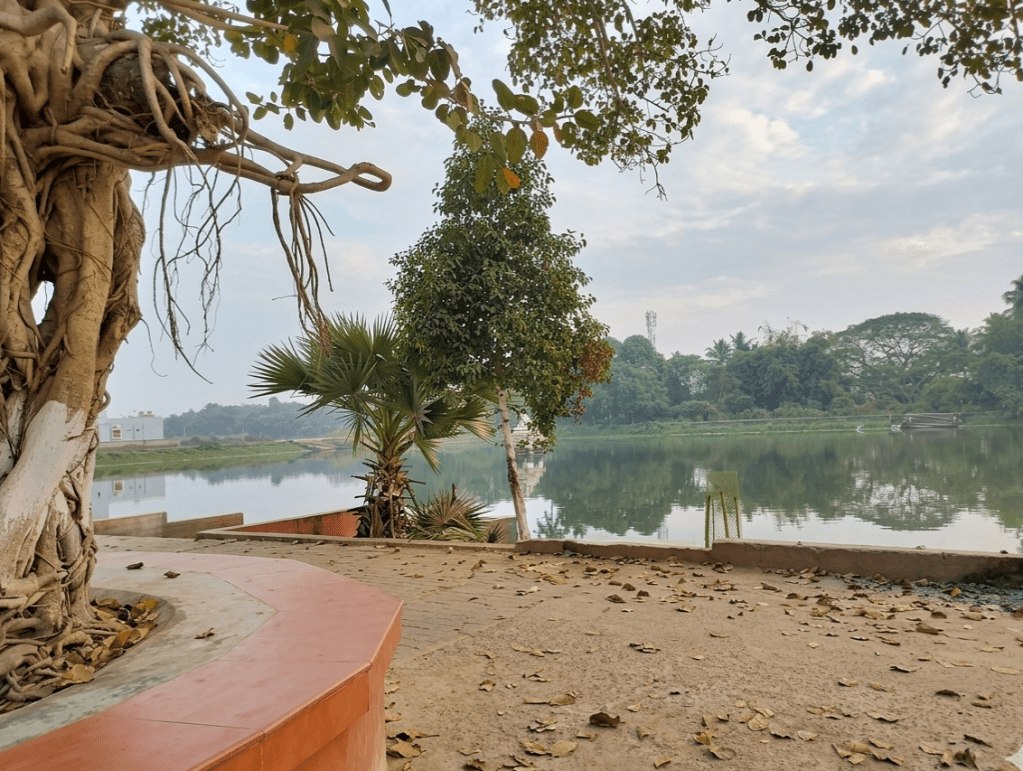
The pond also served a more practical purpose. It was designed to act as a mirror, reflecting the light of lamps and the moon to illuminate the temple during secret nighttime rituals. Even today, a dip in its waters is believed to be a spiritual cleansing—a symbolic journey through the “primordial waters of creation” to prepare your soul before you step into the presence of the Divine.
The Complex
Unlike many temples with massive boundary walls, this complex felt integrated with the village. A well kept lawn peppered with flowering plants provided a peaceful buffer between the mystical shrine and the quiet life of Haripur.
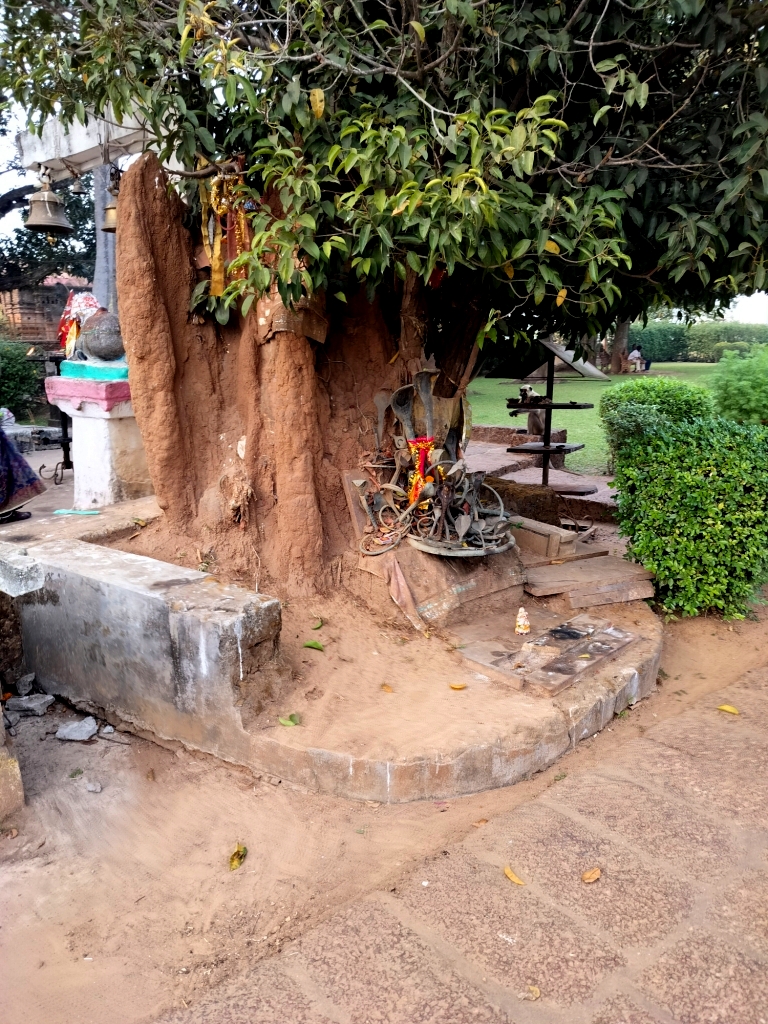
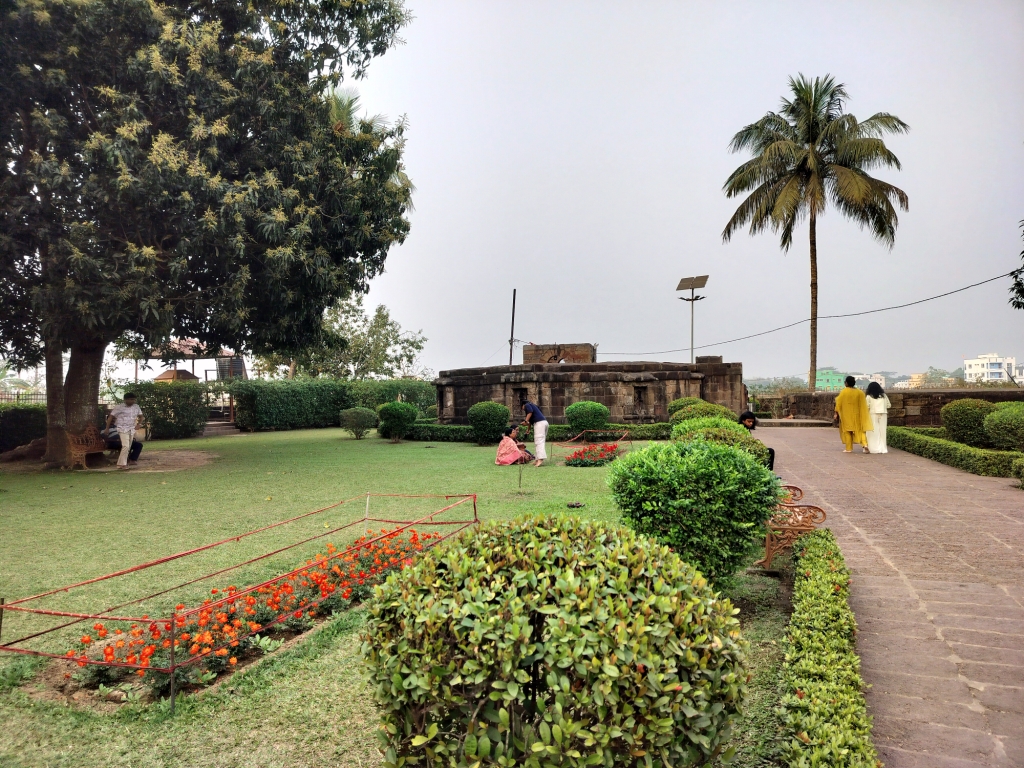
A few ancient, sprawling trees stood watch over the complex, their roots cradling a lineup of bronze Nagas (serpent deities). Since Nagas are so closely tied to Lord Shiva, seeing them guarded by these old trees was a beautiful reminder of the harmony here, a perfect visual of how Shiva and Shakti are essentially two halves of the same divine whole.
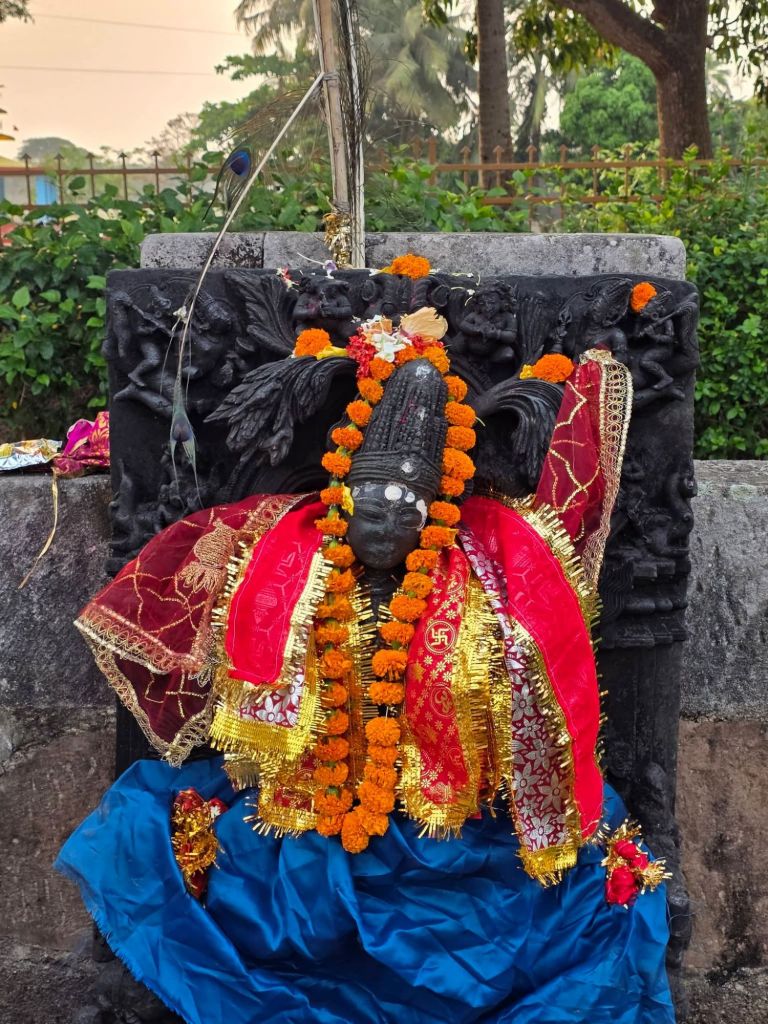
Scattered around the landscaped greenery of the complex were various stone relics and fragments of older structures. These “silent witnesses” gave the whole place an archaeological depth, hinting at the centuries of worship that had taken place on these grounds.
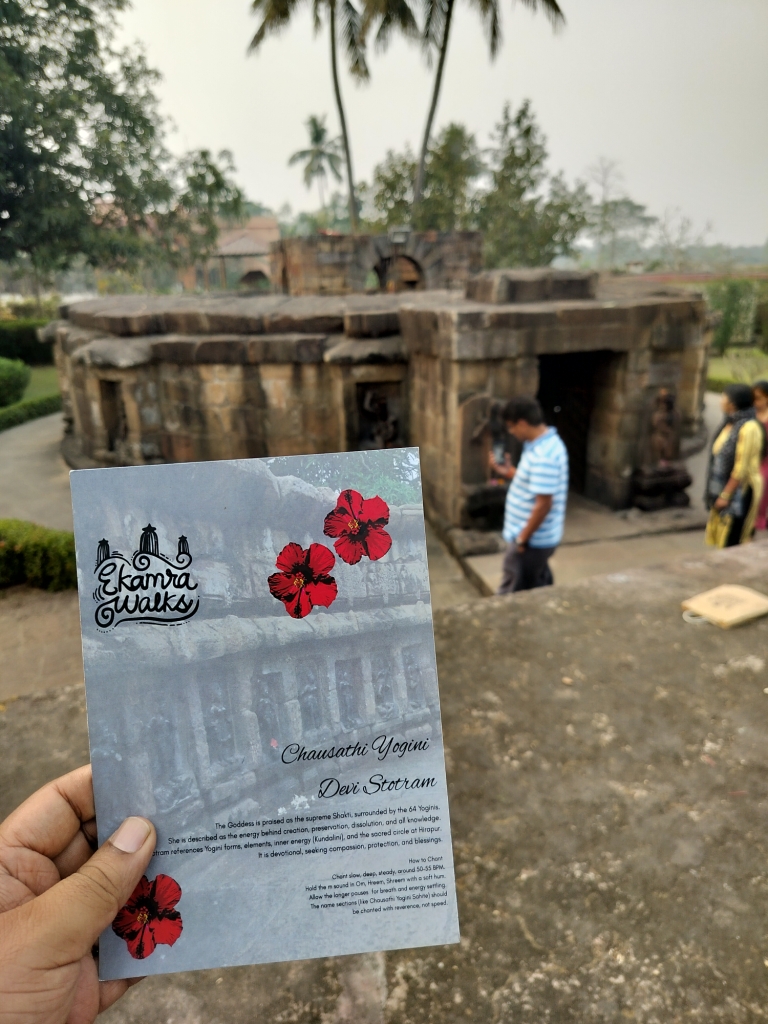
A tiled pathway cut through the lawn, and at the end of this pathway stood the temple. The temple is surprisingly modest, almost hiding its magic from the casual observer. Unlike the soaring, jagged peaks of the famous Lingaraj or Mukteswar temples that dominate the Bhubaneswar skyline, the Chausath Yogini temple appeared as a low, unassuming circular drum rising gently from the verdant plains of Haripur.
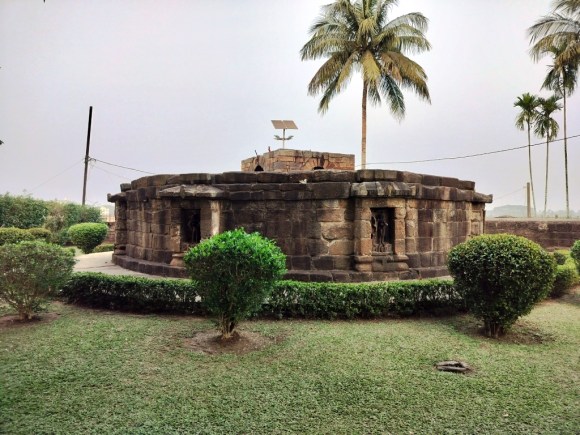
The Chousathi Yogini Temple:
Wrapped in the soft haze of a winter afternoon, the structure looked more like a small, ancient fortress than a conventional shrine. Its weather-worn sandstone walls blended seamlessly with the earthy tones of the surrounding landscape. Without a towering shikhara (spire) to announce its presence, it felt like a well-kept secret, tucked away behind the trees and houses of the village.
The Temple built by Queen Hiradevi in the 9th century, had a circular sandstone wall rising only about 8 feet. The temple is hypaethral, meaning it had no roof, which allowed practitioners to worship the Bhumandala—the environment consisting of the five essential elements: earth, water, fire, air, and ether.
The entrance to the shrine was narrow and flanking it were two fierce, larger-than-life figures of Dwarpala (gatekeepers). They stood as sentinels, symbolically protecting the sacred feminine energy within from the uninitiated.
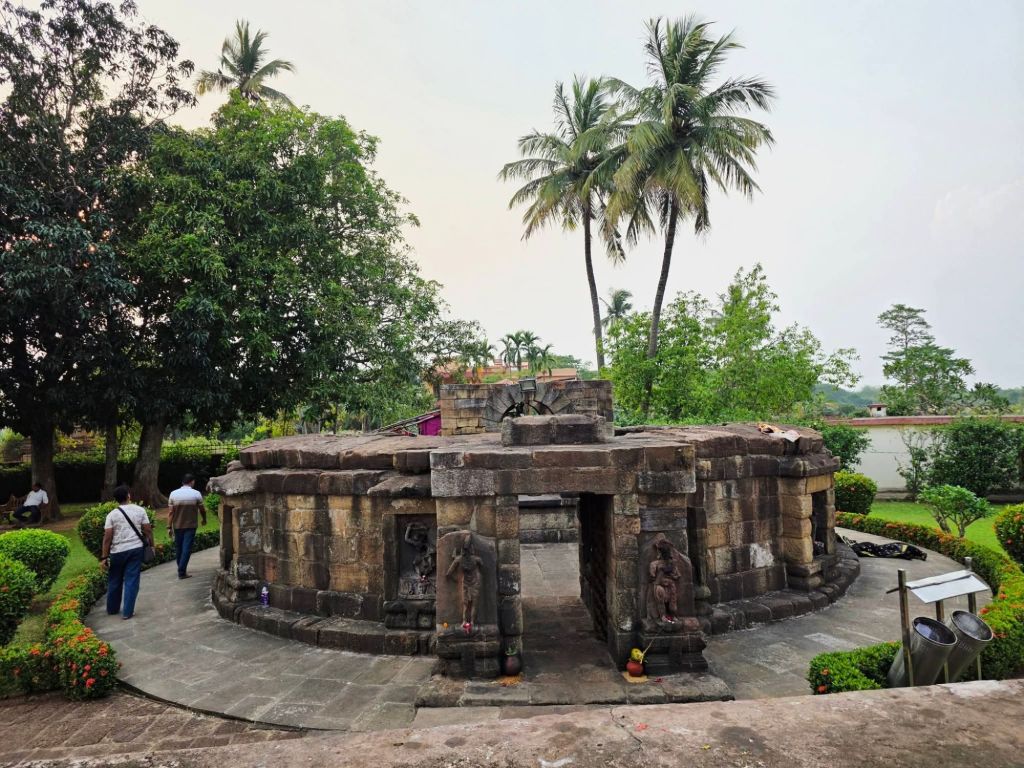
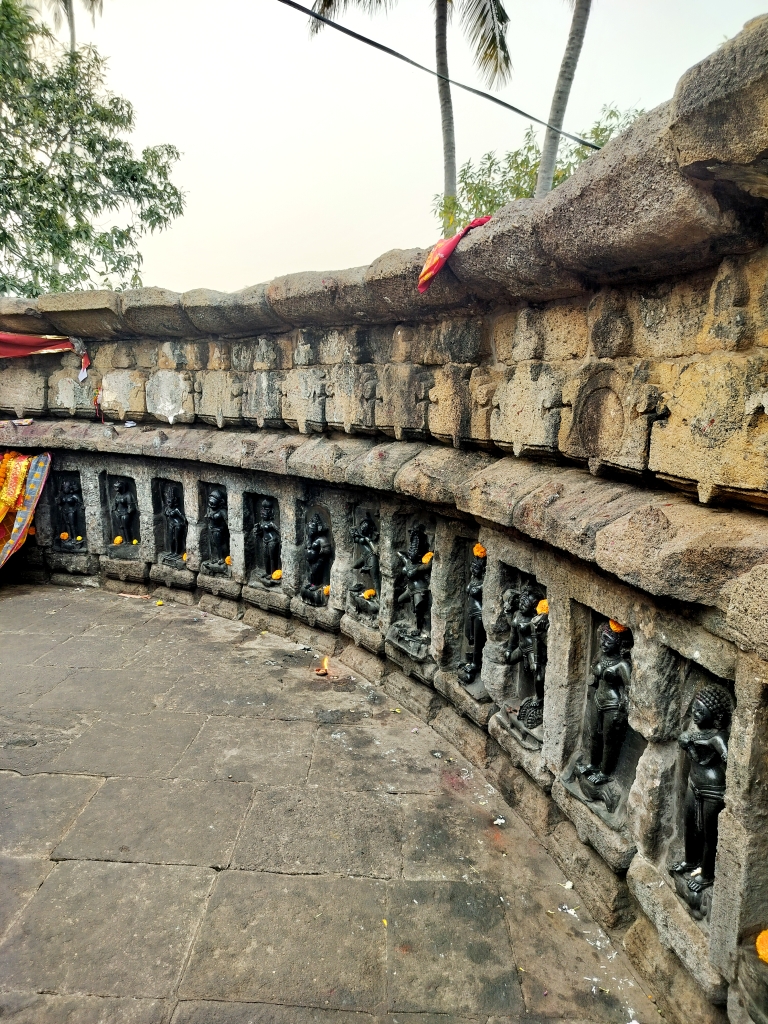
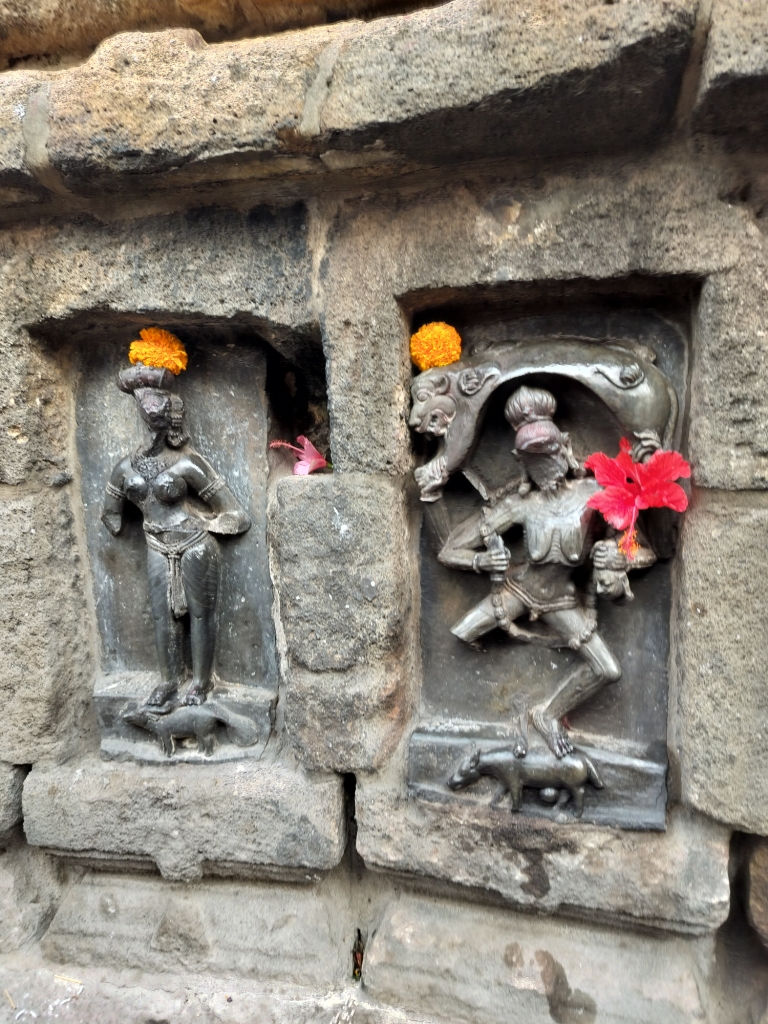
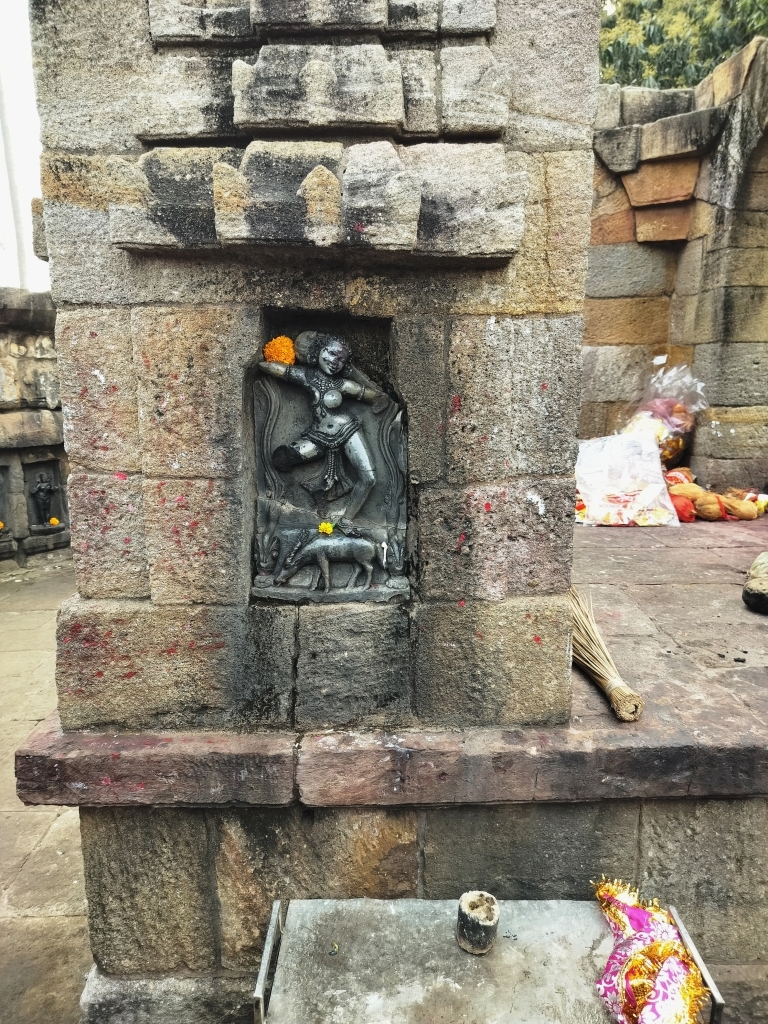
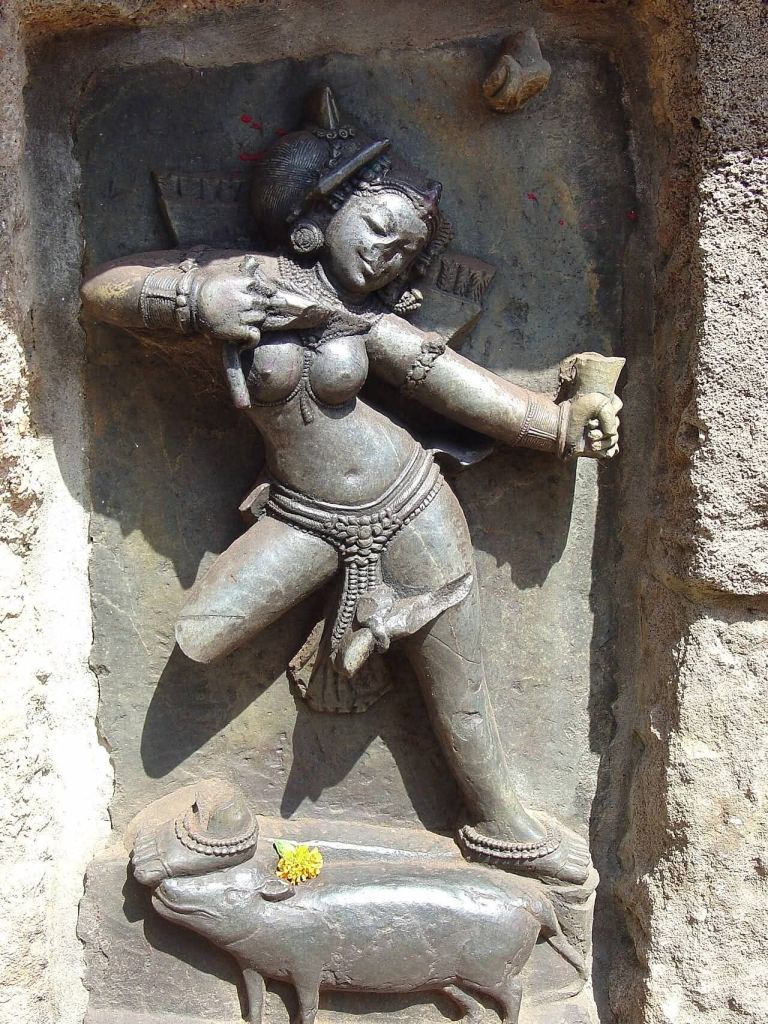
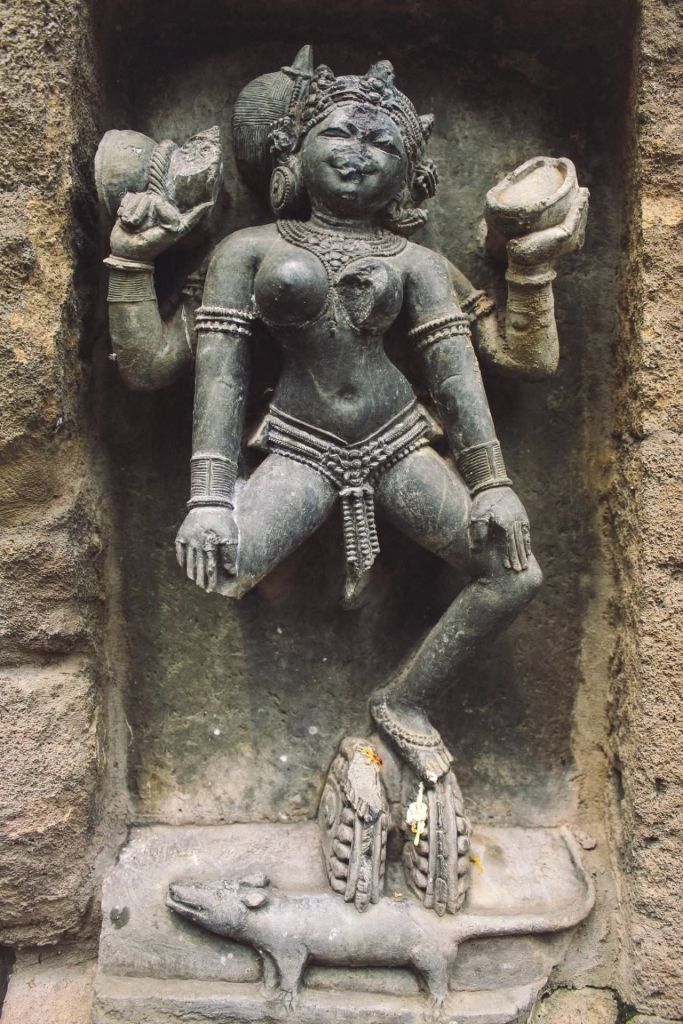
Inside, the atmosphere was electric. The inner face of the circular wall featured 60 small niches, each housing a unique, two-foot-tall statue of a Yogini carved from fine-grained black chlorite. Each figure was distinct, with different hairstyles, animal mounts (vahanas), and expressions; some serene and smiling, others fierce and powerful.
At the very heart of the courtyard stood the Chandi Mandap, a small square pavilion where the remaining four Yoginis were stationed alongside figures of Bhairava.
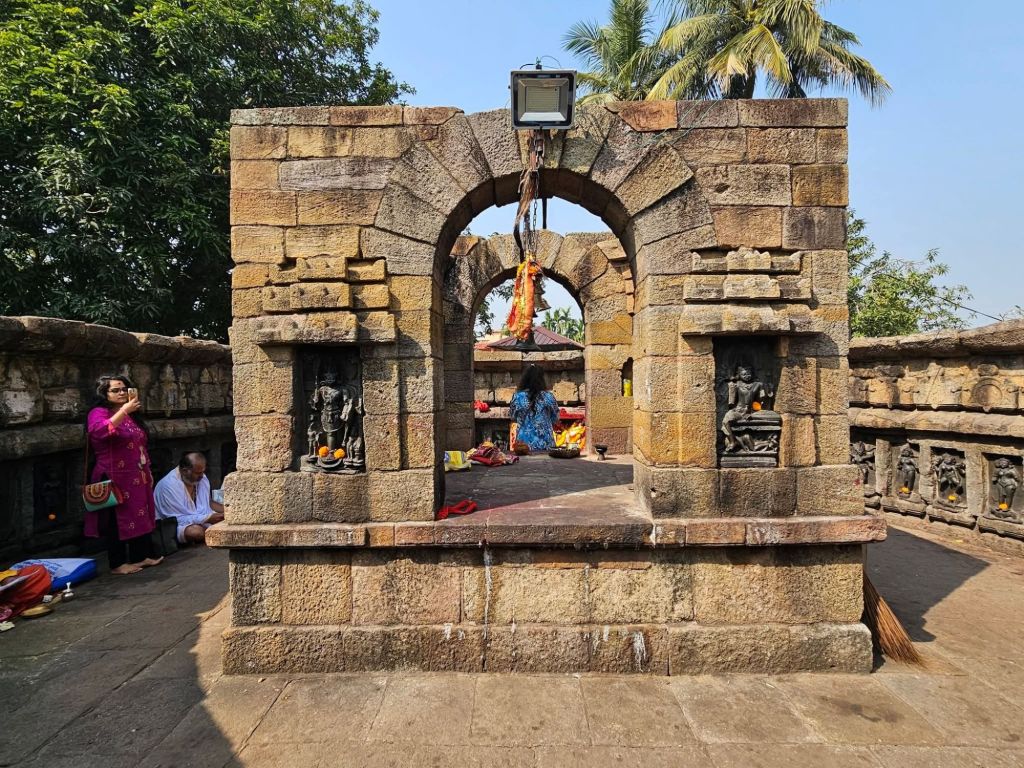
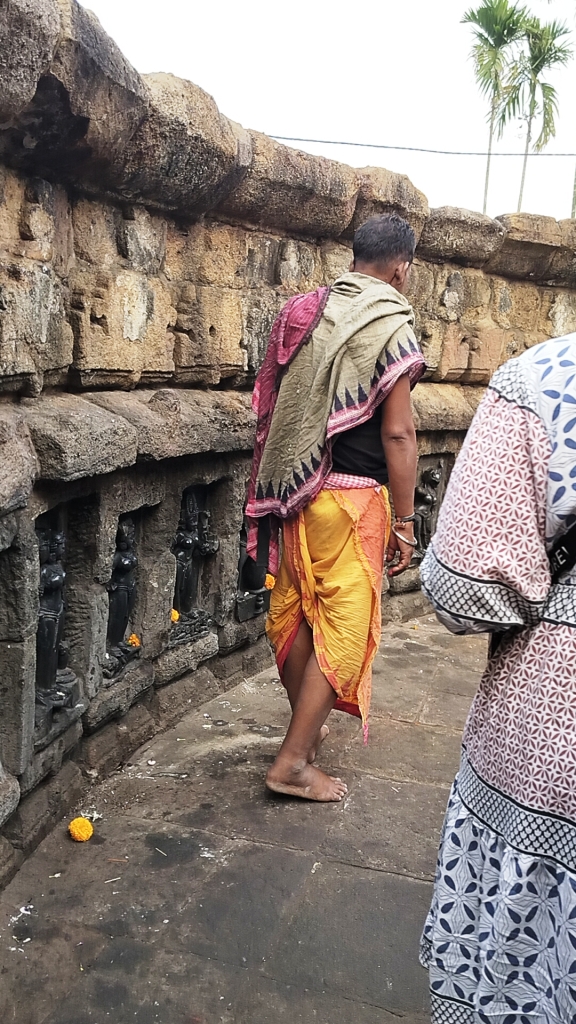
The open sky above symbolized an unbroken connection between the worshippers and the divine, intended to facilitate the absorption of cosmic energy. Walking through that open-air space, with the sky above and 64 pairs of ancient eyes watching from the walls, it felt like being at the center of a living, breathing mandala.
The Mythology
At its simplest, a Yogini is a female master practitioner of Yoga and Tantra. However, within the context of the Chausath Yogini temple, the term takes on a much more powerful, divine meaning. Here, the Yoginis aren’t just humans; they are seen as supernatural embodiments of Shakti—the primal feminine energy that governs the universe.
Legend tells of the demon Raktabija, who possessed a formidable boon: every drop of his blood that struck the earth instantly birthed a new, equally powerful clone. As he rampaged across the world, undefeated and multiplying with every wound, Devi Durga rose to challenge him. To thwart his magic, she manifested into 64 shadow forms, the Yoginis. As Durga struck the demon, these Yoginis caught and drank every drop of his blood before it could touch the ground, finally bringing an end to his reign of terror.
The Yoginis of Haripur
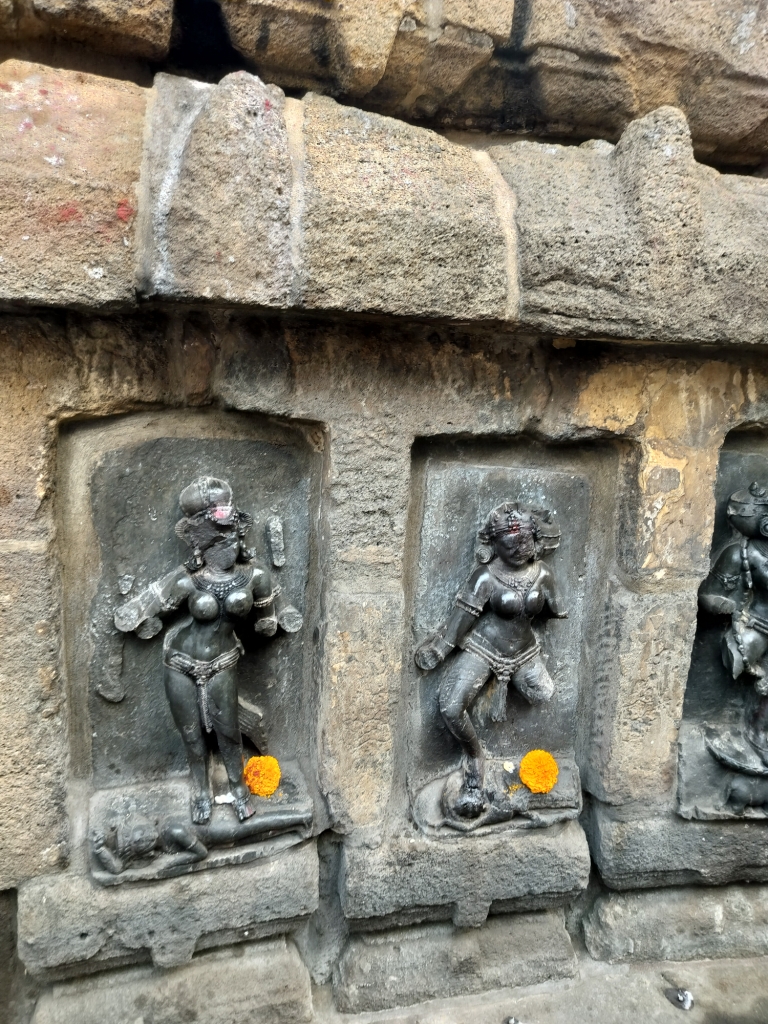
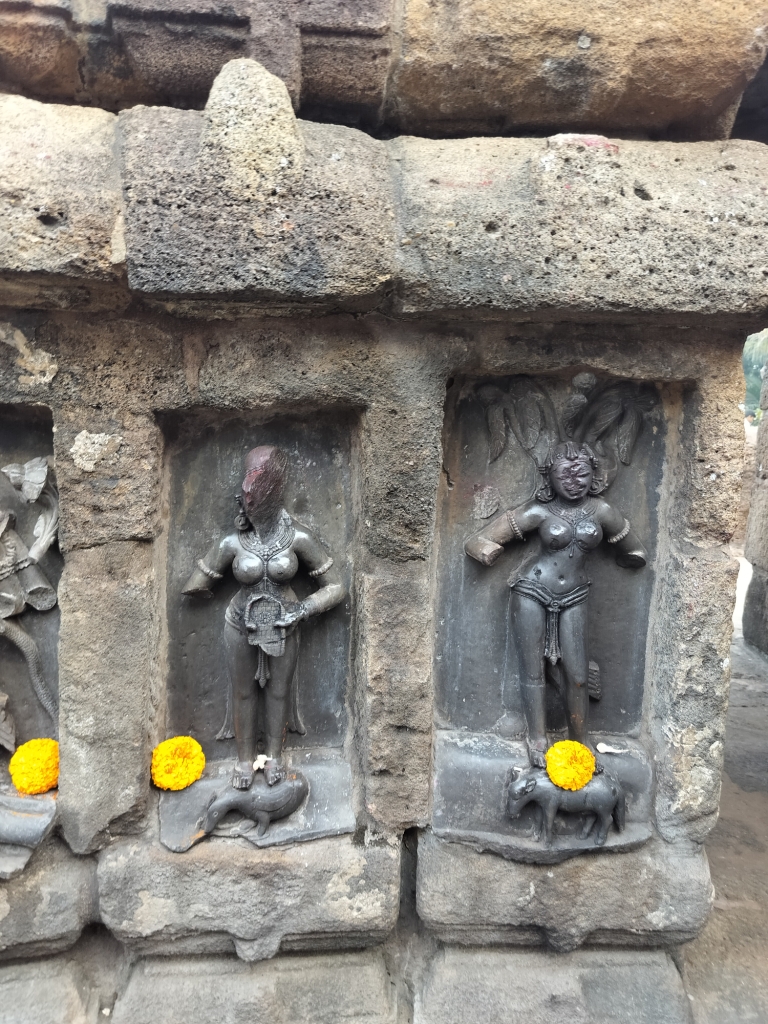
Linked to this legend, the 64 Hirapur Yoginis are masterpieces of spiritual art. While some possess serene female faces, others bear animal heads like boars or lions, showcasing their shapeshifting power, each standing atop a unique vahana (mount).
At the heart of the shrine stands Mahamaya, the ten-armed presiding queen of the temple. As the largest and most ornate figure, she represents the supreme cosmic illusion from which the other sixty-three emanated.
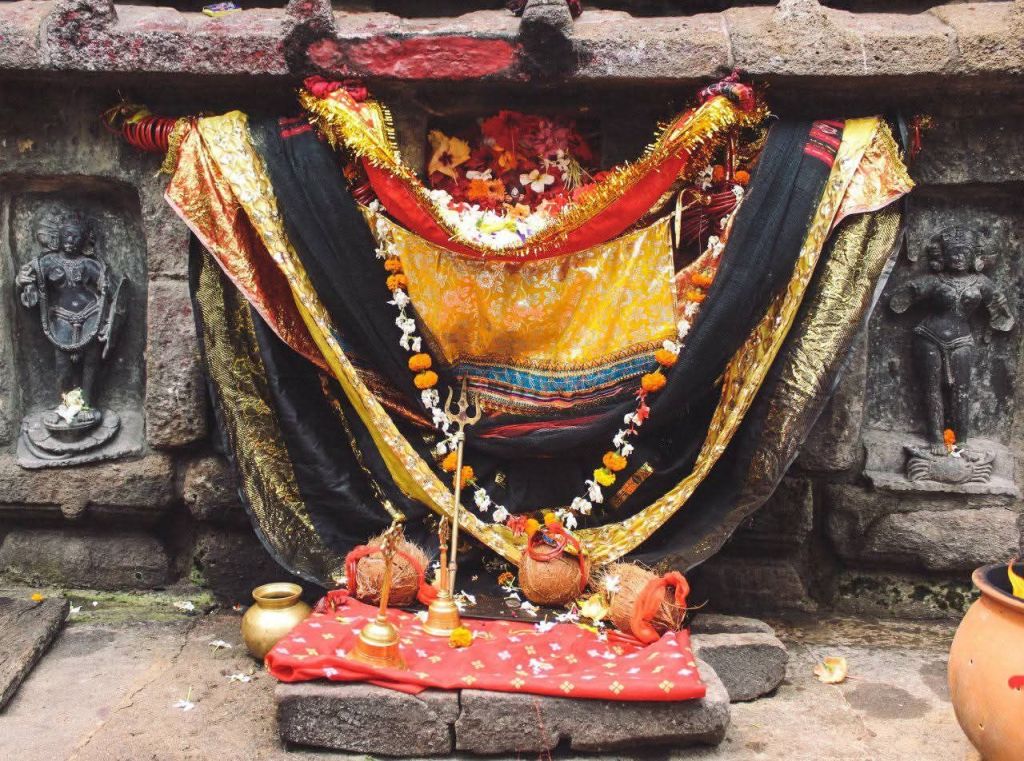
Surrounding her are rare and striking manifestations like Vinayaki, the elephant-headed feminine energy of Ganesha, and Varahi, the boar-headed goddess who symbolises the power to root out subconscious impurities. Together, these figures form a celestial hierarchy of protection and wisdom.
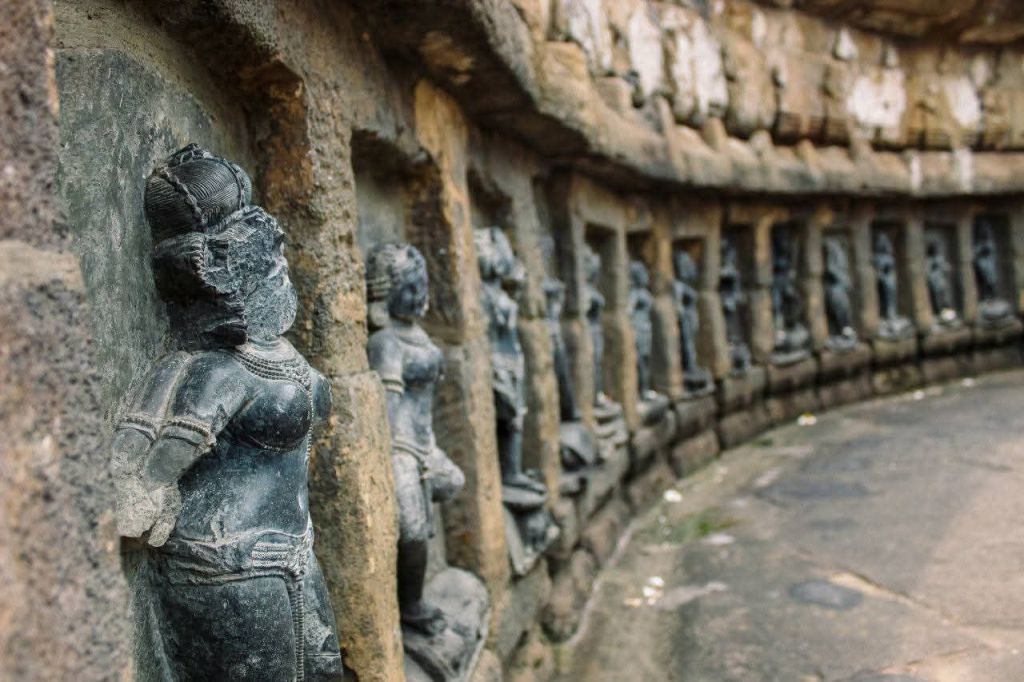
The circle also includes the fierce commander Chamunda, depicted with a skeletal frame to represent the raw destruction of the ego, alongside the serene river goddesses Ganga and Yamuna, who bring a sense of purification to the temple’s energy. Even the outer walls are guarded by nine Katyayanis, formidable warriors standing atop severed heads to protect the inner sanctum. This assembly of diverse forms—from the primal to the graceful—transforms the temple into a living manifestation of divine feminine power.
Desecration and Resurrection
For centuries, the Hirapur temple fell into profound silence and decay, its sacred circle battered by foreign invasions, time and the elements. During this period of desecration, many of the chlorite statues were chipped or broken, and the temple was eventually swallowed by the dense jungle.
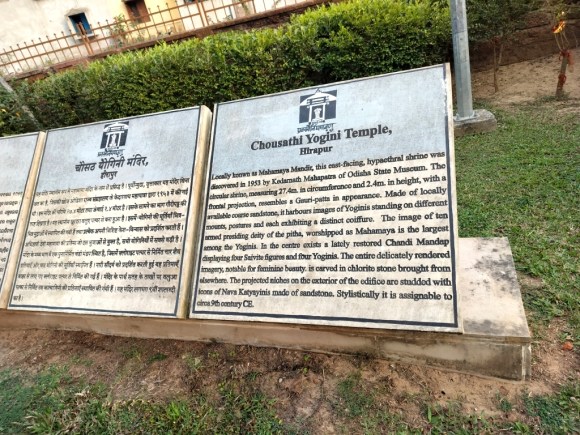
The temple’s rebirth began in 1953 under the care of the Archaeological Survey of India (ASI). Through a meticulous restoration process, they pieced together the shattered walls and fractured statues, successfully reviving a glimpse of the shrine’s ancient, formidable glory.
Today, the temple has been revived as a major cultural and spiritual landmark; the once-forgotten Yoginis are now celebrated as pinnacle examples of Odishan art. Each year, enthusiasts and pilgrims return to the circular shrine, bringing life back to a space that spent hundreds of years in forced obscurity.
Conclusion

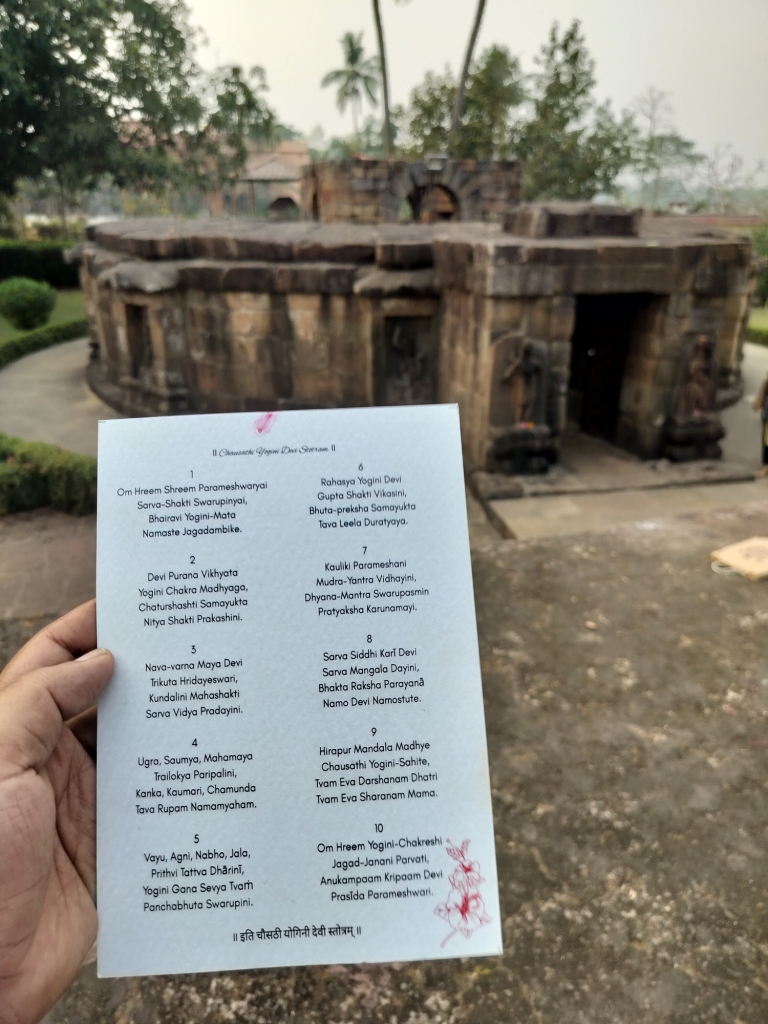
As our tour concluded, we gathered in a quiet moment of reverence to offer prayers and seek the Yoginis’ blessings. Our organisers distributed leaflets inscribed with ancient mantras, which we chanted together while standing in a rhythmic circle.
The collective sound echoed within the roofless walls, harmonising with the temple’s circular energy and bringing the spiritual journey to a powerful, meditative close. It’s not just a visit; it’s an initiation into the mysterious heritage of Odisha.