
Up until now, we had collectively felt that our exhausting, gasping hike to Chandrataal was the most physically demanding obstacle we would encounter on this entire trip. Little did we know that was all about to change.
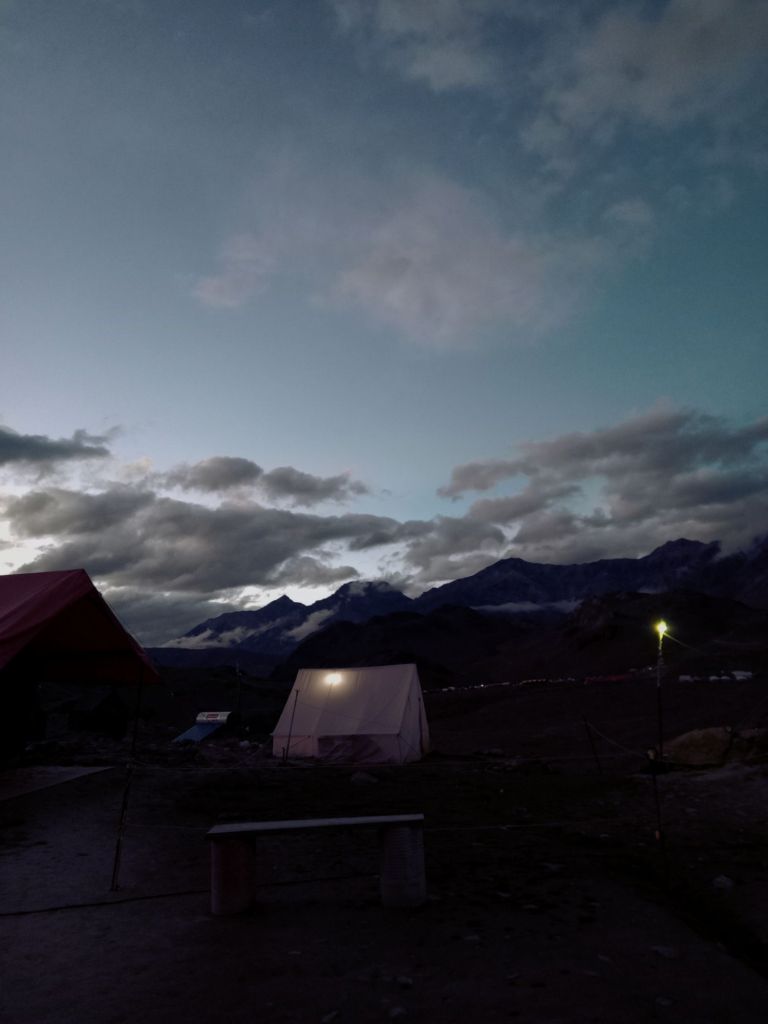
There was a distinct, almost terrifying shift that happened the exact moment the sun dipped below the sharp Himalayan peaks. It didn’t get dark slowly; it seemed as though a switch got flipped, and the entire valley was instantly plunged into an icy, shadow heavy silence.
Our tempo traveller reached the campsite, but stepping out felt like we were willingly subjecting our physical bodies to an unforgiving, high-altitude survival test. The temperature had plummeted well below zero; the crisp, mountain breeze of the afternoon had by now transformed into a biting, razor-sharp wind. I stood on the frozen earth, utterly paralyzed as the gale tore through my multiple layers of fleece, making my teeth chatter uncontrollably. Standing even a single minute in that exposed, wind-whipped expanse felt absolutely impossible.
We all made a collective, desperate dash toward our only visible refuge—the tents. Yet, even from the outside, I watched with a sudden knot of anxiety in my stomach as the flimsy canvas walls were violently rattled like helpless ragdolls by the wind.
Inside the tent, every surface I touched, from the cot to the fabric of my bag, radiated a deep, numbing chill that penetrated straight through my gloves. I jumped on to the bed, trying to dig myself inside multiple layers of blanket, only to realise that the bed itself was ice cold, instantly sucking away whatever little body heat and stamina I had left. Low oxygen, plunging sub-zero temperatures, and a furious wind battering the canvas walls like a malicious ghost—things truly could not have been worse. While my teeth ground together like mechanical crushers and my entire frame shivered violently like a wet dog caught in torrential rain, a cold panic began to set in as I realised that the long night had barely even begun, and my body was already starting to lose the battle against the elements.
The sub zero sanctuary – the dining tent
Just as the freezing desolation threatened to completely break my spirits, a sudden, chaotic clamour echoed from outside—soup was ready, and we were being summoned down to the main dining tent. I instinctively thought that a hot, steaming bowl would finally offer some desperate respite from this biting cold. Gathering whatever little psychological courage I had left inside me, I reluctantly unburied myself and dragged my almost dead carcass out into the freezing wind, stepping across the dimly lit camp.
It definitely turned out to be the best decision I had taken on that day as I found salvation in that communal dining tent. Pushing past the heavy, insulated fabric door flap felt like stepping into an entirely different world.
Inside, the air was thick, heavy, and beautifully alive with the crackle of my group and a local, closed furnace stove—a traditional bukhari—thumping heat out into the small space. We huddled as closely around it as safely possible, holding our frozen, stiff hands over the metal top, watching the feeling slowly return to our fingers.
The true magic, however, arrived in the form of a rich, garlic-infused hot vegetable soup. At 14,000 feet, wrapped in four layers of fleece while the wind howled outside like a wild animal, that hot broth wasn’t just food—it was medicine. It was the ultimate comfort before the long, silent freeze of the night took over.
There are no electrical grids here, only solar powered appliances and a few rumbling diesel powered generators. Conserving energy was an important aspect of camping at this place. Dinner was served soon after and we were told that all lights will go out at 10 PM in that camp, with only a few battery powered lights available inside the tents.
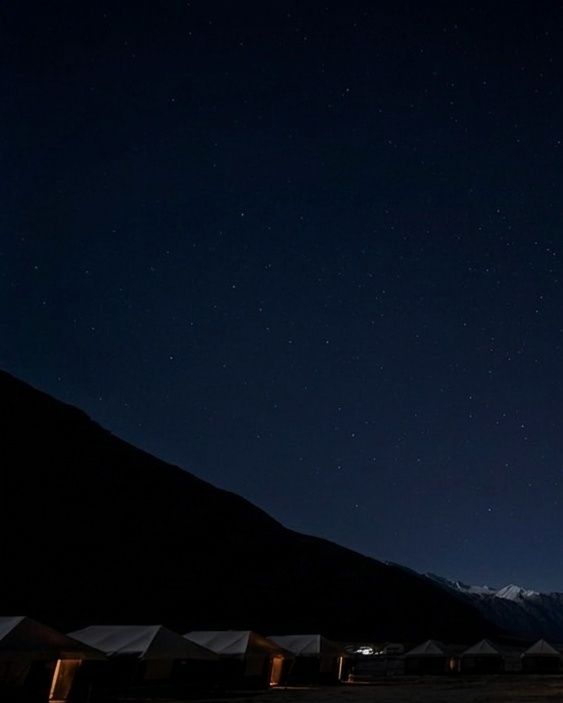
Chandrataal’s thin atmosphere and absence of any light pollution has over the years turned it into an ultimate star gazing destination in India. We were told the best time for stargazing was around 2 AM, and it could be witnessed from right outside our tents.
Walking back to our tent in the dark, I started anxiously mulling over my chances of actually witnessing the galaxy without dying of hypothermia first. The lake’s hostile environment had thoroughly stripped away my romanticized spirit of travel, reducing exploration to a distant, unattainable dream.
Half an hour later, once my body heat had finally warmed the heavy blankets and the tent flaps were tightly zipped against the howling wind, my shivering frame started to relax. Yet, staring up at the canvas roof, the mere idea of willingly walking out into that sub-zero midnight void felt like a physical feat that was simply not humanly possible for me.
2 AM: A Midnight Audience with the Milky Way
Unzipping that frozen tent flap at that hour required a massive act of willpower. I was sceptical that I would be able to drag my dead beat body out of the blanket, to watch stars. Had it not been for a few very excited crew members, who quite literally invaded my tent and pulled me out of my rem sleep. The moment I stepped out of my tent, the air bit my face like glass, and my fingers froze instantly inside a pair of cheap gloves. But the moment I looked up, the freezing cold was completely forgotten.
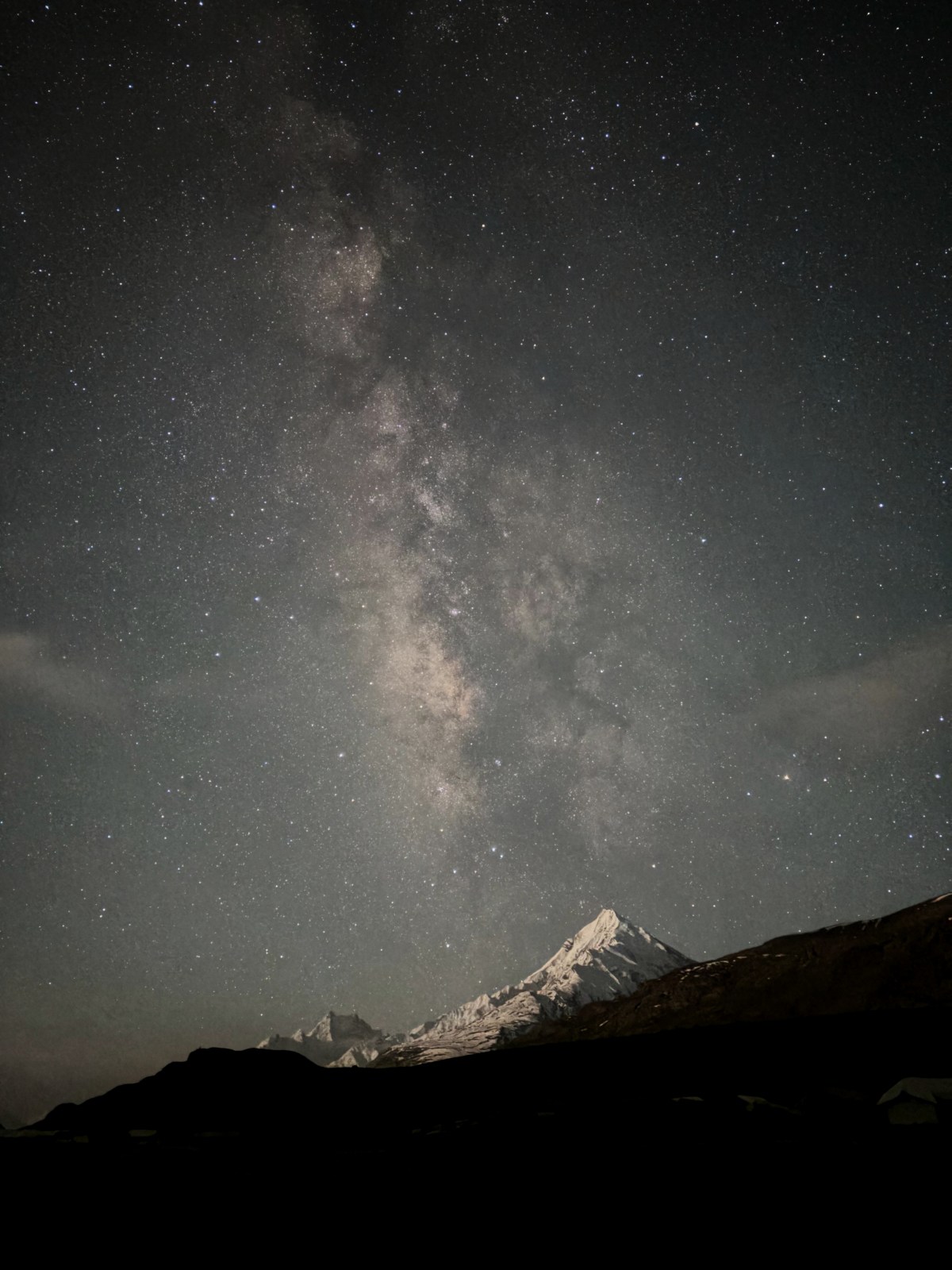
The sky above Chandrataal was dark and alive. With zero city lights, zero pollution, and thin, crystal-clear mountain air, the night sky put on a show that felt entirely cosmic. Stretching directly over the black silhouettes of the Himalayan peaks was the complete, glowing arc of the Milky Way galaxy. It looked like an electric river of silver and purple stardust poured across the heavens, dense with billions of glittering stars.
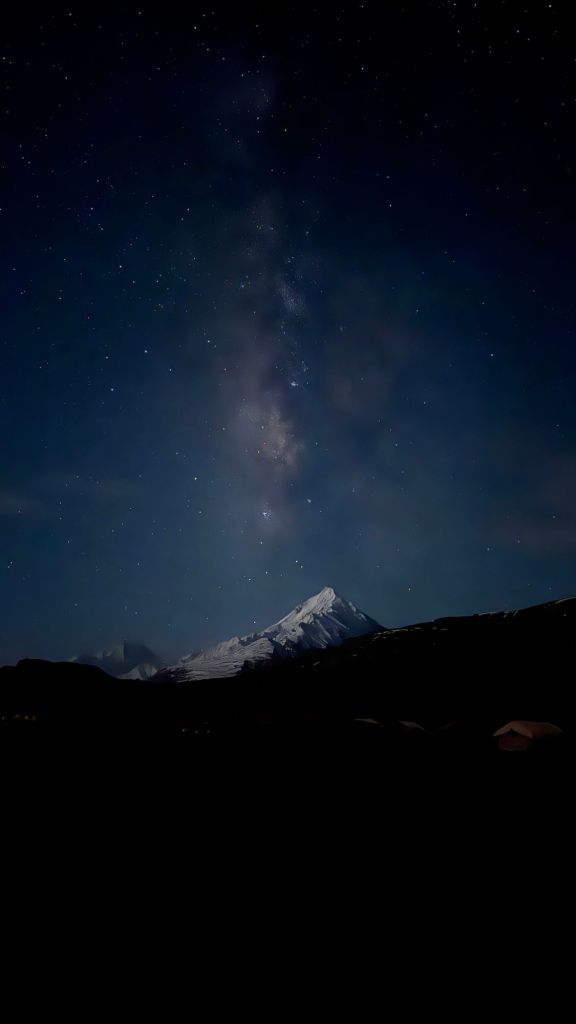
Standing there in the dead silence, shivering in four layers of thermals and jackets while staring straight into the ancient spine of the universe, was a deeply humbling experience. It is a view that photos can never fully capture—a raw, unedited glimpse of infinity that makes you feel beautifully small.
The frozen morning
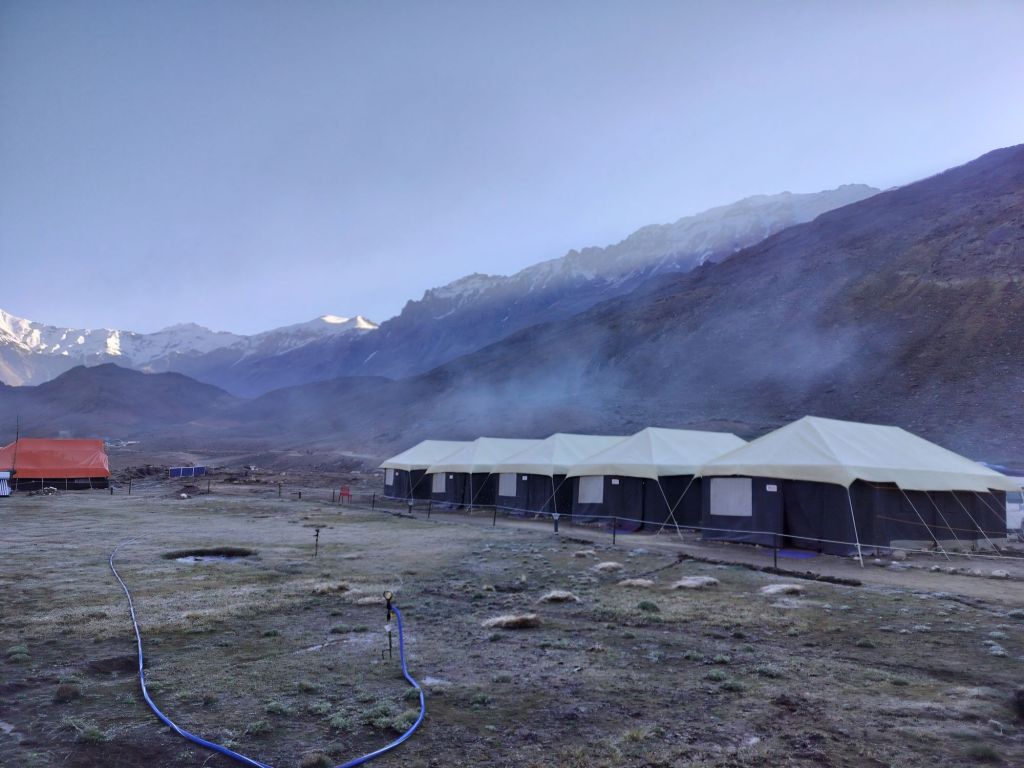
When dawn finally broke, it revealed a landscape completely transformed by the night’s freeze. Waking up and stepping out of the tent, the ground crunched sharply beneath our shoes. Every single blade of grass around the Chandrataal basecamp was coated in a thick, delicate layer of white frost crystals, glittering like diamonds under the first rays of the sun.
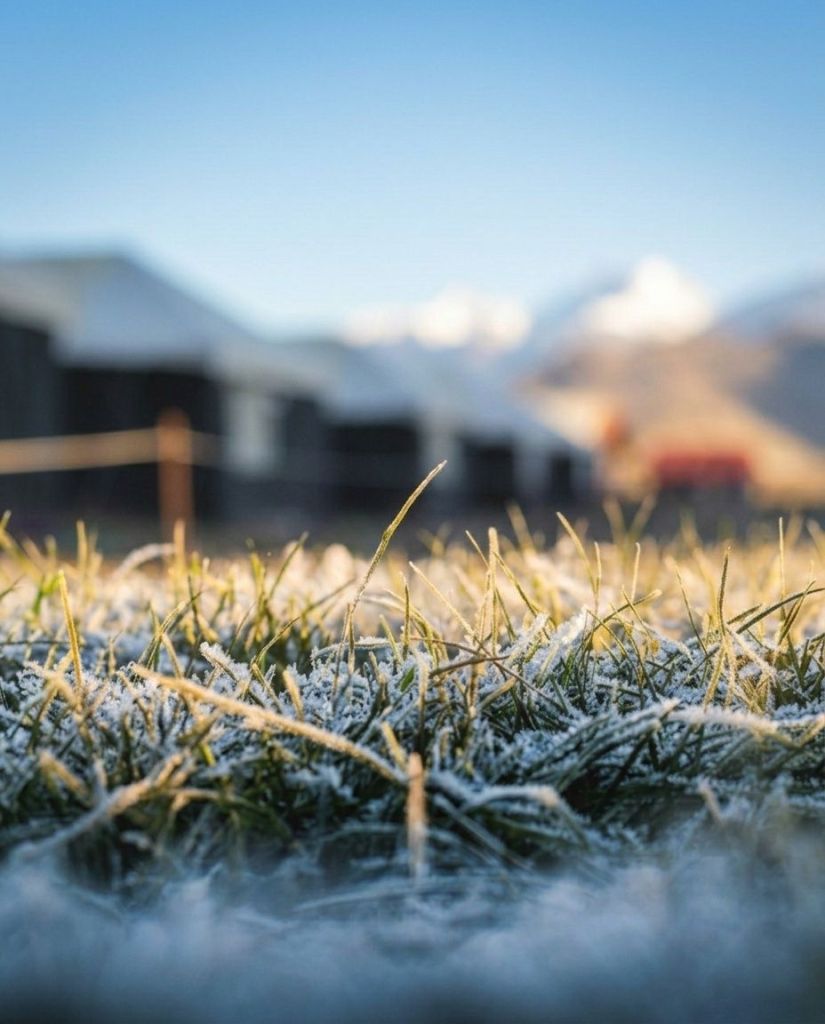
The canvas of our tents was stiff with ice, the water inside our bottles, had almost frozen over, teethering between the two states of matter. Survival in that crisp, sub-zero morning air depended entirely on one thing: a boiling, steaming steel mug of tea. Huddled around the kitchen tent, watching our breath cloud thickly in the morning light, we let the hot tea thaw our frozen fingers and bring life back into our bodies.
Before packing our bags into the vehicle and leaving the highlands behind, we gathered the entire crew for one final group photo at the campsite.
In a world where everything is automated and curated, a Spiti road trip forces you to rely on the people around you. You don’t just travel through this terrain; you survive it together.
Looking at each other—sunburnt, wind-whipped, exhausted, but smiling wider than ever—we realized that the mountains had forged a bond between us that no city life could replicate. We were officially a tribe bound by High Altitudes.
Chronicles of a desperately lonely aloo paratha
Helming my throne at the very back of the vehicle, I was quietly munching down on the crumbs of a random, long-forgotten wafer while our vehicle drove violently over a monstrous, boulder-strewn track. The turbulence was absolute chaos.
Everything inside that cabin was jumping vertically up, slamming back down, and rolling violently sideways. It was so relentlessly brutal that one of my friends desperately wheezed out, “This… roller coaster… of a ride… I did not… sign up for this.” Each of those painful pauses was induced by a bone-shattering crater in the road.
Then, right in the middle of this violent, gravity-defying assault, a small blue cotton carry bag shot out from the abyss and rolled directly on to my feet. I stared at it, my eyes widening as I realized it was the exact same packet that held the legendary, long-lost aloo paratha.
I picked it up for official verification, completely dumbfounded. The prodigal carb had returned from beyond space, time, and the upholstery. It turned out the thing had gotten tightly lodged between the rear seat cushion and the metal wall, managing to remain suspended for two whole days, traveling all over the peaks of Spiti, only to be violently dislodged on our way back.
I clutched it like a rare relic, secretly convinced our driver was in such a frantic hurry to get rid of us that his driving style had literally altered physics to eject our missing groceries. Ultimately, the legendary traveler survived the roof of the world, only to be unceremoniously discarded the moment a modern dustbin finally showed up.
The Long Drive Back to Manali
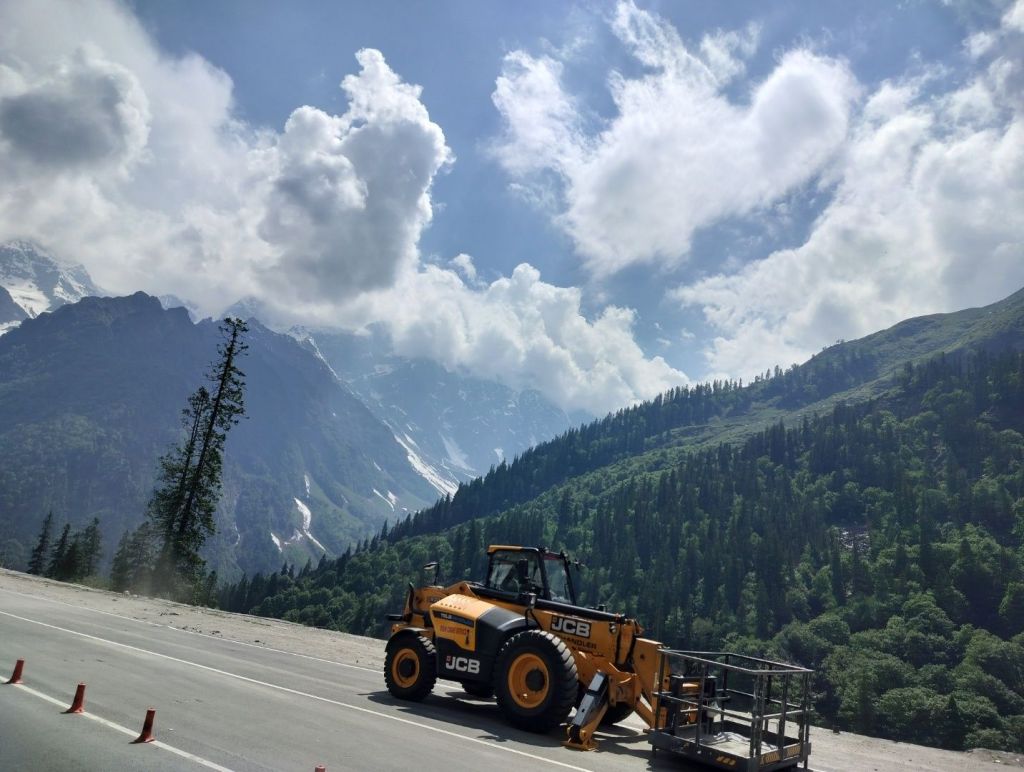
Heading into the dark expanse of the Atal Tunnel and finally saying goodbye to the long, bone-shattering tracks felt entirely surreal. Within matter of minutes inside that concrete passage, the stark, monochrome moonscapes of Spiti vanished, giving way on the other side to lush pine forests, rushing waterfalls, and the intoxicatingly familiar scent of wet earth.
Suddenly, the deep mountain silence was aggressively shattered as our expensive smartphones began to buzz and chime incessantly, with bars of 5G network signal flooding back onto our screens like a digital tidal wave. I stared at the glowing glass in my hand with a strange, sudden sense of reluctance, realizing our pristine isolation had officially ended.
The digital world has found us again.
But as we looked out the window at the crowded tourist traffic of Manali, a strange sense of longing crept in. We were returning to civilization with dust on our body, sunburnt faces, and empty phone memory, but a permanent, unyielding piece of my soul had been left far behind, in the silent, cosmic desert of Spiti.
Checkout the Day 3. The experience of a bone crushing ride to Chandrataal and the ultimate payoff.
Go to PostCurious ? Start from the begining. – Day 1.
Read Day 1
