

Koraput is one of my favorite places to travel in Odisha, owing to its refreshing greenery, breathtaking views and soothing climate. Of late Koraput has seen a steady rise in tourism, however it is still far from the other more popular destinations in India, thus being able to maintain its natural flavor quite successfully.
How to Reach
By Air: The nearest Air Port is in Jeypore, which is also the biggest town in Koraput district. However this is a new Air Strip with sporadic connectivity to other destinations, hence most travelers prefer Vishakapatnam (200 KM) or Bhubaneswar (500 KM), as their place of landing.
By Rail: Koraput and Jeypore railway stations are the nearest railway stations which are well connected to Kolkata, Bhubaneswar and Vishakapatnam.
By Road: NH 26 passes through the District, and overnight buses are available from Bhubaneswar, Brahmapur, Vijayanagaram and Visakhapatnam. Koraput is 500 KM away from Bhubaneswar, which makes it an ideal road trip destination.
Where to stay
There are plenty of hotels, lodges and home stays in Koraput, most of which are located in and around Jeypore or Similiguda. Similiguda is a small hamlet closer to most of the tourist destinations, and Jeypore is the biggest town of Koraput, that offers all the amenities one can imagine in this part of the world.
The most popular hotels in Jeypore are Balakrishna Palace and Princess Hotel. Hotel Apple Vila is the most popular hotel in Similiguda.
If staying amidst nature, away from the hustle and bustle of cities, is something you are looking for, Foothills Retreat near Jaypore and Desia Deomali will be great options.
Putsil Eco Retreat, on the Putsil Table Top mountain, is another great option, which is open during the winter months. It offers Swiss tent accommodation, and is a bit on the pricier side.
Koraput – Places to Visit, a complete day wise Itenarry
Koraput is a district that has many sights to wonder at; every turn one takes on the road, showcases something amazing. That whole place is mesmerizing, however there are a few extraordinary destinations, within this district that one simply cannot miss.
Though one can spend any number of days here, and there would still be something to do, a typical Koraput trip is of minimum four days. In these four days with careful planning, we can cover almost all the key destinations.
Day 1
On Day 1, the target will be to travel around 150 KM and cover most of the destinations towards the south of Jeypore.
Upper Kolab Dam
The 646 m (2,119 ft) long and 55 m (180 ft) high Dam on Kolab River is a major attraction of Koraput, offering the tourists unparalleled views of mountains, water and valleys all at one place. Acting as the icing on the cake is a newly constructed park with a number of flowering plants, tall pine trees and fountains.
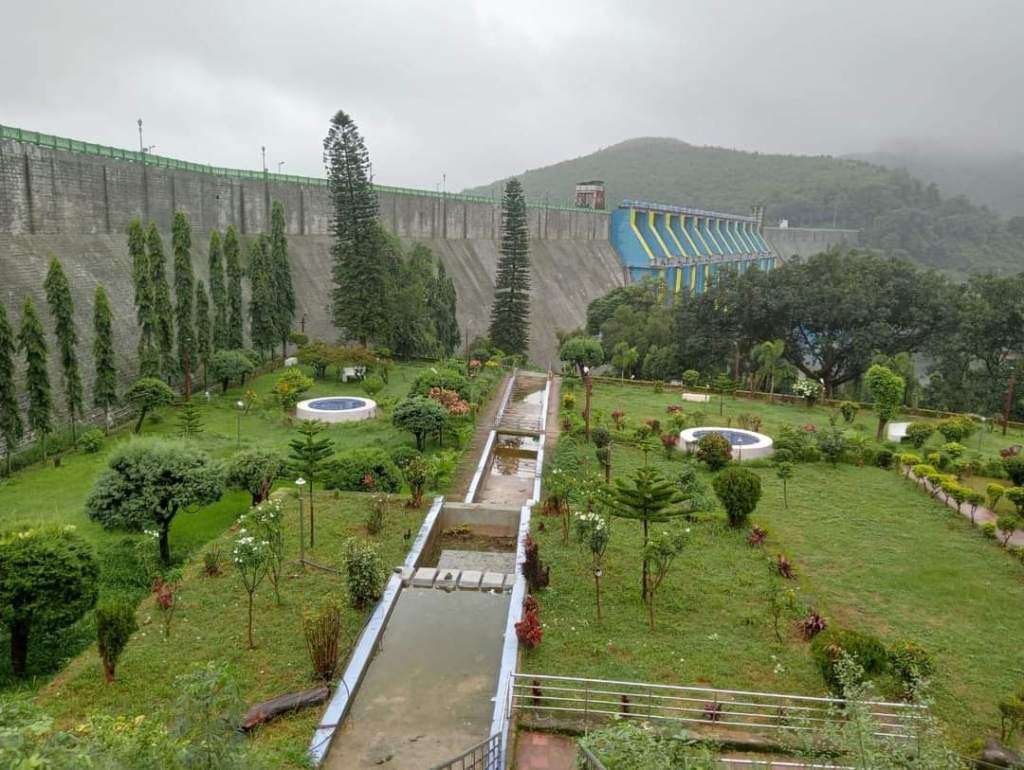
A walk on the top of the Dam is a very fulfilling experience, with deep blue water on one side and lush green meticulously manicured Kolab Park on the other.

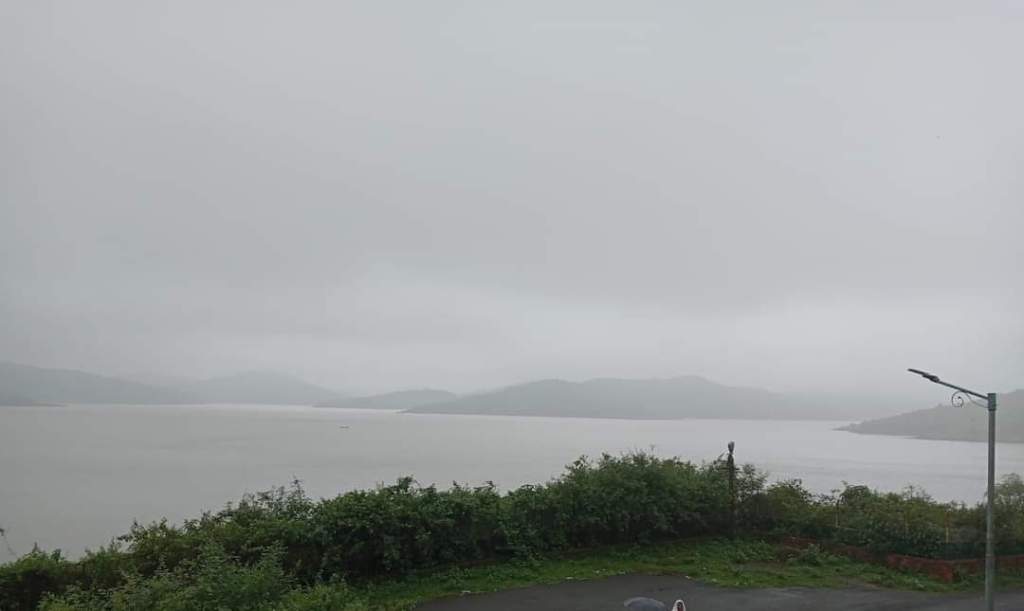
This will be the perfect start to the day filled with numerous natural wonders, and it works as a great introduction to the beauty of Koraput.
Duduma waterfall

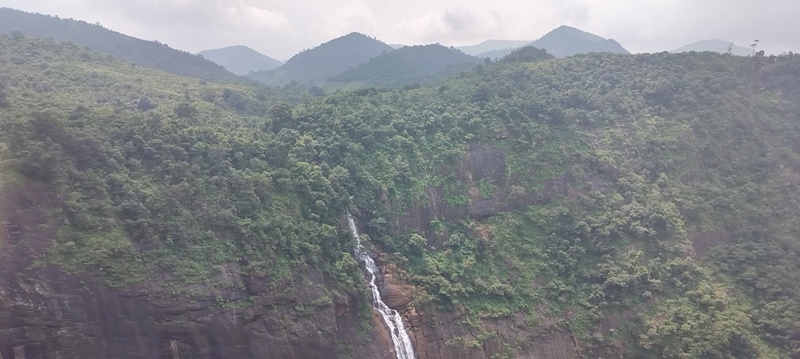
The next stop for the day will be the majestic Duduma waterfall. It is a massive fall on the Machkund river nestled deep inside the forested hills on the Andhra Pradesh and Odisha border. Duduma waterfall is around 60 KM from Jeypore and the route to this fall can be described as a peaceful abode of greenery.
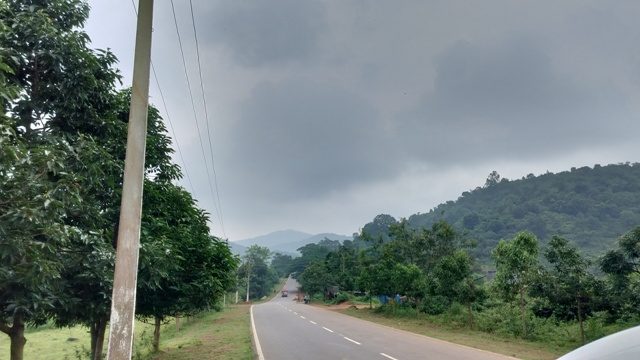
Long grey asphalt roads cutting through the lush green valleys of Koraput, with occasional patches of flower plantations, this route is a delight to drive on.
The long green valleys will give rise to gradual uphill roads as we near the waterfall. The tourism department has recently created an observation deck near the Waterfall which is the safest and best spot to view the majestic cascade.
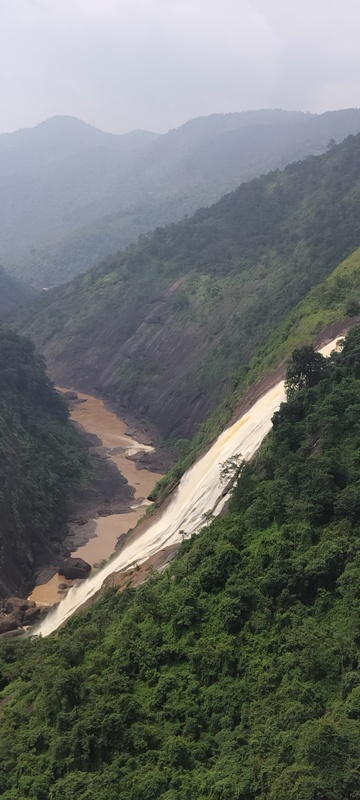
There is some disappointment though as the waterfall is on the same side of the hill, as the observation deck, which is why we get to witness a partial view, and the full glory of the fall remains unseen. The front of the observation area is a steep stone wall, with minimal vegetation and a smaller stream flowing through it.
There is a narrow route leading down to the base of the waterfall, which hiking enthusiasts and locals often undertake to take a closer look of the waterfall. Hiking down is however not advisable as the route is overrun by vegetation and loose rocks.

Onukudelli Tribal Market/Hata
Koraput district is home to some of the oldest indigenous tribes of India. It’s a fascinating experience to visit one of the tribal markets of the area and get to know the tribal life a bit better. The biggest tribal Market of Koraput is at a place called Onukudelli, which is a few KM ahead of Duduma waterfall.
The only catch is that this market is only set up on Thursday, and the rest of the week it’s mostly bare. One similar market, although smaller in size is also located at Lamtaput, on route to Duduma. Depending upon the day of travel one can experience either of the two and witness the tribal produce and lifestyle up close.
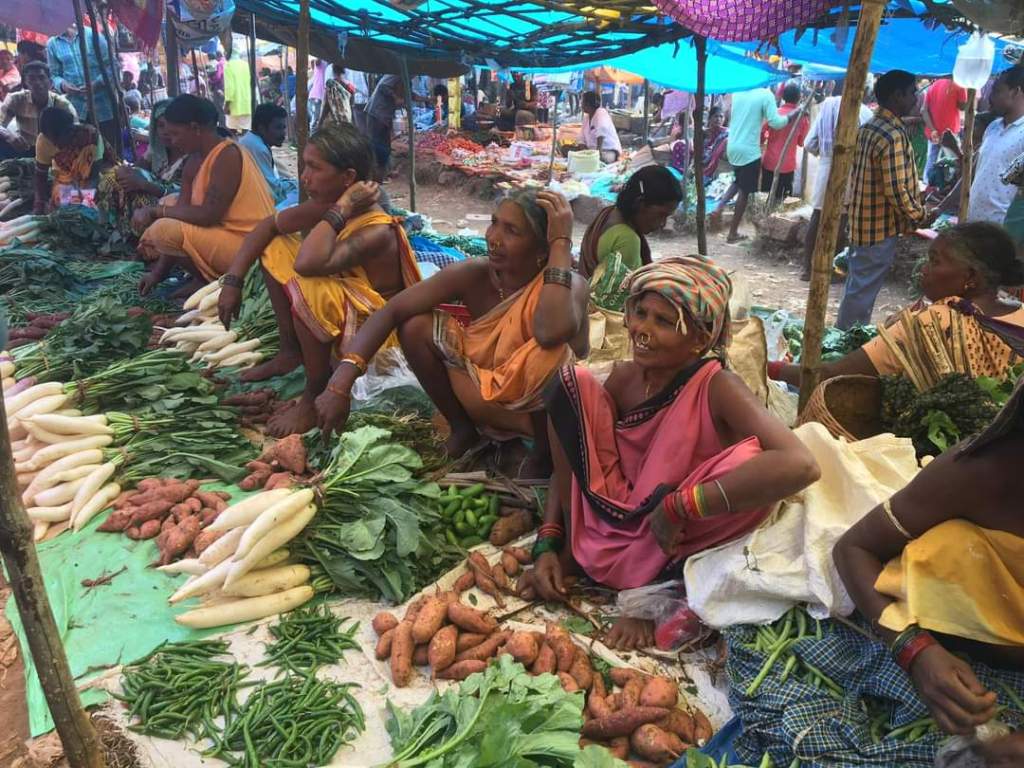
In the market, which is known as Hata in the local language, one gets to see the Bonda tribe, who address the forest and hills around Koraput as their home. These tribes get together on this market and trade their produce, ranging everything from vegetables and fruits to livestock. It’s an experience unlike anything else in India.
This experience would be the last stop for this day away from Jeypore. Though there are ways to explore more places on this day itself, but that would prove to be too hectic, hence returning back and exploring places inside or around Jeypore is recommended.
Sabar Srikhetra/Jeypore Jagannath Temple
Post enjoying the whole day, tucked away in the natural beauty of Koraput, a visit to Sabara Srikhetra in the evening or late afternoon, will definitely revitalize the soul. It is the famous Jagannath temple of Jeypore, that preaches Jagannath consciousness, which can not be confined within the limits of a traditional religious theological order. It is a kind of philosophical system.
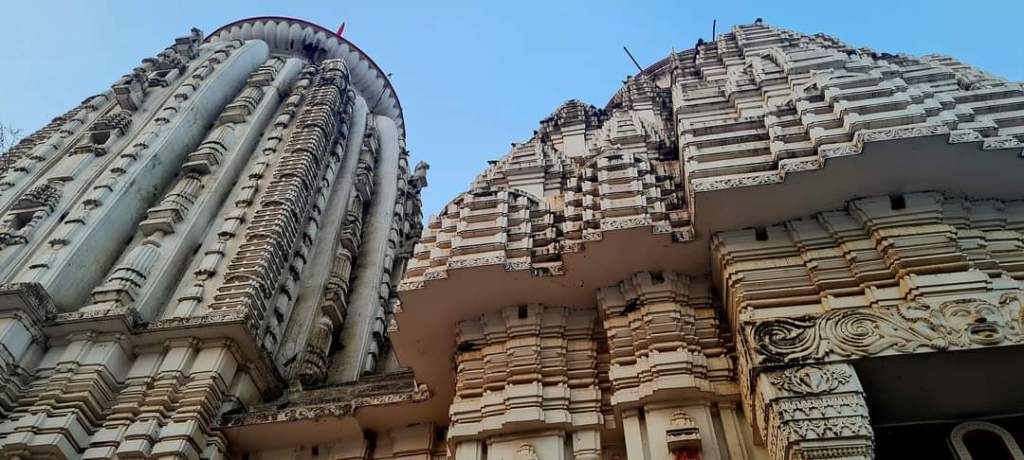
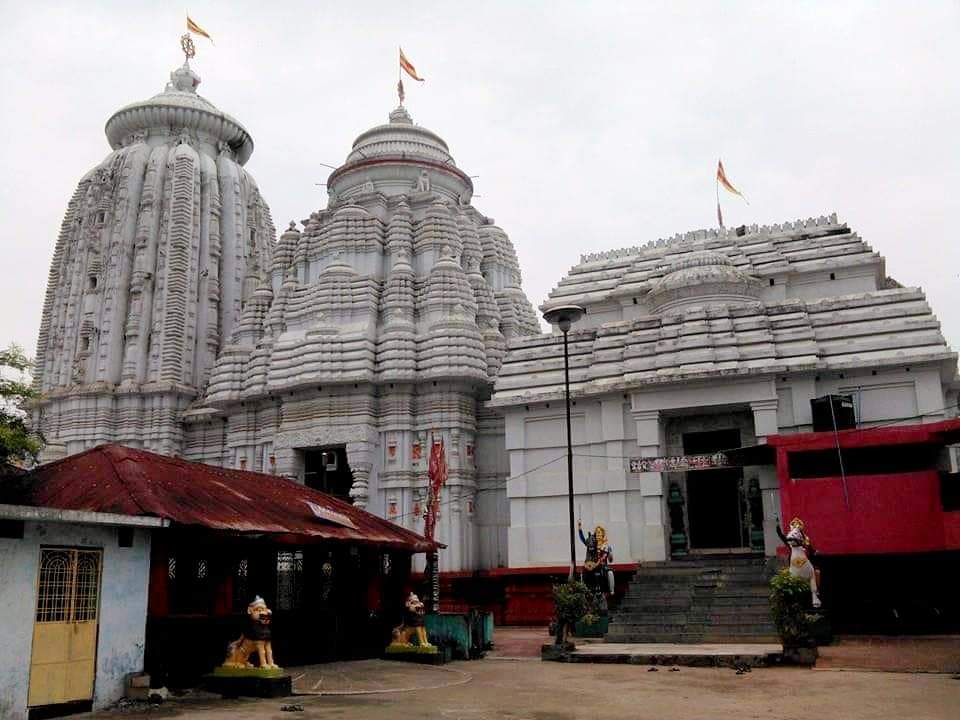
This temple and it’s ideas find its root in the tribal history of Koraput, and hence didn’t discriminate on the basis of religion, caste, creed or colour.
Day 2
Today will be another day of long drives through endless greens, where the route will be same as day 1 until Kana, post which the road will take a different turn.
Before setting off on this epic journey, a cup of some locally produced coffee is a must to recharge the taste buds.
Koraput coffee
Coffee is produced in Koraput since years and quite recently the administration has started branding the local produce, by the name of Koraput Coffee. Franchisees of Koraput Coffee can be found across the state of Odisha, including Jeypore.
The coffee shop offers a blend of multiple varieties which are sure to tickle every coffee lover’s taste buds and provide with the necessary kick to leave the fatigue of the previous day behind.
Balda Caves
One of the most underrated destinations in Koraput, Balda Cave is a must visit for a plethora of reasons. Besides housing one of the most Instagram-worthy caves in India, the place also offers stunning panoramic views of the lush eastern ghats, and a freshwater lake on top of the mountain.

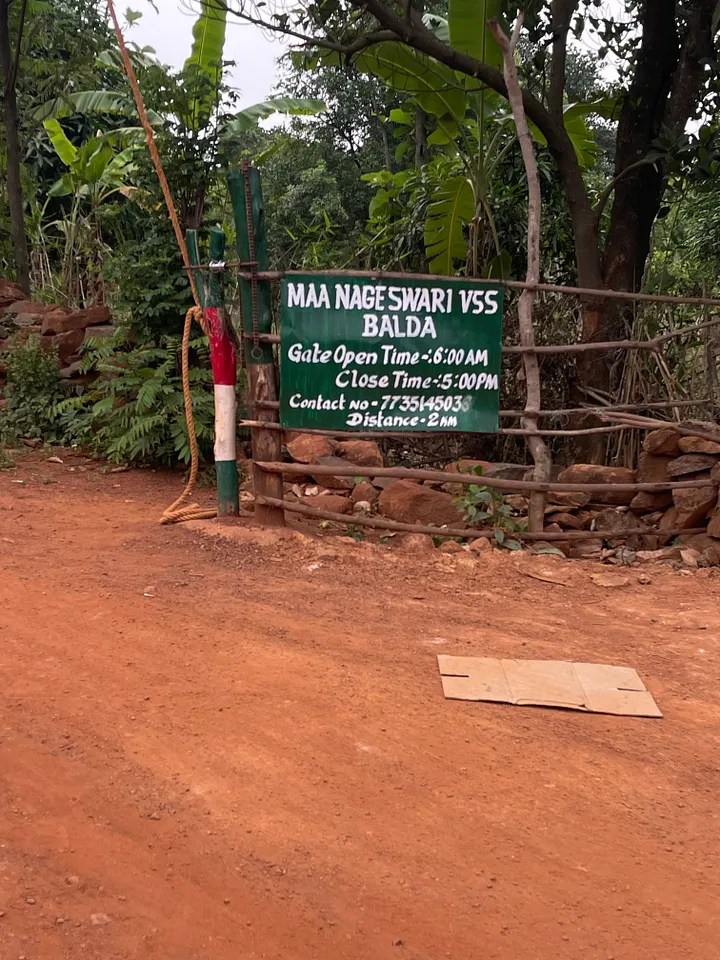
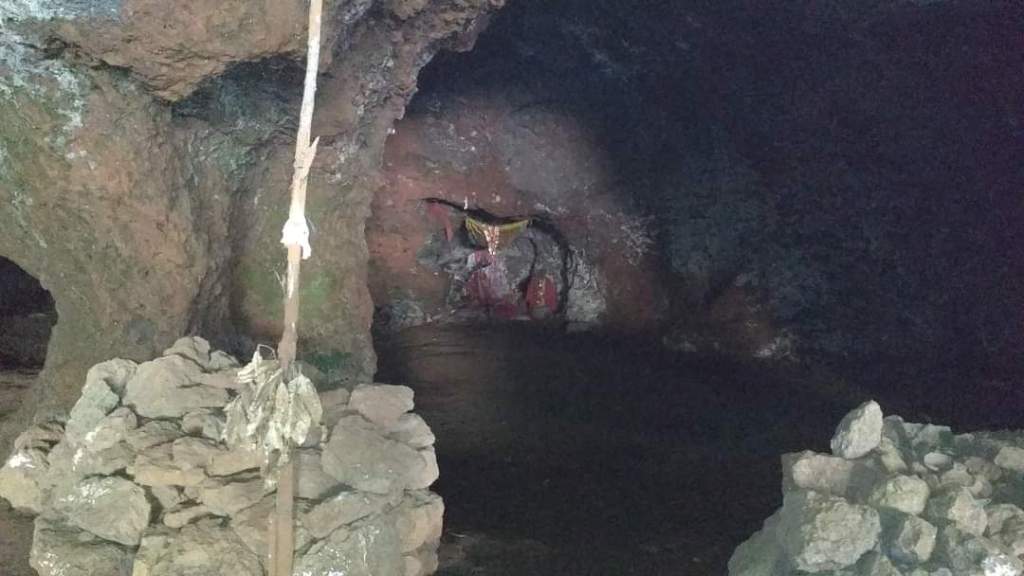
Balda cave is located atop Nageswari hill, 65 KM from Jeypore. A series of small and large caves dot one face of this hill, near it’s top, one of which is dedicated to Nageswari Devi, the goddess of serpents.
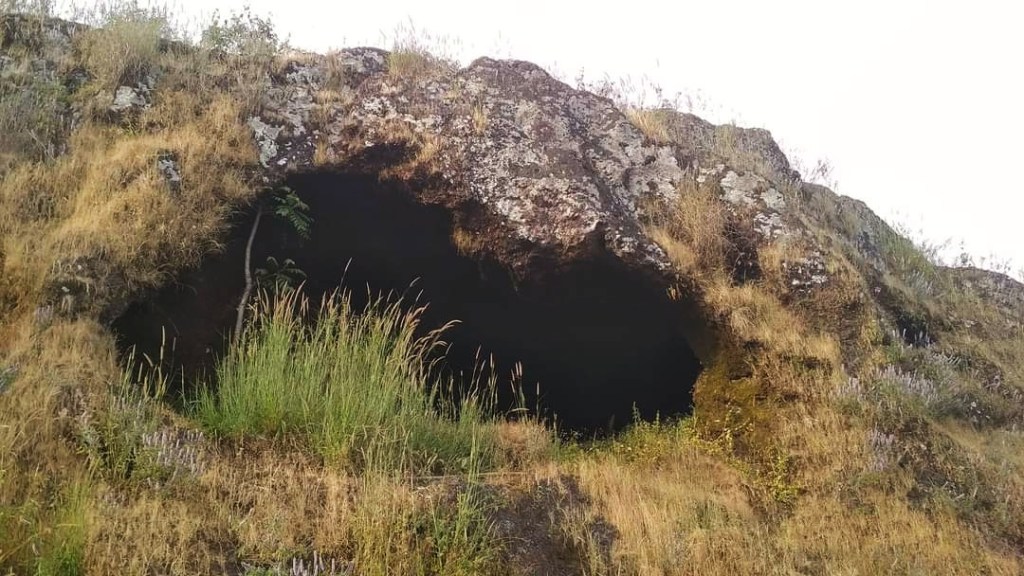
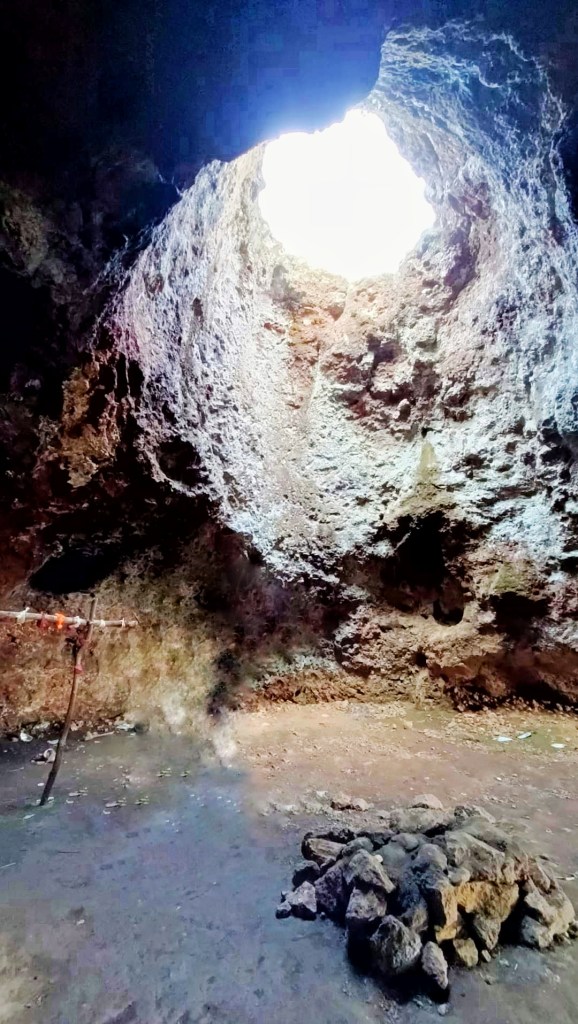
The cave right next to this has captured the imagination of all travelers with its unique architecture. The rock on top is flat, like man made canopy on top of the dark stalactite cave.

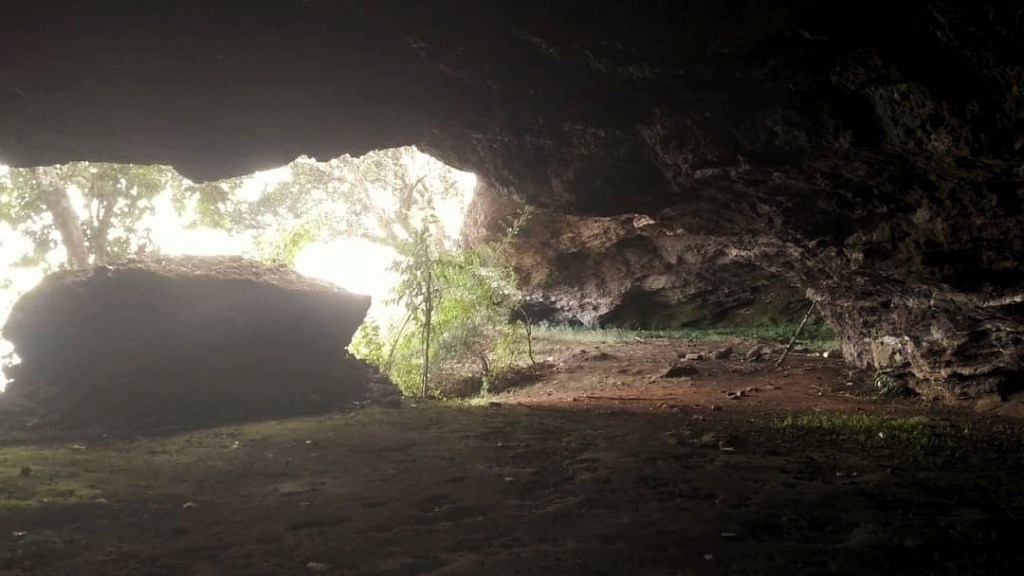
Inside this cave there are multiple openings towards the top, which lets in ample sunlight and provides for a unique photo opportunity, especially popular among Instagram enthusiasts.
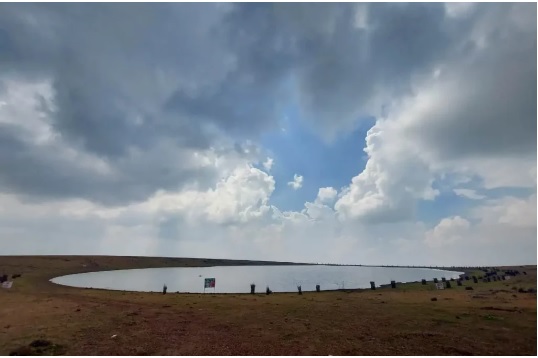
The top of the hill, hosts a flat green plateau. It is quite amazing to even imagine a flat plateau like this on top of hill laden with cave systems. The real surprise however is a massive lake, that is fed with rain water and water seeing through the rocks. It’s quite unreal to even think such a huge lake can exist on top of a hill.
Rani Duduma Waterfall
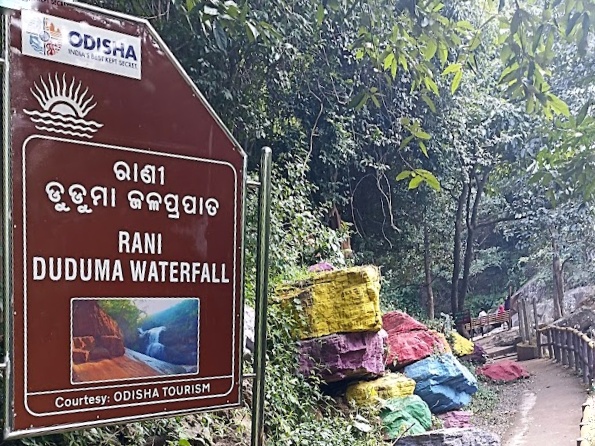
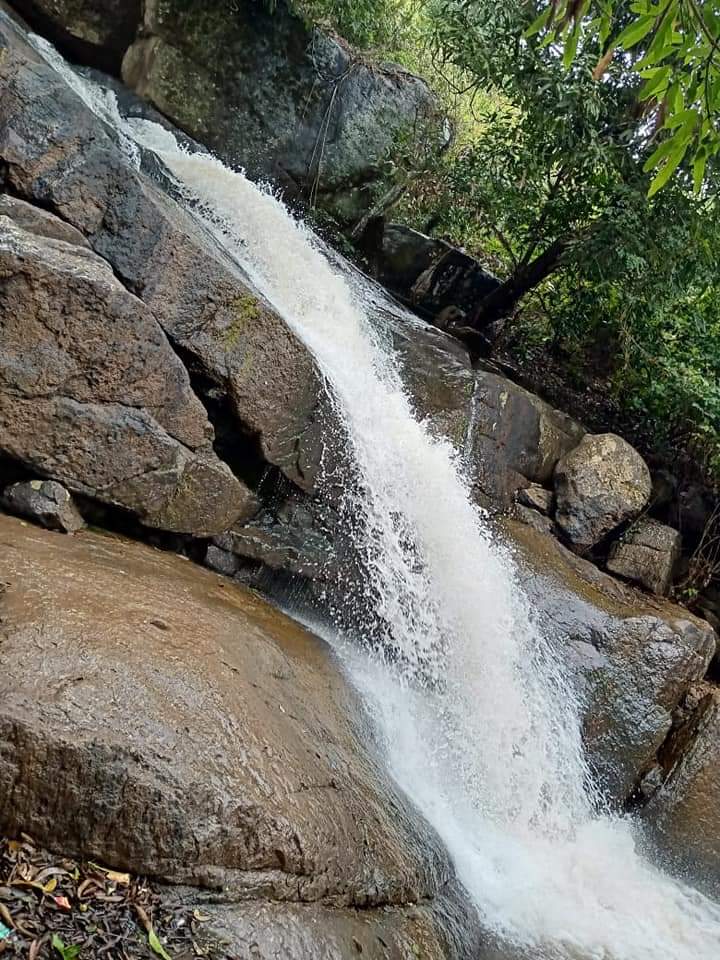
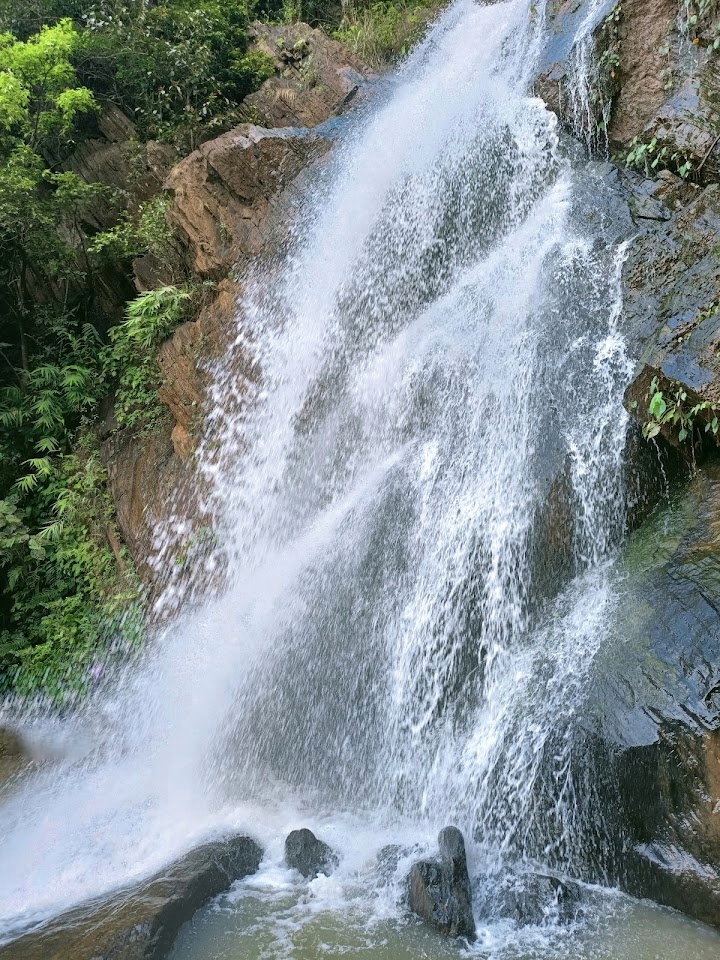
The word Rani Duduma literally translates to Queen Waterfall, which will be the last stop for the day. It is another fascinating waterfall, 26 KM from Balda, in a village called Nandapur.
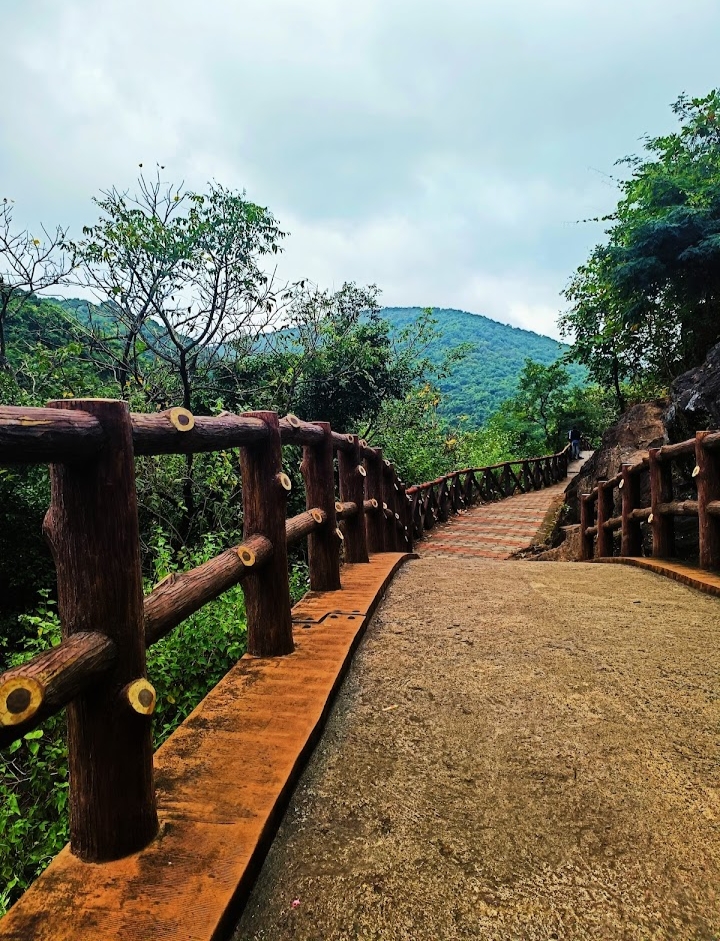
From the gate of the waterfall, a moderate walk of about 500 meters lead to the base of the fall, where one can easily take a refreshing bath among the cascades. There is an option to hike up a series of well maintained steps to the top of the fall as well, where one can catch a fantastic 360° view of the surrounding valleys.
Return to Jeypore/Similiguda
While returning, there is an option to choose between two routes, both of which will cover similar distance, but will offer different views. Option one will be to return on the same road that was undertaken to reach Rani Duduma from Jeypore. The other would be to proceed on the Nandapur-Similiguda road and then catch the highway to return to Jeypore. Both routes are roughly 70 KM in length.
It would be dark by the time you will reach Jeypore, hence there isn’t anything else to do, just lie back and relax.
Day 3
Day 3 will be a tour of the western side of Koraput, that skirts the border with Chatisgarh, and visit one of the best attractions of Koraput, Shri Gupteswar Shiva Temple, that stands at 55 KM from Jeypore.
Jagannath Sagar Lake
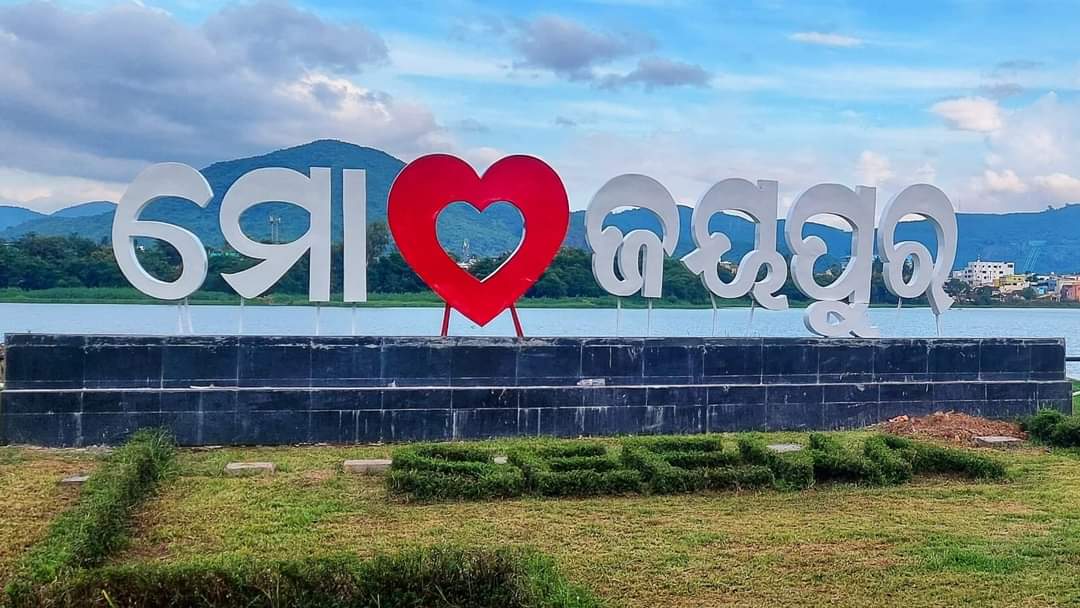
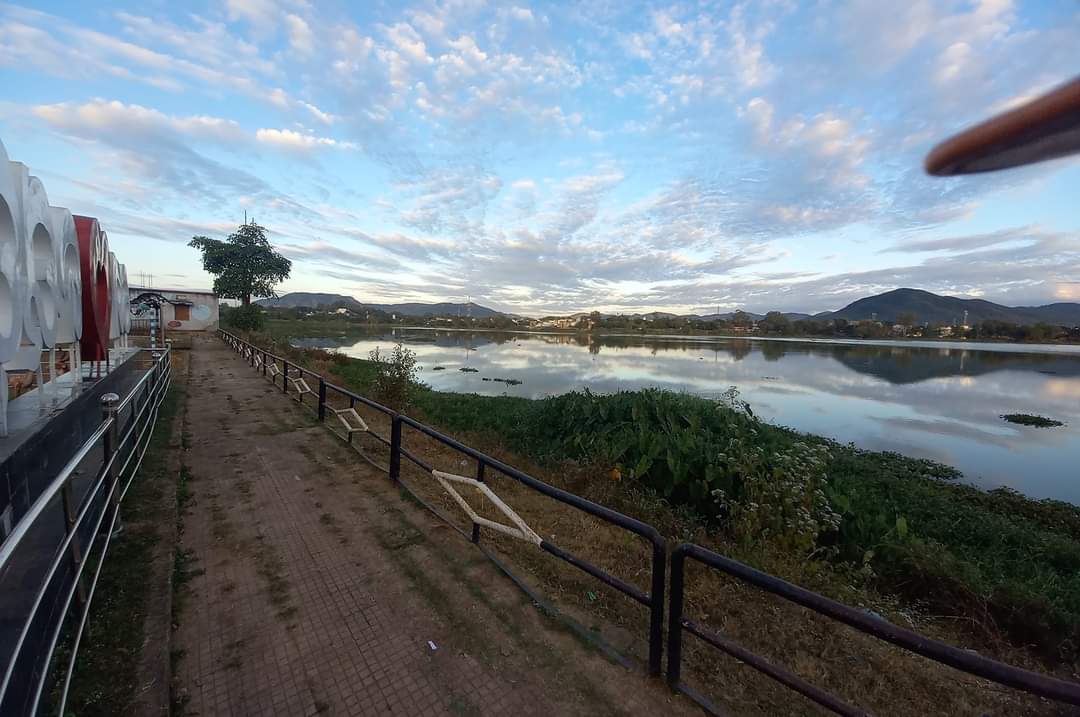
The road that connects Jeypore to Gupteswar temple is called Gupteswar Road, and the road passes by an amazing lake within the city limits of Jeypore. This lake is called Jagannath Sagar lake, and it is must visit for everyone in Jeypore.
Since it is on the road to Gupteswar, tourist can choose to visit it either in the morning while going to the temple, or in the evening while returning. There is a small park besides the lake that hosts morning joggers and yoga enthusiasts from around the area.
Gupteswar Temple
Now it’s time to embark upon a journey that will leaves everyone spellbound. Traversing through one of Odisha’s most beautiful landscapes, the road to Shri Gupteswar temple, is filled with multiple awe-inspiring sights.

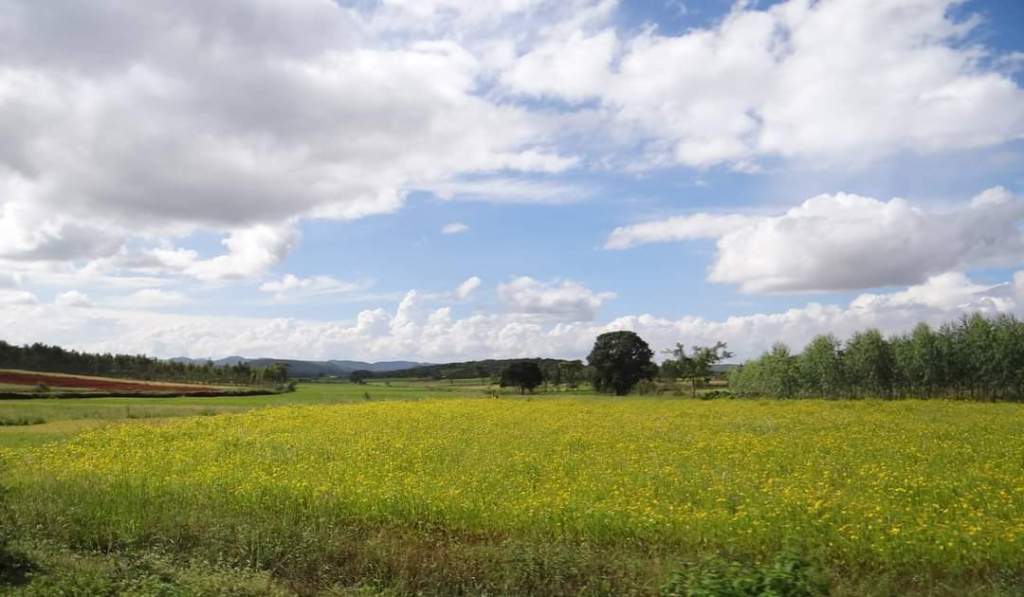
Long prinstine roads, traversing through endless farms in the beautiful valleys of Koraput. The colors of these valleys, keep changing with seasons. If it’s the monsoon, they would be sporting lush green paddy plantation, as can be seen in the picture on the top. In the winter, they would be laden with Alasi flowers, which paint the valleys a vibrant yellow, just like the picture below.
Once you get closer to Sri Gupteswar Temple, the scenery changes from flat green farms to rugged hills. These hills are home to lord Shiva who is worshiped here as Sri Gupteswar.

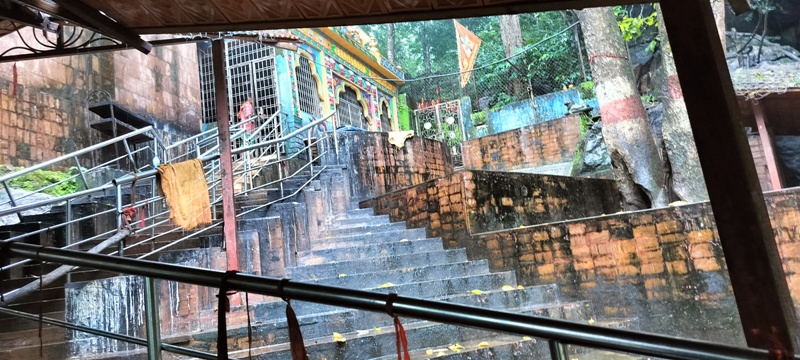
There are 200 steps leading to the main shrine from the gate of the temple, which are in top condition, making the climb fairly easy. After entering the main temple, the familiar brick and mortar structure gives way to a narrow mouth of a cave. Yes, this temple is a cave shrine, and to see the lord, one must enter the cave that is easily a few thousand years old.

A short walk of a few meters into the cave brings one face to face with the lord, who is worshiped here in the form of a Linga. The whole cave is about 15-20 meters in length with well maintained steps. Claustrophobic people might have to refrain from entering this shrine though.
Swargadwara Caves
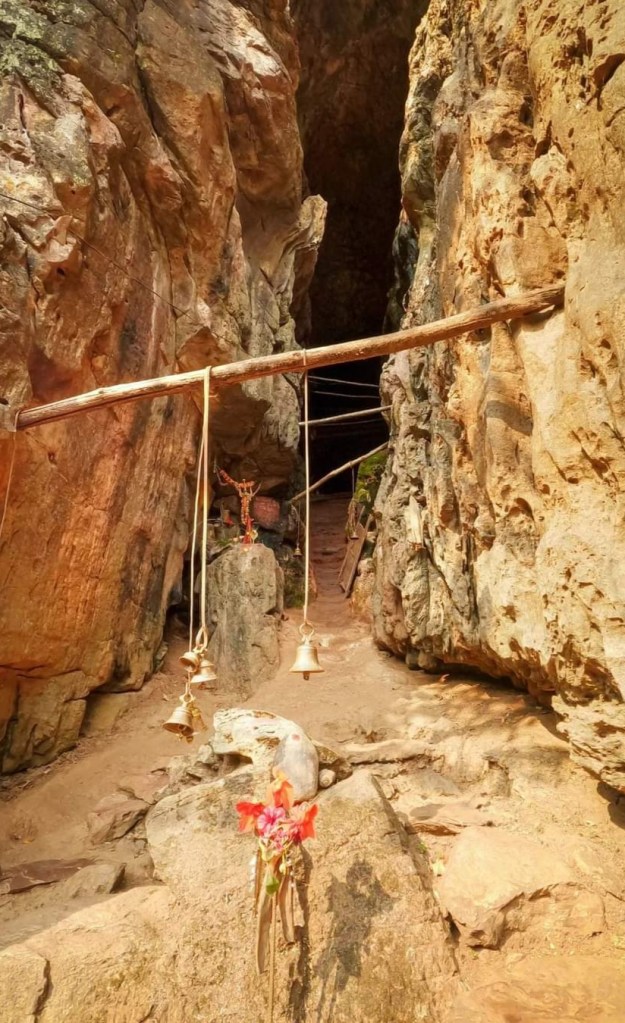
The place also has two more spots to explore. Swargadwara caves, which is a set of wonderful natural cave systems in the vicinity of the temple are the first among these. People who are not claustrophobic can try and explore these caves. It is however advisable not to venture deep into the crevices though, as it may house venomous snakes.
Gupta Ganga
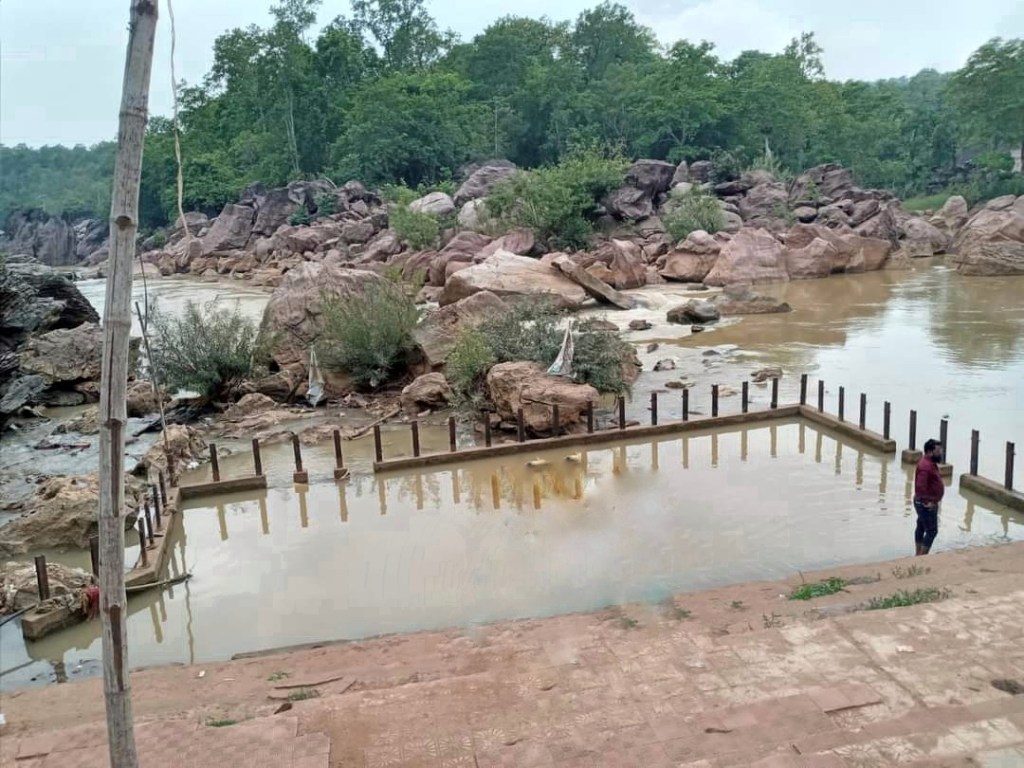
The second spot to explore near the Gupteswar Temple is Gupta Ganga, which is a mountain stream close to the temple. Some pilgrims prefer to take a dip in this stream, before entering the temple. It is strictly prohibited to go beyond the cordoned off area marked by metal poles, as the stream can get violent and sweep away people in its path.
Day 4
The conclusion of the tour of Koraput needs to be the high point of the whole journey, and that’s quite literally what is being planed today. We will embark upon an uphill journey to Deomali, the highest mountain of Odisha.
Deomali Hill
Deomali hill stands at a height of 1762 meters above sea level, which makes it the highest point of Odisha. A journey to the top and the views from there are an unparalleled experience. The best time to visit Deomali is early morning when the sun is not too harsh or towards the evening when the sun starts to set.
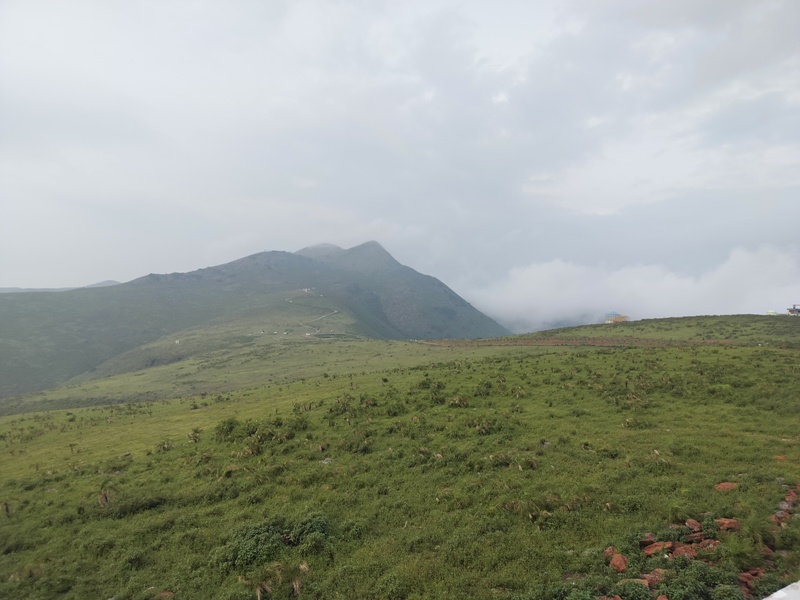
The top of Deomali is a flat plateau, with observation towers sprinkled in all the directions. The whole plateau is motor-able with well maintained roads. There are a few adventure sports options present on top of Deomali as well, so the thrill seekers as well.
The real beauty of Deomali however lies in the 360° view of the hills and valleys that surrounds it. Being on the highest point in a place laden with rows after rows of hills, is bound to showcase some mesmerizing landscapes never experienced before.
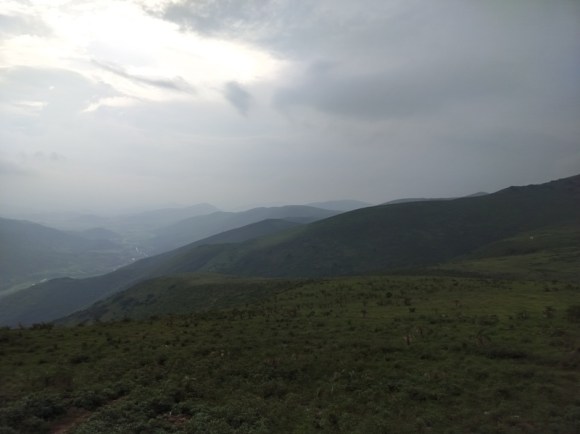
Deomali is 48 km from Jeypore town, hence it will take around 1.5 hours to reach the top. Hence for practical purposes, we recommend to aim for the sun set. However there is a way in which tourists can experience the sun rise without much hassle. For catching the sun rise, one can book a stay at Desia Deomali the previous night. This resort is at the foothills of Deomali, which is 6 km away from the top, hence am early wake up call should be enough to catch a splendid sunrise.
Putsil
After assimilating everything that Deomali had on offer, one can proceed to Putsil, which is just 14 km away. This is another hill, which has a plateau on top, similar to Deomali. This hill also hosts the eco retreat program that the Odisha tourism department has started and hence tented accommodation is available here during the winters.
Since the views from up here are similar to Deomali, this place is completely optional, unless there is a plan to stay at the eco retreat.
Ending the tour
Destinations like Koraput remain etched in your memory for ages and the number of days you spend there doesn’t really matter, you will always feel this urge of going back for more.
Raw natural greenery, and pure sights are something which we miss in our daily life. The rampant commercialization of all the major hill stations of India, has also sucked away the soul of such places. This is why Koraput is special and its simplicity wins over many other popular destinations in the country.
 East Indian Traveller
2 replies on “The Ultimate Koraput Tour Guide – Places to visit, Itinerary and lots more.”
It is not clear whether local vehicle is available from hotel for visiting different places in and around Koraput.
LikeLike
Local vehicle is available.
LikeLike