
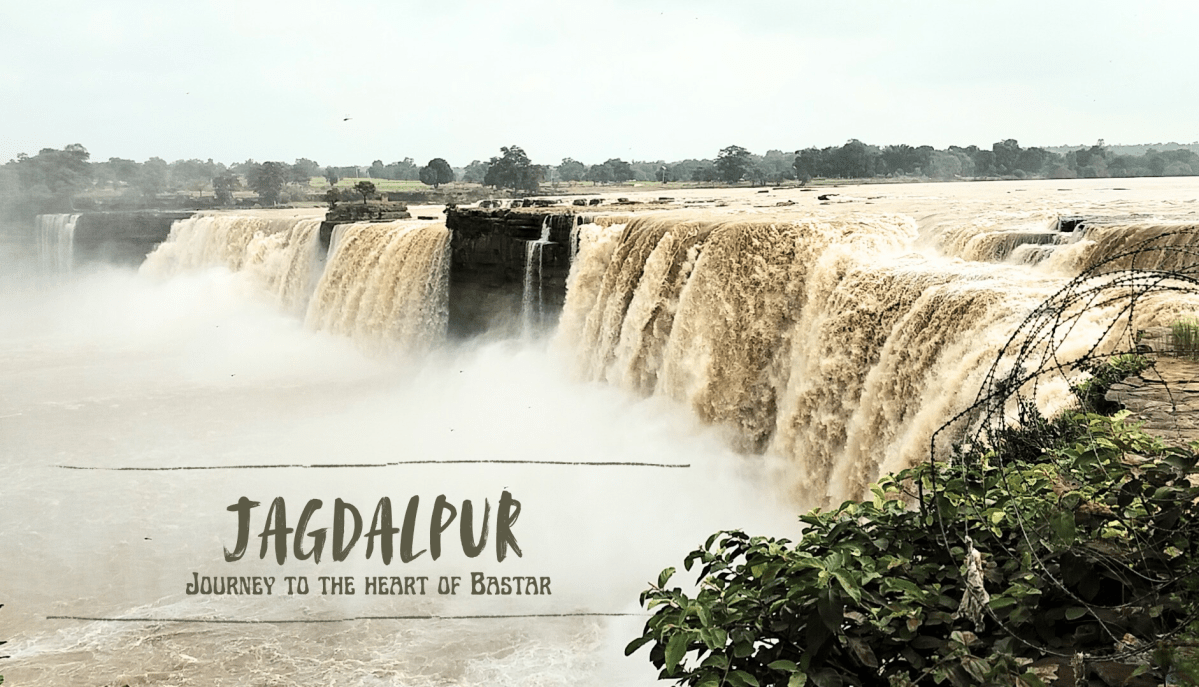
It was way back in 2009 when I had first seen a picture of Chitrakote waterfall on a friend’s Facebook profile. That was my first introduction to Jagdalpur, a place that was relatively unexplored and promised a wealth of natural wonders. Since then this small border town of Chattisgarh has been on my bucket list. It took more than a decade however for this dream to come true, and it wasn’t until a rainy October of 2023, that I was finally able to visit this amazing part of India.
- A ride through the meadows
- Jagdalpur – the begining:
- Bastar and Dandakaranya
- The Crown Jewel: Chitrakote Waterfalls
- Nature’s Masterpiece: Tirathgarh Waterfall
- A Journey Underground: Kotumsar Cave
- A Taste of Bastar
- The Bottom Line
Jagdalpur – Ways to visit
Jagdalpur is accessible via several transportation modes, though road and rail remain the most common options.
The Jagdalpur Railway Station is a key hub with direct connectivity to cities like Visakhapatnam, Raipur, and Bhubaneswar, offering scenic routes through the Eastern Ghats.
Maa Danteshwari Airport in Jagdalpur offers some regional flights, though Swami Vivekananda International Airport in Raipur (approx. 300 km away) is the closest major commercial alternative.
By road, one can reach Jagdalpur via the Raipur – Jagdalpur – Vishakhapatnam Road (NH 63/NH 30), which is one of the most scenic routes in India. The best way to experience Jagdalpur is by taking a road trip from Koraput, Odisha. There are plenty of local taxi operators in Koraput, who provide single day or multi day trips to Jagdalpur.
Places to stay
There are plenty of staying options in Jagdalpur, in all budget ranges. Damdami resorts in Chitrakoot is arguably the best resort in terms of unmatched views.
The Government of Chhattisgarh runs quite a few tourist properties in the area, which can also be booked for a comfortable and budget stay.
A ride through the meadows
It was a wet monsoon afternoon, our car was hurling down the Koraput – Jagdalpur highway, crossing small villages and settlements like fleeting memories. This whole region was so sparsely populated that it looked deserted even in the middle of the day.
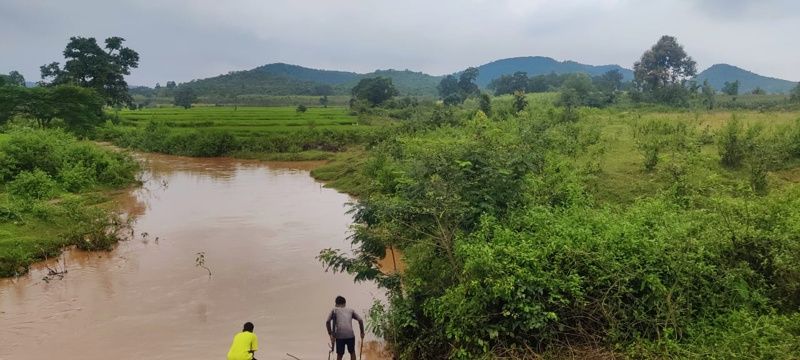
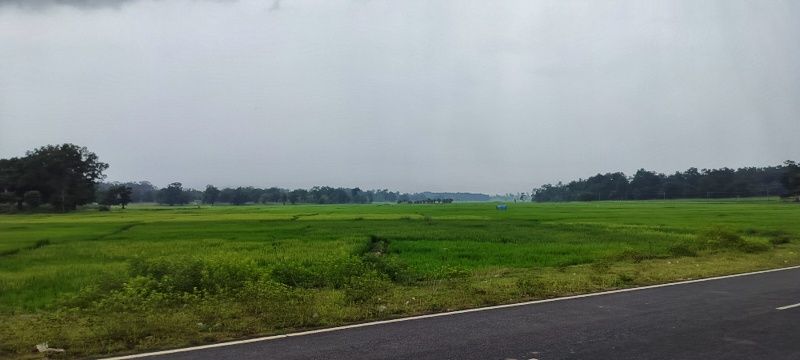
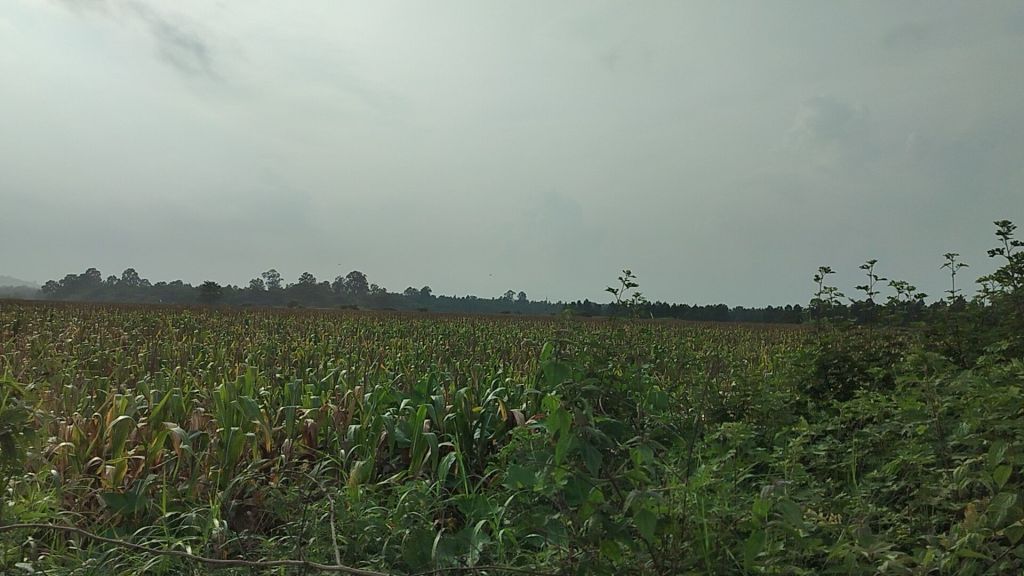
The air was heavy with the scent of damp earth, on either side of the solitary road, stood endless fields of corn and paddy like silent green sentinels. Their tassels waving in the gentle breeze, their rhythm only broken by small patches of forest and water bodies.
These endless meadows were a staple of the beautifully underrated Koraput district of Odisha, a place I had frequented earlier as well, but only this time I was able to add Jagdalpur to my itinerary.
Odisha and Chattisgarh are two neighboring states in Eastern India, whose borders are flanked by Koraput on one side and Jagdalpur on the other. This region is part of the eastern ghats, which is pounded by torrential rain throughout the monsoons. The hills and valleys of Koraput-Jagdalpur are therefore one of the greenest places in India.
Jagdalpur – first impressions:
As we crossed into Jagdalpur, the number of vehicles on the road increased drastically but the landscape remained unchanged. Huge open fields, on both sides of the roads with sporadic outcropping of shops and dhabas. However unlike on the Koraput side, most of the land here was baren devoid of any crops, a very unlikely scene this time of the year.
Soon enough we entered the city, and Jagdalpur, also known as the “Gateway to Bastar”, started looking busy. The air was alive with a symphony of sounds—car horns, Hindi pop music from local shops, creating an immersive and ever-shifting tapestry of contemporary Indian life. Jagdalpur started looking like a quintessential small town.
Let the tour begin
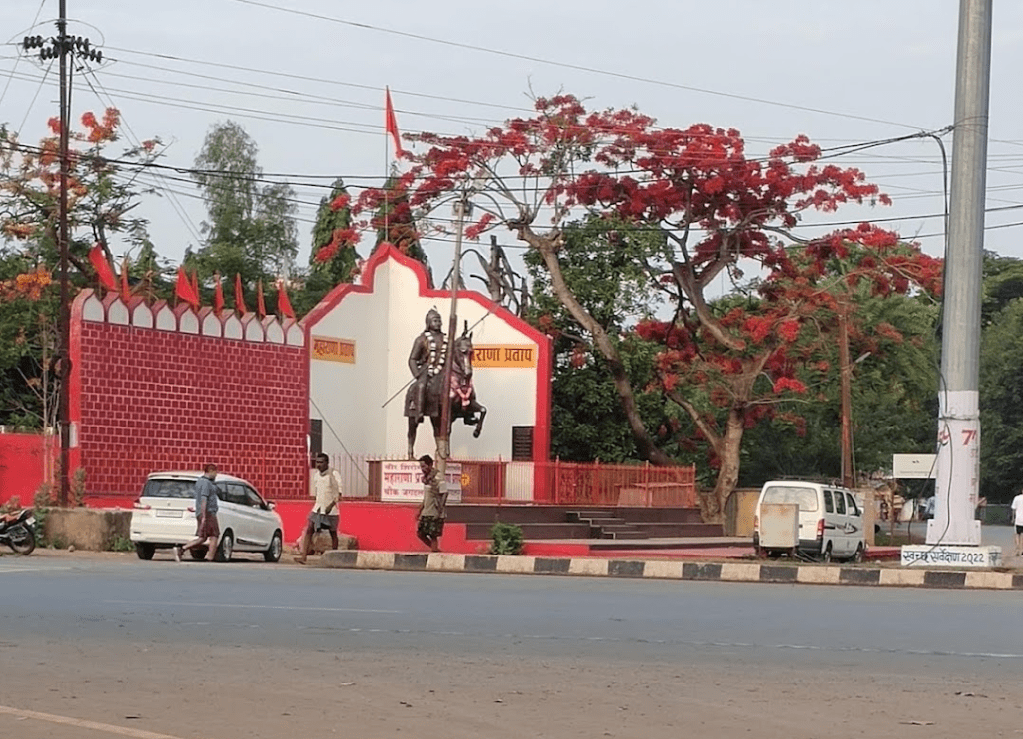
Our exploration of Jagdalpur started the following morning, as we dragged our sleepy, tired bodies out of the cozy bed and boarded our car. Our plan was to travel to Chitrakoot Waterfall, which was around 45 km from the city, followed by all the other tourist spots.
As we took a turn towards the exit route of the city, we saw a majestic statue of Maharana Pratap on the intersection. We were debating whether to stop or to move ahead, only to see a large group of people gathering infront of a road side stall for breakfasts. Our bellies were definitely asking for food, and the sight of fresh dosa was enough for us to pull over and stand in queue. The shop offered some very delicious Dosa and Vada, one of the best I have ever had.
With our stomach full, we started for our destination. An hour-long drive took us out of the urban setting of the city to rural corners of Jagdalpur. The tree cover gradually kept increasing, the air becoming more and more humid, and the sounds of nature took over the sounds of humans. These were all classic signs of the approaching dense forest – Dandakaranya
Bastar and Dandakaranya
Dandakaranya is a historically and spiritually significant region in east-central India, spanning approximately 92,200 square kilometers across the states of Chhattisgarh, Odisha, Telangana, Maharashtra, and Andhra Pradesh.
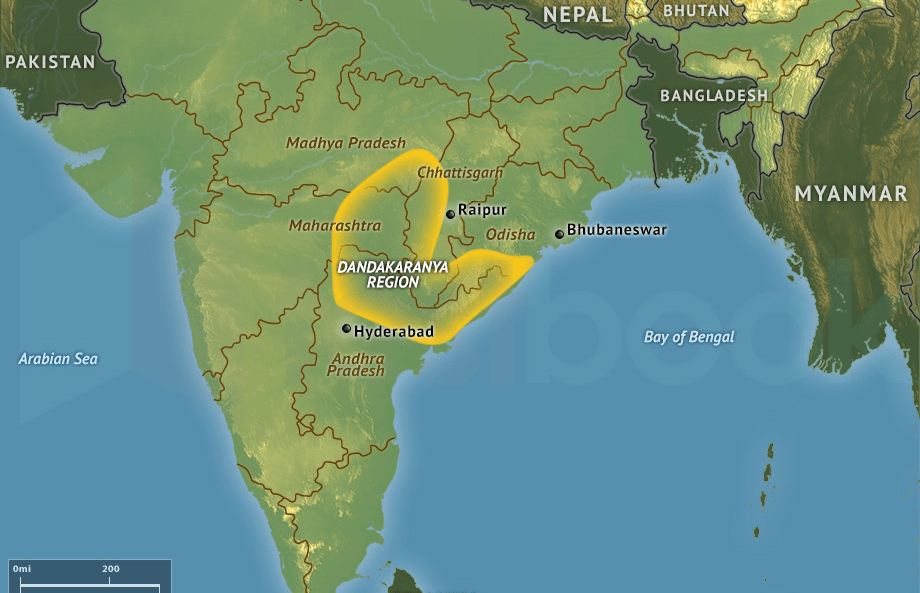
In Hindu mythology, it is famously the wilderness where Lord Rama, Sita, and Lakshmana spent nearly 13 years of their 14-year exile. It was historically described as a rugged land inhabited by sages, demons (Rakshasas), and wild beasts.
In recent decades, the region—particularly the Bastar division of Chhattisgarh—has been a focal point of the Naxalite-Maoist insurgency. Today, it faces ongoing struggles balancing industrial mining and infrastructure development with the rights and environmental preservation of its tribal populations.
The Crown Jewel: Chitrakoot Waterfalls
As we approach Chitrakoot, the anticipation started building. Unlike the towering falls of Odisha, Chitrakoot is renowned for its sheer width, which spans over 150 meters (490 feet).
The parking spot is a good 100 meters away from the waterfall, hence it was not at all visible from, but we could hear the sound of gushing water quite clearly. It was both inviting and terrorising at the same time. Walking towards the waterfall, I was able to catch small glimpse of the river Indravati from small openings between the buildings on the right side of the road. It was peak monsoon, the river had turned into a roaring, brown monster.
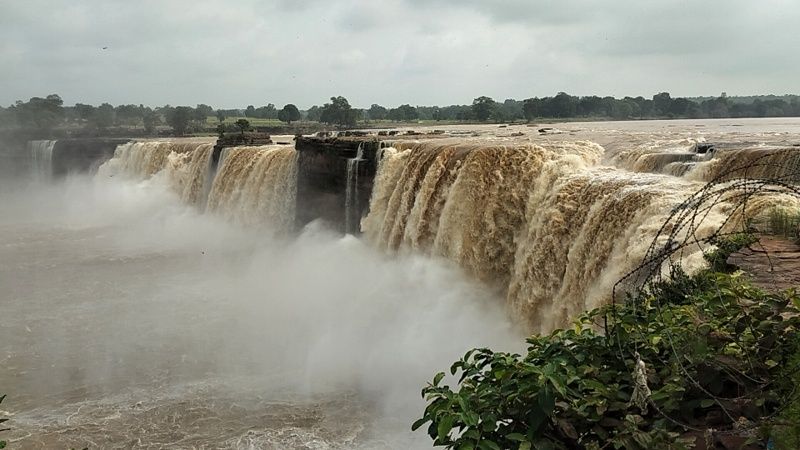
A few steps forward and we were standing infront of the tremendous waterfall. Owing to a more than favourable monsoon, the water level in the river had swelled, and consequently the waterfall had become far more thunderous than it usually is.
The sheer power of the water gushing down the horseshoe-shaped cliff was mesmerizing. The mist rising from the base created a magical, ethereal atmosphere. Had we been lucky, we could have caught a rainbow dancing in the spray, today however was not that day.
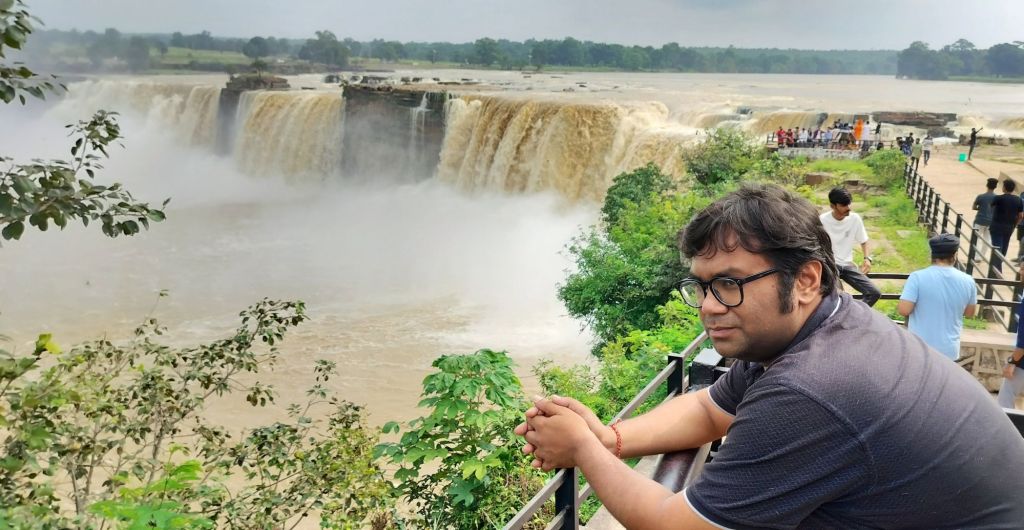
I had planned to take a country boat ride in the base of the waterfall, but once I looked at it in person, I dropped my plans. The river has a different spirit every season. In monsoon, she is angry and powerful. In winter, calm and gentle. Maybe I have to plan to come back here in winter to take that dreamy boat ride.
Chitrakoot is India’s widest waterfall, famous as the “Niagara Falls of India”, a name bestowed upon it owing to horseshoe shape. I am not at all on board with naming anything as India’s answer to any global attraction as I feel, all places have their own identity and they must be known as what they are. So for me, this waterfall is the ‘Crown Jewel of Jagdalpur’.
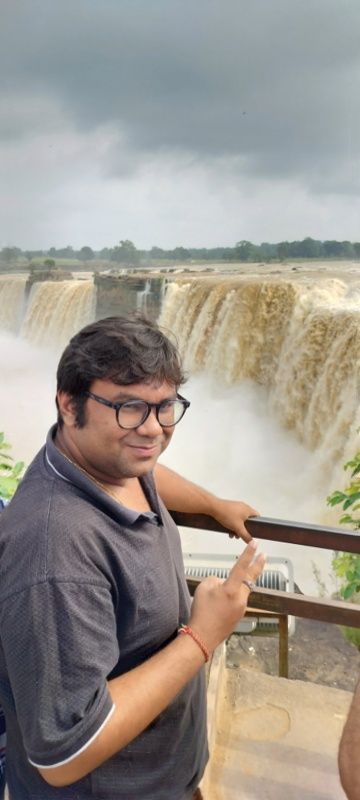
Damdami resort stands on the shore of this waterfall and is arguably the best place to stay inorder to experience Citrakoot. Had we planned ahead, we could have also ensured a stay right beside the waterfall.
Link to Damdami resort booking.
Nature’s Masterpiece: Tirathgarh Waterfall
Next up was a visit to the Tirathgarh Falls, located inside the lush Kanger Valley National Park. The park was home to the next two destinations we had planned to visit. The national park was packed with towering trees and rocky mountains. I was expecting the cacophony of birds and other sounds of nature, however I was treated with the blaring horn of busses and tourist vehicles which had lined up on the road to the park.
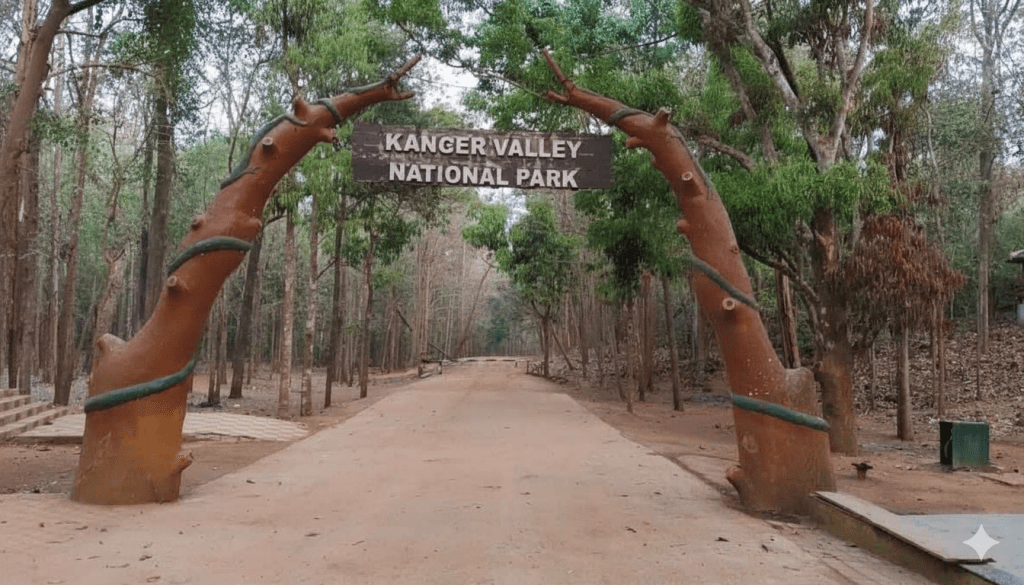
Typically the roads should have been deserted, but since we had chosen our visit on a long weekend, there was heavy traffic on route. It felt like the entirety of Chattisgarh had descended for a picnic in the national park. It took us around one hour to navigate 15 km and reach the waterfall. Parking our vehicle we hiked around 1 km to catch our first glimpse of the majestic waterfall.
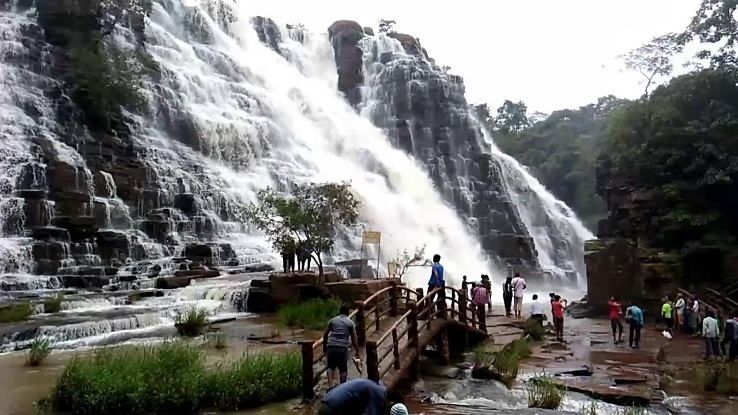
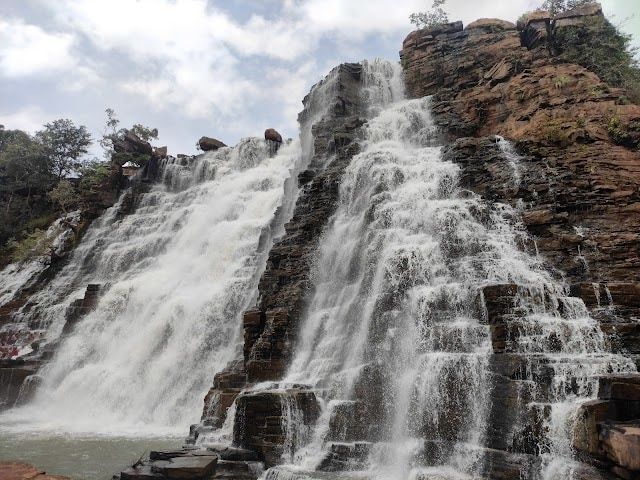
Unlike Chitrakoot’s powerful plunge, Tirathgarh is elegant, a stunning cascade of water that splits into multiple streams down a rocky cliff. It was a picturesque sight, almost like a layered wedding cake of nature. The walk through the national park to reach the falls should have been a peaceful walk, with the soothing sound of crashing water, however the picnicers ensured I was treated to shreaking human noise at every step.
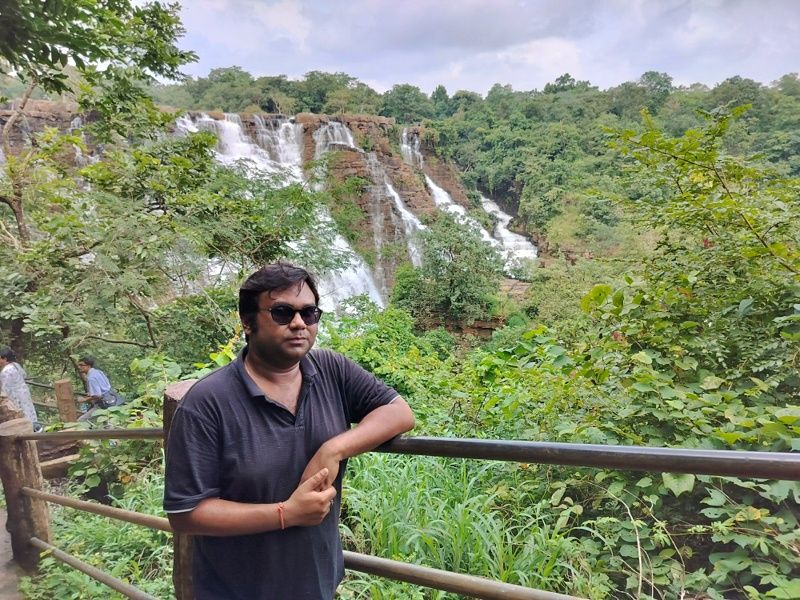
Every inch of the area was teeming with reel enthusiasts and they were hogging all the best viewing platforms of the waterfall. The base of the waterfall was littered with people of all ages and sizes, bathing as if it was not a waterfall but their very own shower. The clear water had turned frothy because of the incessant use of shampoo by the crowd.
There was clear notice on the entry that one should not use shampoo or soap while in the waterfall, but I could see people shampooing their heads, and in some cases the whole body, as if there were no tomorrow. The place was so crowded, I had to say ‘I quit’ and left the place.
A Journey Underground: Kotumsar Cave
With mixed feelings of awe and frustration I left the Tirathgarh waterfall complex. I never understood the need to do a hair routine in a waterfall!! Why why!! Don’t people have a bathroom at home?? Some activities should be completely banned, and bathing in any waterfall should be one of them
Our next destination , The Kotumsar Caves stood around 12 km away from there Tirathgarh waterfall. We had to traverse the single lane road in the dense forest in order to reach the cave. At places we saw platoons of CRPF jawans patrolling, reminding us that the forest, was still a hot bed of Naxalite activities. There was a time when Bastar was synonymous with Naxalism which has seen a steep decline since the 2010s, but there are still pockets within the district where naxalism exists.
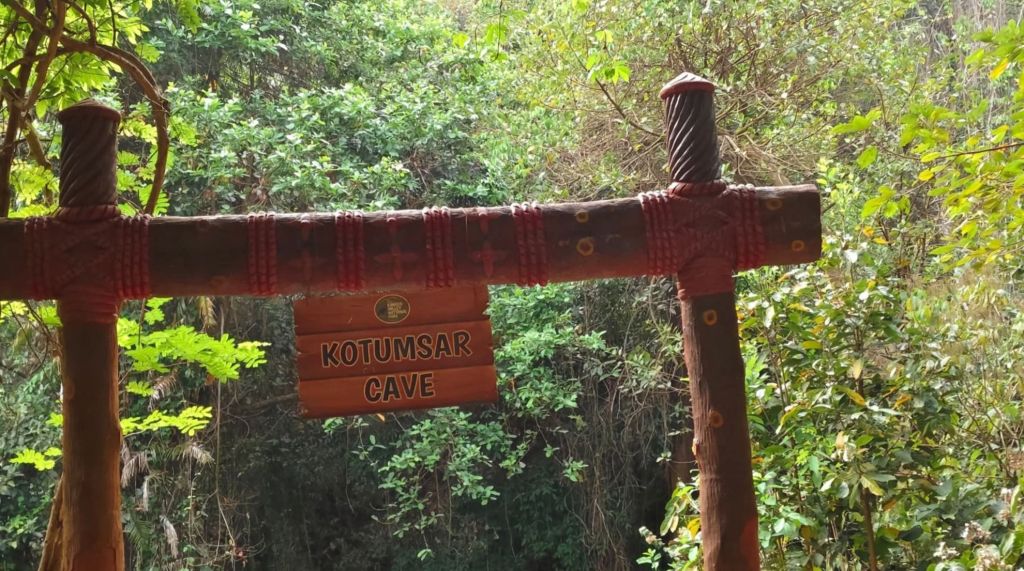
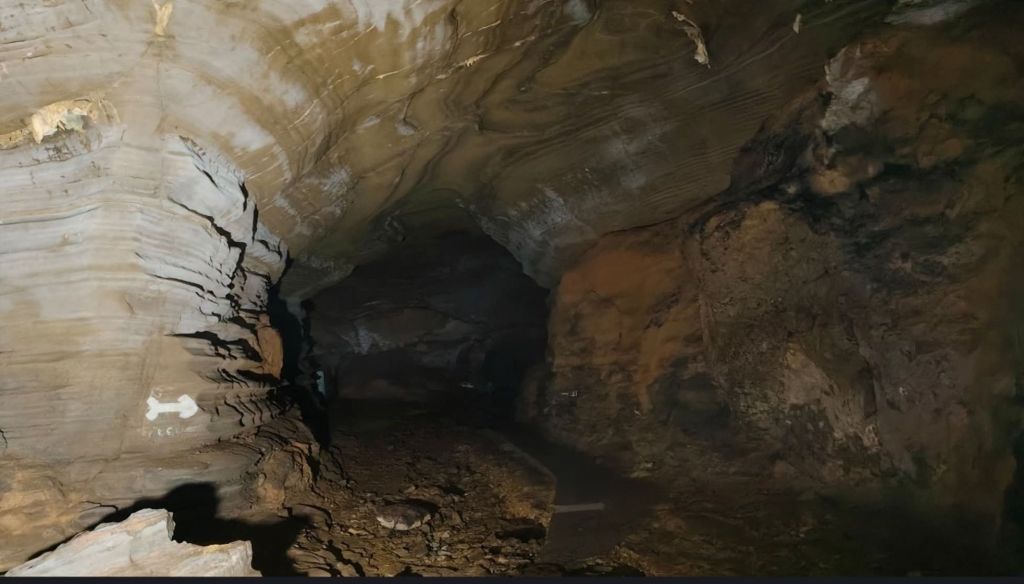
A small gate built in the shape of an intertwined bamboo structure, welcomed us into the Kutumsar cave complex. We hired a local guide and started our descent into the endless limestone cave which is a subterranean wonder.
The sheer formations of stalactites and stalagmites, illuminated by a few sparse lights, felt otherworldly. It was cool inside, a stark contrast to the humid jungle heat outside. Our local guide pointed out various formations, from a “Shivling” to various animal shapes, his voice echoing in the vast chambers.
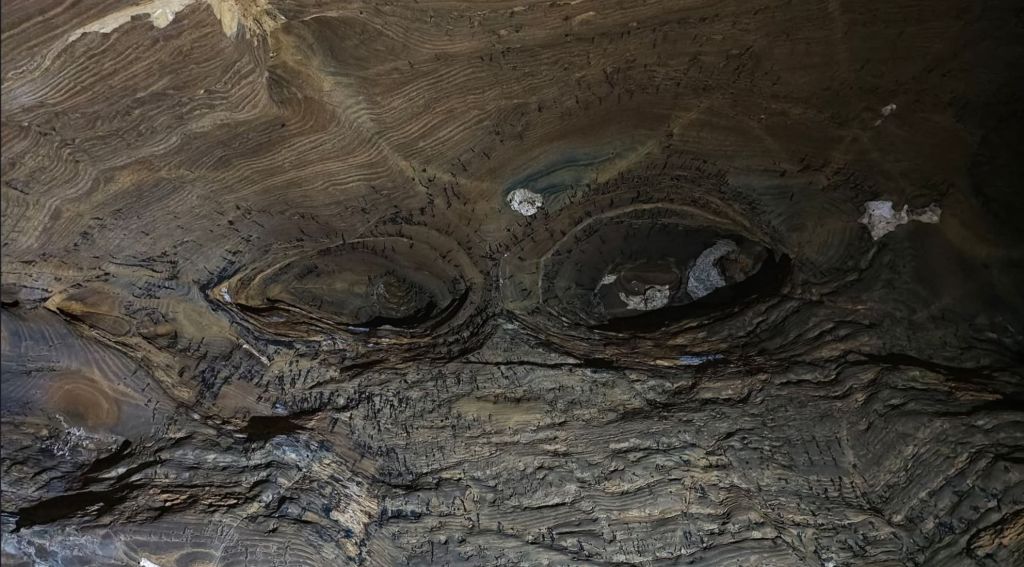
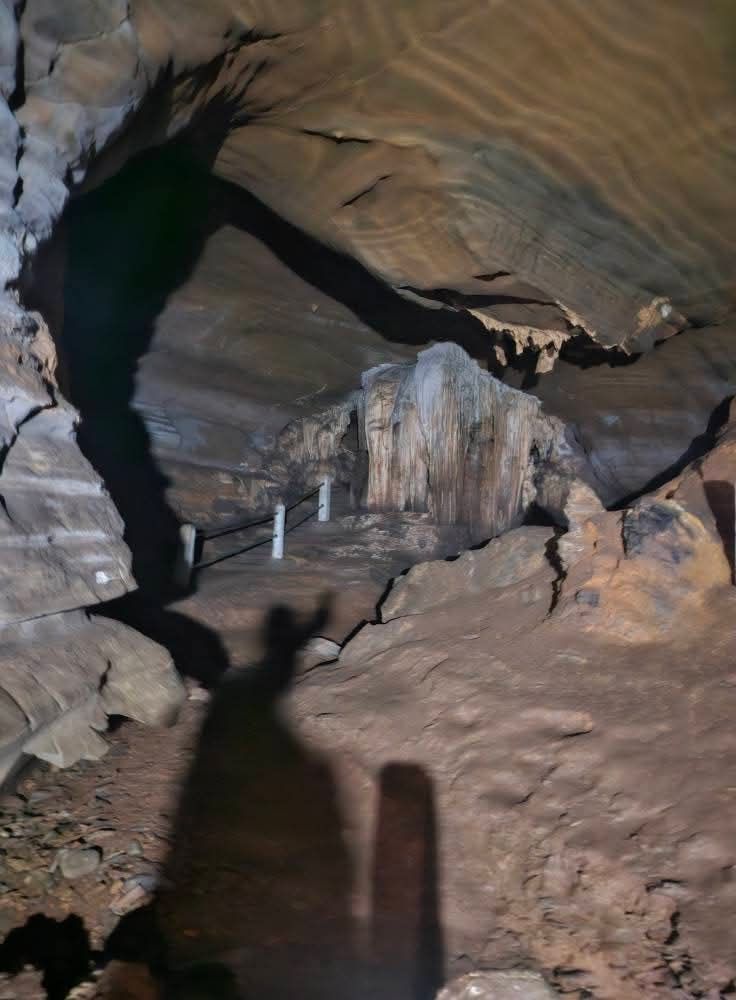
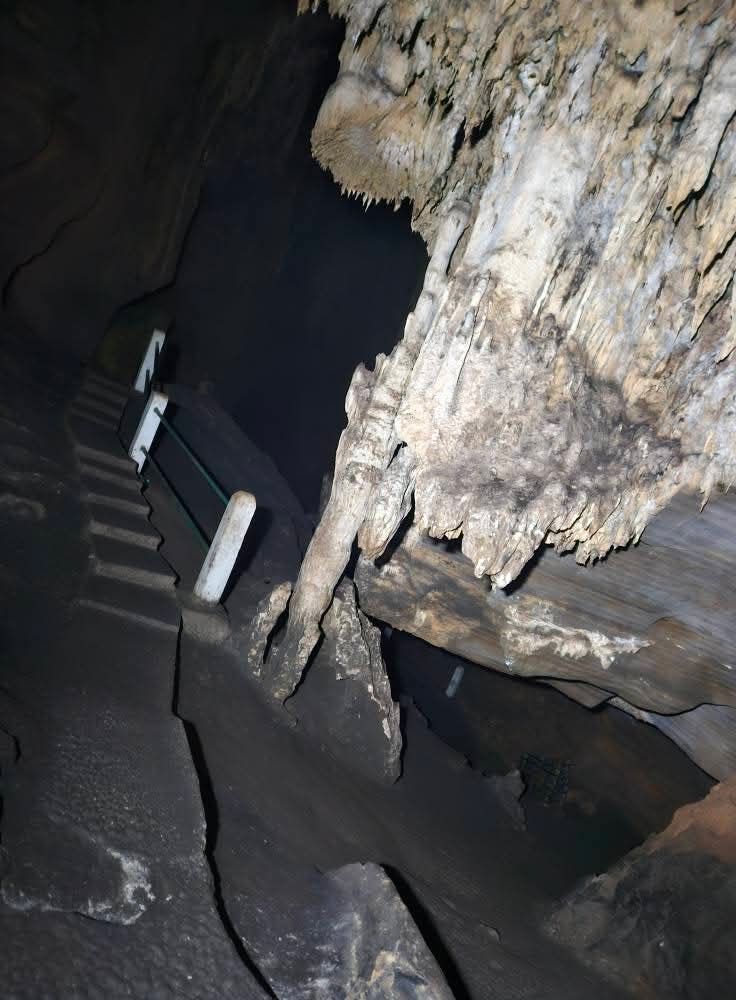
The most fascinating part? These caves house a rare species of blind fish. Nature never ceases to amaze me. A quick tip: wear comfortable shoes; the path can be slippery!A Taste of Bastar
A Taste of Bastar
Our trip to the cave was tiring, and hunger follows tiredness everywhere. By the time we were out of the cave, our bellies had started protesting, and it was imperative for us to eat something right then and there. We drove into the very first dhaba that we found on the road and boy! it amazed us.We had desi chicken curry cooked with local spices, which blasted our taste buds with a unique burst of flavor. There were other accompanied dishes as well, which were good, but nothing out of the ordinary. The standout though was a dish called chapda.
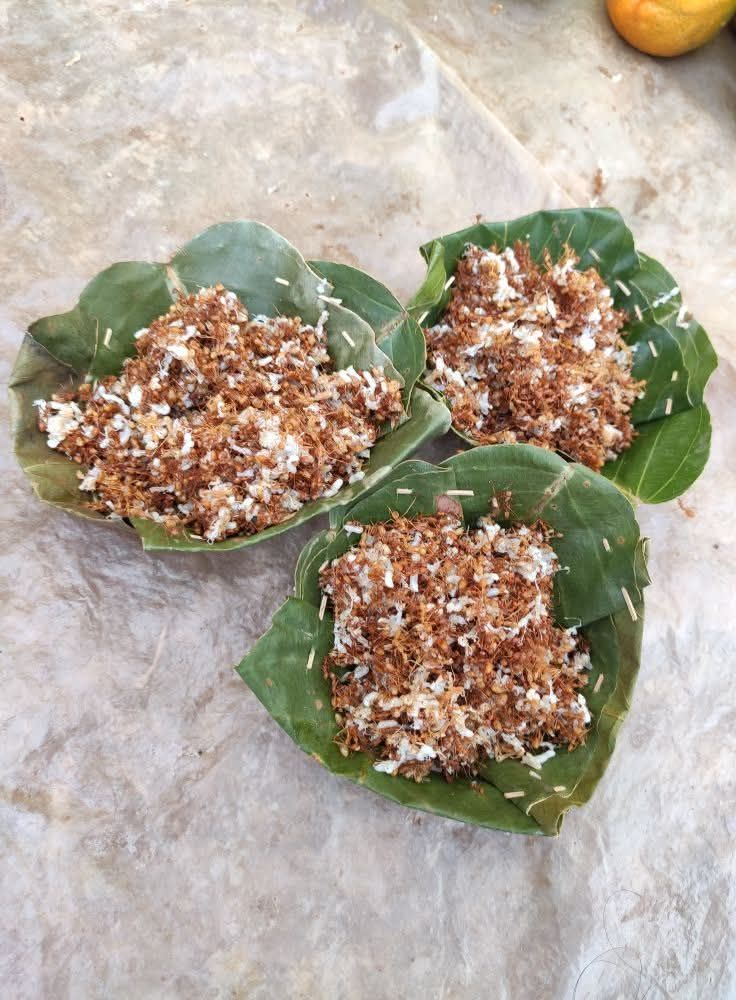
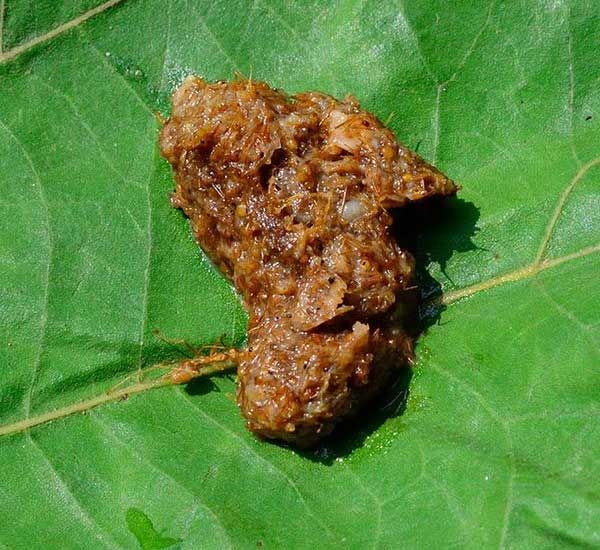
I had ordered the dish despite the steep opposition from my friends. Chapda is a chutney made with grounded ants. Yes, you read that right! It’s made up of big ants, the kind we see roaming around on trees. The crushed chillies were making the dish a lot more spicy than what it should have been, but I could make out that the actual taste of the ants were tangy, bordering around the sour side of taste.
We also sampled taadi, a local alcoholic beverage tapped from a palm tree. It has a mild, earthy taste and is a staple in tribal gatherings. We only took about half a glass out of fear of what kind of intoxication it might trigger, but it didn’t. So I guess you need a copious amount of that beverage to get high.
The Bottom Line
Jagdalpur is a destination that engages all your senses. It’s wild, cultural, and deeply authentic. From the thunderous waterfalls to the silent caves and the vibrant local culture, it offers a travel experience that you won’t find in typical tourist spots. If you’re looking to explore the unbeaten path in India, pack your bags and head to Jagdalpur.
 East Indian Traveller