

Navaratri has always been special in our family. Apart from the fervent devotion to Goddess Durga and her nine forms, ritualistic pandal hopping and gorging on anything edible, Navaratri is also the time when my family embarks upon a trip to a Devi temple. This trip had started impromptu a few years back, but then this had become kind of a ritual in the family.
This year the plan was to visit the deeply divine Maa Tara Tarini Temple in Ganjam district of Odisha, starting off early in the morning and getting the morning darshan. But as it happens with most plans with people of varying age demographics, we were late. Typically being late is associated with unpleasant things but this time it turned out to be a boon.
- The Journey
- Khallikote
- History of Nirmalajhara Temple
- The Complex
- Nilakantheswar Temple and Dola Mandapa
- The Spring
- Snana Mandapa
- Radha Krishna Temple:
- The Upper Level
- Top level
- Conclusion
- How to Reach
- Where to stay
- Places of Interest nearby
The Journey
Our car was darting down NH16, trading the city’s concrete embrace for the long, hypnotic rhythm of the highway. The total journey to Maa Tara Tarini temple was that of 150 KM, and though we were dangerously close to break the speed limits on the highway, we were still far behind our schedule.
The initial stretch was a blur of seamless grey, the landscape unfolding in easy, predictable swathes of green. Darshan to the temple stand closed from 12:30 PM to 2 PM, and as already established no matter how fast we drive, we were not reaching the intended spot before lunch. It therefore made more sense to have our lunch prior to visiting the temple. Once we added up all the timelines, it dawned upon us that we had about an hour to kill, and then started the idea of checking out a few local places, before heading out to our final destination.
Suddenly multiple phones were out with Google maps and chatGPT as all of us tried to find out interesting places on route.
“Have you visited the Nirmalajhara Temple?“, our driver had jumped in to the brainstorming session.
“No“, an honest answer from us ignorant lot. Some of us are already cancelling our earlier search results and typing Nirmalajhara.
“You can visit it, it’s nice“, he said with a mix of confidence and humility. By that time some pictures had turned out on our phones, the place surely looked fantastic. It deserved to be explored.
A simple nod from us was enough for our driver to effortlessly glide off the highway on to a service road leading into a small, weathered town we had heard of, but never visited – Khalikote.
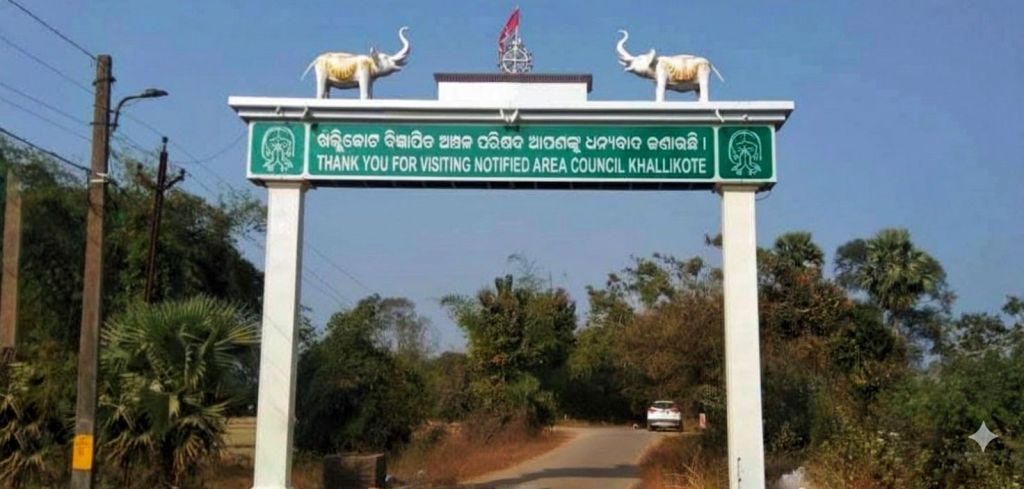
Khallikote
The four-lane highway gradually necked down into a narrow, winding rural road. The pace slowed instantly. The world outside the window transformed, a tapestry woven with ancient trees that formed a leafy canopy, fields rippling with crops, and the occasional farmhouse standing as a sentinel of a bygone era. Nothing describes a typical small town of Odisha, which is finding its way from being a rural settlement to a semi urban life.
Khallikote was not an unknown town. I had many friends who had graduated from Khallikote college, a reputed institute in the region,, which attracts many talented students from far away places. However beyond the college, this town has never even been part of our regular conversation, let alone be part of our travel itineraries.
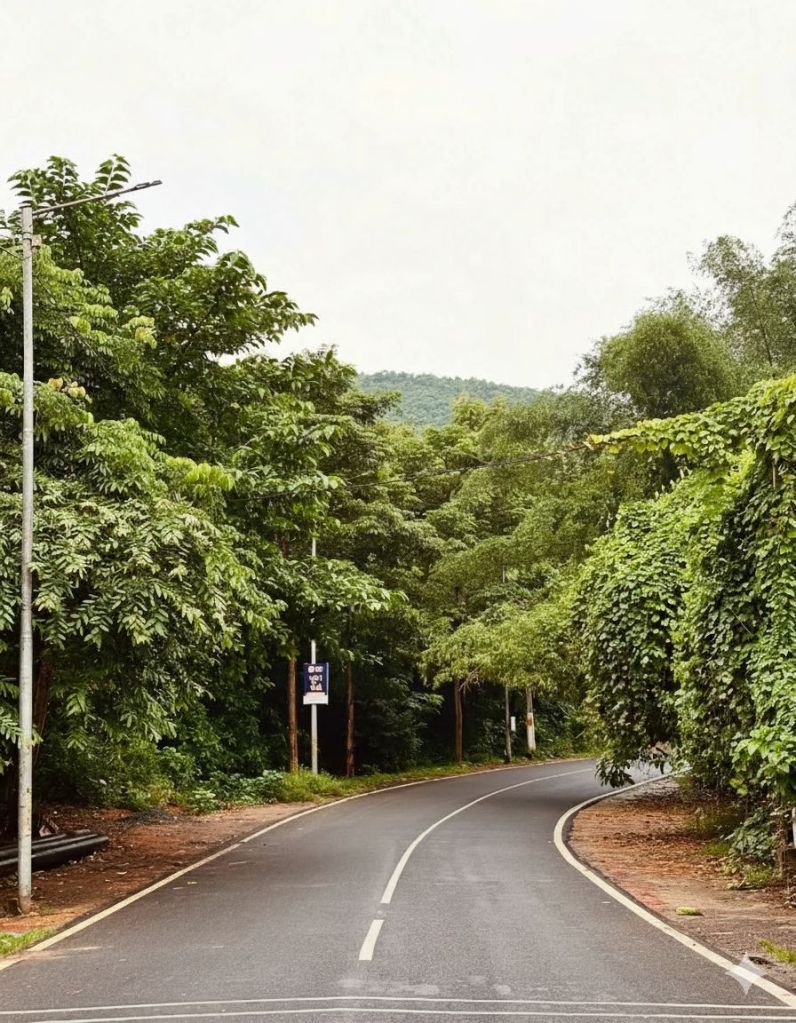
The town had large patches of forested area, making certain places almost invisible. All of a sudden, a break in the dense foliage revealed something extraordinary. Nestled in a small clearing, almost swallowed by time and nature, stood an ancient temple – Nirmalajhara.
History of Nirmalajhara Temple
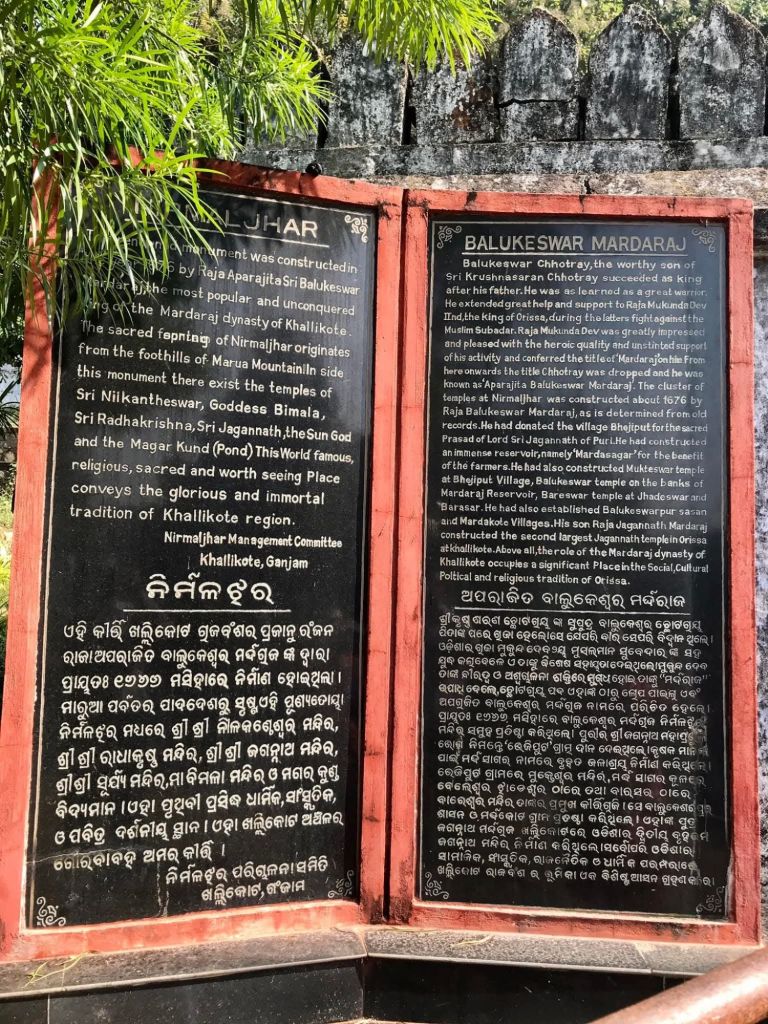
The Nirmalajhara temple in Khallikote, Ganjam, was constructed in 1676 by Raja Sri Balukeswar Mardaraj of the Khallikote royal dynasty. He was a powerful ruler of the region and was undefeated during his reign. He reportedly converted his summer palace, into this temple complex, opening it to all people and thus marking a new era for the region.

The Complex
From outside, the temple doesn’t seem to have anything special about it. It felt like any other rural temple which had a hill being it with ample vegetation. It was however once we stepped in that we realised how special this complex was.

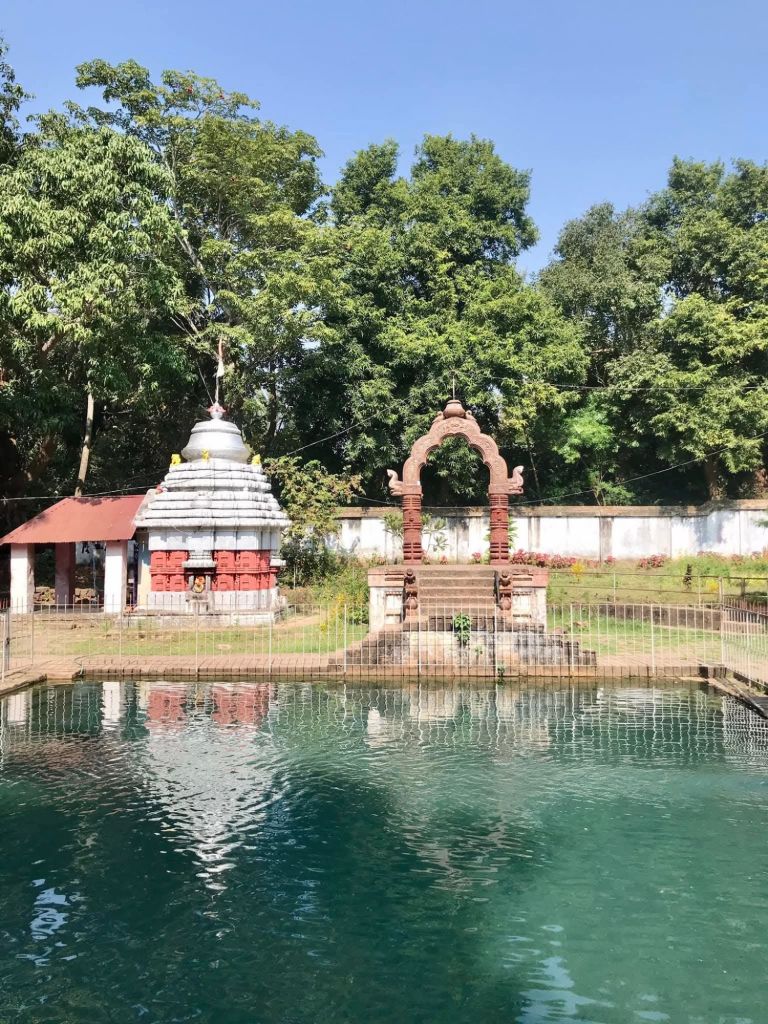
Inside the complex, the simplistic look of the temple gave way to an even deeper, more profound stillness. Cascading temple tops of various sizes stand sprinkled around a pristine water tank, helmed by green hills in the background.
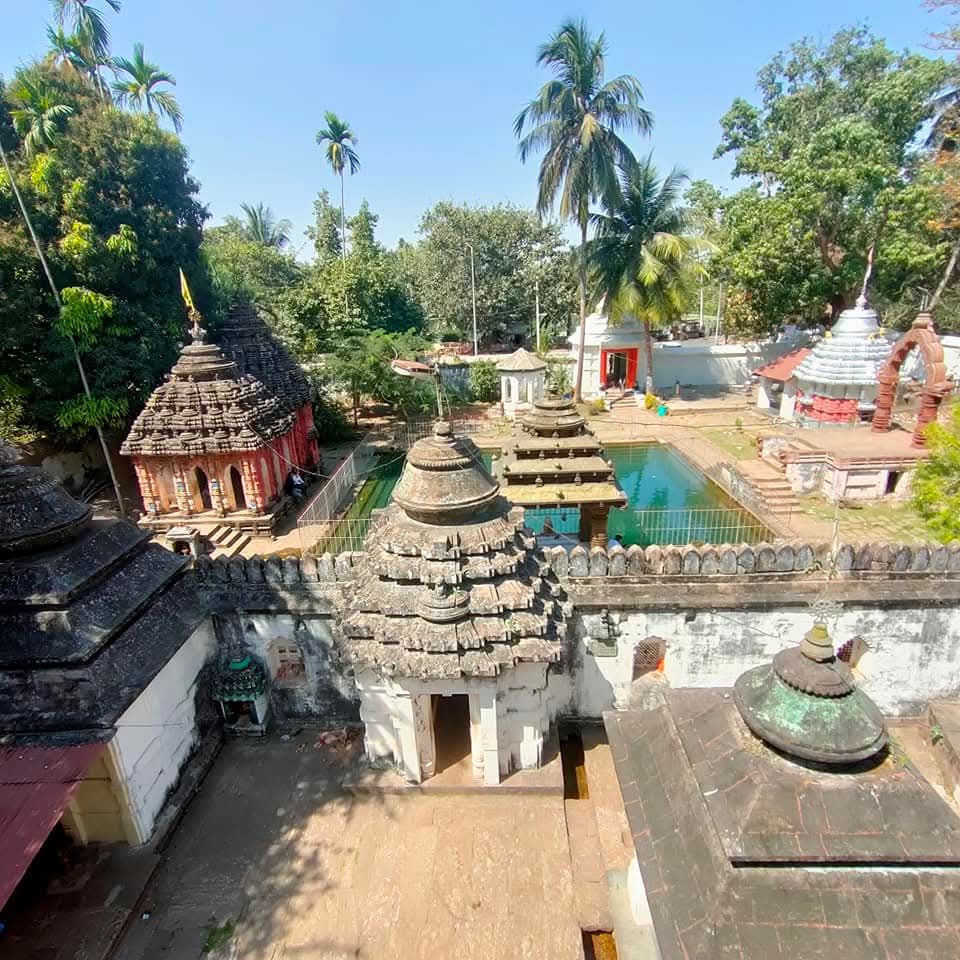
Our brains are wired to look at things clockwise, thus a small temple on the left could be considered a starting point of the complex, followed by a beautiful arch, then a pool or water tank in the middle. There is a raised platform with a ceiling beyond the water, followed by a beautiful red colored temple at the right most corner. There were more temples behind the water tank, leaving a lot to packing, from a temple that looked plain and simple from the outside.
Nilakantheswar Temple and Dola Mandapa
The first temple is known as Sri Nilakantheswar Temple. It is dedicated to Lord Shiva who is also the presiding deity of this whole temple complex. This particular temple attracts a lot of pilgrims from in and around the area, who still divine blessings of the lord.
Followed by this temple is an intricately carved arc supported by even more intricately carved pillars. The arc stands on top of a raised platform. This whole structure is known as Dola Mandapa and it is used for various rituals during special festivities like Dola Purnima (Holi).

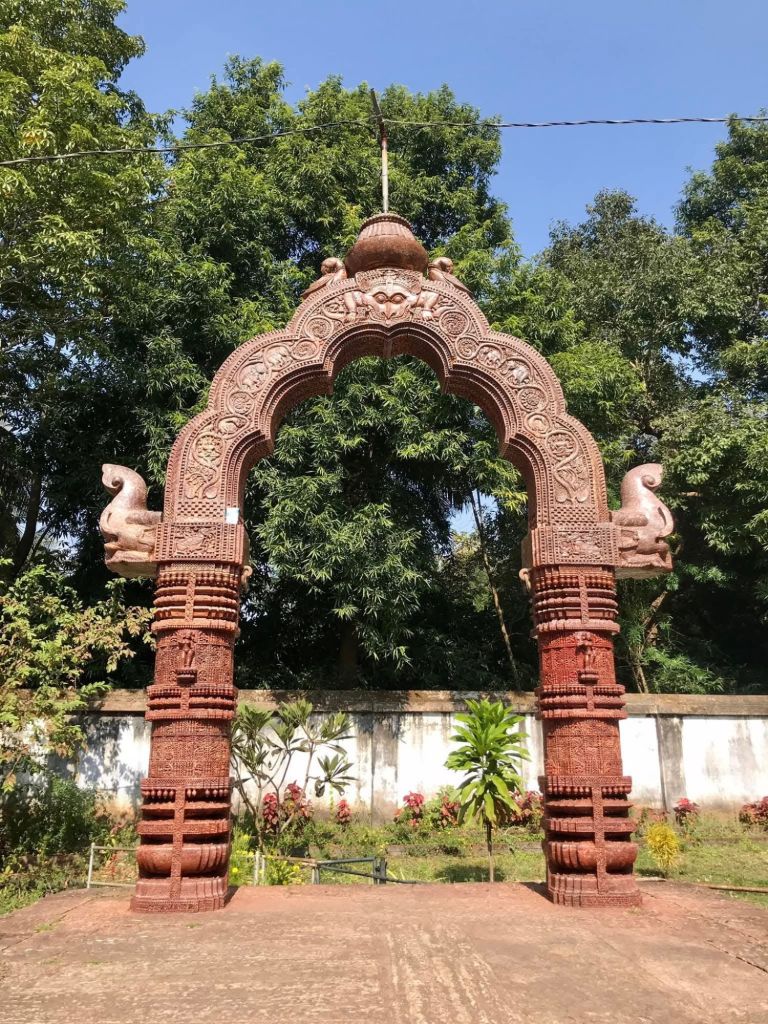
The Spring
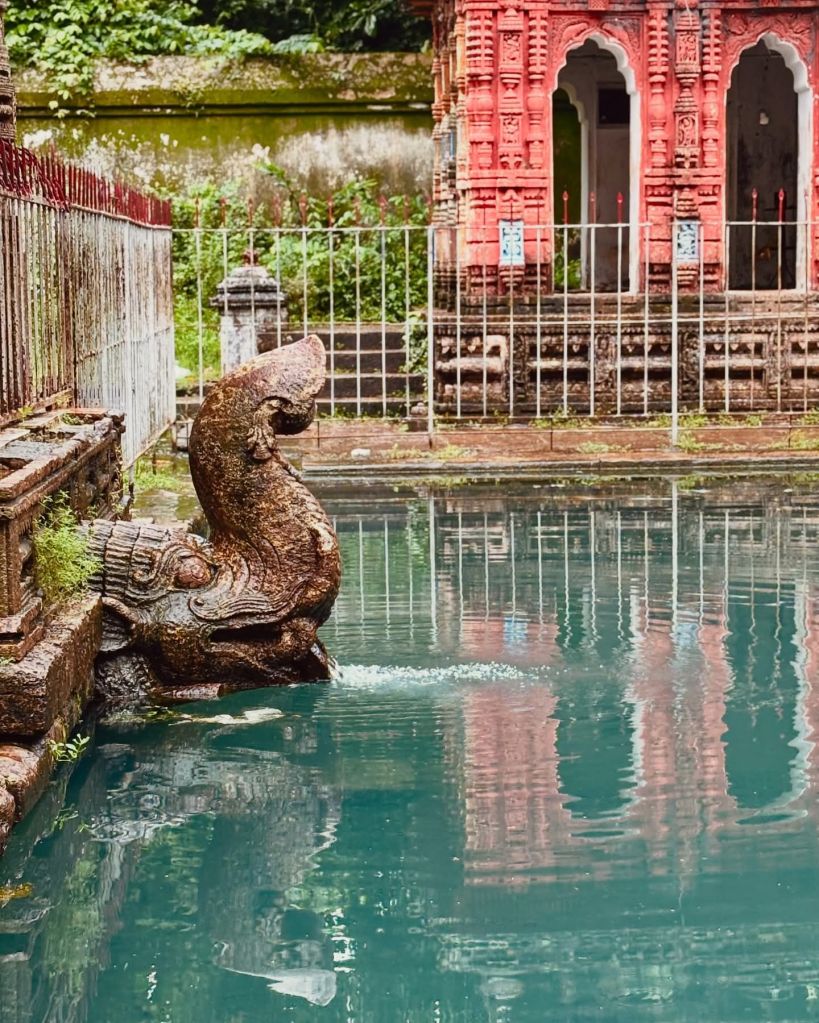
The central feature of the complex, which enhanced the beauty of the whole place was a central pool. The pool had crystal clear water, with fresh water being fed from a perennial spring. This spring, which is considered sacred originates from the Marua hill, that stands behind this temple complex. This hill is part of the Badaghati Mountains of the Eastern Ghats, a starting feature of the still vastly under-explored mountain range in the east of India.
The water from the spring is channeled through open channels into two main pools or kundas within the complex. One small tank, which acts as the first stop where water from their channels are collected. It is also known as Makara Kunda and the other a big pool in the middle of the complex which is intriguingly unnamed.
The water is considered pure and is believed to possess therapeutic properties, thus we saw many pilgrims collecting this water for religious or medicinal purposes.
The importance of this spring in context of this temple could be appreciated from the fact that this complex is named as Nirmalajhar, which is a combination of two words Nirmala meaning pure and Jhara meaning spring.
Snana Mandapa
Just behind the pool stands the extremely beautiful Snana Mandapa. Snana means bathing in Odia, which means this structure is meant for bathing. I loved this whole structure, which was adorned with intricately carved columns and an even more mesmerisingly carved ceiling. The beauty of this particular structure cannot be justified in words.
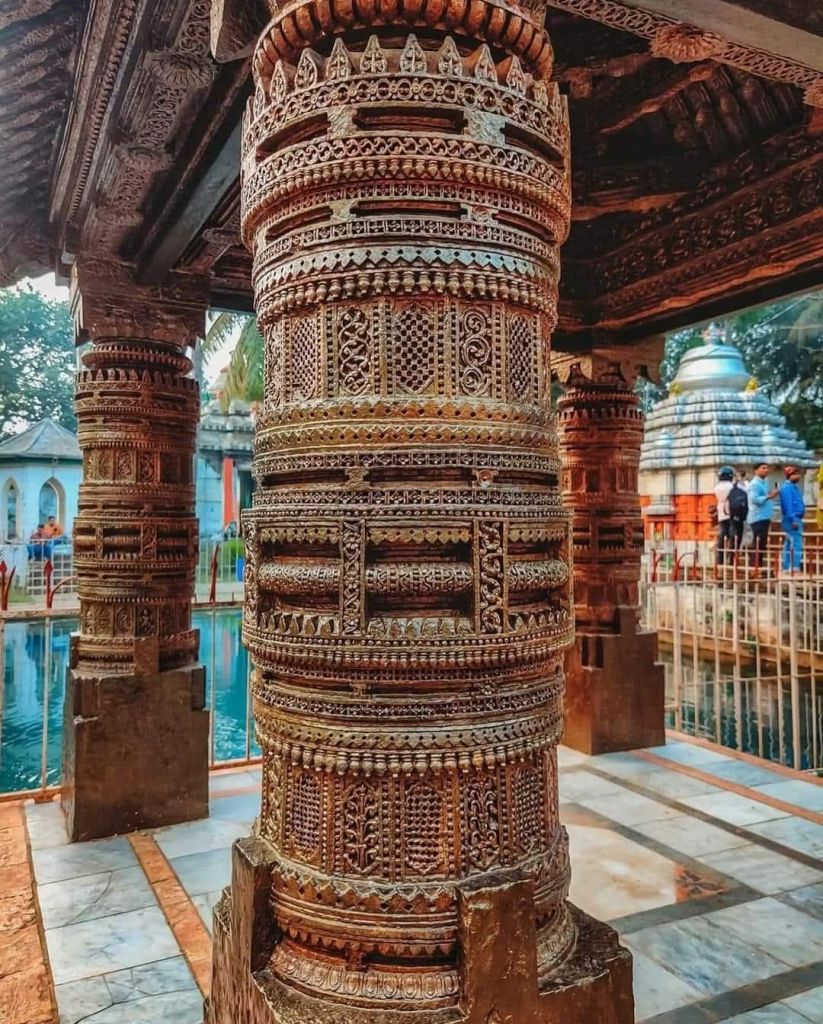
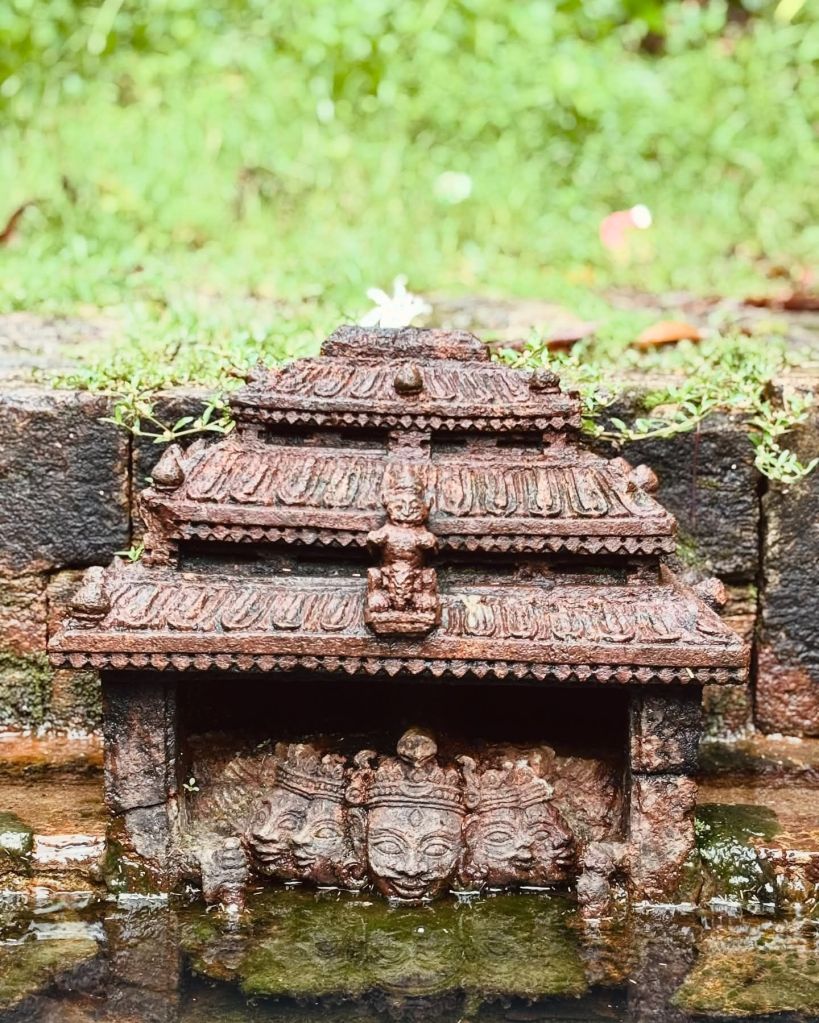
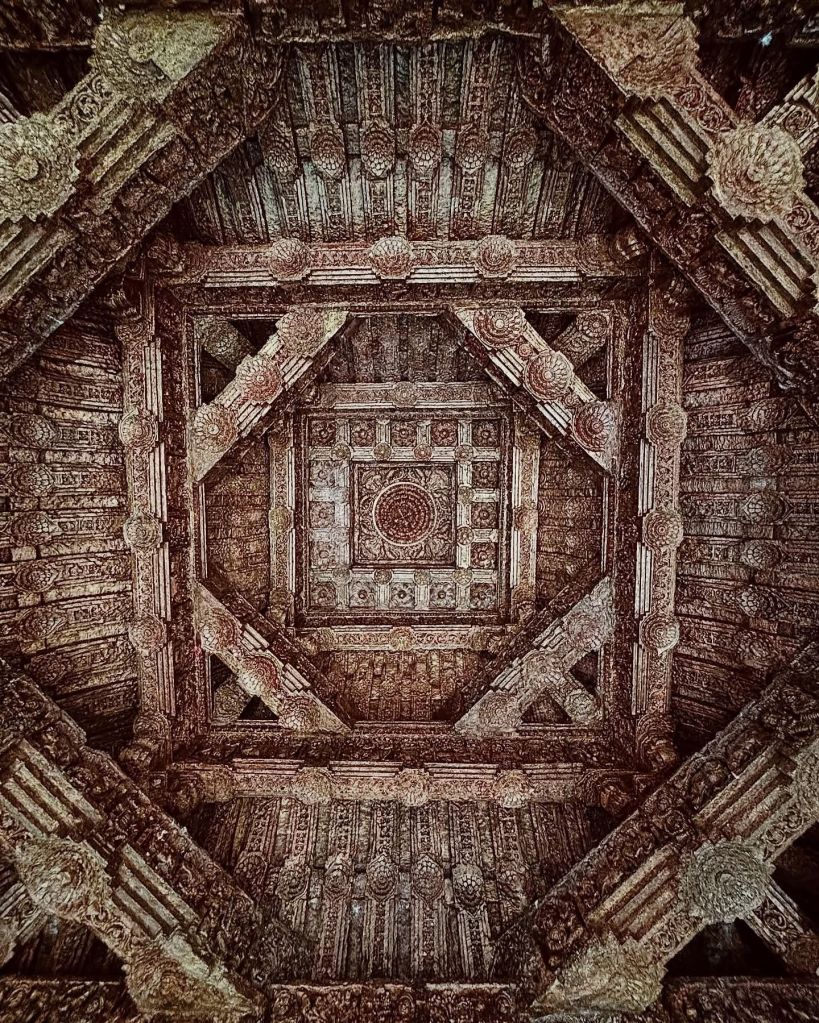
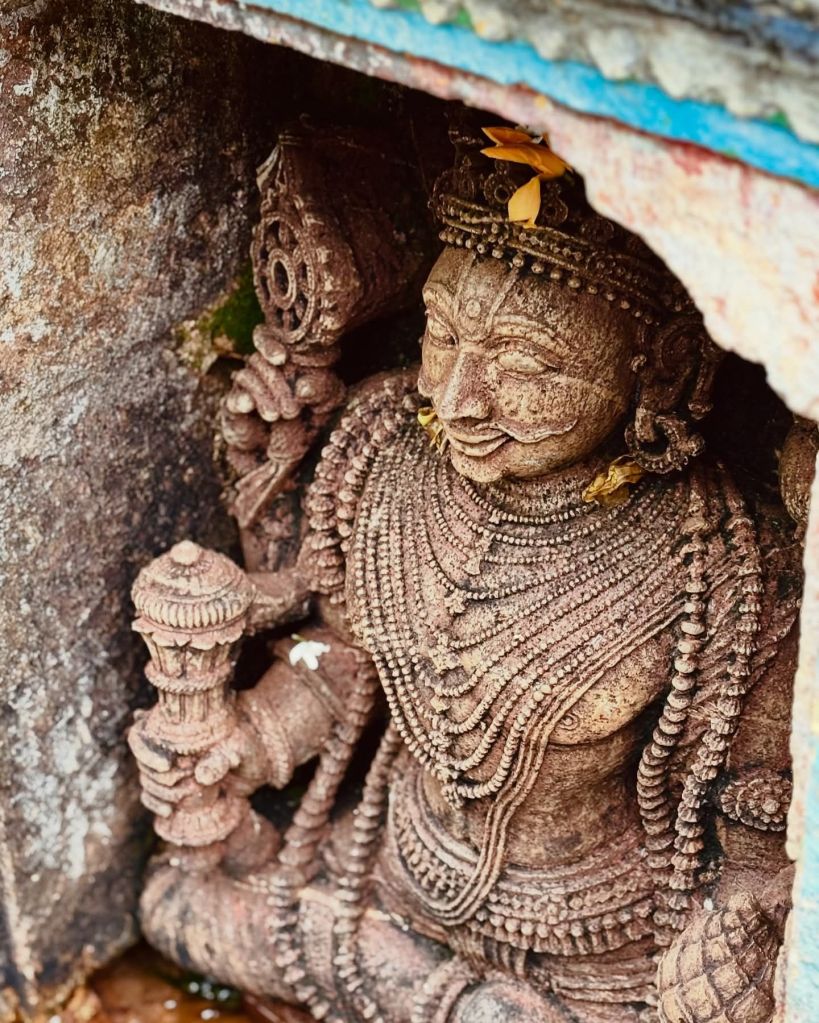
The intricately carved columns were a magnificent example of ancient Indian artistry and architecture, serving both a structural and a deeply symbolic purpose. The pillars were far more than just supports for a ceiling; these were “stambhs” that connected the earthly and divine realms.

Radha Krishna Temple:
The last structure around the pool is the rustic looking Radhakrishna Temple. This was an interesting sculpture as the walls looked freshly painted but the ceiling was left as is. I have no clue why this was done, but this very act ensured that the temple looked very different from any other temple I have seen till date.
While the walls of the temple radiated a bright red hue, the ceiling was dull grey. Centuries of neglect could be observed as plants were creeping through multiple crevices of the ceiling. This however rendered a unique look to the temple as it radiated old world charm like no other.
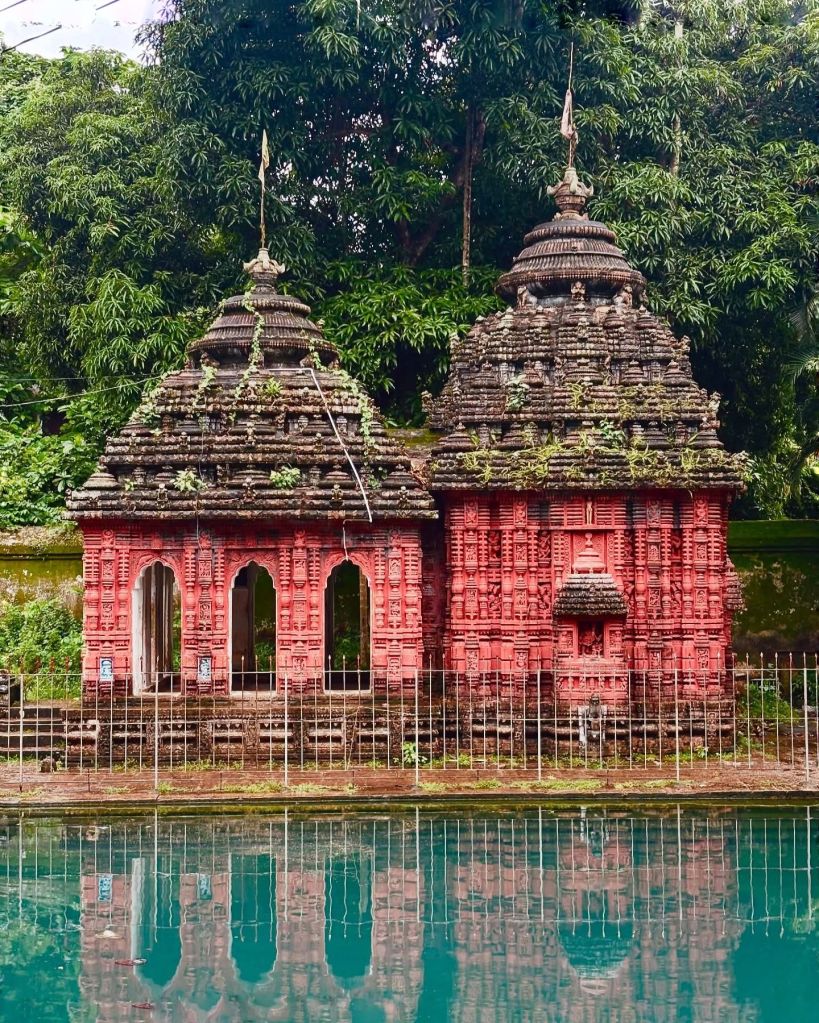
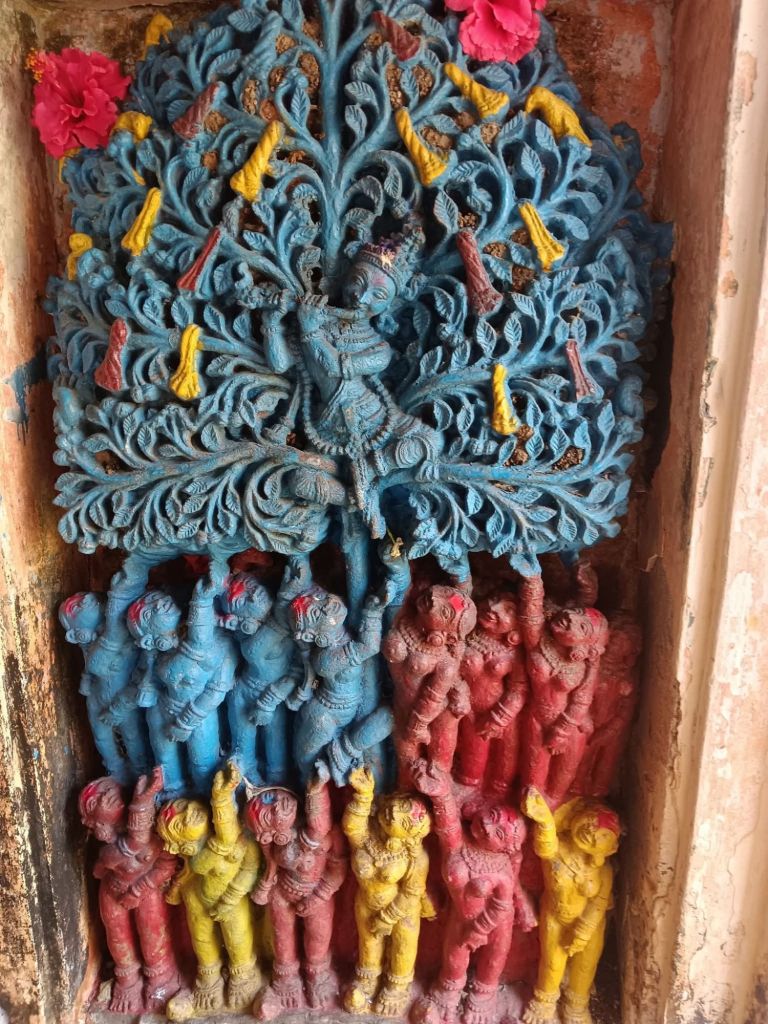
On the inside the Temple celebrated the divine love between Radha and Krishna. It is adorned with intricate carvings of various scenes from Krishna’s life, highlighting his playful and divine aspects of Lord Vishnu’s mortal form from the Dwapar Yuga.
The Upper Level
While the complex around the pool was beautiful and enigmatic, the upper level of the complex housed many more temples dedicated to various gods and goddesses. The wall in front of the door leading to the upper level, held sculptures of Dasa Avatars, the 10 reincarnations of Lord Vishnu, placed at regular spacing.
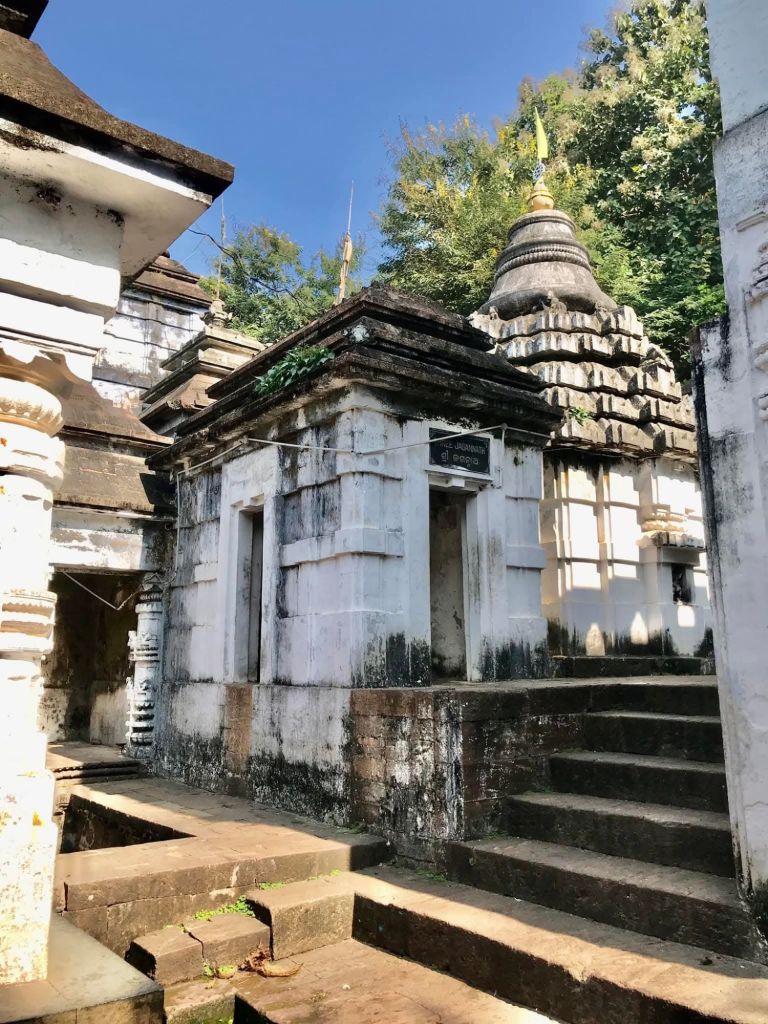


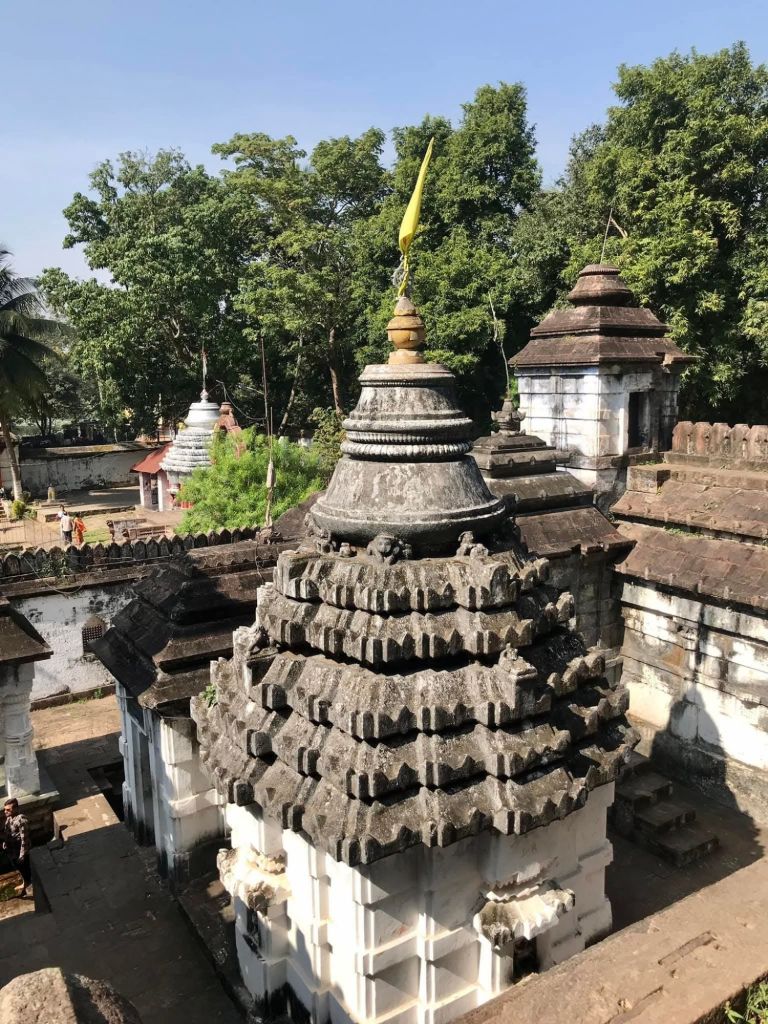
This section of the temple complex showcased typical Odisha temple architecture. The walls featured beautiful sculptures of Parvati, Kartikeya, and Ganesha along with the Dasa Avatars. The structures were a breathtaking testament to forgotten craftsmanship, the stone walls intricately carved with deities and stories, worn smooth by centuries of wind and rain.
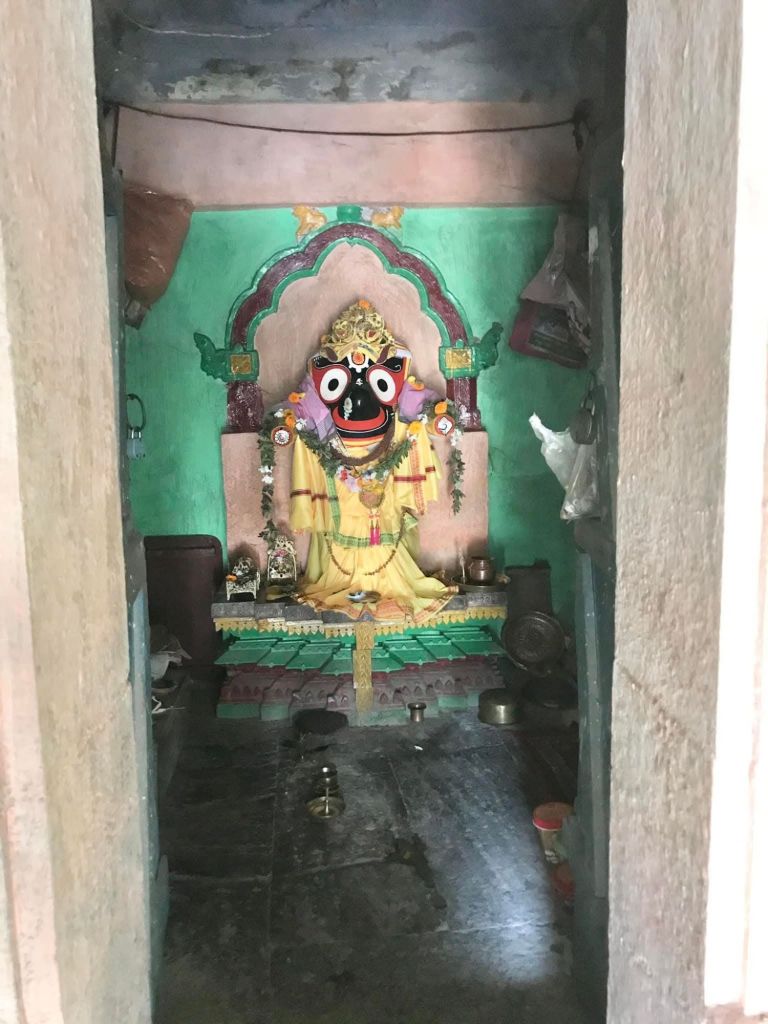
This section also housed Temples dedicated to Lord Jagannath and Maa Bimala, which are extremely important place of worship and attract devotees from in and around Khallikote, seeking blessings from the lord.
Top level

Walking through the temples we discovered a narrow flight of stairs. Intrigued we walked the stairs and soon we were on top of the complex. A narrow lane took us to a viewing pavilion, which had simple columns but a ceiling with carvings, that matches the aesthetic of the temple. This pavilion gave a bird eye view of the entire complex.
Though the view was simply breathtaking, this was not a typical feature of a temple complex. Generally temple complexes don’t have pavilions to look from above. I feel this might have something to do with the history of the place being a summer palace. I could imagine soldiers stationed there for security purposes.
Conclusion
Trekking down the pavilion my mind was overflowing with emotions. We had not planned for Nirmalajhara, but destiny had planned it for us. This place came up as such a pleasant surprise that it reminded me to keep an open mind while travelling, as every wrong turn could introduce us to such beauty.
This discovery, an unexpected reward for the miles traveled on the path less taken, was the true highlight of our journey. It was a powerful reminder that the best adventures often begin where the highway ends, hidden down a simple country road, waiting patiently to be found.
How to Reach
Nirmaljhar has both road and rail links. On the Northern side, it is 60 km from Berhampur and on the Southern side it is about 120 km from the State Capital Bhubaneswar.
Khallikote station is the nearest railway station and is 9 km away from Niramaljhar, while Biju Patnaik International Airport in Bhubaneswar is the nearest airport.
Where to stay
It’s a day trip from Bhubaneswar, recomended to stay at chilika or gopalpur.
Places of Interest nearby
Maa Tara Tarini Temple
Tampera Lake
Gopalpur Sea Beach
Chilika Lake
 East Indian Traveller