

- Vattakotai Fort in a Nutshell
- History of Vattakotai Fort
- Visiting Vattakotai
- Architecture:
- The View:
- Conclusion:
Vattakotai Fort in a Nutshell
How to reach
Vattakotai Fort is just 8 KM from KaniyaKumari Railway station, hence most travellers prefer to take a bus or cab from Kanyakumari to Vattakotai.
Where to stay
Kaniyakumari offers a host of staying options, in all budget ranges.
Fort Timings
8 AM to 5 PM
History of Vattakotai Fort
The fort was commissioned by Punachal/Elakkara Valiyaveetil Marthandan Chempakaraman Pillai as a defence mechanism for the Travancore region against sea faring invaders. Later the fort was renovated and modified by Captain Eustachius De Lannoy, who was the commander of the Travancore kingdom.
The story of De Lannoy is also very interesting. He was a Frenchman who served the Dutch East India Company and had come to the Indian Subcontinent to fight with the Travancore Kingdom. His forces were defeated in the Battle of Colachel in 1741, leading to the surrender of De Lannoy. The Raja, impressed by his skills and knowledge, inducted him into his army. De Lannoy helped mordenised the Travancore army by training the forces on Euporean lines and also imparted the army the knowledge of artillery.

In due course of time he earned the trust of the King and became commander in chief of the very same army that defeated him. During his time, he renovated many forts to match the modern warfare requirements.
You can learn more about the story of De Lannoy here.
Visiting Vattakotai
Post visiting the famous Padmanabhapuram Palace, while we were on route to Kanyakumari from Thiruvananthapuram, we made an unplanned stop at Vattakotai fort. To be truthful it appeared simple at the first glance, nothing ornate. Little did we know, what an amazing experience awaited us.
As we went closer to the entrance of the fort, the Coat of arms of the Kingdom of Travancore caught our attention. It shows two elephants flanking a shank (conch shell) surrounded by a laurel wreath, and a banner underneath with the Sanskrit text ‘Dharmo Smat Kuladewatam’, meaning ‘Dharma is Our Family Deity’.

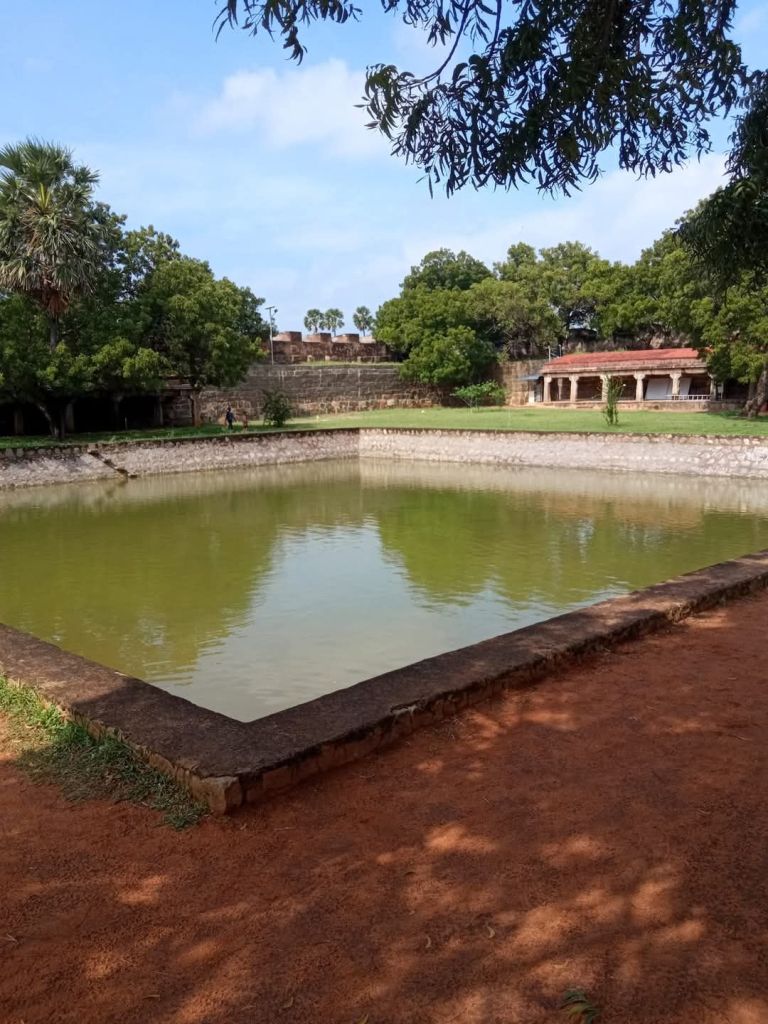
Inside the gate a huge lawn welcomed us, with the view of the Arabian sea at a distance. A small stepped tank, sits right in the middle of the lawn, which still has water filled to the brim.
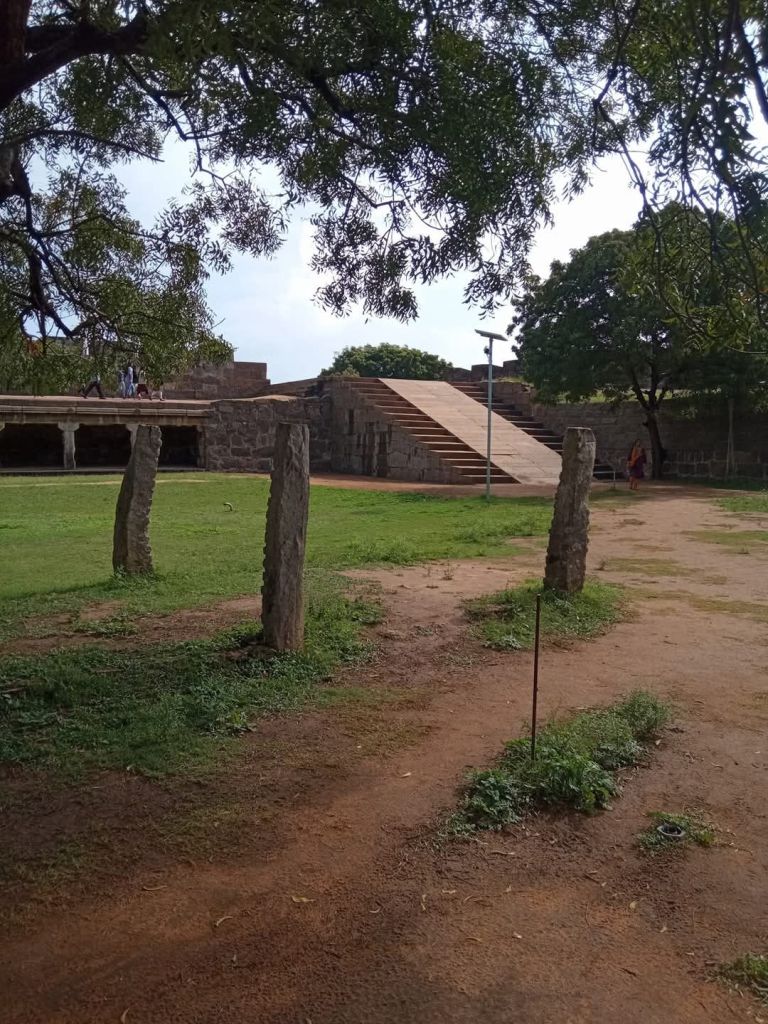
Long corridors flank all the sides of the fort, which didn’t have any doors or windows, just a series of stone pillars supporting the ceiling. The pillars were plain without any engravings. At one end of one such corridor a series of steps with a huge ramp in the middle lead to the top section of the fort. This top section, was just the boundary wall of the fort, from where in the old days cannons used to be stationed.


Architecture:
Vattakotai fort which initially was a simple construction, got major renovation with granite stones blocks. Built of stone and lime, the fort covered an area of 171800 square feet. Its actual shape is Rectangular with its corners curved, which is why it appears circular. This is why it’s called Vattakkottai (Circular fort).
The fort covers an area of three and a half acres, enclosed by walls 25 to 26 feet high, with holes on the exterior side for guns. The parapet is 29 feet thick at the front, 18 feet at the corners and 6 feet at the rear. Inside the fort, there are watch towers which measure from 3 to 6 feet.
The View:
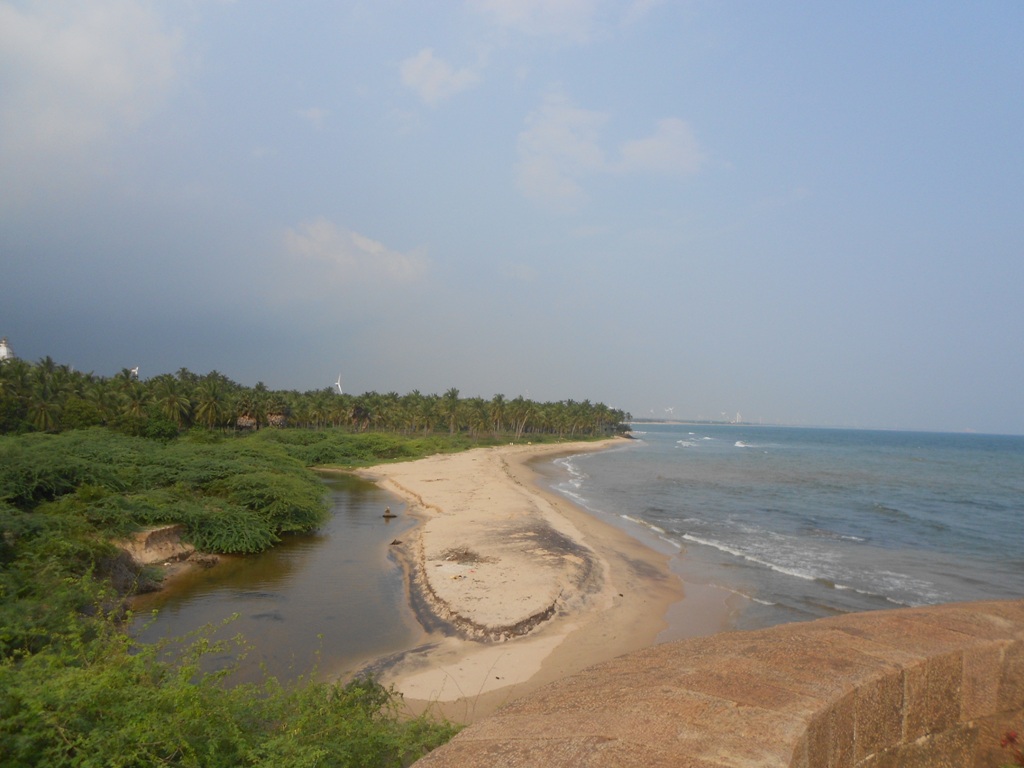
The fort is strategically situated on a rocky outcropping beside the sea, and thus offered breaking views of the Arabian sea and the surrounding hills.
One look outside and you can see miles after miles of water, surely no armada could have sneaked up upon the Travancore kingdom with this fort watching out to the sea.
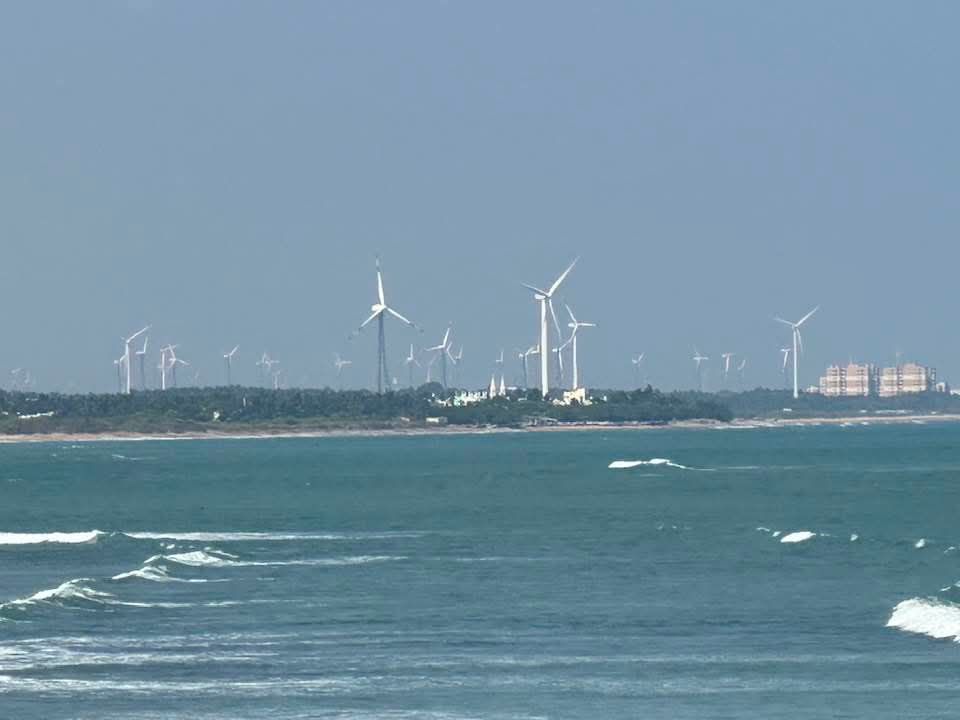
On the left side of the fort we saw a series of windmills, at a distance, which added a different kind of flair to the overall experience. Below the fort lies the beach, with white sand, and a variety of flora, which swayed erratically because of the wild winds from the sea.


Conclusion:

The fort was built for protection of the kingdom, and it did so for many years. The main attraction of the fort though is the uninterrupted view of the Arabian sea, and the inspiring story of De Lannoy, the Frenchman who served the Travancore Kingdom.
 East Indian Traveller