

Koraput in a nutshell
Located in the southern tip of the state of Odisha, Koraput district is dominated by the Eastern Ghats, which turns the whole place into a beautiful amalgamation of hills, valleys and waterfalls. The hills here are rich in minerals like Bauxite, and is home to multiple indigenous tribes, whose lifestyle has remained largely unchanged over the course of centuries.
| How to Reach: By Rail: The nearest station is Koraput Railway station, which has decent train connectivity from Bhubaneswar, Kolkata, Vizianagaram and Vishakhapatnam. By Road: NH 26 passes through the District, and overnight buses are available from Bhubaneswar, Brahmapur, Vijayanagaram and Visakhapatnam. Koraput is 500 KM away from Bhubaneswar, which makes it an ideal road trip destination, and hence invites a lot of travelers to this destination. By Air: The nearest airport is Jeypore Airport, but since its a new and small airstrip, connectivity is sporadic. The nearest big airports are Vishakhapatnam (200 KM) and Bhubaneswar (500 KM) |
Where to Stay: |
| There are many options of accommodation available in Jeypore, Koraput and Similiguda, but it is recommended to stay at Jeypore as it is the biggest town of Koraput with all facilities one needs at walking distance from each other. Some recommended staying options are: Balakrishna Palace : The newest addition to the Jeypore skyline, Balakrishna Palace is beautiful and is one of the most sought after hotel in the area. Hotel Princess : It is one of the oldest hotels in Jeypore and still stands proudly in the busiest area of Jeypore, the Jeypore Old Bus Stand. The Foothills Retreat : This property offers a stay among the nature, away from the bustling Jeypore town. With friendly hosts and tasty food, Foot Hills Retreat is one of the best stay options in the whole district. Best Time to Visit: September to March is the best time to visit Koraput. |
- Koraput in a nutshell
- How to reach Gupteswar
- History of Gupteswar Temple
- Gupta Ganga (Sabari Ghaat)
- Gupteswar Temple
- Swargadwara Caves
- Conclusion
How to reach Gupteswar
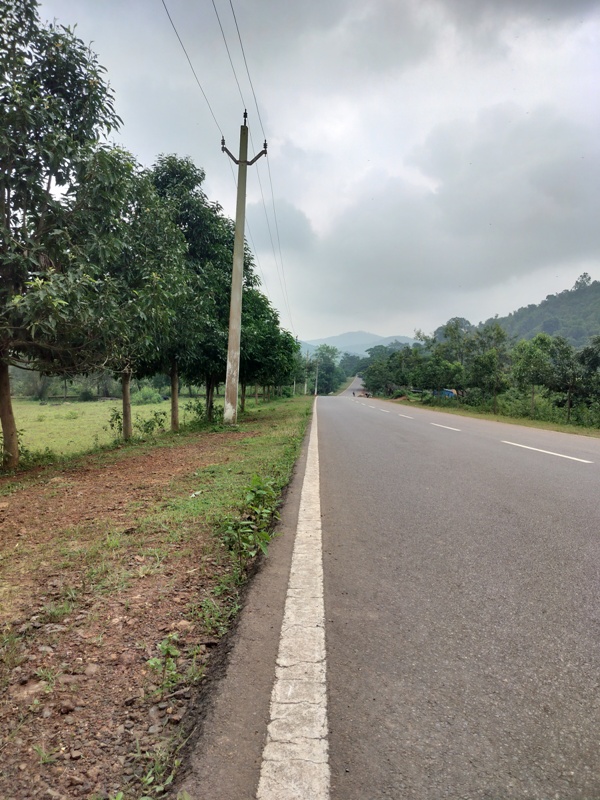
The route to Sri Gupteswar Temple, which is 65 KM from Kota Junction passes through numerous villages and miles after miles of farm lands. Most of these farms, depending upon the season are laden with either paddy or corn, with occasional patches of marigold.
The long narrow roads are flanked with lush green fields on both sides. The mountains at a distance just turns the scenery into something out of our imagination.
History of Gupteswar Temple
As per popular belief, the cave was first discovered by Lord Rama during his vanvaas, while residing in the Dandakaranya forest with wife Sita and brother Lakshman. Here he came across the cave and the Linga inside. It is believed that he was the first one to offer prayer at this place.
As the centuries passed, the temple and caves were lost in obscurity but in the 17th century, the Shiva lingam was discovered by a hunter who then informed about it to Maharajah Veer Vikram Dev, who was the king of that region.
King Veer Vikram paid a visit to the cave and was mesmerized by the grandiosity of the majestic Lingam and the magnificent natural surroundings.
He appointed priests in the cave temple and started a tradition of making a foot journey to the cave of Lord Gupteswar during the holy month of Shraavana which is performed by the people of the erstwhile kingdom to this day. Since then the Lingam has been worshiped by the tribes and locals of Koraput region.
Gupta Ganga (Sabari Ghaat)
The Sabari river flows adjacent to the cave shrine, which is a tributary of the Godavari River. This river originates from the hilly slopes of Koraput, and flows south. This river also acts as a border between Odisha and the neighboring state of Chattisgarh.
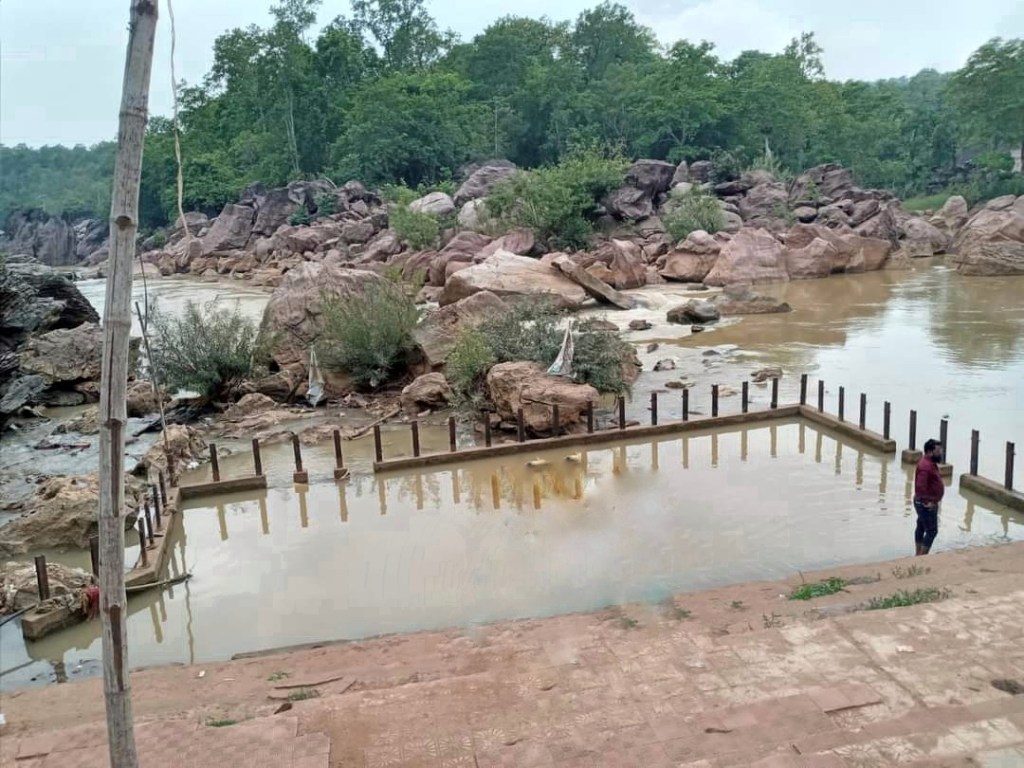
The local belief system has equated this river to Ganga, the holiest river in the Hindu Mythology. It is often believed that a dip in this river at the Ghaat near the temple, is enough to rid one off their sins. Many pilgrims to the temple can be seen taking dips at this ghaat before entering the temple.
Gupteswar Temple
The cave temple is situated on the eastern face of a small hill. After crossing through thick forest and unparalleled nature, we reached the gates of this temple. A small parking area at the entrance of the temple is dotted with small shops and dhabas, aimed at providing basic facilities to pilgrims.

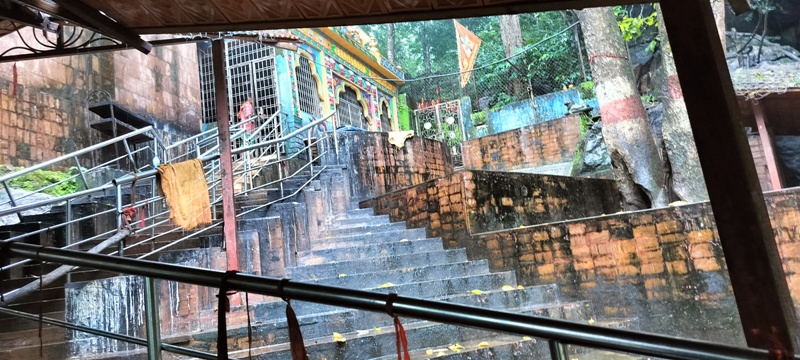
A short walk from the parking area brings one to the entrance of the temple which is being renovated currently with huge concrete gates. Following the concrete gate, a series of nearly 200 steps, lead towards the entrance of the actual cave. The steps are well maintained with a canopy covering it, ensuring shade for the pilgrims from both sun and rain.

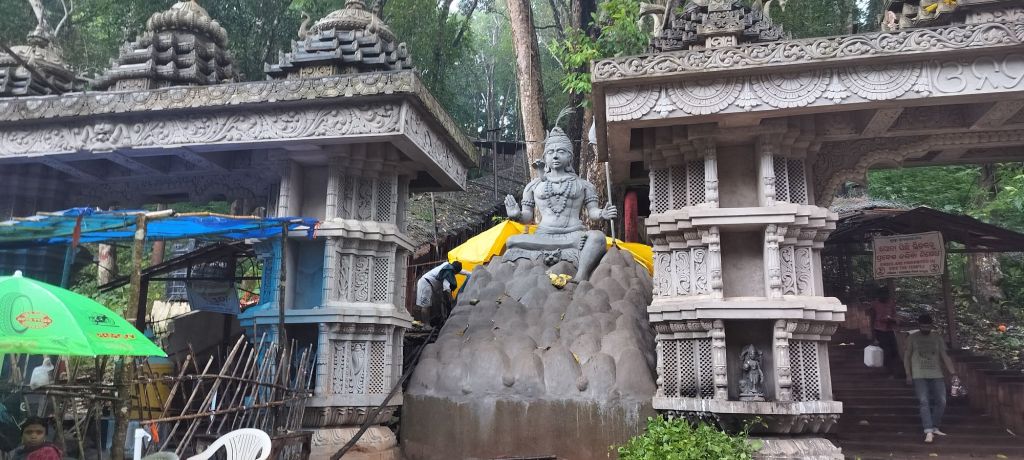
There are two openings to this limestone cave, one to enter and the other to exit. The steps lead one to the entrance of the cave which is adorned with a small structure that resembles a temple.
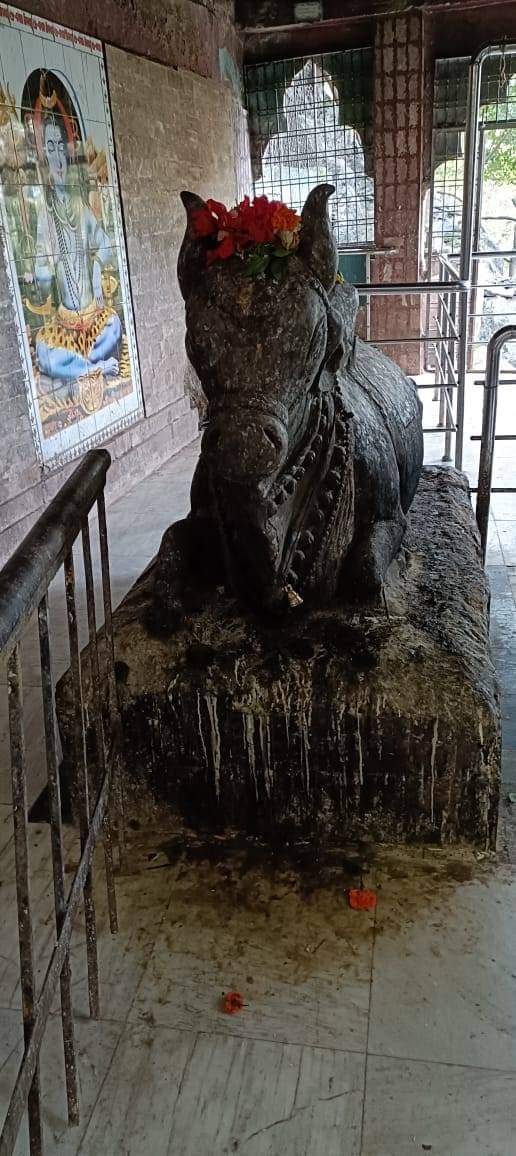
Inside the temple structure, one encounters a huge statue of Nandi, the vaahan of Lord Shiva. It is believed that if one has any desires, they can whisper the same into the ears of Nandi and it may come true. Almost all pilgrims that arrive at the steps of Gupteswar, offer their prayer and whisper their desires in the early of Nandi before descending down into the cave.
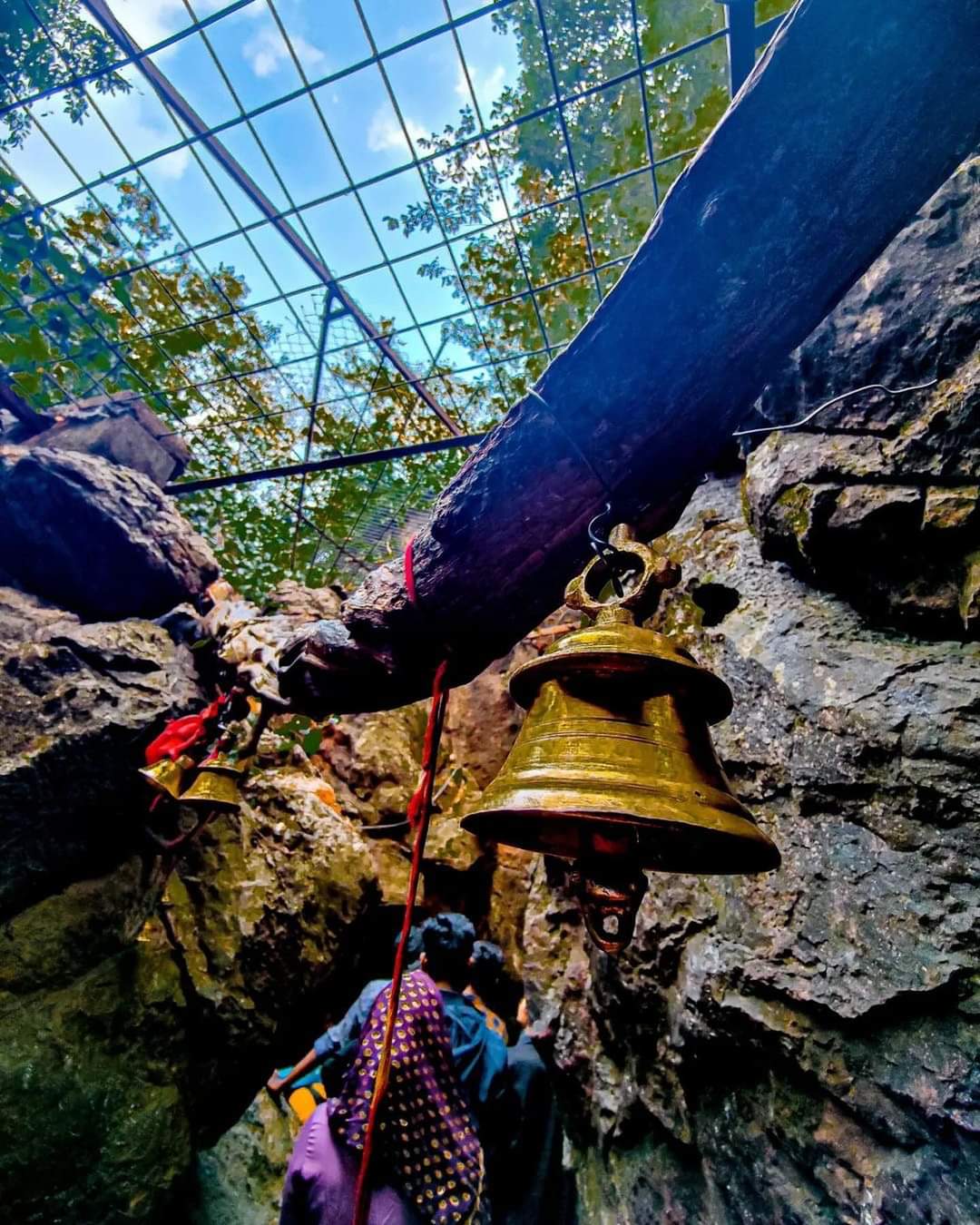
A few odd steps down the cave leads one into a chamber of sorts. It’s well lit and isn’t very claustrophobic. The stalactite cave has limestone outcroppings, all over its walls, giving it a very rustic look. The Shiva Linga sits in the middle of this chamber, a steel guard rail separating it from the pilgrims.
Upon offering prayers, pilgrims climb out from the exit of the cave, which opens up into another side of the hill. This leads into another series of steps going down, all the way to the main road, near the parking lot.
Swargadwara Caves
This is another cave system near the Gupteswar Temple, which is only accessible in summer and winter seasons. During monsoon the road to the cave is closed.
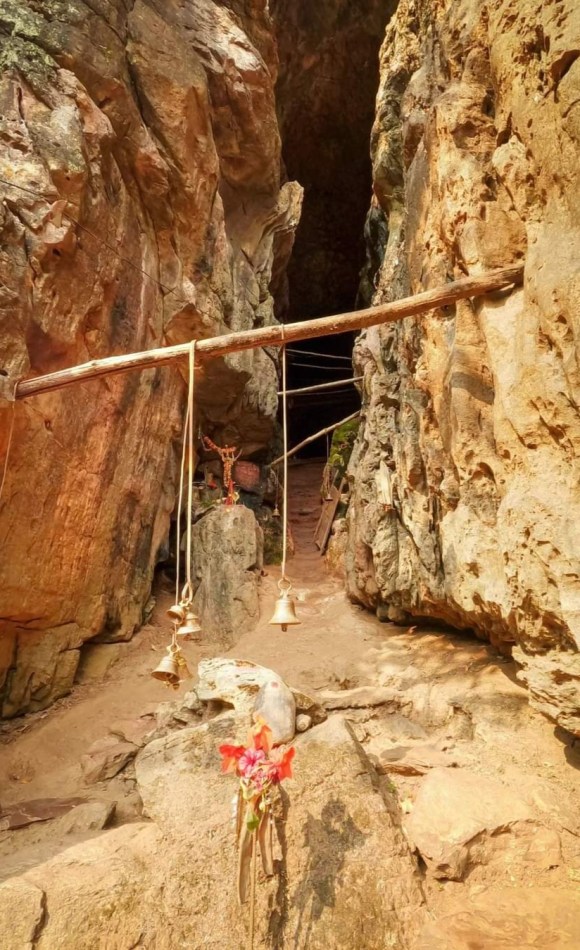
This is also a stalactite cave, with Rocky outcroppings and moss ridden walls. It’s entrance is extremely photogenic, however the interior of the cave is completely dark. This could easily have become Odisha’s answer to the Borra Caves of Araku Valley, but the authorities here don’t seem too keen.
Conclusion
Gupteswar is one among many natural wonders of Koraput, but perhaps it’s the most well known. This has certainly helped in the development of infrastructure around the temple, starting from roads to cell phone towers.
It is however a matter of debate whether it is good or bad, as the development has also stripped the Rameswar hills of its raw natural beauty. The once lush hills are now barren particularly in the stretches near the roads. Personally I feel the benefit of development far outweighs the issues, a purist however might feel otherwise.
 East Indian Traveller