

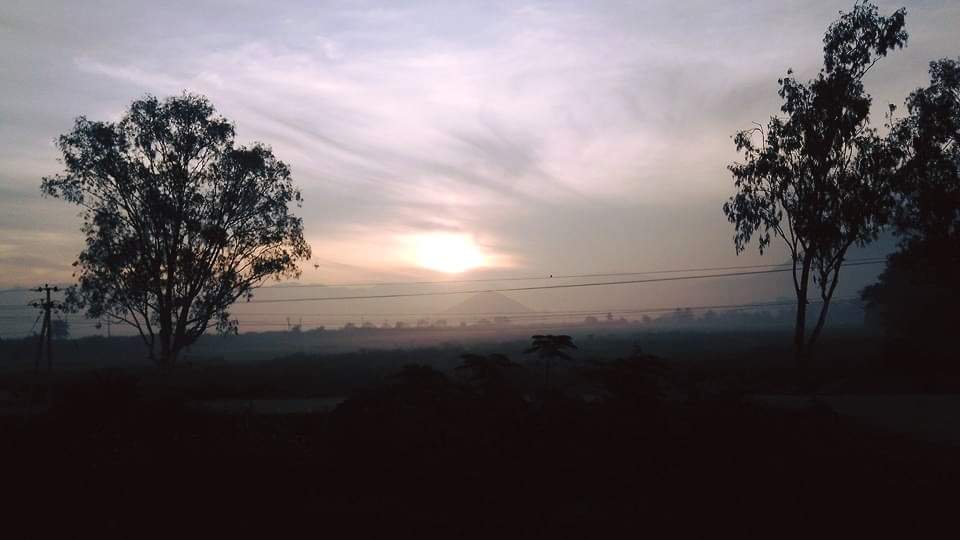
Despite being smack in the middle of Monsoon, Jeypore, the biggest town of Koraput welcomed us with a beautiful sunny day. The sky was deep blue and completely clear of haze, a sight I had not imagined to see in this trip. Though later on during the day we faced lashing rain and thunder, at this point it all seemed perfect. After a hot cup of tea, and a plate of steaming upma, we started our drive to explore the stunning district of Koraput.
- Koraput in a Nutshell
- Places to visit in Koraput – Our Experience
- Other places to visit in Koraput
- In Conclusion
Koraput in a Nutshell
Located in the southern tip of the state of Odisha, Koraput district is dominated by the Eastern Ghats, which turns the whole place into a beautiful amalgamation of hills, valleys and waterfalls. The hills here are rich in minerals like Bauxite, and is home to multiple indigenous tribes, whose lifestyle has remained largely unchanged over the course of centuries.
The valleys between these hills are used for cultivation, as agriculture is the main income source for most of the local population. Besides agriculture, an aluminium refinery owned by NALCO, and a factory of HAL provide for a good chunk of employment within the district.
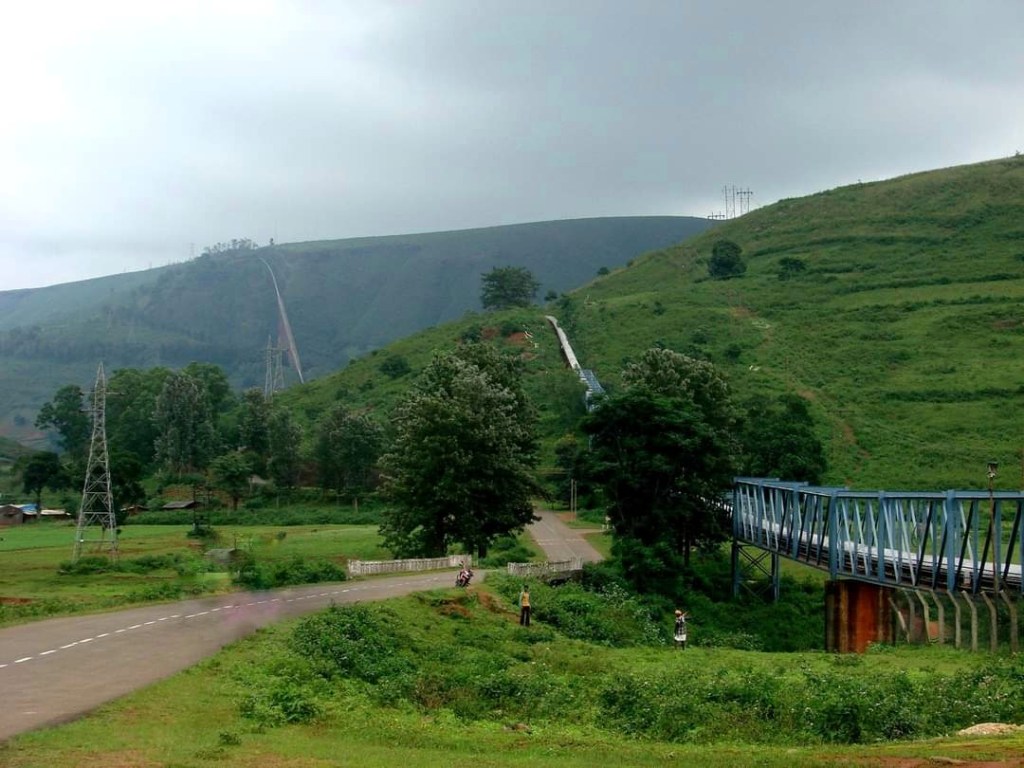
Over the past few years, lots of development has happened centered around the tourism sector, thankfully however, these developments have remained concentrated in some semi urban pockets, while most of the countryside remains untouched. This has managed to keep most of Koraput, raw and beautifully natural.
| How to Reach: By Rail: The nearest station is Koraput Railway station, which has decent train connectivity from Bhubaneswar, Kolkata, Vizianagaram and Vishakhapatnam. By Road: NH 26 passes through the District, and overnight buses are available from Bhubaneswar, Brahmapur, Vijayanagaram and Visakhapatnam. Koraput is 500 KM away from Bhubaneswar, which makes it an ideal road trip destination, and hence invites a lot of travelers to this destination. By Air: The nearest airport is Jeypore Airport, but since its a new and small airstrip, connectivity is sporadic. The nearest big airports are Vishakhapatnam (200 KM) and Bhubaneswar (500 KM) |
Where to Stay: |
| There are many options of accommodation available in Jeypore, Koraput and Similiguda, but it is recommended to stay at Jeypore as it is the biggest town of Koraput with all facilities one needs at walking distance from each other. Some recommended staying options are: Balakrishna Palace : The newest addition to the Jeypore skyline, Balakrishna Palace is beautiful and is one of the most sought after hotel in the area. Hotel Princess : It is one of the oldest hotels in Jeypore and still stands proudly in the busiest area of Jeypore, the Jeypore Old Bus Stand. The Foothills Retreat : This property offers a stay among the nature, away from the bustling Jeypore town. With friendly hosts and tasty food, Foot Hills Retreat is one of the best stay options in the whole district. Best Time to Visit: September to March is the best time to visit Koraput. |
Places to visit in Koraput – Our Experience
We had reached Jeypore the night before, driving 500+ KM from Bhubaneswar, with an intention to explore Koraput and the nearby Bastar district. The problem however was that a lack of leaves, had forced us to cram this tour into a long weekend, which turned the whole journey into a non stop driving expedition.
Our plan for the day was to visit Duduma waterfall, followed by Sri Gupteswar Temple. Both the destinations are on the same route, bifurcating at a place 25 km away from Jeypore town called Kota Junction.
Jagannath Sagar Lake
As we followed the route to Duduma charted out by Google Maps, we were greeted by a humongous lake, within the Jeypore town. It was not in our itinerary, but that Lake was so amazing that not stopping here for a few minutes would have been criminal.
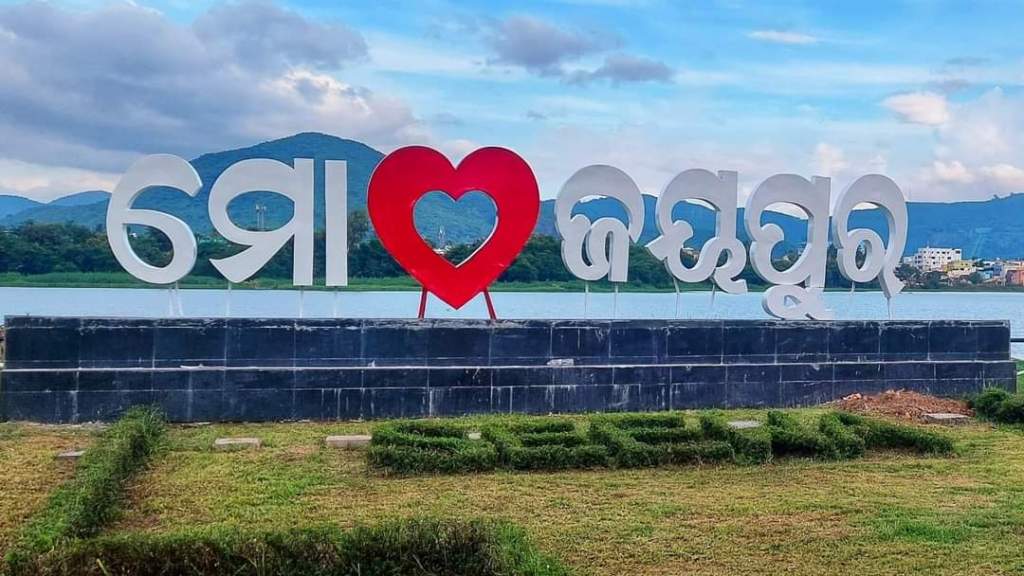
The far away hills provided a perfect backdrop for this lake which sported still blue water, with little patches of vegetation on it. There is a small park near the lake as well, which sees a healthy crowd composed of mostly local people in the evening.
We couldn’t stop any longer as we were pressed for time, but if you are visiting Koraput and halt at Jeypore, please make sure you pay a visit to this beautiful lake and spend some time soaking in the evening sunset.

Meadows of Koraput
As we drove past the city limit of Jeypore, we started to see glimpses of the beauty of Koraput’s countryside. Winding roads, lush cultivated fields, and flower plantations, we came across sights never experienced before.
Sleepy little villages hummed with life as the warm morning Sun rose in the sky. Endless green fields, random rows of trees and not a single human in sight, it was like the dream of any nature lover.
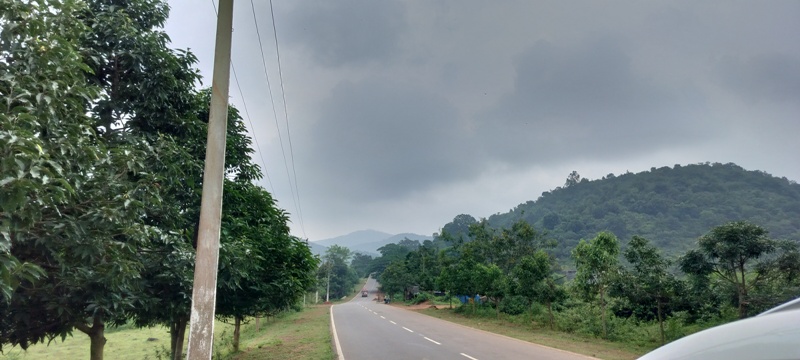
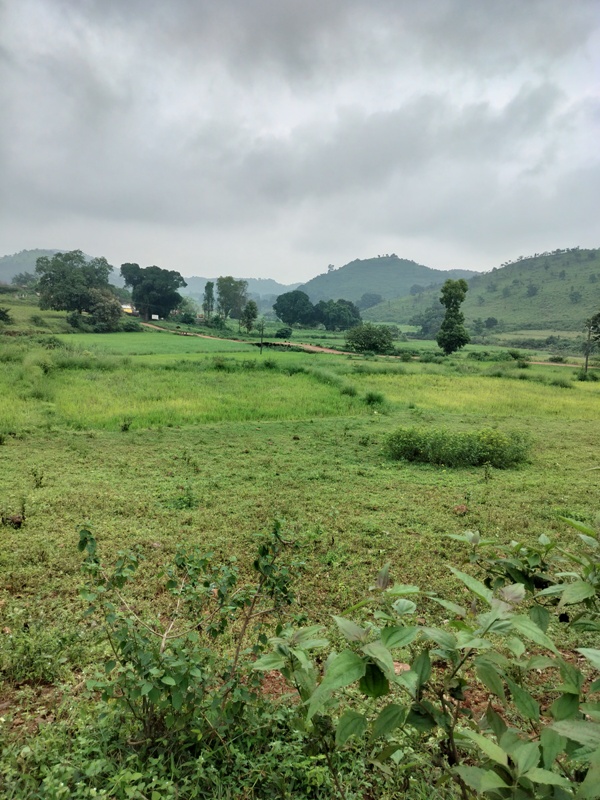


Once we crossed the British era Patraput bridge, we were officially on a hilly stretch, traversing hairpin bends one after the other. The straight long roads were a thing of the past now. Driving a few more minutes brought us to Kota Junction, from where, we decided to first visit Duduma waterfal.
Tribal Market
Duduma was 45 KM from this point, traversing through multiple small and large hamlets. On the way, we came across a place called Lamtaput which was so crowded, that moving through it in our car proved to be quite challenging. It was a weekly tribal haat, which is a local word for ‘Market’.
Market day, usually is a very special day for indigenous communities, where they come together and trade their produce. Entire families walk for miles carrying on their heads, baskets of fresh produce; kindling on their shoulders wood, and pots of homemade wine.
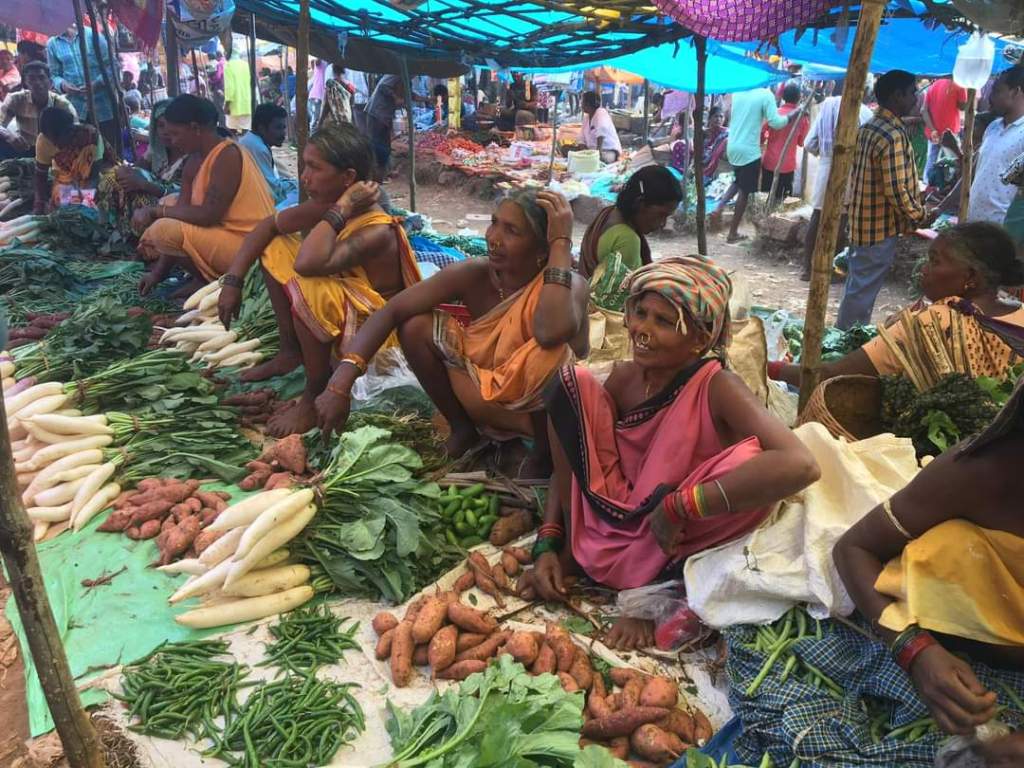

We passed through troops of merry ladies on the way as eggplants, radish and cauliflower tumbled out from their fat, happy baskets. In the morning light, rural remote Odisha looked placid and soul soothingly peaceful.
Onkideli is another place quite famous among travelers for experiencing the Tribal Haats. People from far away places come to Onkideli to experience the life style of the Bonda Tribe, which is one of the oldest Tribal communities in this part of the world. Unfortunately we couldn’t visit the place, and parked it for a future time.
The last leg of this journey took us into rugged hills. The hairpin bends here were sharp and never ending, with mostly blind corners. The roads are in excellent condition, but oscillating constantly in the car, still takes quite a toll. I was on the brink of throwing up, when thankfully we reached our destination, and I could climb down from the car.
Duduma Waterfall

As we made our way into the gate we could hear the roar of the waterfall, which sounded massive. A series of concrete steps line from the entrance to a flat observation area, with concrete railings shaped into the form of bamboo, flanking from both sides.

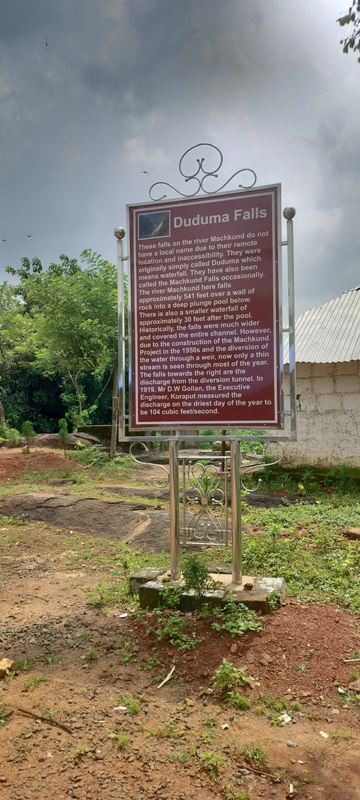
Fueling our excitement, as we climbed down the stairs was the sound of that waterfall which became more and more prominent with each step. As we touched down on the observation area, our eyes were transfixed on the huge 175 metres waterfall.
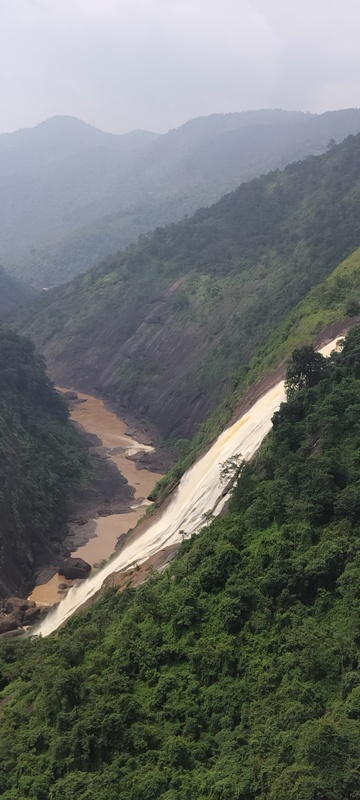
This fall is part of the River Machkund, which flows through Koraput and gives life to this whole area. The fall however stands on one side of the observation deck, making the view not very ideal. The front of the observation area is a flat stone face, with a small stream of water flowing through it. In any other situation, this small stream would also qualify as a decent waterfall but here, it was dwarfed by the massive Duduma.

For people who want to go closer to the base of the fall can do so by hiking down the rocky hill. The river Machkund and the waterfall holds auspicious significance for the aboriginal tribes of the area, who often scale to the base of the waterfall, to offer prayer and perform rituals. For lazy and lethargic people like us though, the view from up here was enough, and hiking down was simply not our cup of tea.


Paddy and Corn Plantations
It was the beginning of October and a looming low pressure area in the Bay of Bengal meant we were at a constant mercy of the rain gods. Our morning had been quite graceful and the sun was out most of the time, but as the afternoon approached dark clouds started gathering in the sky. At places we experienced incessant rain, that almost clouded our vision and looking beyond a few meters proved to be quite a challenge.
It is true that the downpour created messy roads and driving proved quite a challenge, but the rain also painted the landscape a dazzling fresh green. As the rain stopped everything looked more alive, more beautiful.
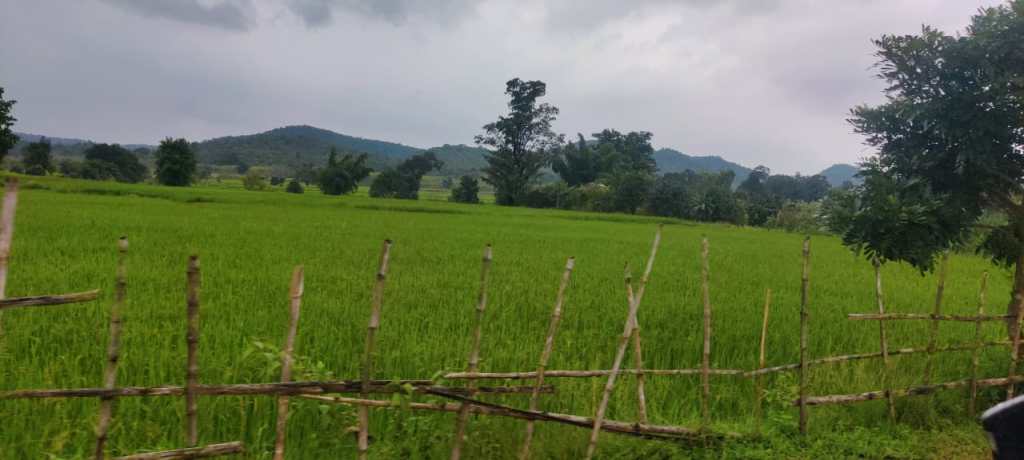
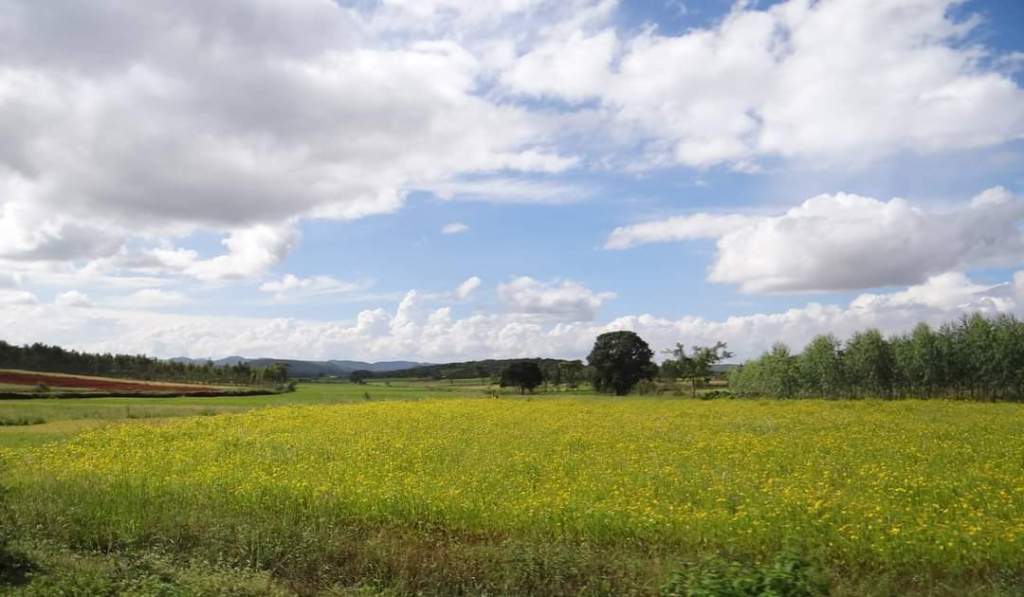
The route to Sri Gupteswar Temple, which was 65 KM from Kota Junction passes through numerous villages and miles after miles of farm lands. Most of these farms were laden with either paddy or corn, with occasional patches of marigold. The long narrow roads, flanked with lush green fields on both sides, with mountains at a distance; the scenery couldn’t have been better.

As we trundled along, clouds opened to reveal some patches of sunshine. Various valleys opened up in front of us. It was a magical dream; with endless meadows that glistened emerald green, buoyed by the rain drops on the young paddy leaves. Occasional patches of plants, that bore small yellow flowers, seemed like a welcome sight, as if adding a tinge of gold dust on God’s green carpet.
Sri Gupteswar Temple, Koraput
A further drive from here took us into dense forest, followed by a small ghat. The rain and thunder had made sure that the roads are deserted making it a delight to drive.

The rain which made sure the roads are empty and scenery beautiful, however turned out to be a pain as we reached the temple complex. It was raining heavily and we had to take refuge under umbrellas and rain coats before we would get to the main temple.
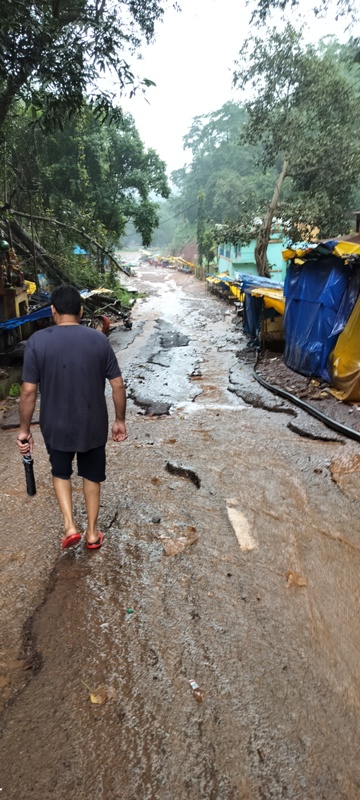
The main temple is around 100 meters from the parking area, and is otherwise a smooth walk, however with the rain, the roads had either submerged under water or had heavy water streams gushing through it.
The temple is primarily a limestone cave, and its main attraction is the gigantic Shiva Linga which is said to be increasing in size.
It is believed that the cave was discovered by Lord Rama, when he was residing in the Dandakaranya Forest, during his vanvaas and re-discovered during the reign of Maharajah Veer Vikram Dev in the 17th Century.
After maneuvering our way through those gushing streams, we reached the entrance of the temple. The entrance was made up of a concrete gate, followed by 200 stone steps leading up to the main shrine. The steps had a canopy on top of it, which protected pilgrims from rain and sun. It also allowed us to take off our rain coat and relax a bit.

We scaled the steps and reached the main shrine, where Nandi, the mount of Lord Shiva guarded the entrance. After offering our prayers to Nandi, we started our descent into the main sanctum.
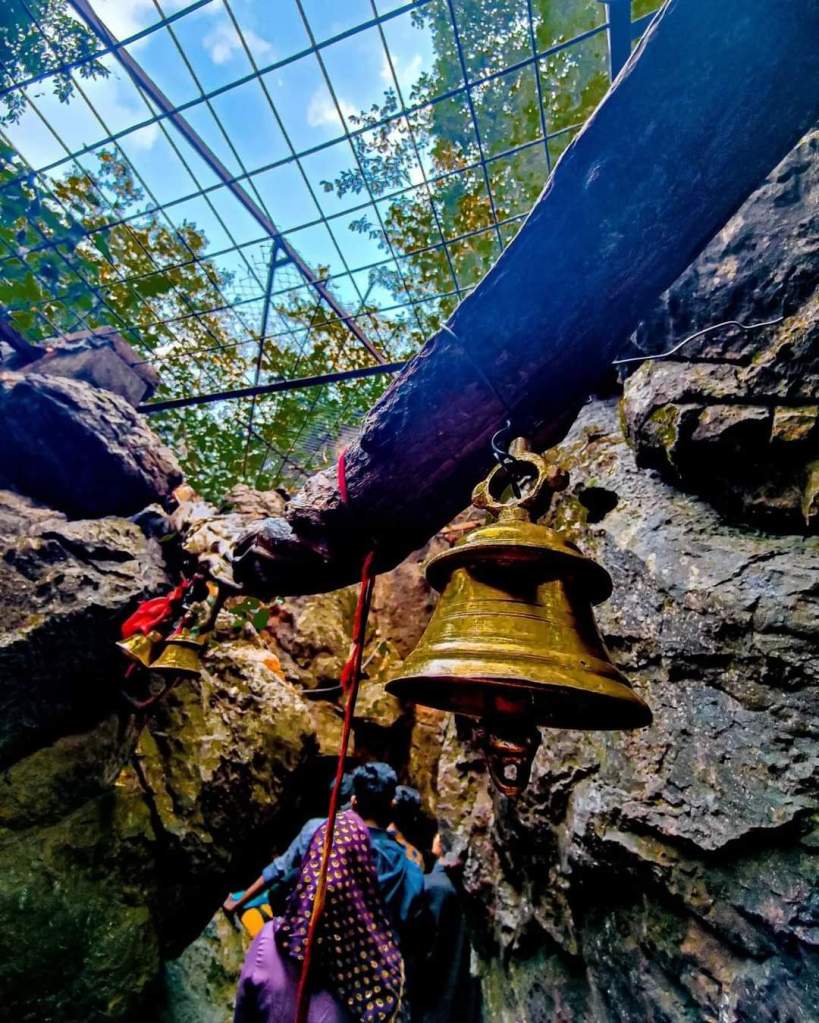

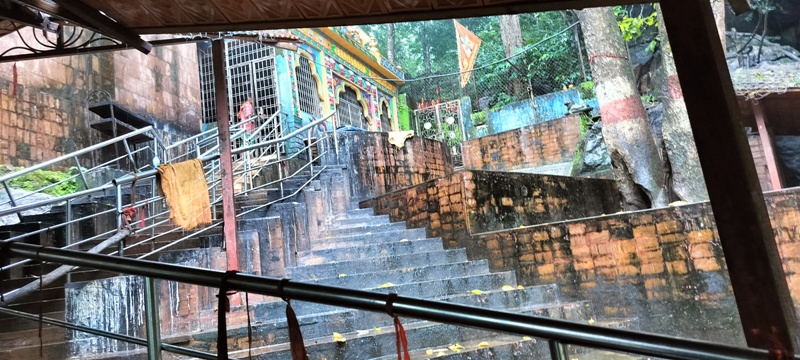
Photography is prohibited in the sanctum, so I will try my best to explain the vibe of the temple through my words. As explained earlier, the sanctum is basically a limestone cave, where Lord Shiva is worshiped in the form of a Linga. We took a few steps to descend into the main shrine. The steps are pretty wide and well maintained, but since it’s a cave, it’s quite claustrophobic.
Thankfully the whole moving through the cave was just about 10 to 15 meters, and is well lit. Once inside we offered our prayers to the lord and climbed out of the cave from another side.
There are more cave systems here, namely the Swargadwara cave, which is beautiful and mesmerizing. However the incessant rain ensured we were not allowed to visit the place, as the road to the cave passed through slippery rocks.


By the time we left Gupteswar, it was already 3 PM, which meant we could not visit any other location. From here we drove to Jagdalpur (140 KM), where we stayed the night and explored Bastar the next day. I would share my Bastar experience in a separate post.
Following our Bastar exploration, we returned back to Koraput to explore Deomali, the highest mountain of Odisha, and stopped on route to checkout another gem, which was not part of our original plan.
Telengiri Water Reservoir
We were driving on the Borigumma-Koraput road, through long pretty valleys, with bouts of rain every and then. As we got closer to Koraput, the cloud cover became more and more dense and the rain relentless.

Our drive through the rain brought us close to a water reservoir in the outskirts of Koraput Town. It was not part of our itinerary, but we decided to explore the place, and we definitely were not wrong.
From top of the reservoir, we saw in front of us a vast expanse of water, with a small hill in the middle. The dark clouds had turned the area into a strange place of subdued sounds, sights, and colours. It seemed as if the clouds were all diverging from the hill in the middle. The whole scenery looked eerie and pretty at the same time, just like a Frank Miller graphic novel.

Deomali
After spending a few mins on top of the reservoir it was time for us to checkout our final destination for the day, Deomali, the highest peak of Odisha. It took 3 more hours for us to cross the towns of Koraput, Damajodi and Similiguda, to reach the base of Deomali hills.
Thankfully the rain had subsided by now and though there stood a decent cloud cover on the sky, the sun was out and the rays of the dusky sun were making the whole place even more beautiful.

We came across a sunflower plantation, on route which looked spectacular, even though most of the flowers faced away from us. I bet the view of this in the morning must be breathtaking. The garden was right in front of Desia Eco Cottage, which is a wooden accommodation 5 km from Deomali top.
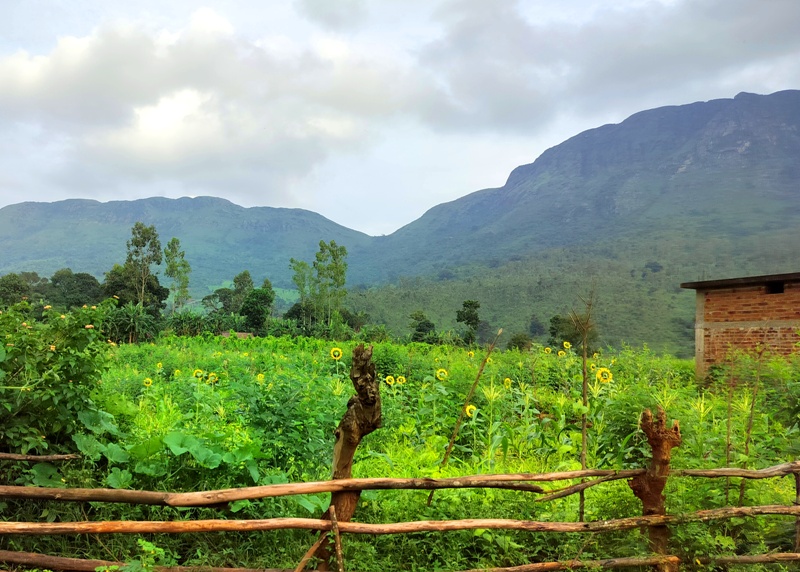
After climbing though innumerable hairpin bends and maneuvering our way through the oncoming traffic of returning tourists, we reached the top of Deomali. It was spectacular and nothing like I had imagined.
The top of the hill is not a peak, but a piece of flat hill, kind of like a plateau. It extends to about a kilometer and one can drive to various corners of the hill to experience the breathtaking views in each direction.

The hill being the highest point of Koraput offered a 360° view of all the smaller hills and valleys of the nearby areas. The height of the hill also ensured, that low hanging clouds would graze the hill top, while passing from one side to the other.


As the sun approached the horizon, marking the end of the day, fog and mist tumbled down the hills to engulf the valleys underneath. The beautiful green valleys of Koraput now laid veiled in mist, which rolled thickly into the pine and eucalyptus forests. Everything seemed to be wrapped in cotton wool, with thick white streaks covering layers after layers of hills.

Other places to visit in Koraput
As we didn’t have more time in our hand, Deomali proved to be our last stop before heading back to our homes. There are however more places one can explore while in Koraput.
Balda Cave
Balda Cave is a stalactite cave system located 60 KM away from Koraput, on top of a hill. The hill, similar to Deomali features a flat plateau, featuring a small freshwater pond and offering magnificent views of the nearby forests.
On the hill itself the natural cave system wows anyone visiting with its vibrant colours and amazing features. At one place within the cave, the ceiling has a hole that allows for sunlight to enter. This particular spot has turned Balda into a viral Instagramable spot in recent times. boosting the tourism to this place.
Putsil
Putsil is a small village in the Koraput district that has some amazing sights to offer besides some rich cultural heritage. The presence of multiple indigenous tribes in the region, makes this a must visit for people looking to experience the lifestyle of these tribes.
There is also an eco retreat setup here, by the tourism department that offers sustainable and peaceful accommodation away from the bustle of the towns and cities.
Know more about Putsil and eco retreat.
Sabar Srikhetra
Built in 1972, Sabar Srikhetra is a temple dedicated to Lord Jagannath, and is one of the most popular ones in Southern Odisha. The temple preaches Jagannath Consciousness, which endorses unity and discourages sectarianism based on Religion, caste or creed.
Having Tribal roots, this temple also hosts an annual Rath Yatra, that attracts thousands of devotees from all corners of Odisha.
Know more about Sabar Srikhetra
Rani Duduma Waterfall
Translating to Queen of Waterfalls, Rani Duduma is one of the most popular picnic spots of Koraput.
Standing at an astounding 1000 mtr above sea level, this waterfall also holds historical significance, as antiquities related to the Nanda Dynasty of Magadh were found here during excavations.
Know more about Rani Duduma waterfall
Kolab
Kolab is a tributary of River Godavari, that passes through the Koraput district. In the year 1993, the first dam on this river was completed, which resolved the power shortage issues of the whole area to a large extent.
The reservoir created as a result of this dam, enhanced the views of the area to epic levels. It became an instant hit among tourists and locals alike, who flocked the place for picnics and recreation. Later on a park was constructed at the base of the reservoir, adding more touristy value to the area.
Know more about Kolab Reservoir
In Conclusion
People say that the journey is often more beautiful than the actual destination. Never had I felt it closer to the truth than in Koraput. Yes, there are some amazing spots in Koraput, but it’s the unadulterated natural surroundings, that mesmerizes most visitors. The long grey roads, dense forest, unbeatable greenery and colorful wild flowers are the images that will forever remain etched in my memory.
While we were ending our trip with some regret as we couldn’t cover all the beautiful places Koraput has on offer, it also meant there remains a reason for us to return back to this amazing place, and experience raw nature at its best all over again.

 East Indian Traveller