

Standing atop one of the highest points of Jaipur and watching the sun gradually descend over the pink city, was a view that would remain forever etched in my memory.
The sky was getting darker with every passing minute, the brightness of the sun slowly dimming and the city lights were taking over the horizon. This usually is the process of a sunset over any city, but there was something magical about this sunset, that we were witnessing from the Sunset point of Nahargarh Fort, Jaipur’s highest vantage point.

- History of Nahargarh Fort
- Our visit to Nahargarh Fort
- Madhavendra Bhawan
- Sculpture Park
- Nahar Baba temple/Nahar Singh Ji Temple – Nahargarh Fort’s Haunting Story
- The Rang de Basanti Step well – Bawdi
- Sunset point – Catch the magnificent evening and night view of Jaipur
- Other Attractions within Nahargarh Fort
- Nahargarh Fort Tickets and Timings
History of Nahargarh Fort
It was built in 1734 by Maharaja Sawai Jai Singh II, the founder of Jaipur as a place of retreat, in case of any attacks. It stood on the summit of the ridge above the city with its walls extended over the surrounding hills. These walls provided a formidable defense for the entire old city, and turned the whole area into a fortress.

The fort was never attacked in its history, it however has seen signing of multiple treaties within its walls and has also provided refuge to the British Families, during the Sepoy Mutiny of 1857.
Our visit to Nahargarh Fort

Nahargarh fort was our last stop for the day, following a whirlwind tour of Hawa Mahal and Amber fort. We had heard about the beautiful sunset at Nahargarh, hence had planned it for the afternoon.
Once we entered the fort walls, we saw similar sandstone walls as that of Ambar fort with cannon openings and various quarters for the soldiers lined up around the entrance courtyard. The fort looked similar to Ambar, because it is built in the typical Rajasthani fort style.
There are a total of three entry gates in the fort. While two of these are outer gates, a single gate provides access to the Madhvendra Bhawan, which is the main palace within the Fort.
Madhavendra Bhawan
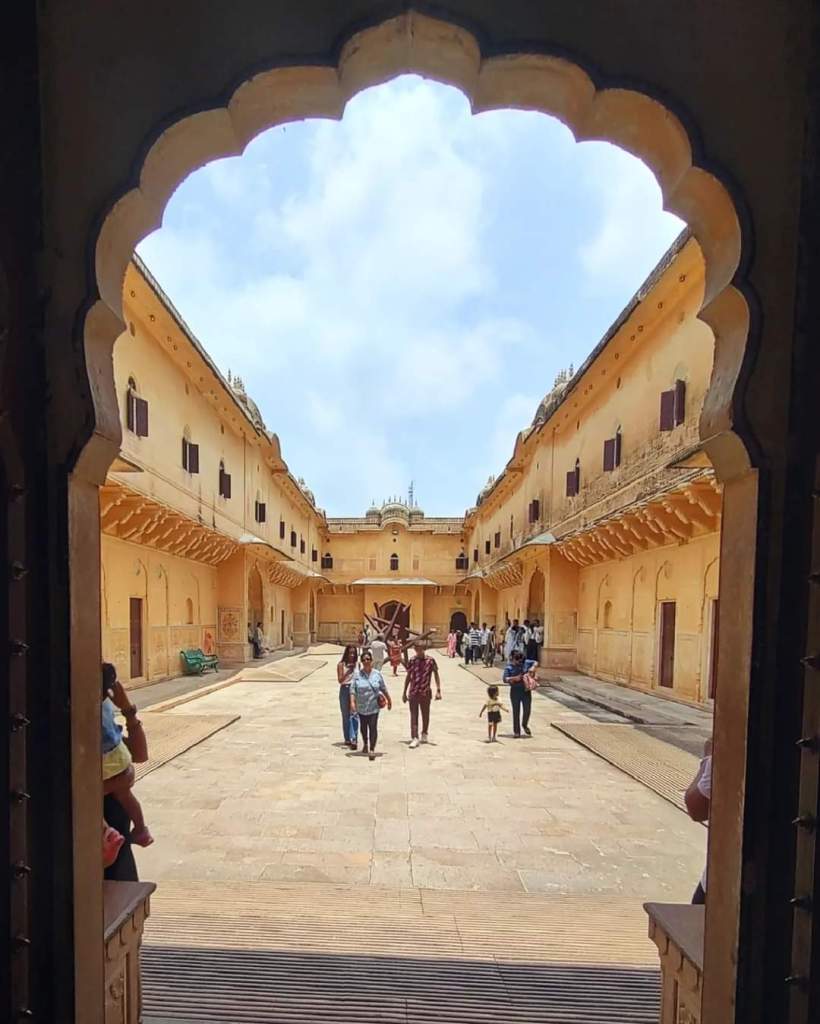
Once inside the fort an imposing two story structure called the Madhavendra Bhawan attracted our attention. It was built by Maharaja Sawai Madho Singh II (1880 – 1922), as a resident quarter for him and his queens.
The palace, which is built in Indo-European style has 10 suites, one each for his 9 queens, and one for the king himself at the top floor. Each suite had a veranda, courtyard, kitchen and toilet. There is a fireplace in each room for use during winters.
The palace consists of a maze of courtyards, passageways, and terraces. Each female section is connected by two passageways. The first one was meant only for the king, known as Raja ka Galiyara, which translates to King’s lane. The design of this passage facilitated the discreet movement of the king. This was to rule out a feeling of jealousy among the queens. The second passage was meant to facilitate the socializing between the queens.

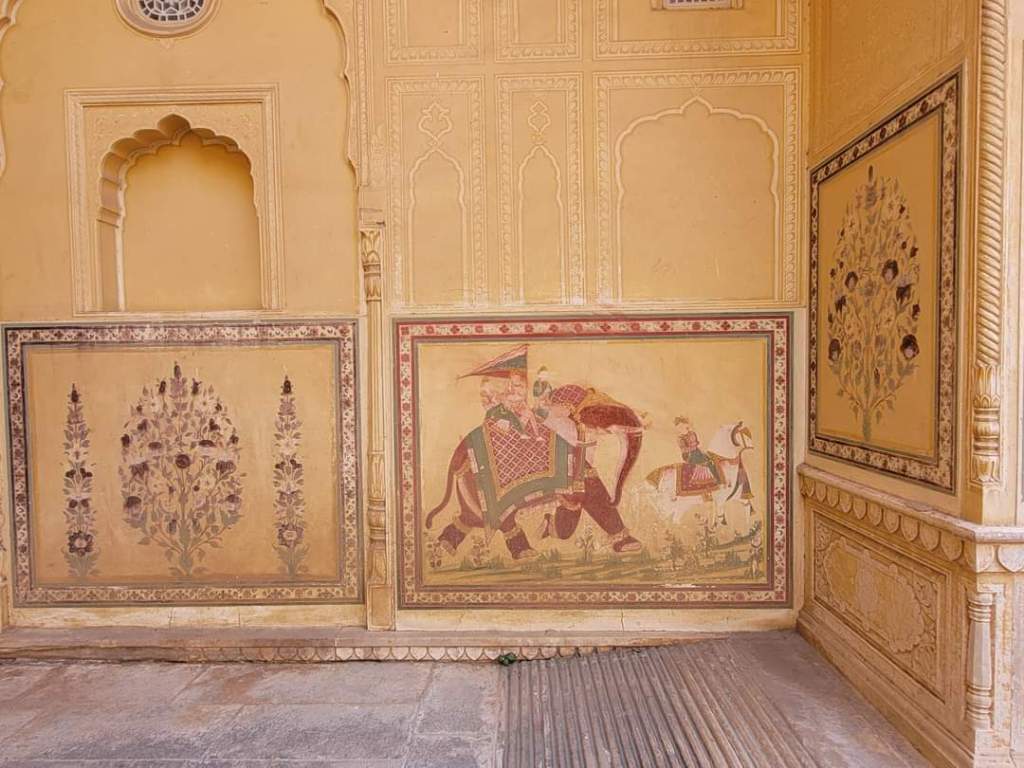
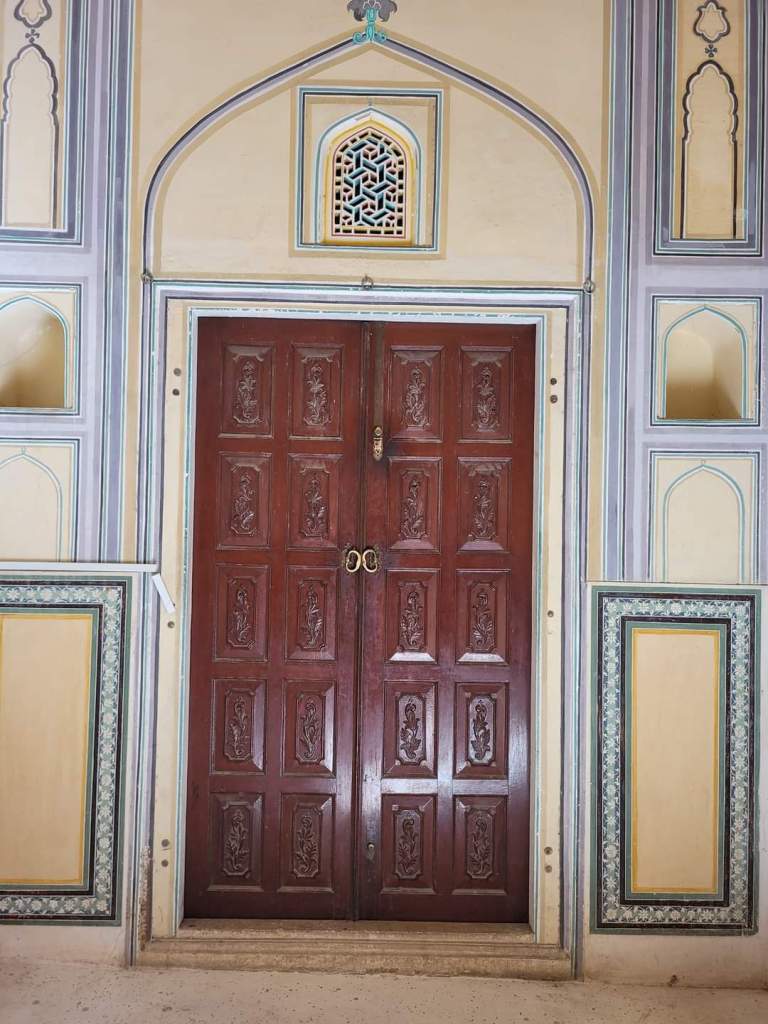
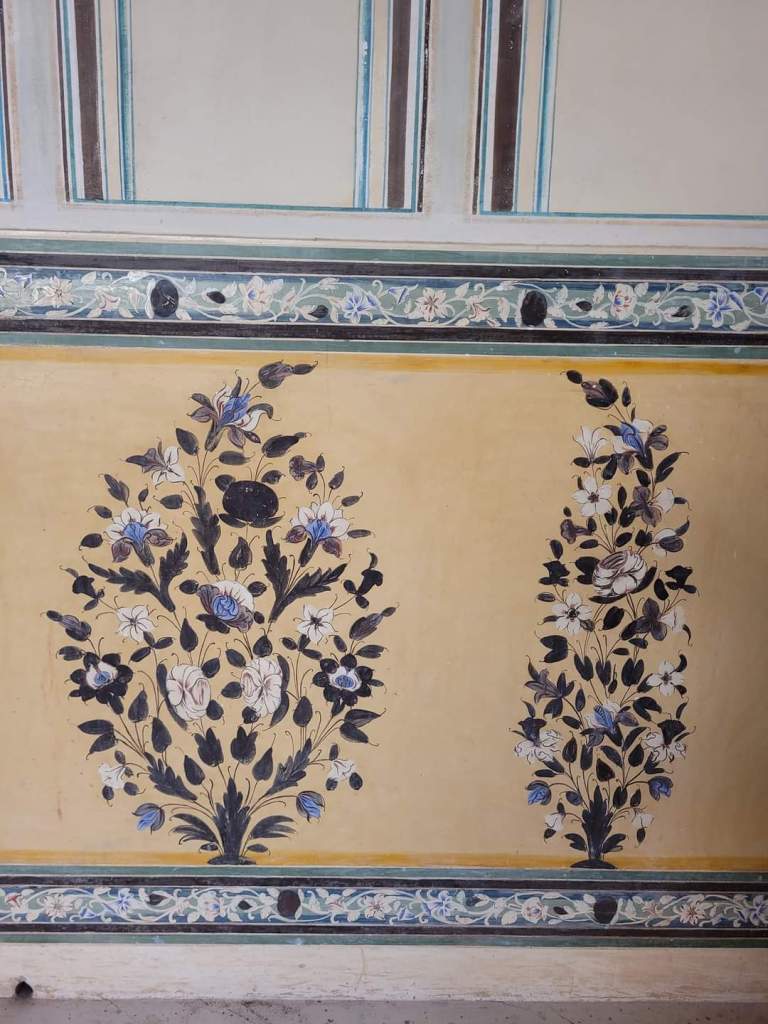
The insides of the palace are equally beautiful, with a gorgeous array of artistic elephant wall paintings, decorative floral patterns and scalloped archways. The inner yellow walls have lime green colour lining, with intricate floral motifs all over them. The stained glass windows add another layer of wonder to the palace.



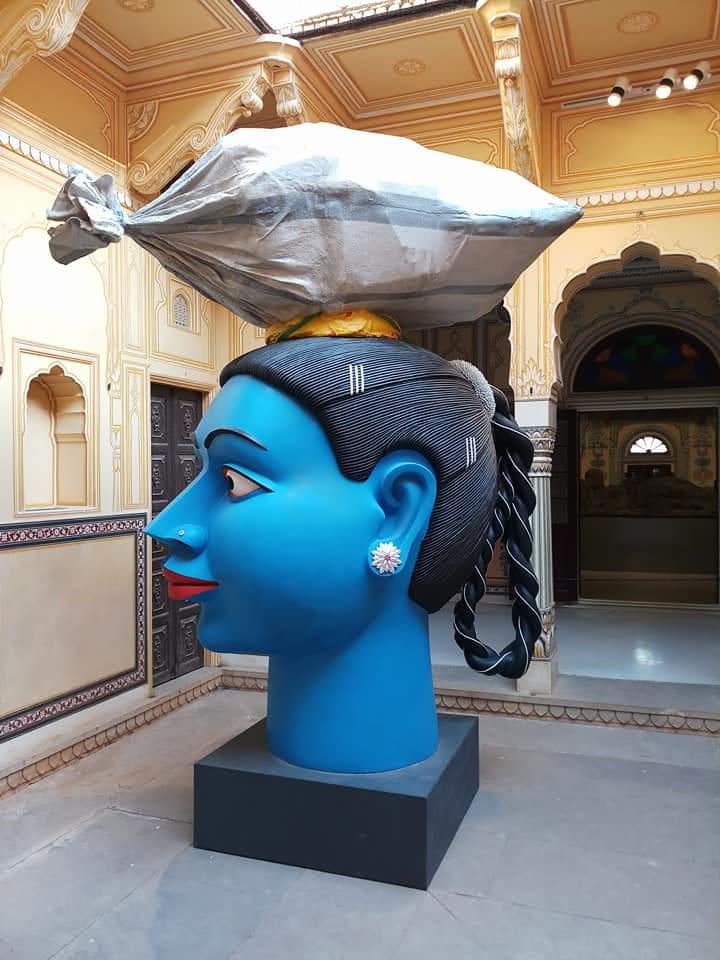
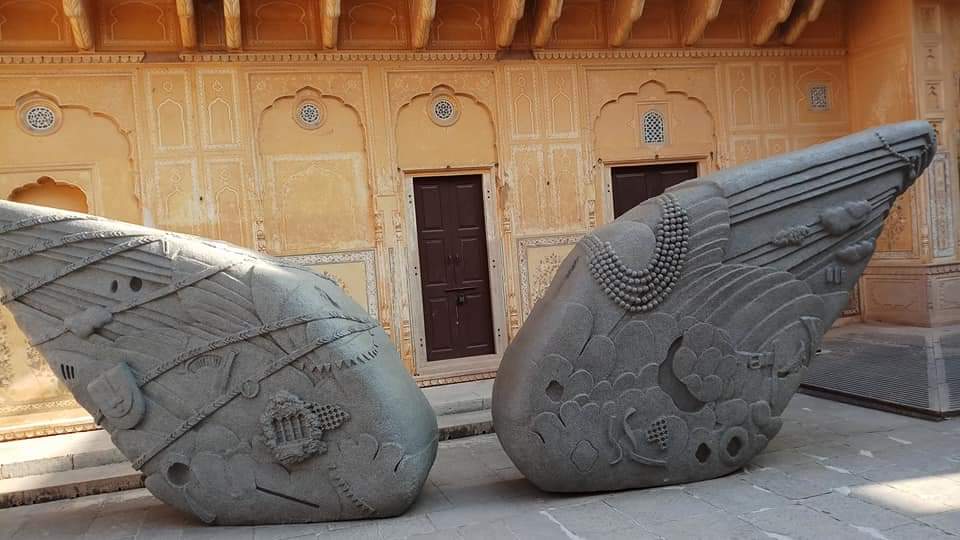
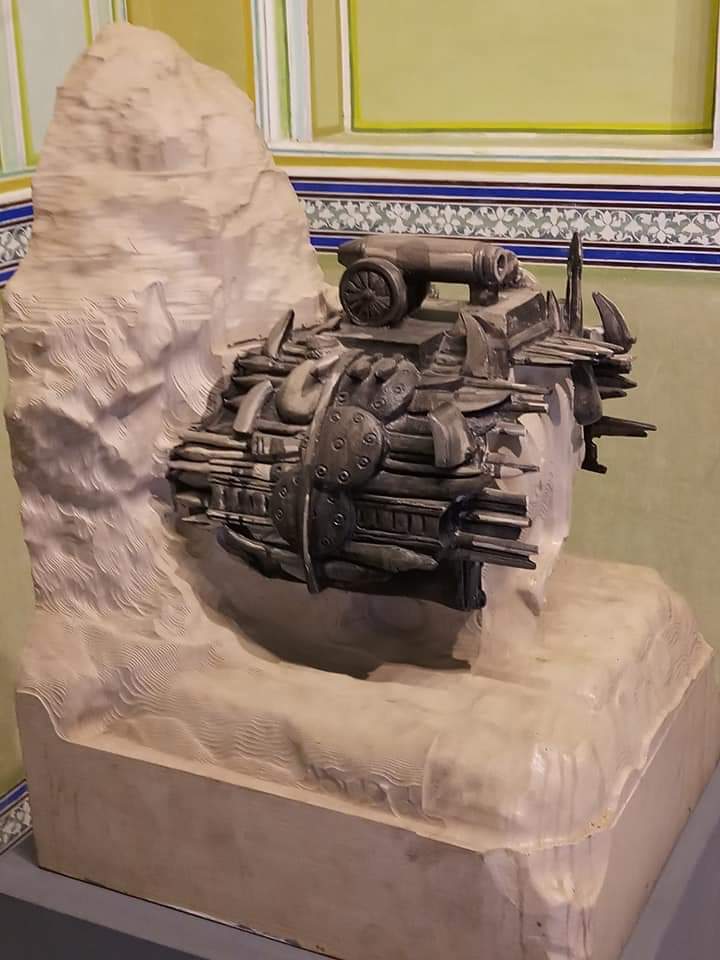
Sculpture Park
Inside the Madhavendra Palace, a sculpture Park is organised by the tourism department showcasing contemporary art work of renowned modern day artists. While most of the artists are international, the sculptures are mostly created using materials sourced locally.
The art works are updated periodically, hence keeping up the interest of the visitors.

Nahar Baba temple/Nahar Singh Ji Temple – Nahargarh Fort’s Haunting Story
The next attraction on route is a temple within the fort, known as the Nahar Baba Temple or Nahar Singh Ji Temple, which was built to calm the spirit of Prince Nahar. Yes, that’s an interesting story in itself.
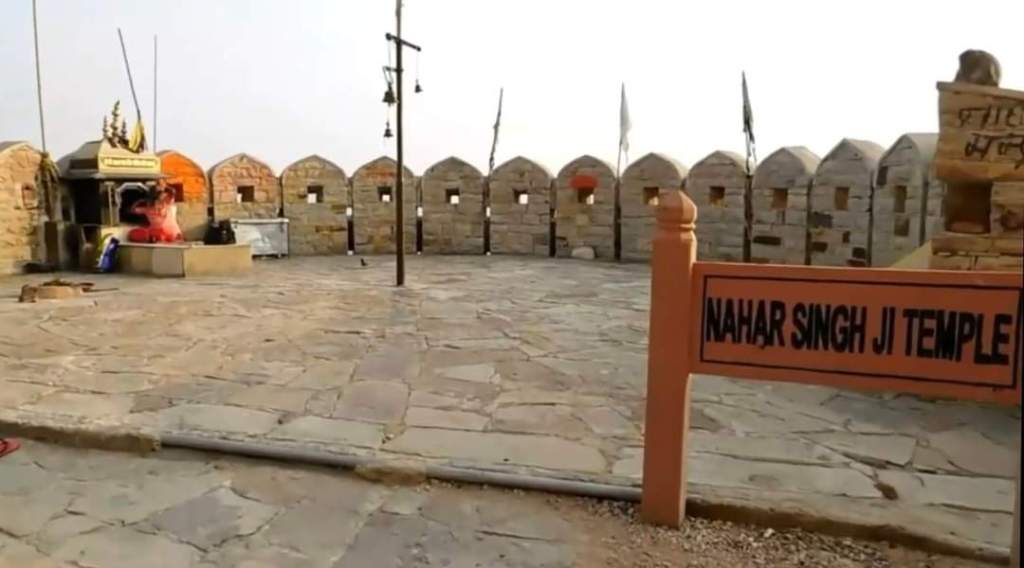
Legend has it that, the land on which the Nahargarh fort was constructed, belonged to a Rathore Prince, Nahar Singh Bhomia. Post the Prince’s death, Sawai Jai Singh, took over his land and started construction of his palace.
Overtime a lot of paranormal activities started to surface in the fort premises, which halted the construction work multiple times. It was then believed that it was in fact Prince Nahar’s Ghost, which was obstructing the work.
To remedy this, a large scale prayer was organised to pacify the wandering ghost, and a temple was built in his memory to calm his spirit. Initially the fort was known as Sudarshagarh Fort, but later the king named it as Nahargarh, thus honouring Nahar Singh Bhomia. Things got better after this and the ghostly activities subsided.
The Rang de Basanti Step well – Bawdi
After we moved ahead, we came across a water reservoir, built as a step well, which provided water to the fort. Stepwell in the local language is also known as Bawdi.

This bawdi provided the occupants of the fort enough water to outlast a long siege by the enemy forces. The water system in the Nahargarh Fort forms an important part of its architecture.
At first viewing it seemed like another stepwell, but soon we realised that this particular stepwell is quite famous in pop culture of India. This is the same stepwell which was featured in the super-hit movie Rang De Basanti. This was the step well, where the protagonist and his friends were shown to take jumps and have a fun time.
Sunset point – Catch the magnificent evening and night view of Jaipur
Fun times are indeed something we all long for, and being awestruck is definitely fun. We had heard tales of the beautiful sunset of Nahargarh Fort, and since the sun has started setting in the west, we were hurrying towards the Sunset point.
As we reached the Western wall of the fort we quickly occupied open spaces to see and click the famous sunset of Jaipur. The sun was still bright and warm, it seems another 39-40 mins before the sun set actually begins.
Nahargarh is the highest point of Jaipur, and hence provides for a panoramic view of the pink city. Being the highest point also means that while the sun sets, one can see it descend over and beyond the city of Jaipur. A sight to behold.

As the sun set, the lights came up, it was time for us to bid good bye to the mighty Nahargarh fort. Due to time constant we couldn’t explore the whole fort, but there are a few attractions within the fort that one can visit while being there.
Other Attractions within Nahargarh Fort
Seesh Mahal (Hall of Mirrors):
This is not part of the original fort, and is a recent addition to the complex. It’s built using 25 million glass pieces with thikri, mirror work and gold polish giving a magnificent royal look and feel. The entry however costs Rs. 250 and photography is not allowed.
Wax Museum:
It has 30 wax and silicon statues from the field of sports, Bollywood, social activists, freedom fighters and royal family members. This is located in the heritage palace of Nahargarh Fort. Entry Fee is Rs. 250.
Padao – An Open Air Restaurant
This restaurant is operated by Rajasthan Tourism Department, and is the best place to catch the night time view of Jaipur. Nestled in the top most part of the fort, this restaurant offers a panoramic view of the city. There is a cover charge of Rs. 100 per person, that one needs to shell out to enter the restaurant. This includes water, tea, coffee or cold drink.
Update: Owing to a court notice, the restaurant has been closed. It might be opened in near future.
Nahargarh Fort Tickets and Timings
The fort is open all days from 10 AM to 5.30 PM.
- Rs. 50 per person for Indians
- Rs. 5 per person for Indian Students
- Rs. 200 per person for Foreign Tourists
- Rs. 25 per person for Foreign Students
Tour time: It can take around 3 hours to complete the tour of the fort in a relaxed manner.
Address: Krishna Nagar, Brahampuri, Jaipur, Rajasthan 302007
 East Indian Traveller