
- History of Murshidabad
- Hazarduari Palace
- Nizamat Imambara
- Wasif Manjil
- Katra Masjid
- Fauti Mosque
- Tomb Of Azimunisa Begum
- Namak Haram Deori
- House of Jagat Seth
- Nashipur Rajbari
- Kathgola Palace
- The Terracotta Temples of Murshidabad
- How to reach
- When to Visit
- Where to Stay
History of Murshidabad
Perhaps the most prominent event in the history of Murshidabad is the defeat of Nawab Siraj Ud Dullah, in the battle of Plassey, which paved the way for the British rule on the Indian subcontinent for the next 200 years. The rich history of the town however dates back even further.
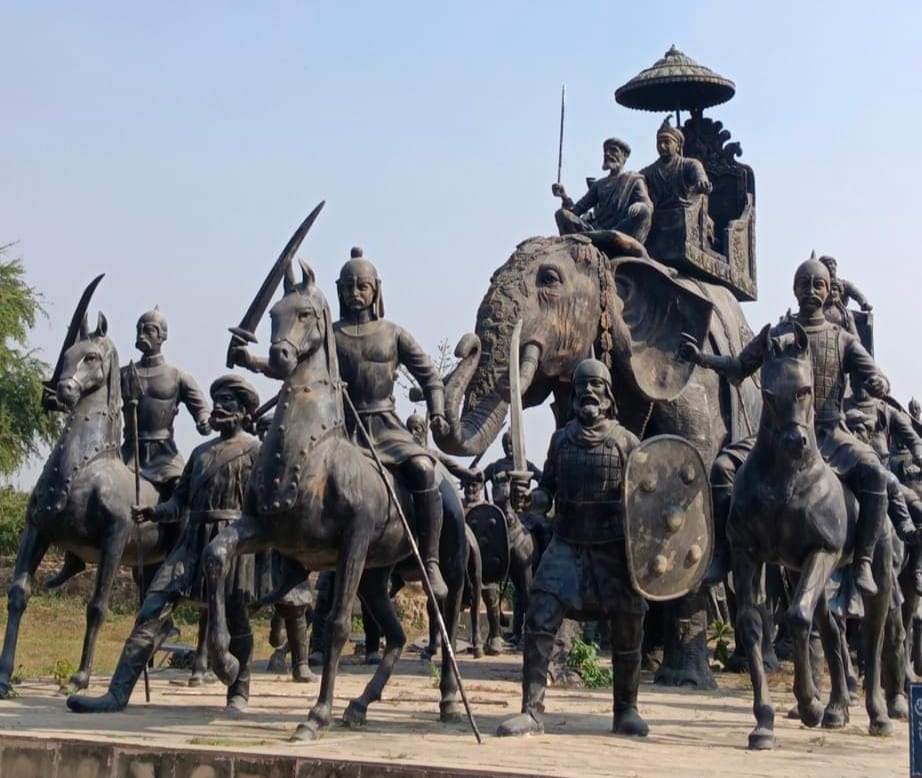
In 1706, during the reign of the Mughal Emperor, Aurangzeb, Dewan Murshid Kuli Khan was recognised as the Nawab of Bengal Province. Murshid Kuli Khan decided to move his capital from Dhaka to the lush fertile banks of Bhagirathi known as Mukusudabad. This particular area later on became known as “Murshidabad”.
It is said that Bengal Province was solely responsible for about 20% of Indian GDP back then, which enabled international trade to flourish in Murshidabad. Many noblemen and wealthy merchants made Murshidabad, their home, which helped sky rocket the region to historic riches.
This wealth attracted the British, who with the help of Mir Jafar, were able to oust Nawab Suraj Ud Dullah from the throne of Bengal. From then on the fortunes of Murshidabad took a turn for the worse, and over a period of a few decades, its former glory had faded away.
Today the town of Murshidabad looks like any normal town of West Bengal, with narrow lanes and ageing buildings. There are some remnants of the past though in the form of horse driven carriages, that roam the streets, and a plethora of historic sites that are spread across the length and breadth of the town.

Let’s look at the top places to visit in Murshidabad in no particular order, those are bound to impress any visitor.
Hazarduari Palace

Built in the year 1837 by Nawab Humayun- Jah, and architect M’cleod, this Indo European style palace is probably the most well known landmark of Murshidabad. The name Hazarduari translates to 1000 doors, which is is apt, considering there are infact 1000 doors in the palace. An interesting fact though is that many of these doors are fake, and were created as decoys for enemies. The long pillars, arched roof, manicured gardens and straight walls makes this palace a sight to marvel at.
Now a days, the palace also serves as a museum that holds huge collection of art and craft and as well as several artefacts and armoury. Most of the weapons used in the Battle of Plassey, are on display here. There is also a library inside the museum which has a huge collection of books and manuscripts.

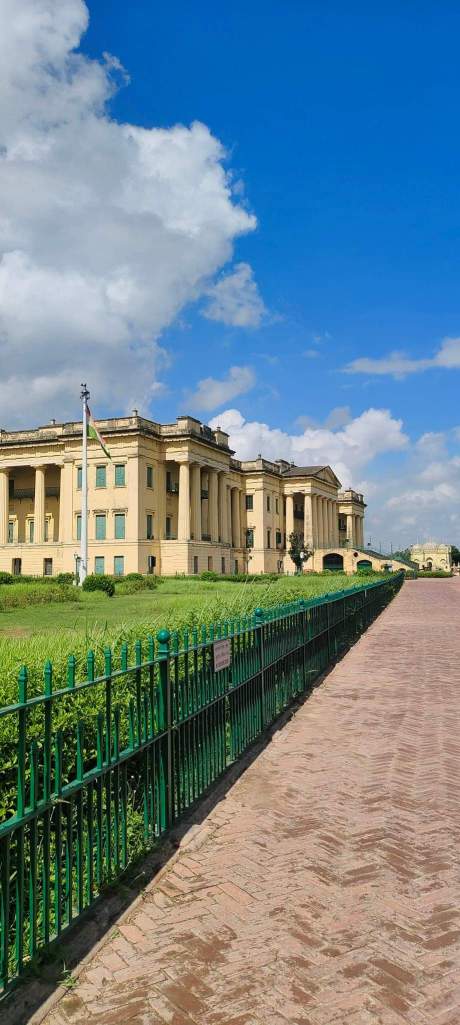
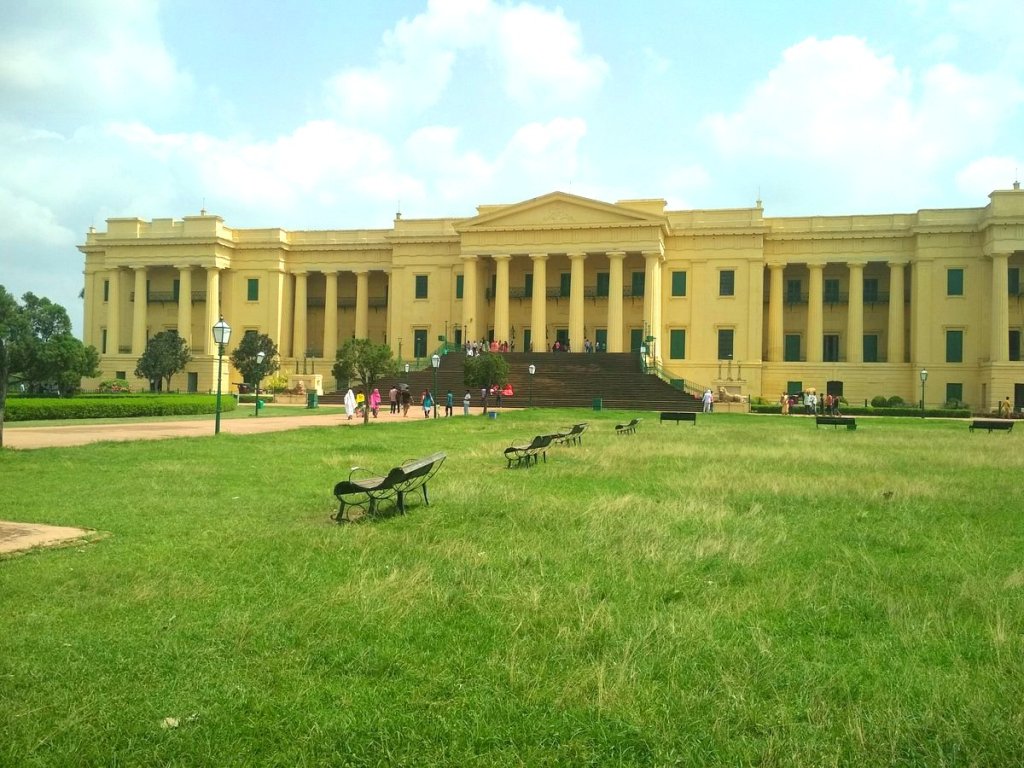
The palace stands in the location of the original palace of Nawab Siraj Ud Dullah, which was demolished to make way for this monument. The palace is part of the Nizamat Fort complex, which also houses many other historic sites, like the Nizamat Imambara.
You can read about my full experience of Hazarduri Palace here.
Nizamat Imambara
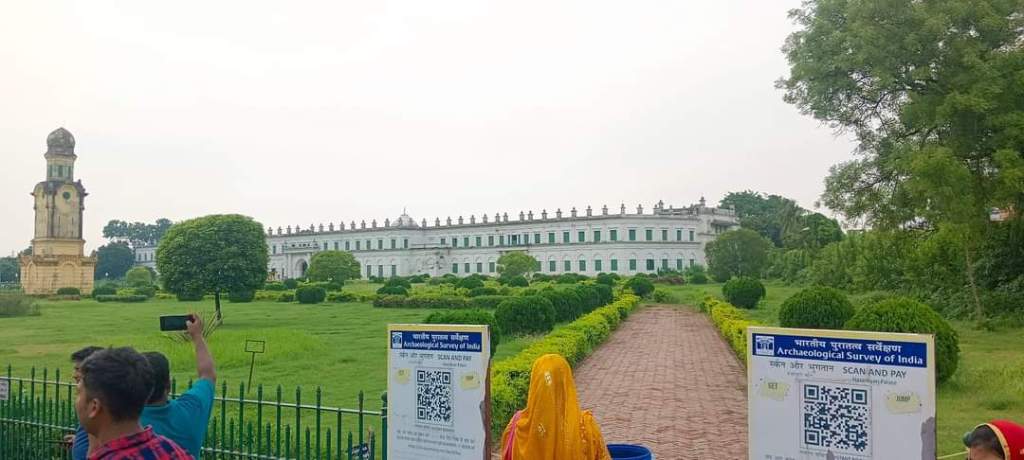
Imambara is a Muslim congregational hall, and the one in Murshidabad is the arguably the largest is the world. The white colored monument stands on the opposite end of Hazarduari Palace, and is a rebuilt version of an old wooden structure.
Nawab Feradun Jah built this in 1847, following the fire of 1846 that destroyed the original wooden Imambara. Now a days the hall remains closed throughout the year, and opens only for a few days during Muharram.
Wasif Manjil
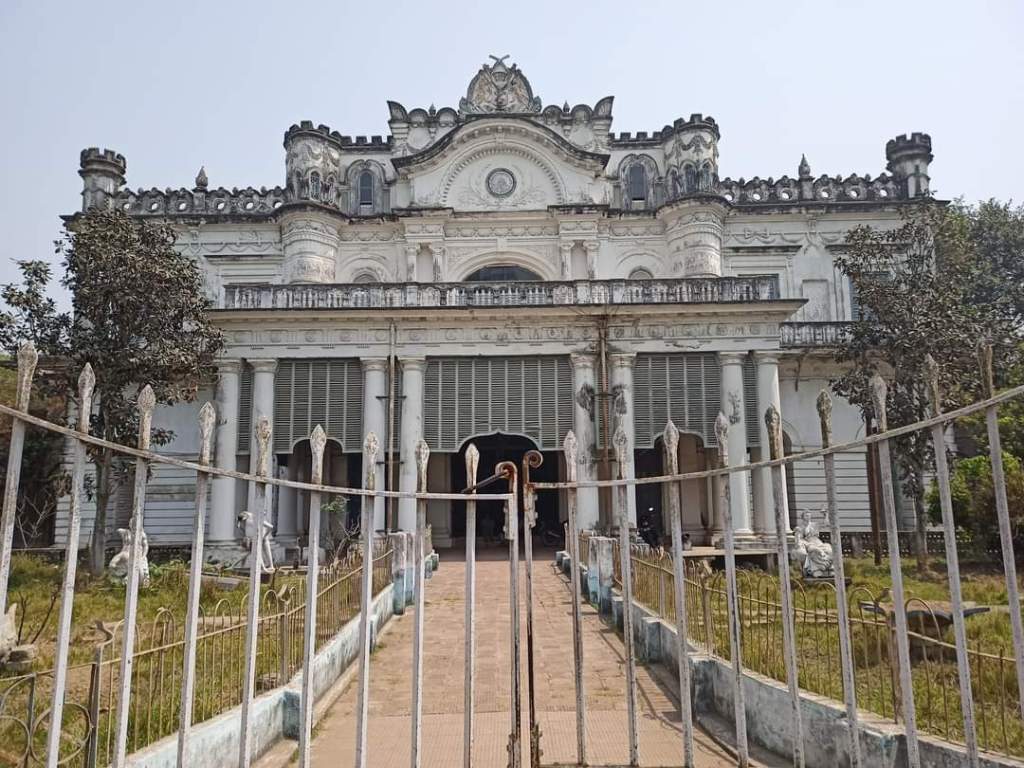
The late Nawab Bahadur of Murshidabad, Wasif Ali Meerza constructed this building towards the south of Hazarduari Palace. Contrary to the Hazarduari, this palace is smaller in size, but it contains many intricate carvings, with rounded walls and entrance.
The overall design of this palace is very pleasing, however this is not properly maintained, which is why it has been categorised as hazardous, and no one is allowed to go inside.
Katra Masjid
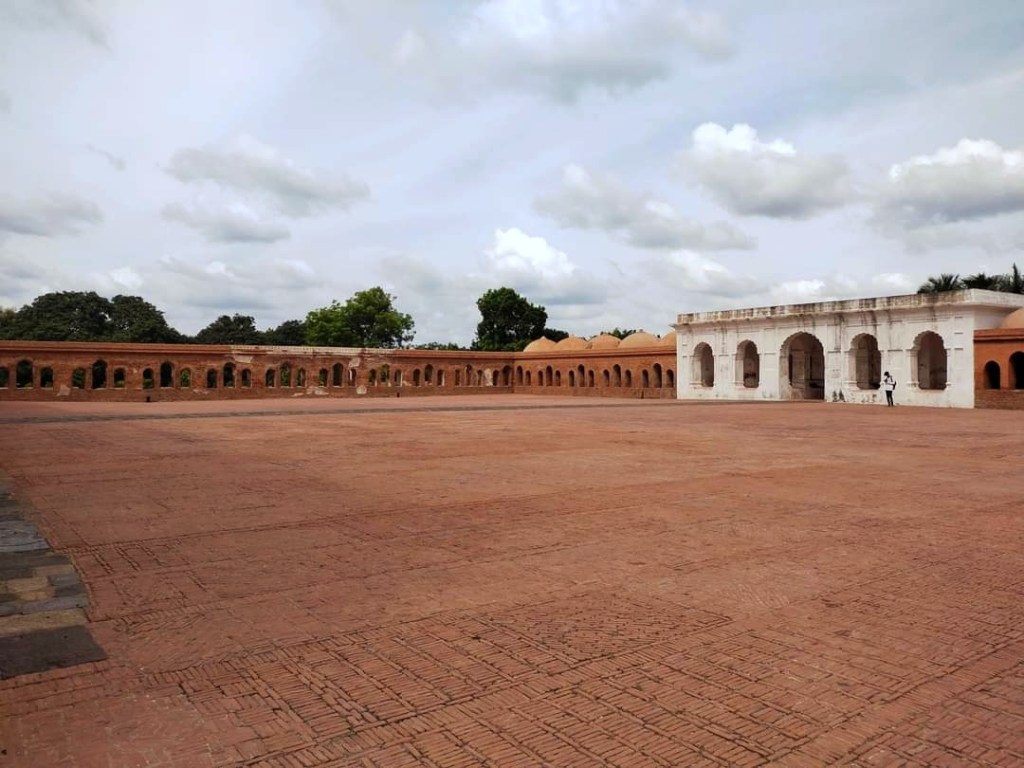
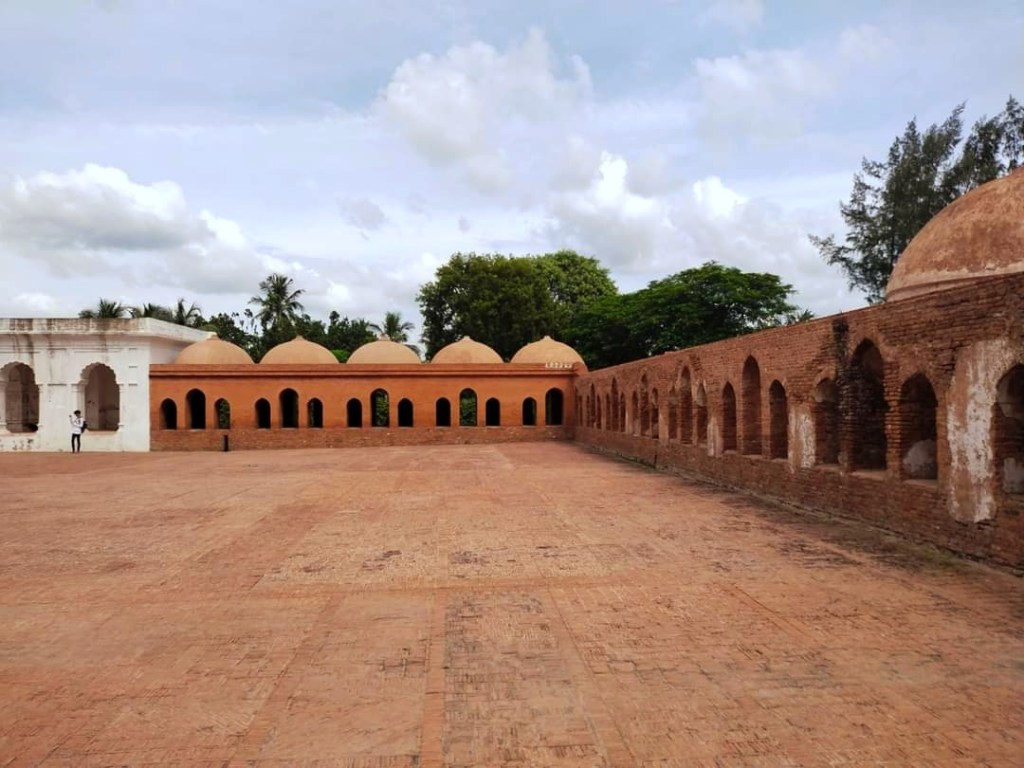
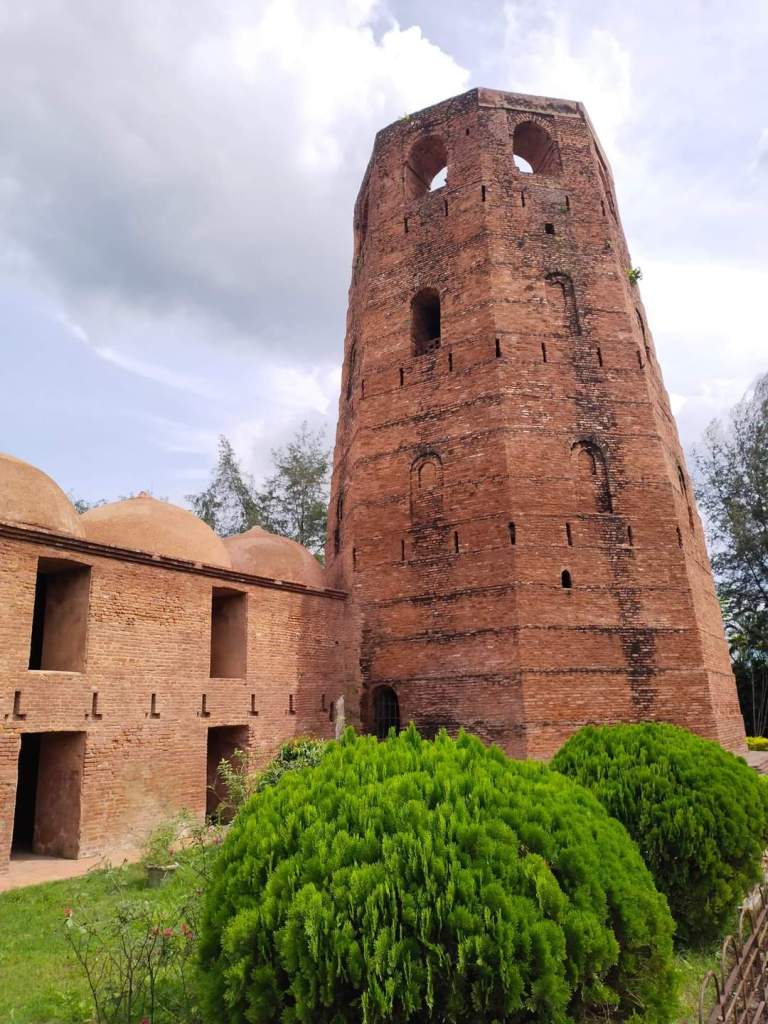
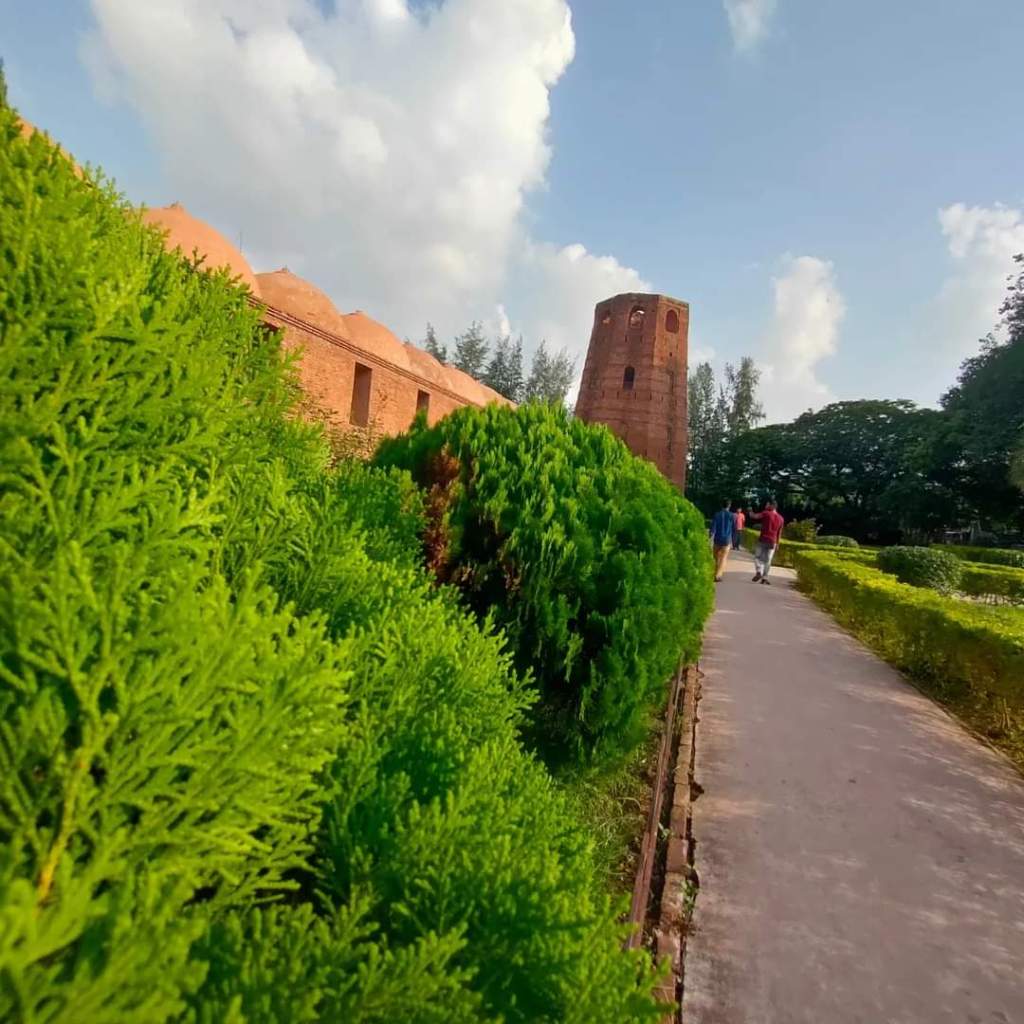
It is one of the oldest mosques in West Bengal, and it is currently being maintained by the Archeological Survey of India. A must visit while in Murshidabad, this mosque was built by Nawab Murshid Kuli Khan himself.
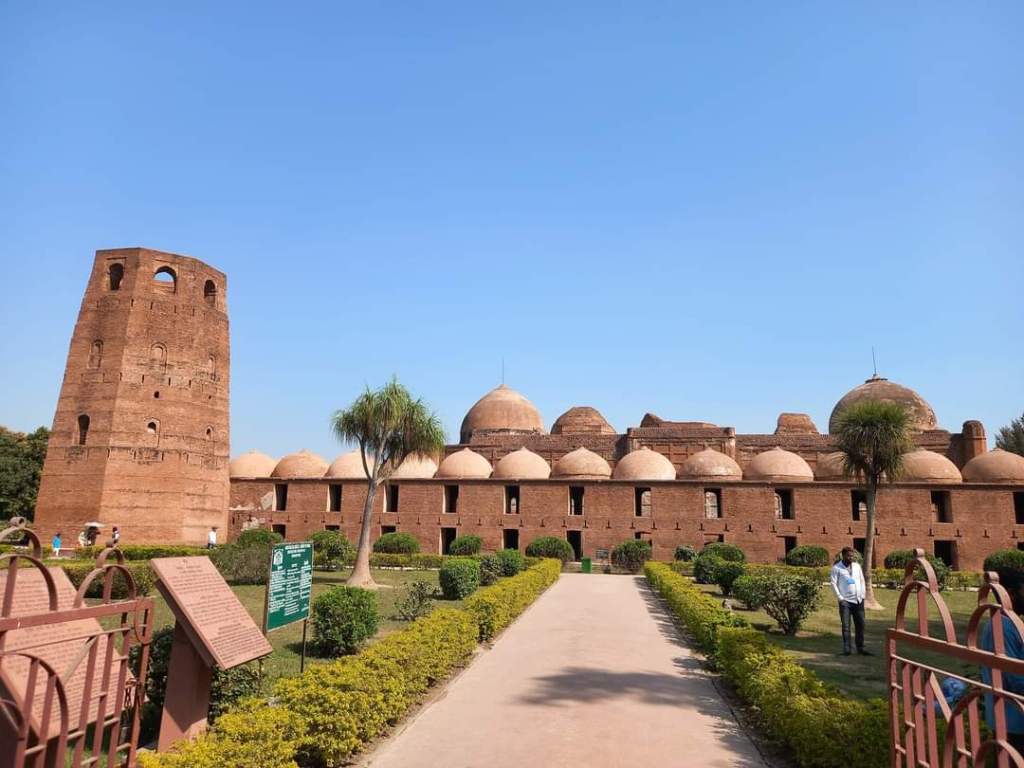
The mosque is a two storied structure, raised on a platform with multiple domes. There were four octagonal minarets in the mosque, sadly however two of them have been destroyed over the years.

At the two ends of the mosque, two domes measuring 70 feet in height, are present, which though in a dilapidated condition, showcase the glorious past of the mosque and the town.
Fauti Mosque
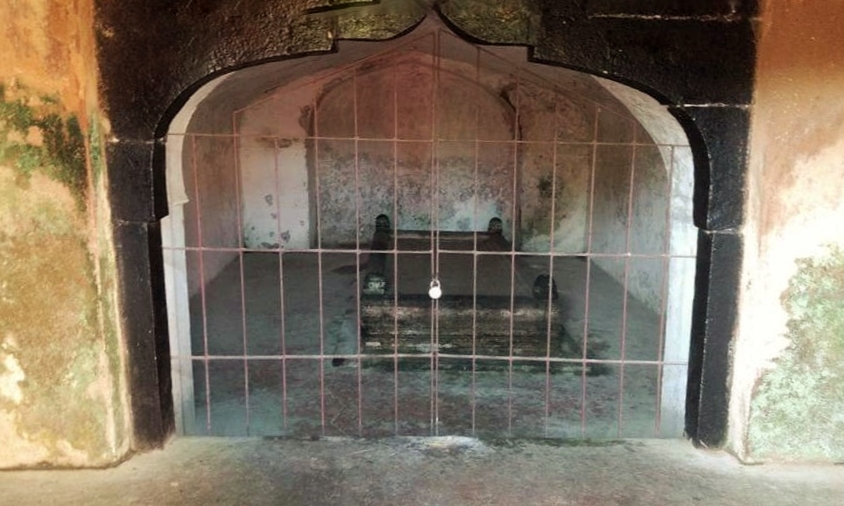
Among the many old structures of the town, one structure that is both haunting and photogenic at the same time is Fauti Mosque. It was built by Sarfaraz Khan, the grandson of Murshid Kuli Khan, and it took a grand total of one day to build. The folklore also says that the Nawab died before the completion of the mosque, which is why most people believe this mosque had a ‘faut’, which means defect.

As the mosque was believed to be defective, it was abandoned. The abandonment and forces of nature has shaped the structure that’s visible today. With no dome, the open sky is visible from the half completed circular walls of the mosque. The forest has taken over most of the structure, with plants and shrubs covering almost all the nooks and corners.
Tomb Of Azimunisa Begum
The tomb of Azimunisa Begum is located on the banks of the river in a meticulously manicured garden. A grand gateway leads into this garden that houses her tomb and a mosque that she had built in the year 1734. This Mosque was partially washed away in a flood, and only part of it stands today as a reminder of the forces of nature.
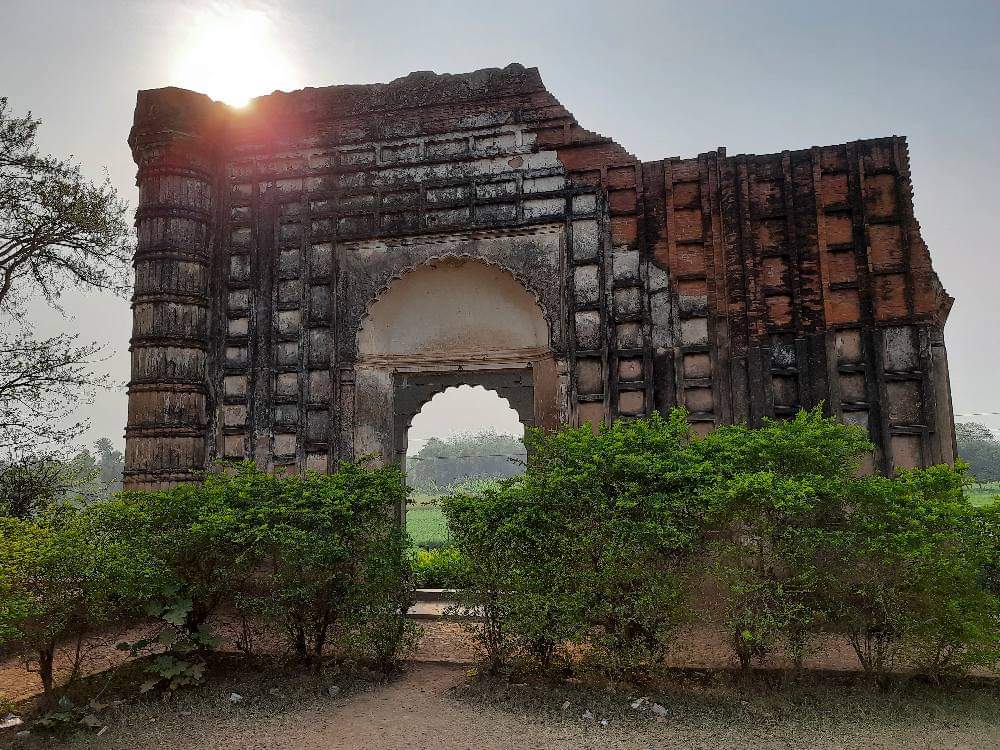
She was the daughter of Murshid Kuli Khan and wife of Suja Ud Din Mohammad Khan, the second Nawab of Bengal. As per local folklore, she had some canibalistic practices, because of which she was buried alive by the king; however it is only hearsay and is not corroborated by Historical facts.
Namak Haram Deori
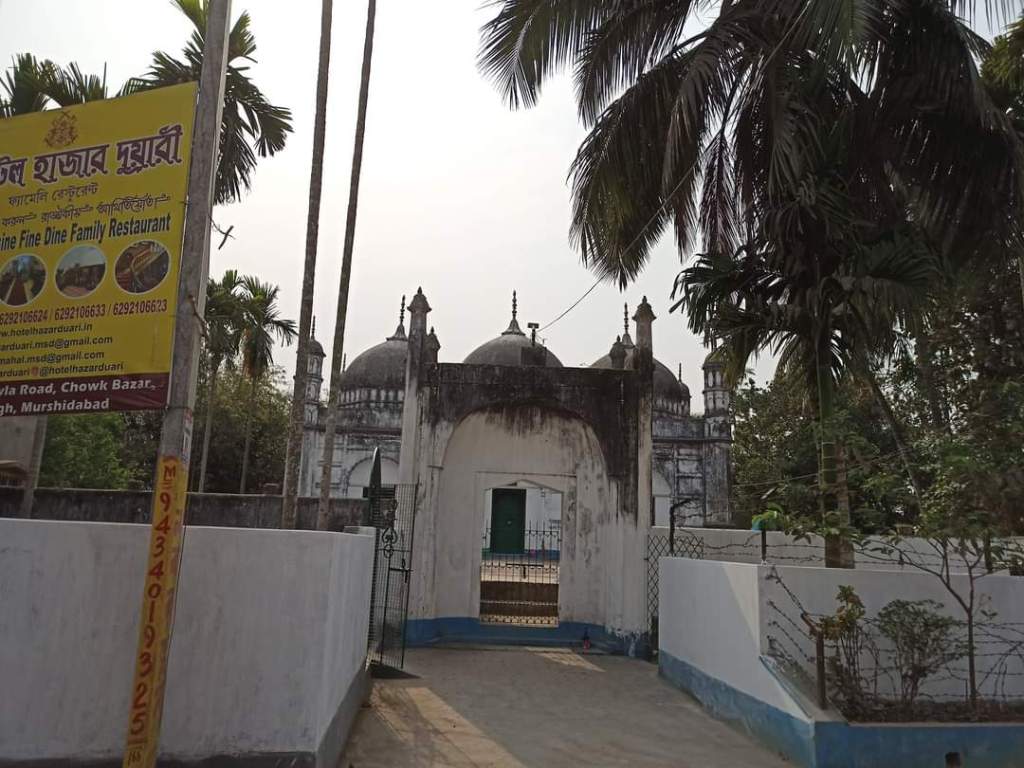
People familiar with the history of British East India Company, know about the Battle of Palassey, where the last independent ruler of Bengal, Nawab Siraj Ud Dullah was defeated owing to a conspiracy by his own minister, Mir Jafar. Jufferjung Palace is the abode of that same Mir Jafar.
After the battle, Nawab Siraj Ud Dullah was held captive in this palace and later on executed by Mahammad Beg, on orders of Mir Jafar. As a reminder of the treachery of Mir Jafar, the gate of this palace came to be known as Namak Haram Deori (Namak Haram in Urdu, means Traitor).

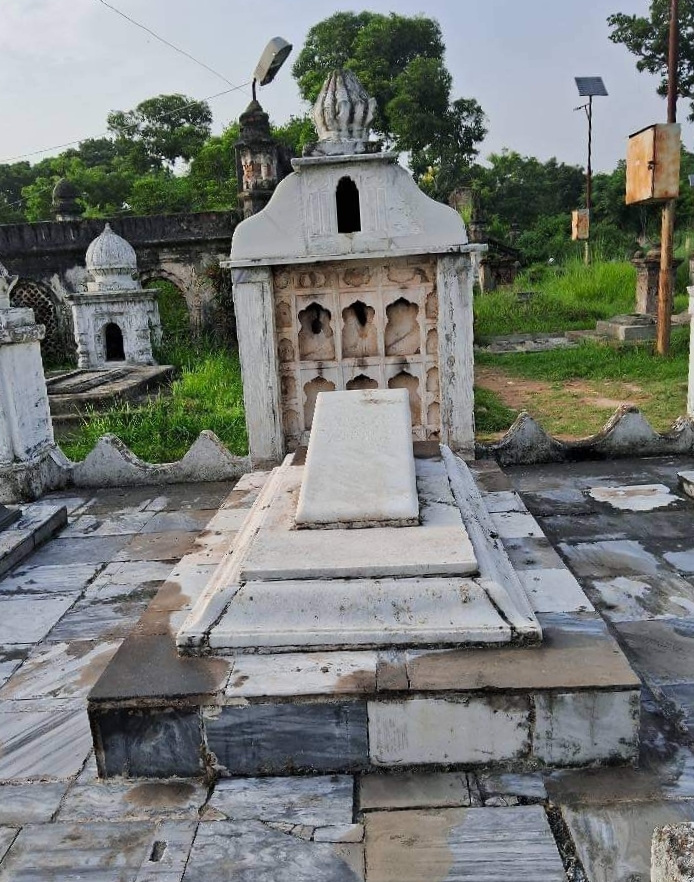
Besides the palace there is a cemetery here as well, where the family of Mir Jafar was buried. The burial of his wife and children have beautiful blue and white tiled carvings engraved on it.
House of Jagat Seth

Jagat Seth is a title bestowed to the banker family of Manikchand, who had a very profitable business and operated as a money lender to the Mughals and the British. As per historians, the Jagat Seth family bank rolled the battle of Pallasey and are equally responsible for the overthrow of Nawab Siraj Ud Dullah along with Mir Jafar.
The family’s wealth saw a gradual decline as the British took over reigns of Bengal, as well as executions of multiple members of the family in the years following the battle of Pallasey. Over time any trace of the family had completely vanished and after a flurry of devastating floods, their residence was also engulfed by the mighty Bhagirathi River.
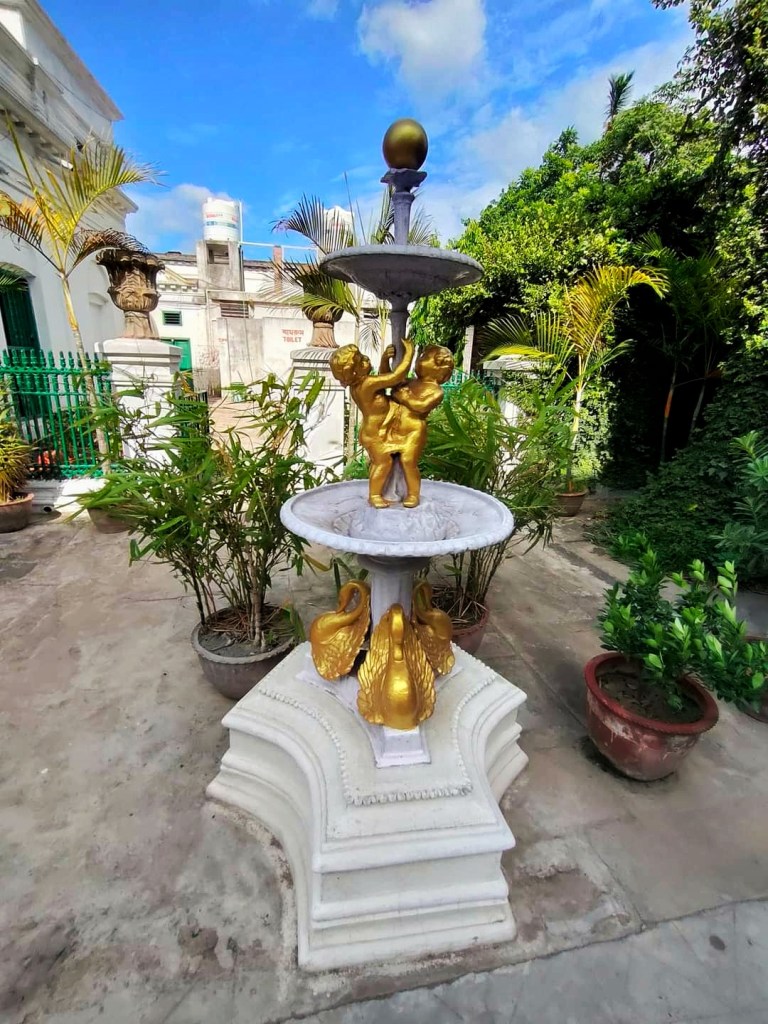
What stands today as the House of Jagat Seth is infact the Kacheri or Office of the family from where they conducted most of their banking business. It has been converted to museum by the Archaeological Survey of India, containing a few of the belongings of the original family.


Nashipur Rajbari
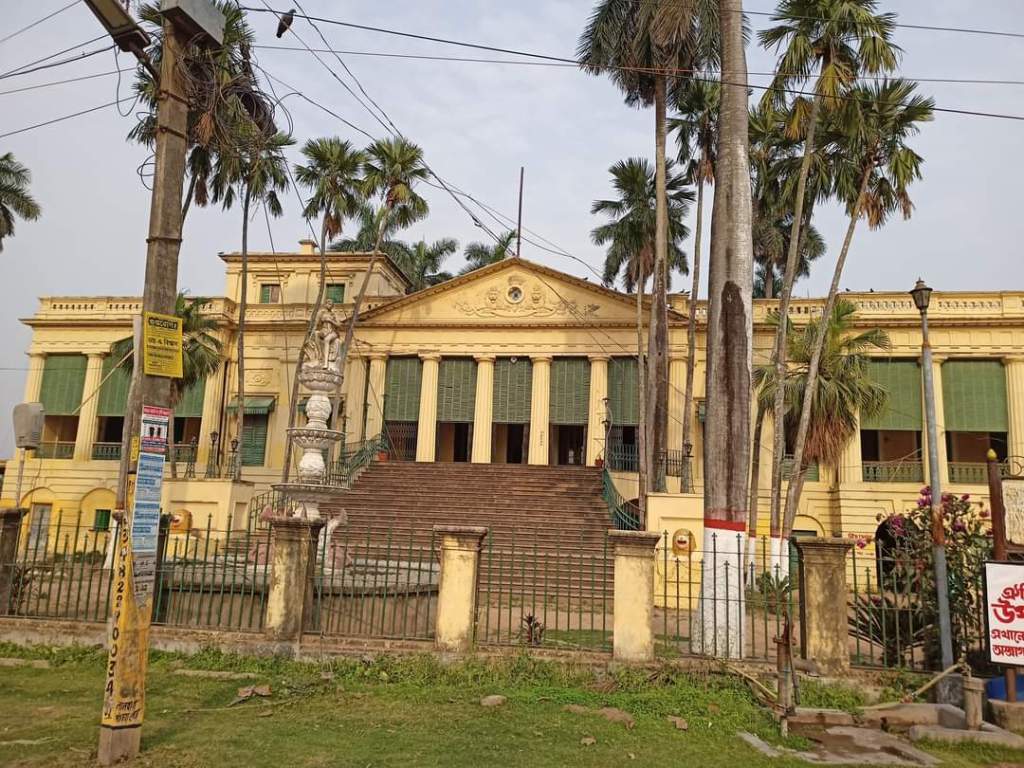
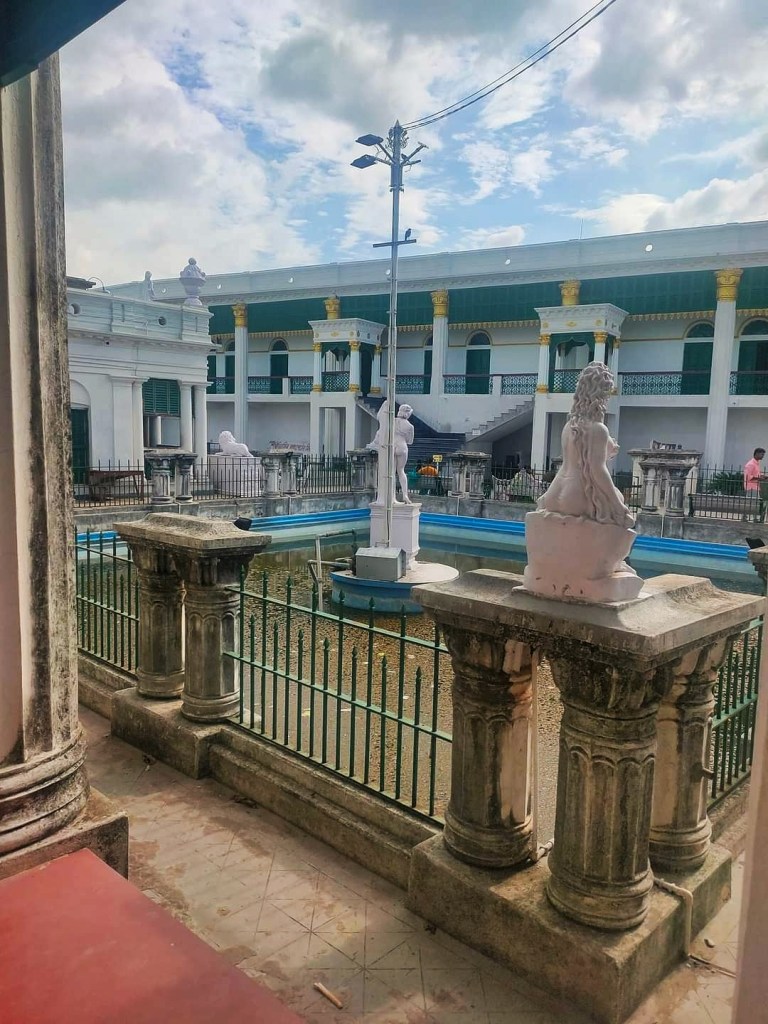
A huge yellow palace stands near to the House of Jagat Seth, belonging to Raja Debi Singha, who is infamous in history as one of the most brutal tax collectors of Bengal. He initially started off as a trader, then got a job in the Revenue Department under Dewan Raza Khan, and with time became the head of the department.
The Rajbari also houses beautiful Laxmi Narayan Mandir and a Kali Mandir, it has an entertainment courtyard called the Nat Mandir where performances were organised.
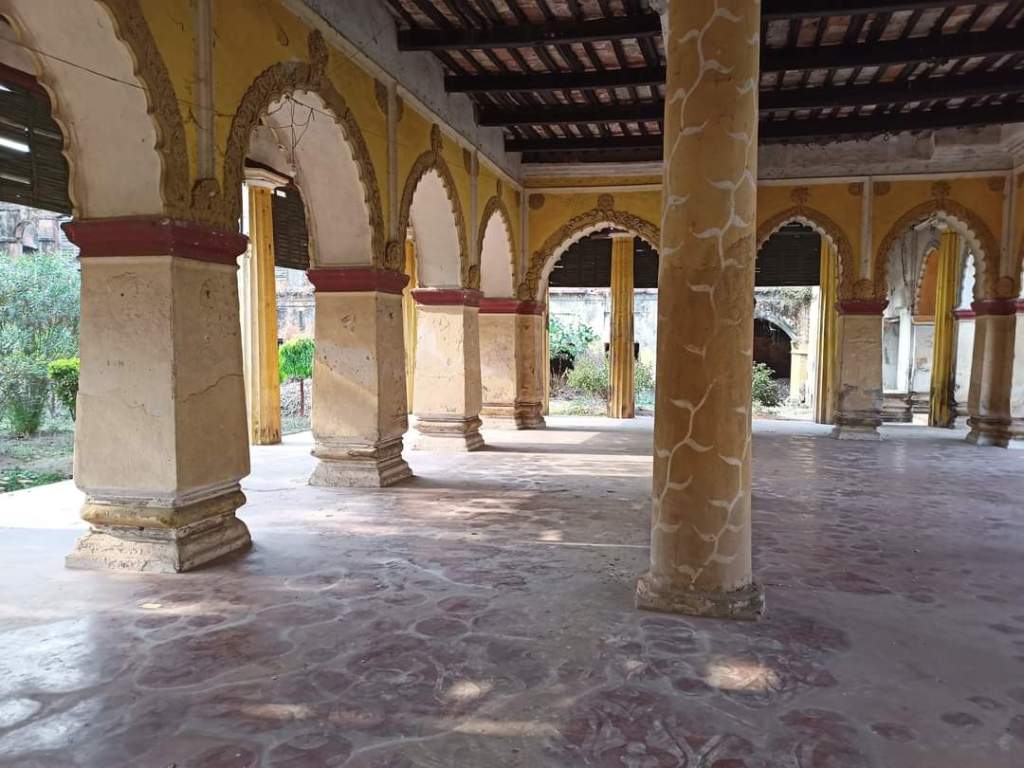
The palace, bears an eerie resemblance to the Hazarduari Palace, in terms of style and colour. It’s as if the makers of this Palace wanted this to look like a mini version of the Nawab’s residence. Currently this palace houses a small museum of documents related to tax collection and various royal decrees, also known as Farmaans.
Kathgola Palace
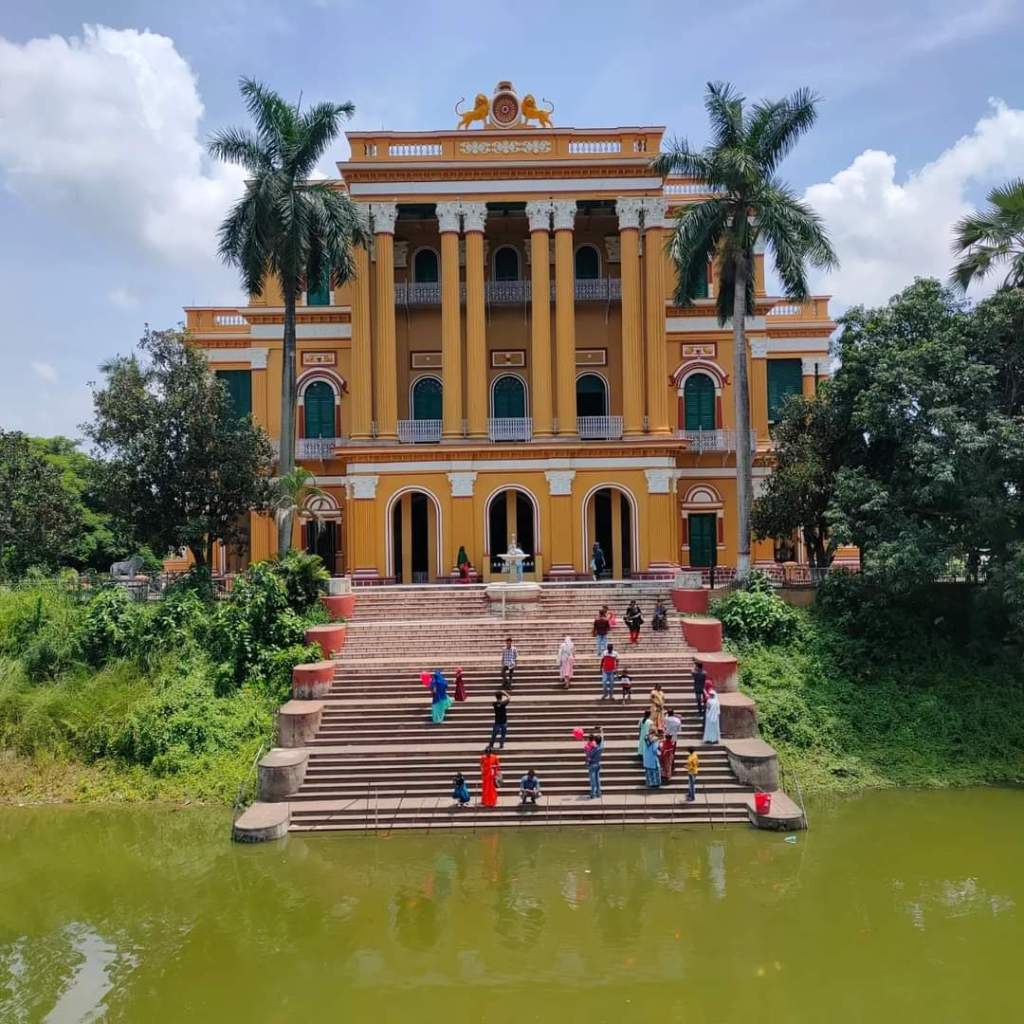
The big palatial house is one of the most beautiful and royal with architectural excellence. In 1870, when Rai Bahadur Lakshmipath Singh Dugar laid the foundations of Kathgola, it was made sure that future visitors or onlookers will be transported back to the regal past.
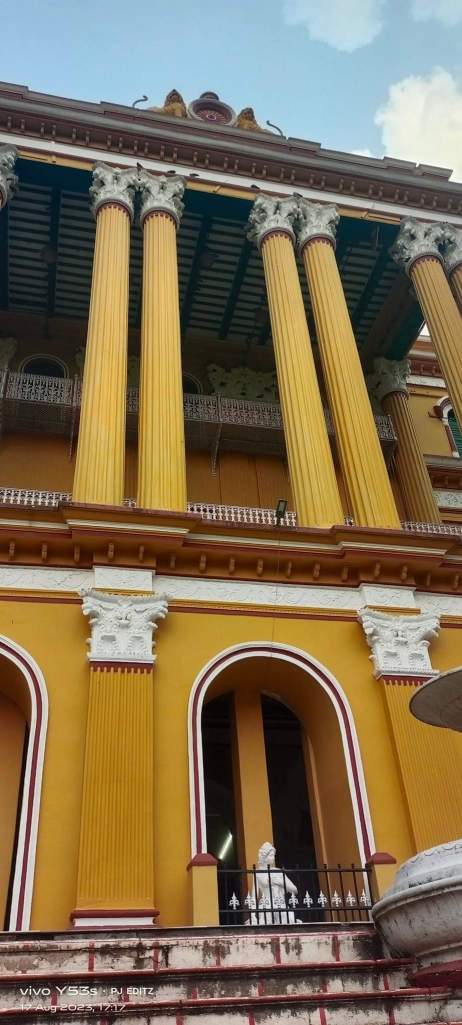
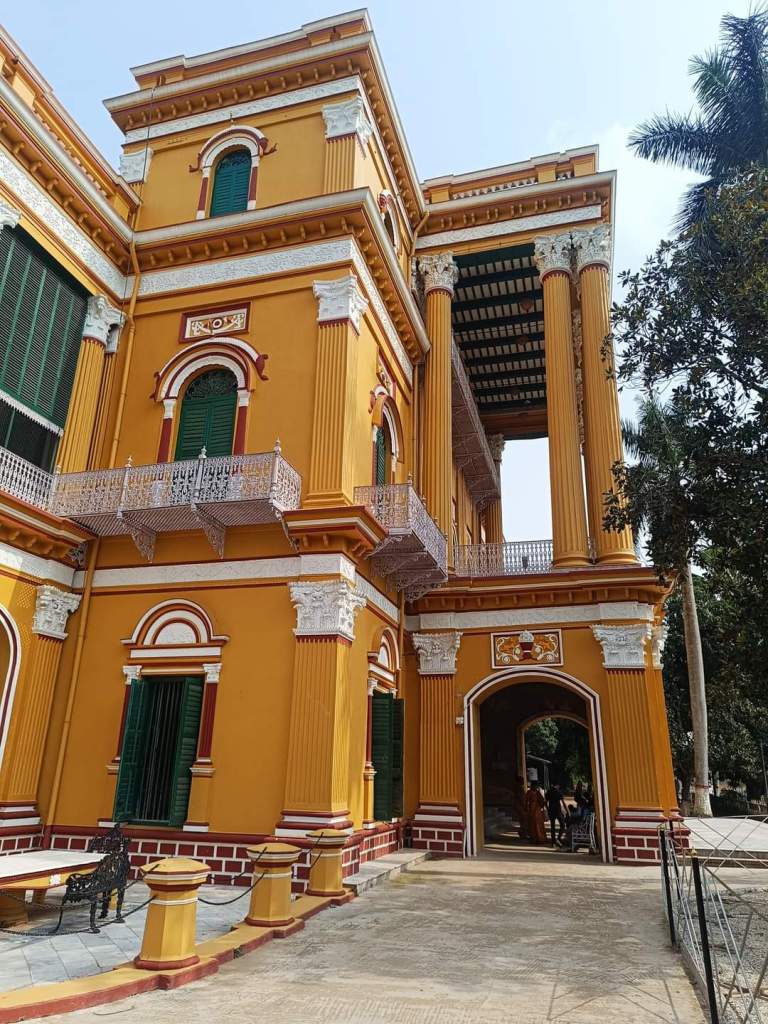
The interiors consist of Italian marble, intricate mosaic, Bengal Lime works, Pillars polished with Sea Shell Lime, Wooden Carvings etc. The entire palace is decorated with chandeliers, period furniture, and has Belgian mirrors and glasses.
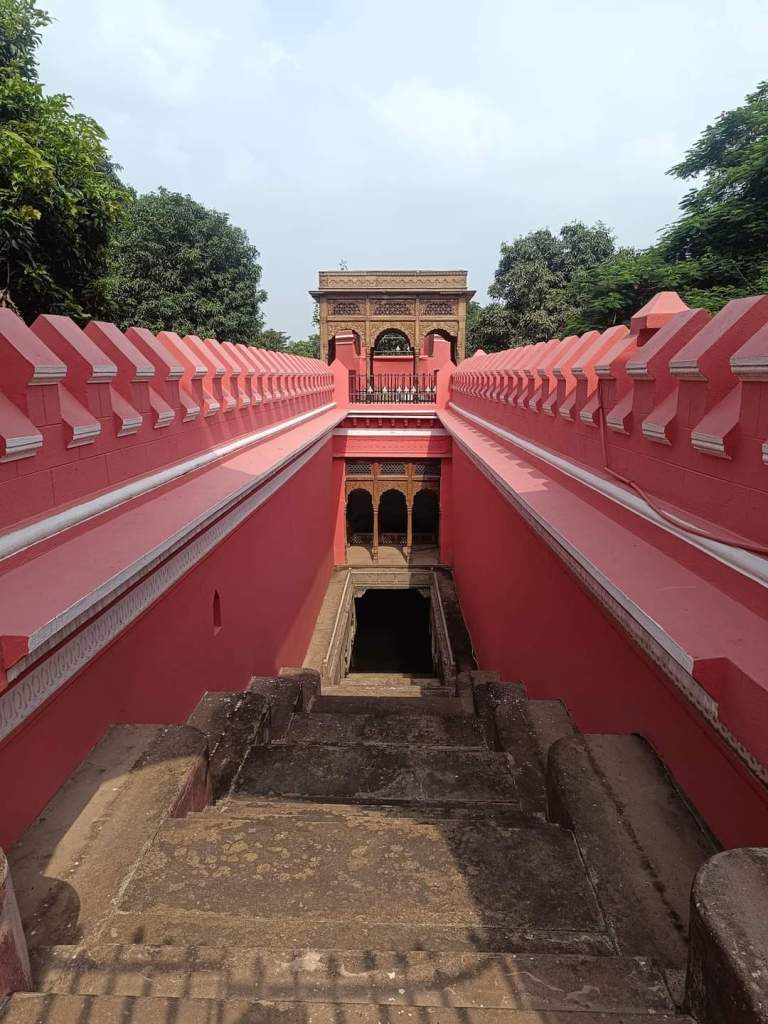
There is also a step well, called as Baoli which goes upto 3 levels down below the surface. It has steps which go down to all the floors and the dias on the ground is made of intricately carved Mirzapuri stone.
The Terracotta Temples of Murshidabad
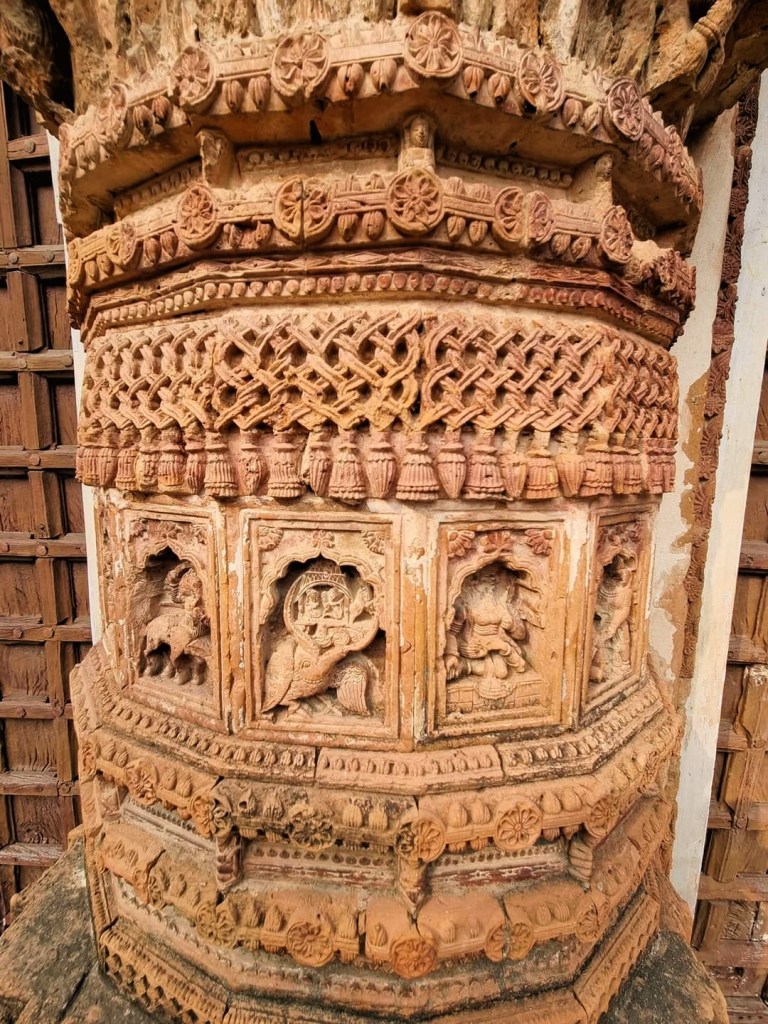
Among all the grand palatial buildings of Murshidabad, some overlooked and underappreciated structures are the beautiful terracotta temples of Baranagar. These were mostly built by Ranj Bhavani of Natore, in the 18th Century.s
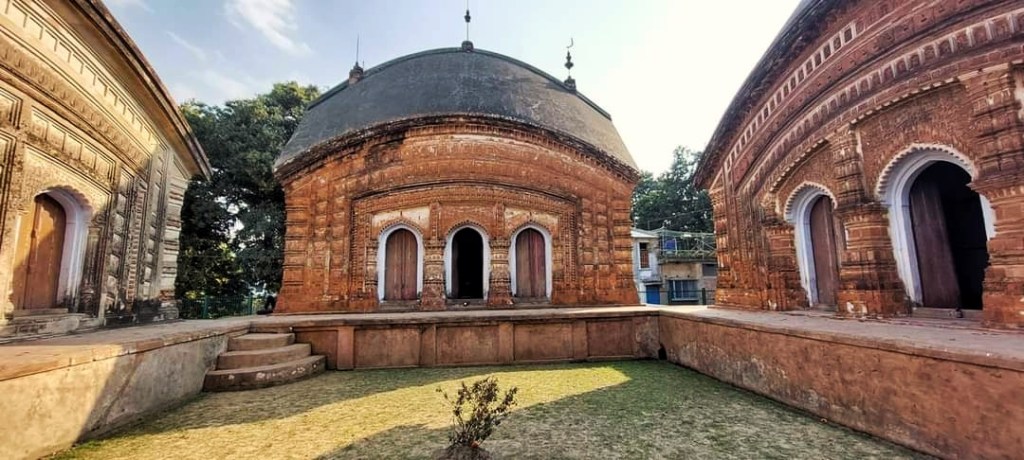
Sporting intricately carved exteriors, these temples provide a glimpse into the great craftsmanship of Bengali workers. The carvings depict the daily lifestyle of the village, tales of Hindu epics like Ramayana and Mahabharata, gods and goddesses.
Ek Bangla Pancha Shiva temple, Bhabaniswar Temple, Gangeswar Jor Bangla Temple and the Char Bangla Temples are the most noteworthy of these structures. You can read about these temples in detail here.

How to reach
Kolkata, the capital of West Bengal acts as the gateway to Murshidabad, which is located 205 KM away.
By Rail: The nearest station is Azimganj Railway Station and Murshidabad Railway station, which has regular local train connectivity from Sealdah, Kolkata. People coming from outside of Kolkata, need to come down to Kolkata and then take the connecting train to Murshidabad/Azimganj.
By Road: From Kolkata, one can hire private cabs as a day tour for this place.
By Air: The nearest airport is Netaji Subhash Chandra Bose airport in Dumdum, Kolkata.
When to Visit
September to March is the best time to visit Murshidabad.
Where to Stay
There are many options of accommodation available in Murshidabad, but if you have money to spare, I would recommend staying at an heritage property.
Bari Kothi : It is the best place to stay, costs around Rs 11000 for 2 people, including breakfast, lunch and dinner. Bookings needs to be done through BariKothi Website.
Cossimbazar Rajbari : Another heritage property in the area nearer to the Hazarduari Palace. Bookings needs to be done through Cossim Bazar Palace of the Roys Website.
 East Indian Traveller