

- What are Terracotta Temples
- Terracotta Temples of Beengal
- Baranagar
- Jor Bangla Gangeshwar Temple, Baranagar, Murshidabad
- Bhabaniswar Temple, Baranagar, Murshidabad
- Rani Bhabani of Natore
- Ek Bangla Panchanan Shiva Temple
- The Char Bangla Temple, Baranagar, Murshidabad
- Conclusion
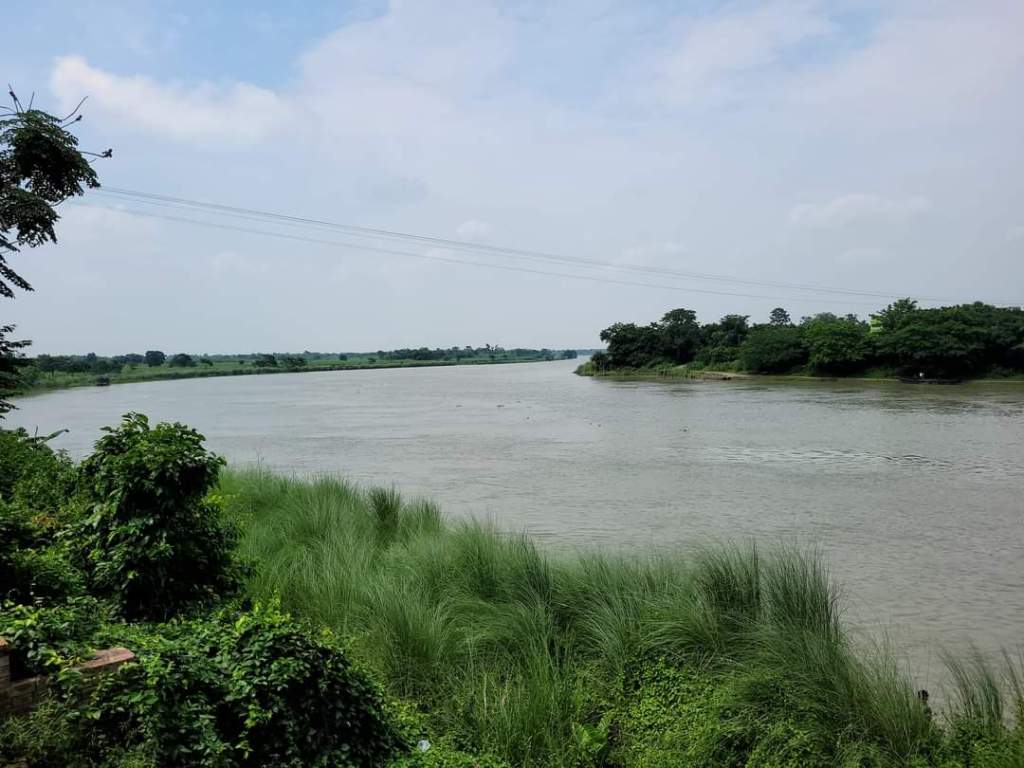
I had not heard about the terracotta temples of Baranagar, near Murshidabad before interacting with fellow tourists on a dhaba near Hazarduari Palace. It came as a pleasant surprise, and we were all excited to witness the terracotta art of this region. So without wasting any more time, on the last day of our Murshidabad tour, we hopped on a boat from Sadar Ghat near Jiaganj, and crossed the mighty Bhagirathi River to reach Baranagar.
| How to Reach: By Rail: The nearest station is Azimganj Railway Station and Murshidabad Railway station, which has regular local train connectivity from Sealdah, Kolkata. People coming from outside of Kolkata, need to come down to Kolkata and then take the connecting train to Murshidabad/Azimganj. By Road: From Kolkata, this place is 205 KMs and one can hire private cabs as a day tour for this place. By Air: The nearest airport is Netaji Subhash Chandra Bose airport in Dumdum, Kolkata. |
Where to Stay: |
| There are many options of accommodation available in Murshidabad, but if you have money to spare, I would recommend staying at an heritage property. Bari Kothi : It is the best place to stay, costs around Rs 11000 for 2 people, including breakfast, lunch and dinner. Bookings needs to be done through BariKothi Website. Cossimbazar Rajbari : Another heritage property in the area nearer to the Hazarduari Palace. Bookings needs to be done through Cossim Bazar Palace of the Roys Website Best Time to Visit: September to March is the best time to visit Murshidabad. |
What are Terracotta Temples
The term Terracotta is linked to fired clay, which is unglazed. As it is unglazed, its mostly non shiny, reddish brow in colour. Typically terracotta is used to make utensils, if you have plants at your home, chances are it is standing inside a terracotta pot. The millennia old pottery which gets excavated from Harappa like settlements, is terracotta. In art, it is used to define figurines. Only in Bengal, is this terracotta getting used for temple building.
Terracotta Temples of Beengal
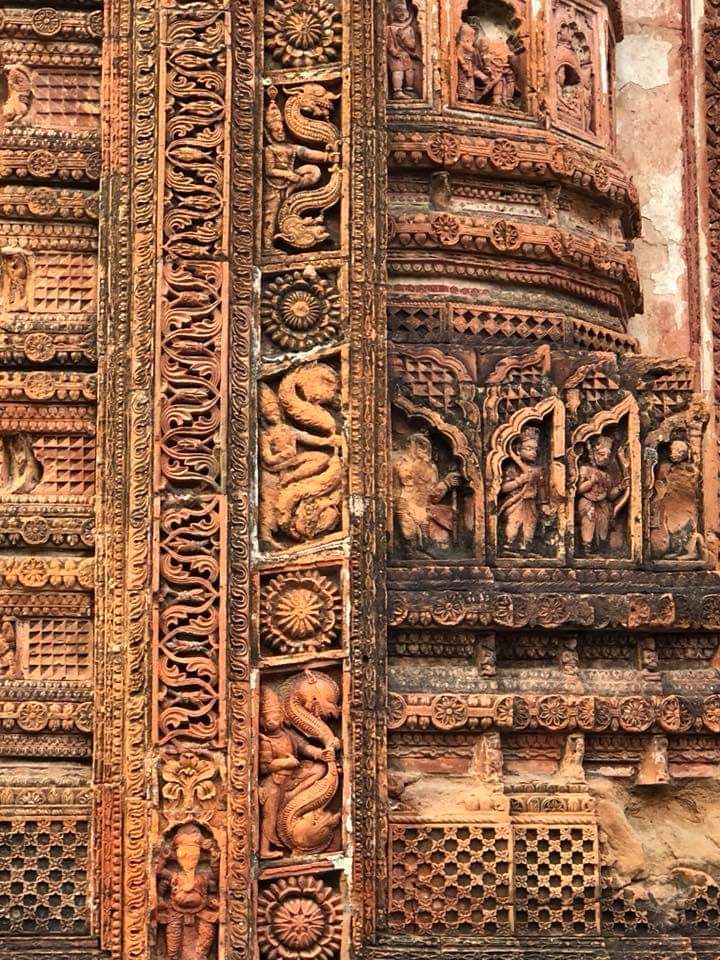
The Terracotta temples of Bengal are built using fired bricks and decorated with beautiful sculptures, made of clay found in the river basin. The clay after being given shape is fired in a kiln, thus turning it into a never fading terracotta art.
Bishnupur in the Birbhum district is the most popular destination for Terracotta Temples, possessing some beautiful creations of the yester years. However some Terracotta Temples of West Bengal are present in Baranagar, of Murshidabad as well.
Baranagar
We booked a Toto (e-rikshaw), for the whole tour of Baranagar and it’s temples, for Rs. 400. As our toto rode leisurely through the roads of Baranagar, nostalgia started pouring in from all sides to my mind. Roadside hawkers, selling everything from vegetables to steel wares. Food stalls offering aloo kabli and jhal muri; sweet shops overran with folks trying to grab a look at all the colourful sandesh lined up.
All of these were bringing back memories of my summer vacations at my maternal village. Baranagar seemed to be sealed inside a time capsule, still preserving its old worldly charm.
This however doesn’t mean that all it’s old glory are still standing, as most of the temples belonging to this area have succumbed to the fury of nature. It’s a cost of living so cost to that river Bhagirathi, that has had some really devastating floods over the decades.
Only a handful of temples in Baranagar are still standing, which though a small percentage of what actually used to be, do a great job in providing a glimpse of the older glory days. Our Toto had reached one of the those now, the Jor Bangla Gangeshwar Temple.
Jor Bangla Gangeshwar Temple, Baranagar, Murshidabad
Standing in front of this beautiful temple, I couldn’t believe my eyes as they pondered over Bengal’s unique style of surface terracotta art. The temple consists of two identical structures fused together, giving it the unique look and name (Jor meaning joint in Bengali).
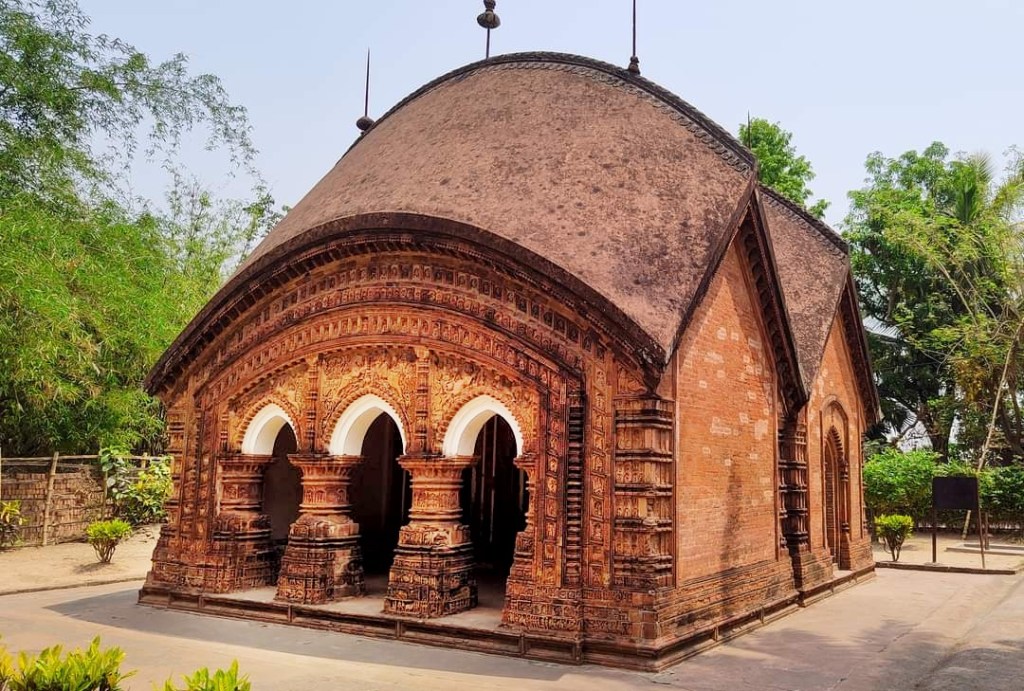

The front of the temple, has three arches, with intricately designed pillars. The other sides of the temple however are plain and simple. The pillars had depiction of mythological figures from Ramayan and Mahabharat. The details of these carvings have sadly been washed away with time, but whatever is currently present is so beautiful that we couldn’t take our eyes off it.

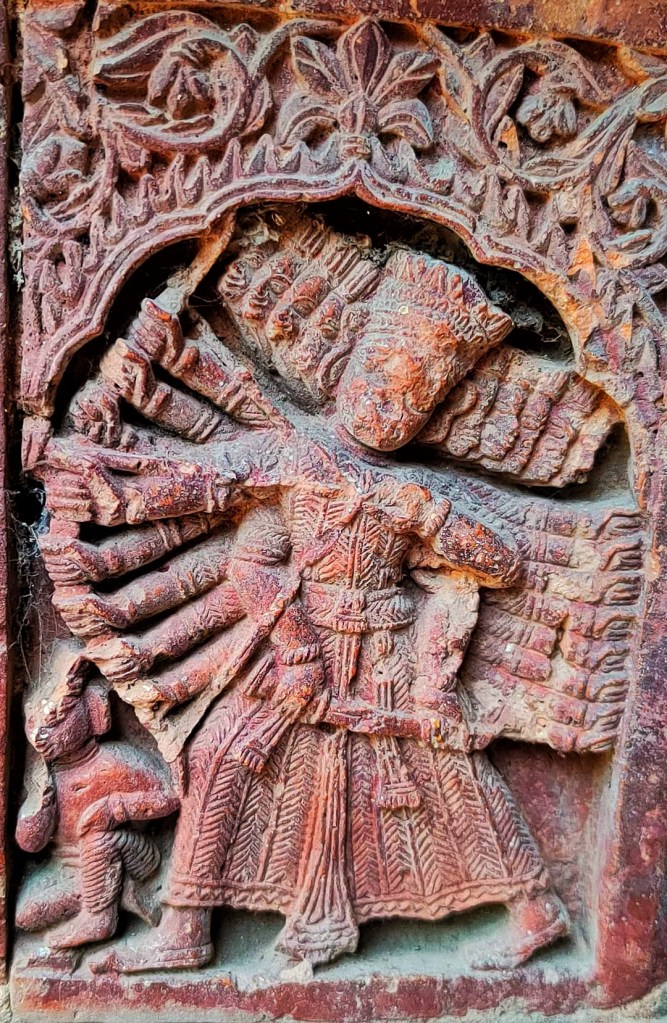


This temple was a great introduction to the terracotta art of the area, and as beautiful as it was, it was time to move on to our next stop, the Bhabaniswar Temple.
Bhabaniswar Temple, Baranagar, Murshidabad
This temple was not in our itinerary, but we visited it nevertheless as it was on route to the next location. This temple in contrast to the other temples we were visiting, was built using limestone and mortar, and not Terracotta. It stands on an open field, by looks of which it seemed like it must be getting used as a football ground by the kids of the village.
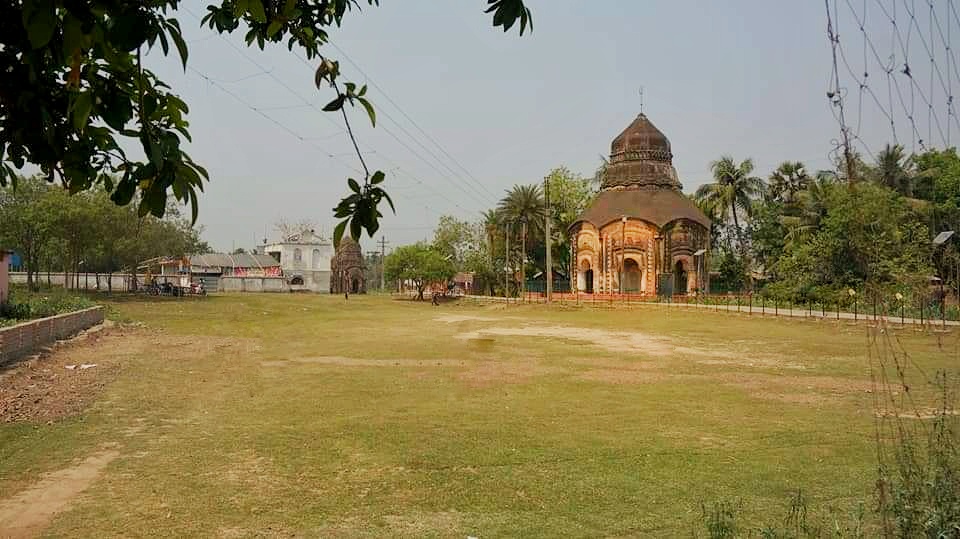
The specialty of the temple is that it is octagonal in shape, with a domed roof. The roof has an etching of an inverted lotus, which is very interesting as this design rarely appears in the temples of West Bengal.
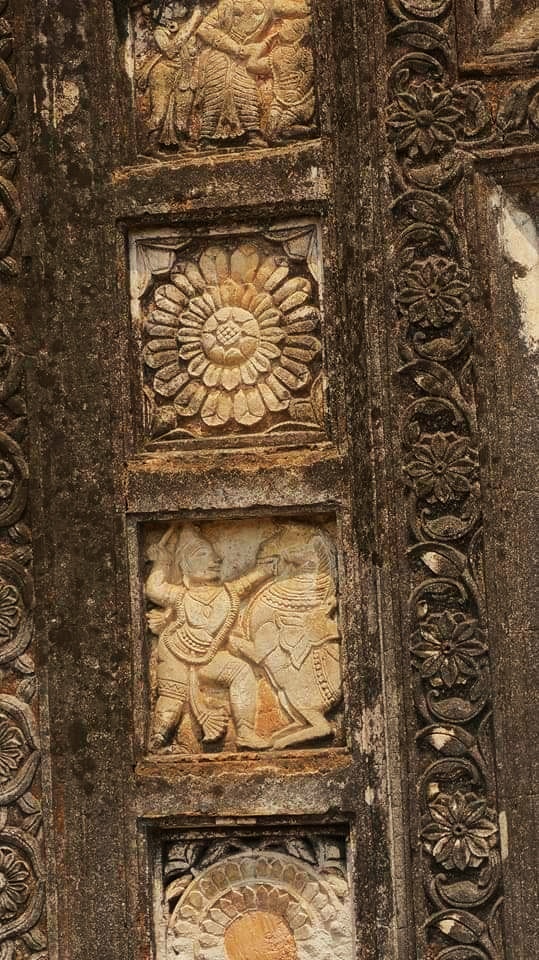
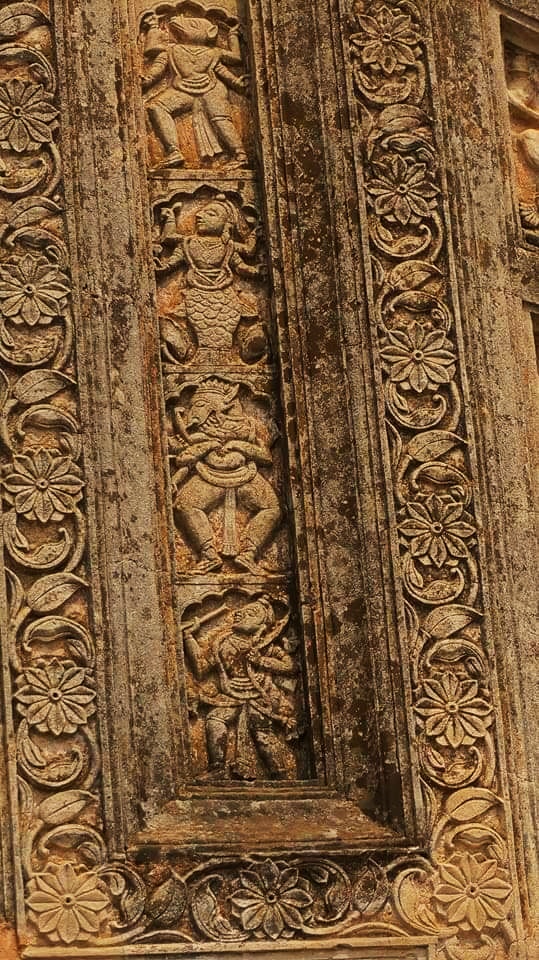
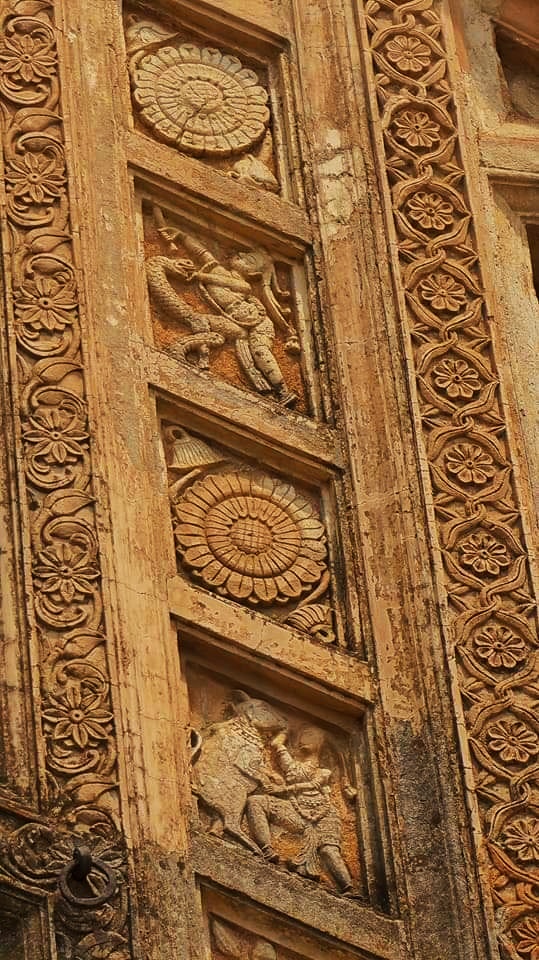
This temple has sculptures lined up against the edge of the hexagonal base, which range from mythological motifs to flowers and animals. The gate of temple are arched, decorated with religious figures between the arch and the roof.
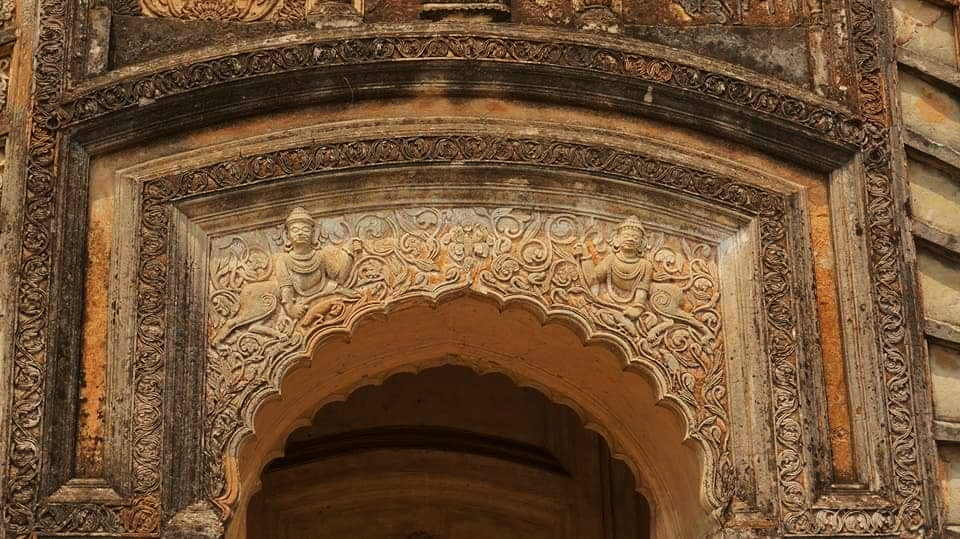

The presiding deity of this temple is Lord Shiva, like many other temples of the area. In 1755 AD Tarasundari, had built this temple, dedicating it to her late mother, Rani Bhabani of Natore, the architect of all the terracotta temples of the region.
Rani Bhabani of Natore
Rani Bhabani was the zamindar of Natore, which was part of the erstwhile Bengal Province. She had taken over the zamindari post the death of her husband, Raja Ramakanth in 1748. She worked hard to bring wealth and prosperity to her province, and the fact that Murshidabad and it adjoining areas were a big trading point at the time of her reign, helped her wealth to swell to epic proportions.
Out of this massive wealth, she donated a huge sum for the betterment of the poor and safeguarding of Hindu traditions. She encouraged Hindu learning and bestowed large endowment for the spread of education. She always wanted to enrich Bara Nagar economically, socially and culturally, thus, she started to build temples in the area from as early as 1755.
Ek Bangla Panchanan Shiva Temple

The temple next on our list was Ek Bangla Panchanan Shiva Temple. This temple was nearly destroyed in floods and due to other natural issues. It was revived in the year 1940, and hence has been under the protection of the Archeological Survey of India.
Situated on a small garden, the temple is dochala (2 roofed hut shaped), which is pretty common amount the temples of West Bengal from that era. The temple consists of a small garbhagriha and a verandah with triple arched entrances.

That main attraction of this temple is that five faced Shiva Linga, which lends the temple the name ‘Panchanan’, meaning five headed. The from walls of the temple is decorated with terracotta ornamentation depicting the legends from Ramayana. Sadly the crispness of the terracotta works have faded due to the excessive color coatings, over the years.
As we completed offering our prayers, and boarded our toto, we could sense the restlessness on the face of our driver. Seemed like he had not fathomed we would be so slow in our explorations. The usual tour of all these temples takes about a couple of hours but we were already on the two hour mark, and still had the main attraction of Baranagar to visit, the Char Bangla Temple.
The Char Bangla Temple, Baranagar, Murshidabad
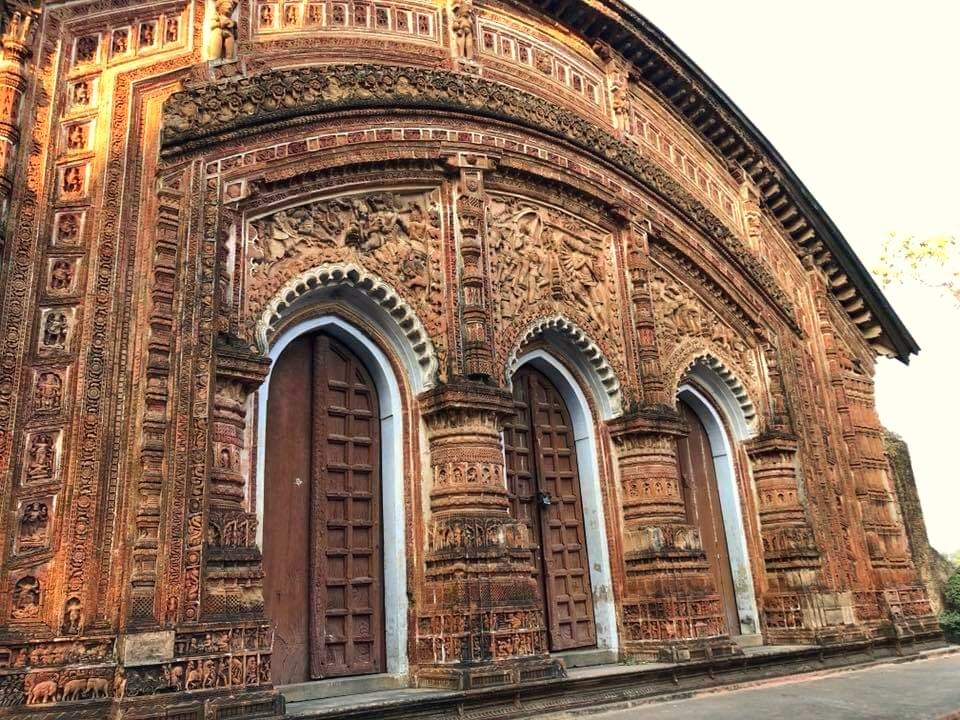
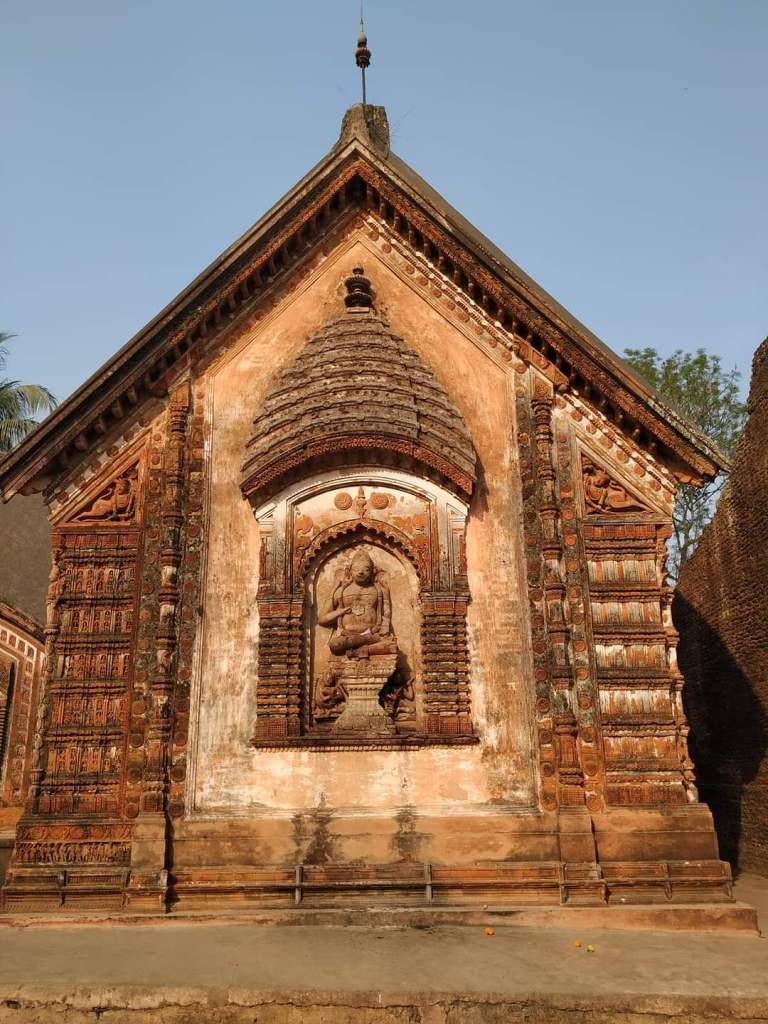
Unlike the temples we had seen till now, this one was not a single temple but a complex of four temples, hence the name (char means 4 in Bengali). These four temples are placed around a small courtyard, each one standing on a 1.5 ft platform.
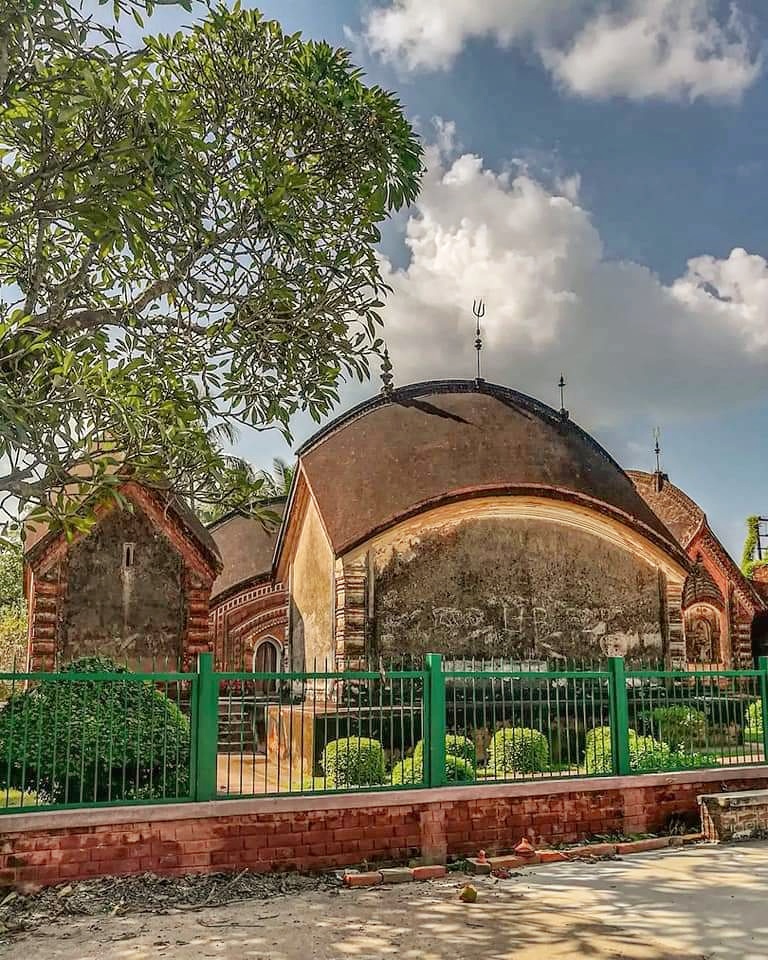
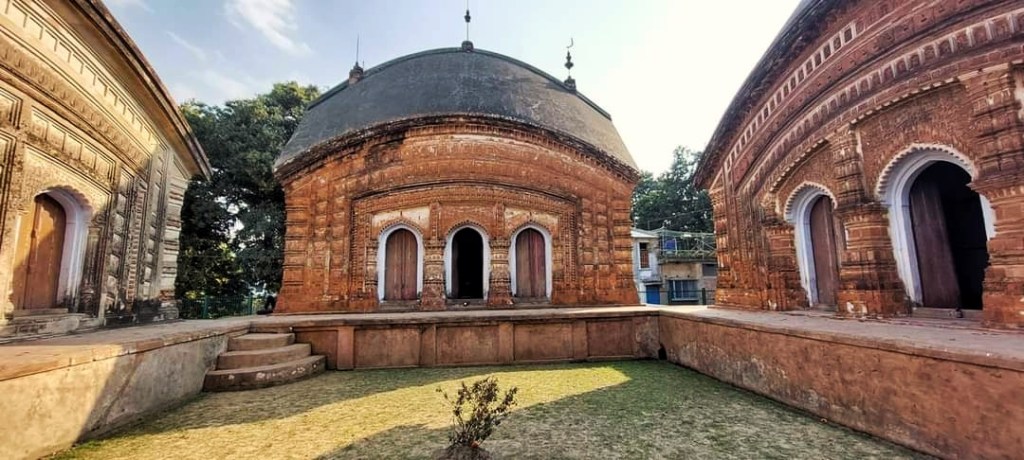
Each temple has three doors and three Shiva Lingas inside. The Northern and the Western temple are most exquisitely decorated with terracotta. The eastern temple is decorated with lime and mortar reliefs.
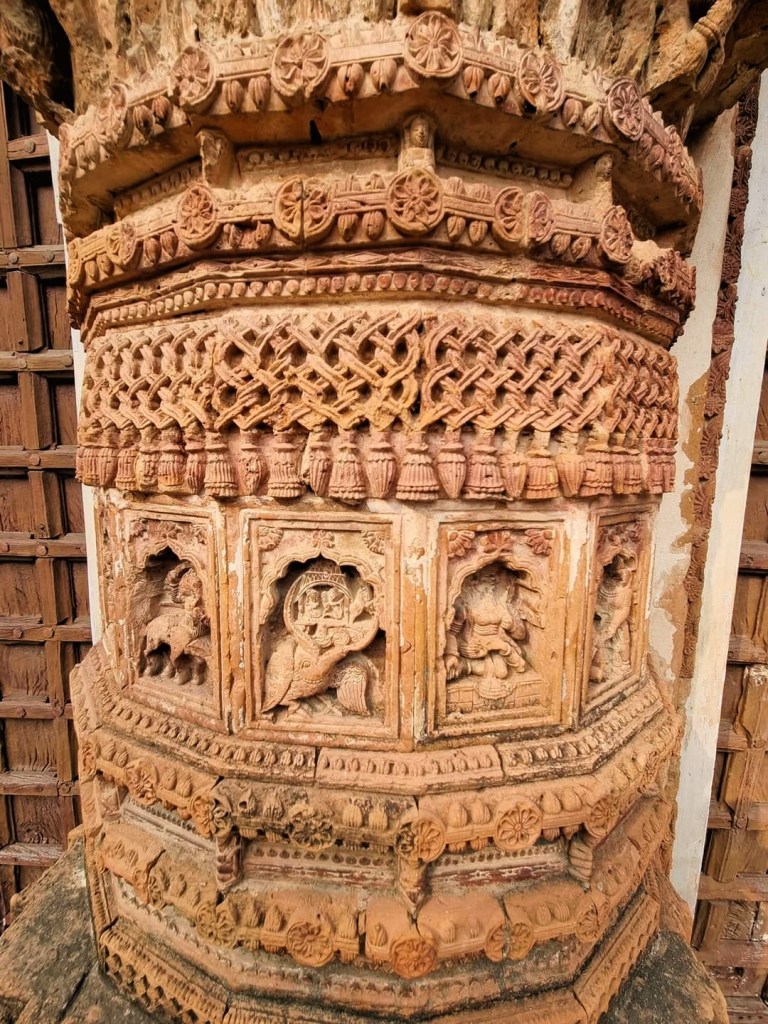
The terracotta motifs depict scenes from Ramayana and Mahabharata as well as various Hindu motifs and incidents from day-to-day life. The Northern Temple has a beautiful figure of Lord Shiva seated on a raised platform with his disciples Nandi and Bhringi. Surprisingly though the southern temple is devoid of any intricate work.


Conclusion
That concluded our tour of Baranagar, and we soon boarded a boat back to Sadar Ghaat. The tour of this historic village was nothing short of an eye opener for me. A part of history that had remained unknown had suddenly popped up and I must thank other traveler like me, who explore and share locations like this with rest of the world.
While we were talking back with us lots of knowledge and memories. I would like people to visit Baranagar, and see these works of art before they completely lost to forces of nature.
 East Indian Traveller