

- Murshidabad:
- Dakhin Darwaja:
- Tripoulia Gate:
- House of Jagat Seth:
- Hazarduari Palace – History:
- Hazarduari Palace Tour
- The Museum:
- Artifacts in the Museum:
- Other marvels in the same complex:
- Conclusion:
| How to Reach: By Rail: The nearest station is Murshidabad Railway station, which has regular local train connectivity from Sealdah, Kolkata. People coming from outside of Kolkata, need to come down to Kolkata and then take the connecting train to Murshidabad. By Road: From Kolkata, this place is 205 KMs and one can hire private cabs as a day tour for this place. By Air: The nearest airport is Netaji Subhash Chandra Bose airport in Dumdum, Kolkata. |
Where to Stay: |
| There are many options of accommodation available in Murshidabad, but if you have money to spare, I would recommend staying at an heritage property. Bari Kothi : It is the best place to stay, costs around Rs 11000 for 2 people, including breakfast, lunch and dinner. Bookings needs to be done through BariKothi Website. Cossimbazar Rajbari : Another heritage property in the area nearer to the Hazarduari Palace. Bookings needs to be done through Cossim Bazar Palace of the Roys Website Best Time to Visit: September to March is the best time to visit Murshidabad. |
It was a sunny Saturday morning when we reached the modest railway station of Murshidabad. Among the regular cacophony of familiar sounds of a railway station one particular sound caught my attention.
‘Tanga, tanga, tanga lagbe?’
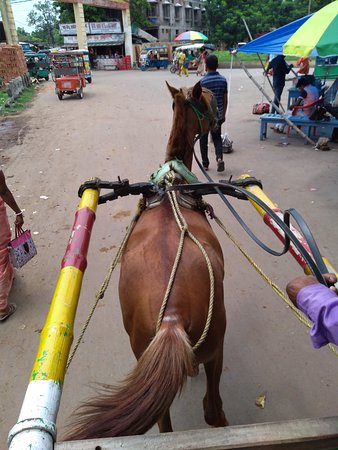
A man in his early forties was shouting on top of his voice. A ‘tanga‘ is a horse driven carriage, and in this town it was available for basic commuting. The Nawabs of Murshidabad used ‘tangas‘ as their primary mode of travel, hence it just made sense to hire one, and get a taste of the old times.
In my mind I had pictured a grand horse driven carriage similar to ones present near the Victoria Memorial of Kolkata. My royal excitement however fainted in thin air as I discovered the tanga was a very modest carriage, and was pulled by a mule, not a horse.

With minor disappointment I boarded the carriage consoling myself that atleast it would be a different and faster ride. Yes faster, since the other option was an electric rickshaw called Toto, that depended more on gravity to run faster than electricity.
Murshidabad:
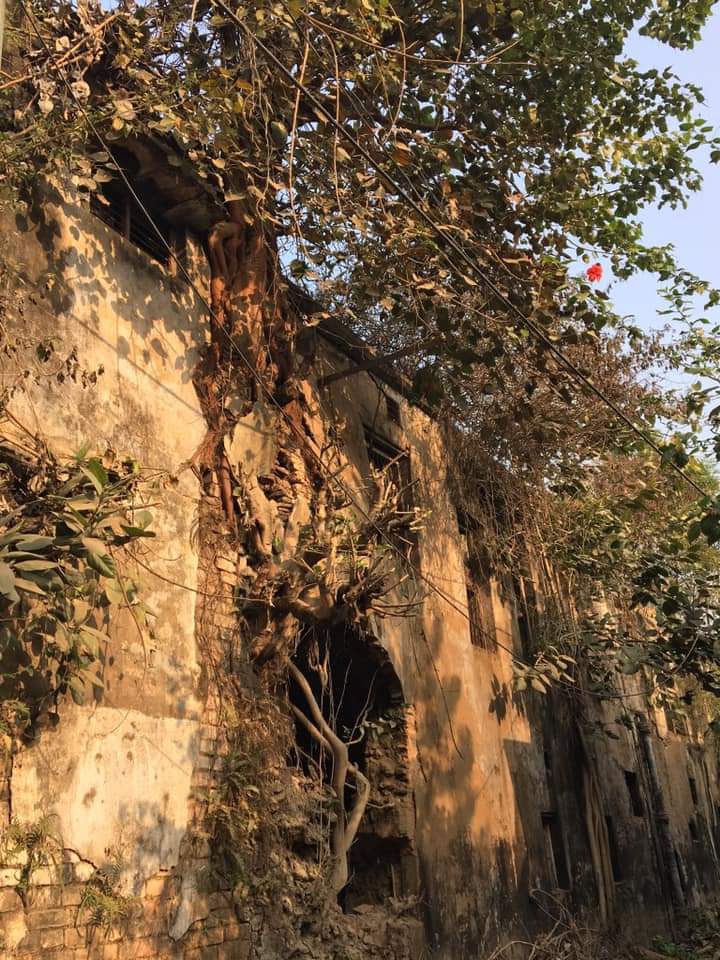
As our tanga galloped through the narrow by lanes of Murshidabad, We saw Century old ruins, colonial structures and newly constructed houses, all on the same road. It was as if the old and the new have somehow found a way to coexist, making a beautiful amalgamation of architecture, culture and way of life.
It is almost impossible to imagine that this humble town was once the beating heart of Eastern India. Serving as the capital of the Nawabs who ruled over Bengal Province.

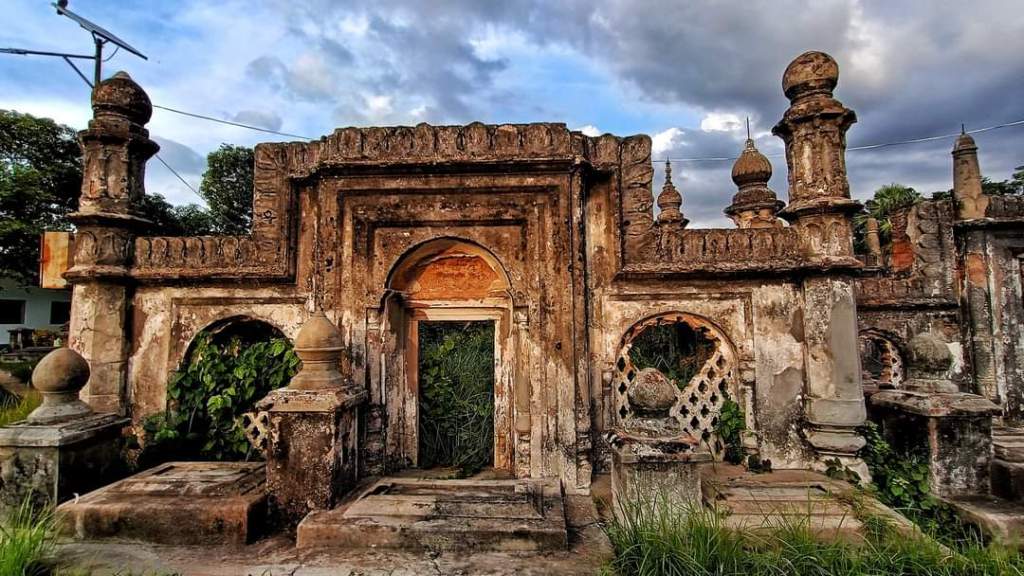
Bengal Province back then covered the whole of West Bengal and Bangadesh, along with parts of modern day Odisha and Bihar. Having the most fertile piece of land in the form of the Ganges delta and an easy access to the sea catapulted the Bengal Province and along with it Murshidabad towards historic riches.
Dakhin Darwaja:
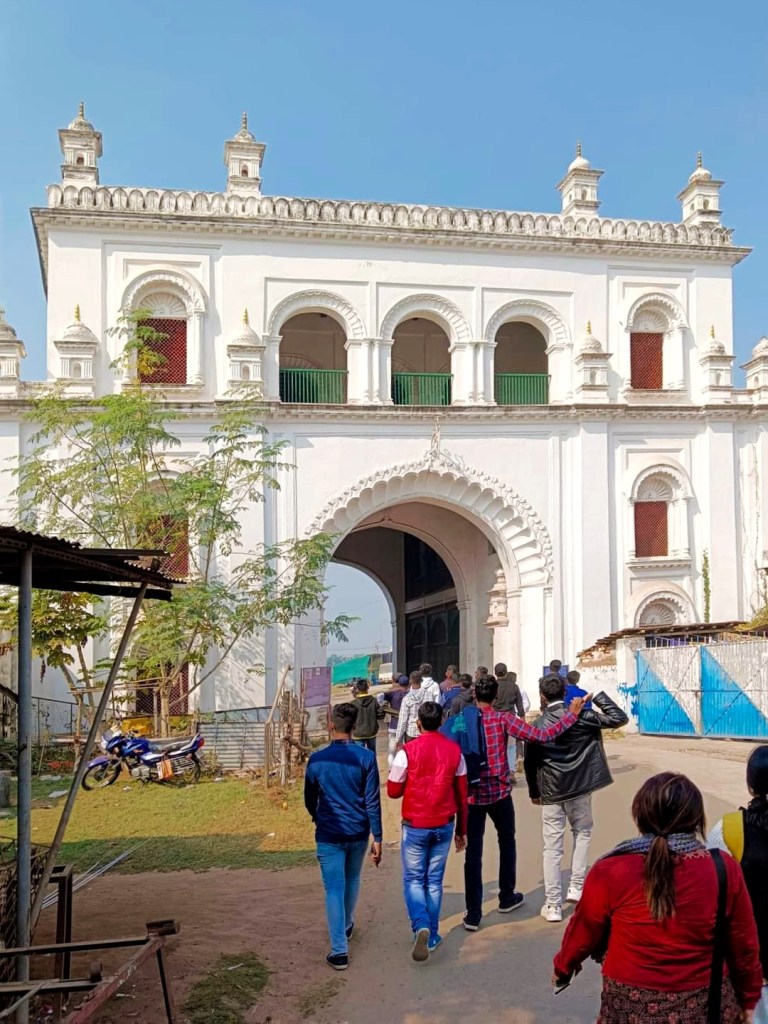
The tanga slowed down as the crowd became thicker, an indication that we were nearing our destination. An unassuming white gate awaited us just around the corner. This gate though humble is no place to ignore on a tour of Hazarduari.
This gate is called Dakhin Darwaza, meaning South Gate. This used to be the entrance to the Nizamat Fort area, that was the stronghold of the Nawabs like Nawab Siraj Ud Dullah, who resisted the British Conquest on Bengal for many years. Crossing into the gate took us on to the final leg of the tour. A few meters on we encountered another white gate, this was the main gate of the fort, the Tripoulia Gate.
Tripoulia Gate:
Although the Dakshin Darwaza was the entry point into the fort, the real fort didn’t begin until one entered the Tripoulia Gate.
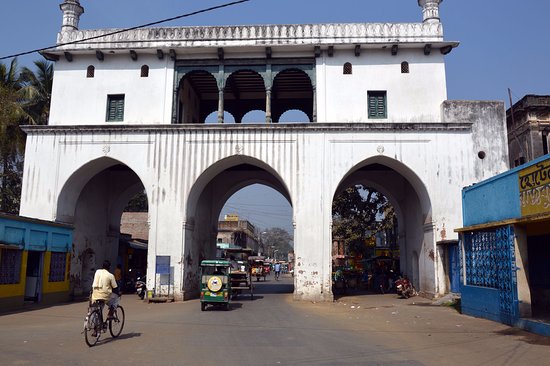
The concrete two floor gate had three pathways leading into the fort area. The first floor has resting quarters for the guards who were stationed at the gate during the old times. Open arches on the first floor ensured swift action from up above in case any trouble arose. Now a days the iron gates remain open fairly throughout the year, and no body guards the pathways, but in those days the gates remained closed and opened only on the orders of the Nawab.
As we passed the gate, a small white building stood behind closed gates, which had an Indo European architecture to boast of. It was the Office and Bank of Jagat Seth, the money lender of the British and the Mughals.
House of Jagat Seth:

Jagat Seth is a title conferred upon Fateh Chand, a wealthy merchant by the Mughals, which means ‘Banker of the World’. After this, the whole family came to be known as Jagat Seth Family. Their business was extremely profitable and the total wealth of the house of Jagat Seth at its peak was around Rs. 14 crores which in contemporary terms could mean something around Rs. 10,000 crore.

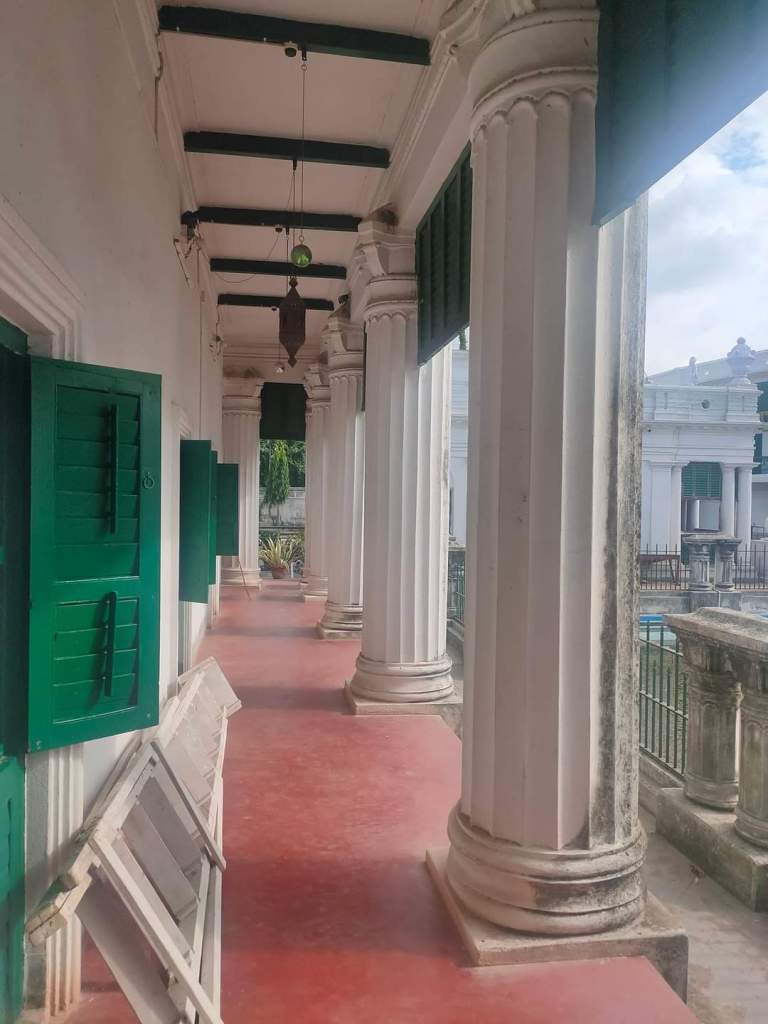


As time progressed they became a banker and gave out loans to the Mughals, Other Businesses and the East India Company as well. As per historians this banker family bankrolled Pallasey’s battle that saw the overthrow of Nawab Siraj Ud Dullah, the last independent ruler of Bengal and established the British rule in India.
Gradually the wealth of the family declined and they became a fable of history towards the late 19th century. Their resident itself was destroyed in a natural calamity, and this building is the only structure belonging to this family that remain.
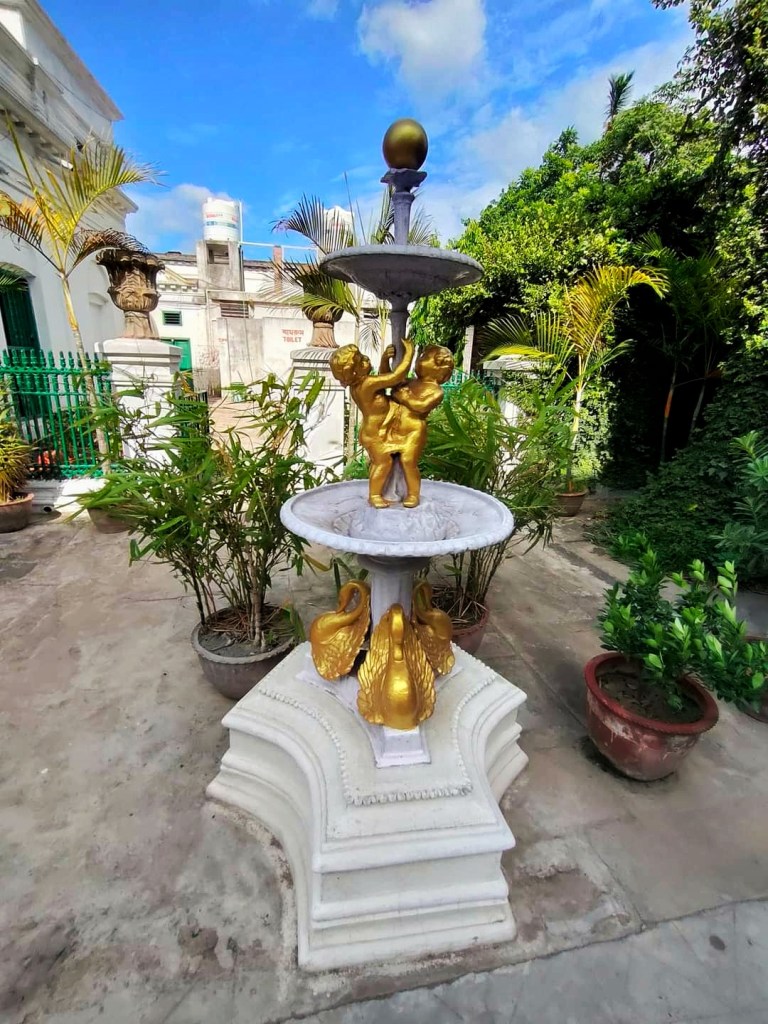
This building was their office and bank which is now converted into a small museum, containing some private belongings of the family, acting a reminder of the times this building used to be the central bank for whole of India.

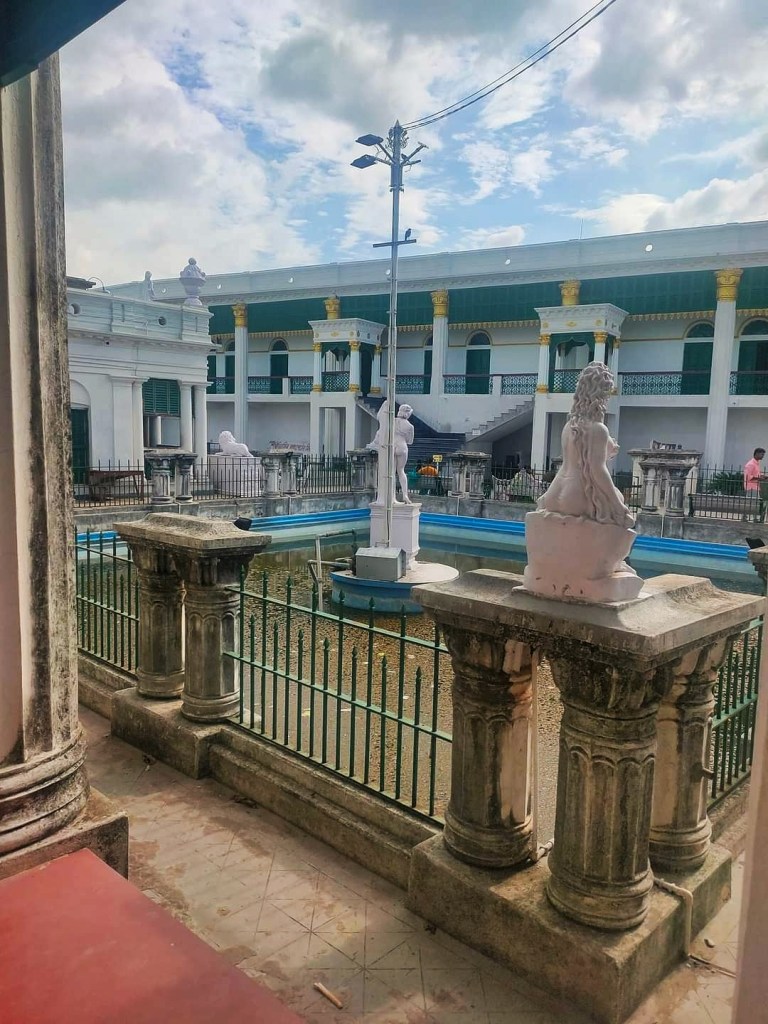
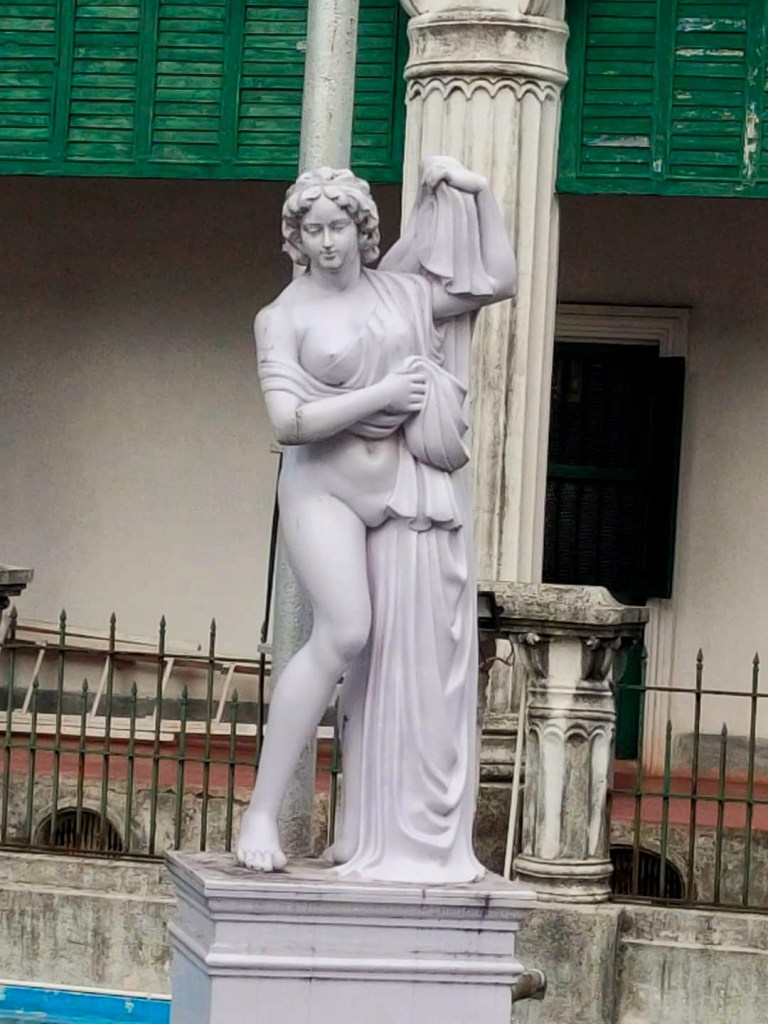
As I left the house, our next destination was the Hazarduari palace. I was wondering if the office of the financier of the Nawab was so grand, just how much opulent would the palace of the Nawab be.
‘ese gelo’, our tanga driver exclaimed as he reigned in the mule and stopped the carriage infront of a boundary wall made up of iron bars. Inside the boundary stood the Hazarduari Palace in its full might.

Hazarduari Palace – History:
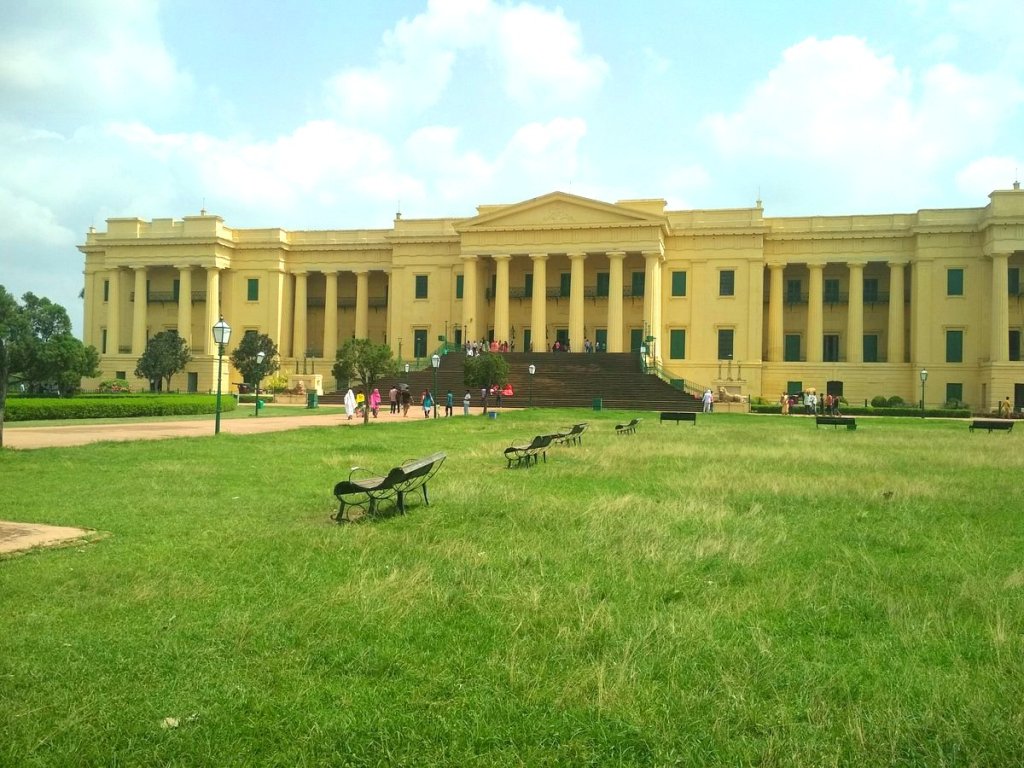
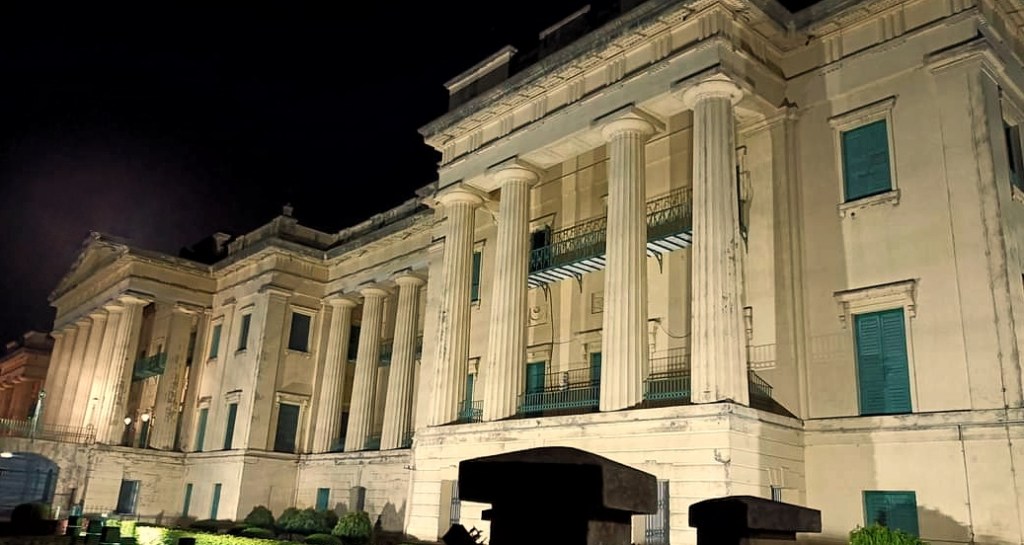
Hazarduari translates to ‘1000 doors’, and the name couldn’t have been more apt. Even from the road I could make out that there are doors everywhere in this grand monument. However, there is a catch. Even though there are 1000 doors in the Palace, only 100 of them are real, rest 900 are fake, and were created to confuse and disorient invaders. The name of this palace was however not always Hazarduari, it was earlier known as Bara Kothi, I however like the name Hazarduari. It invokes royalty.
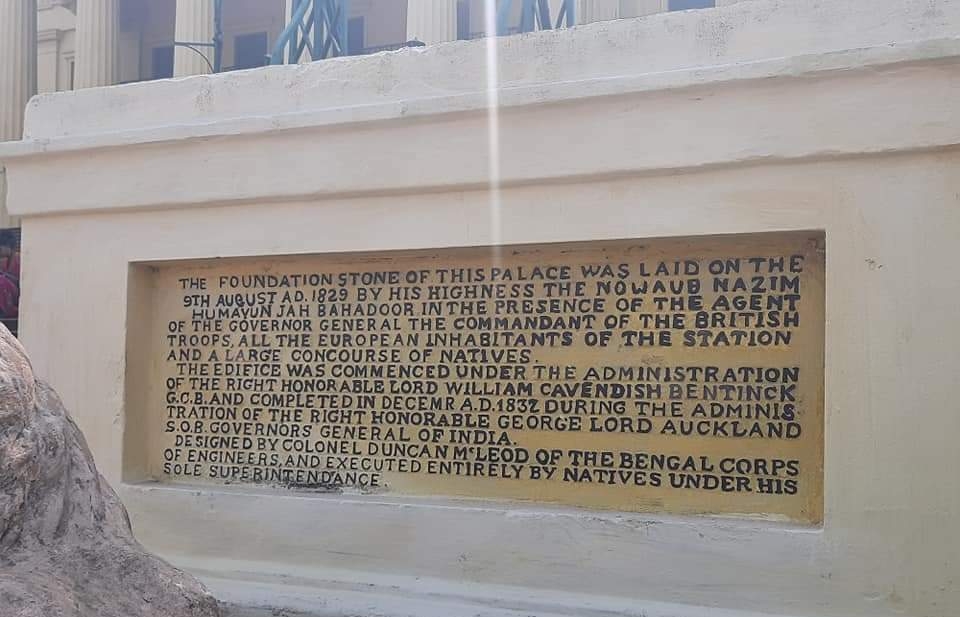
The palace was designed and built by Architect Duncan M’cleod, and was commissioned by Nawab Nazim Humayun Jah, in the 1829 AD. The palace was built by demolishing the Nizamat Fort, which was built by Nawab Siraj ud Dullah. Some parts of the older fort still find refuge in the Imambara that stands in front of the palace. This often leads to a misconception that Hazarduari is also a creation of Nawab Siraj Ud Dullah, but in reality it was built much later.
Hazarduari Palace Tour
A long walk towards the palace brought forth many elements of the place that were not visible from the road. The 18 ft tall pillars, supporting the triangular arch, personified the European influence of the structure. A wide flight of stairs lead into the palace, while a stone lion stood guard on one side.


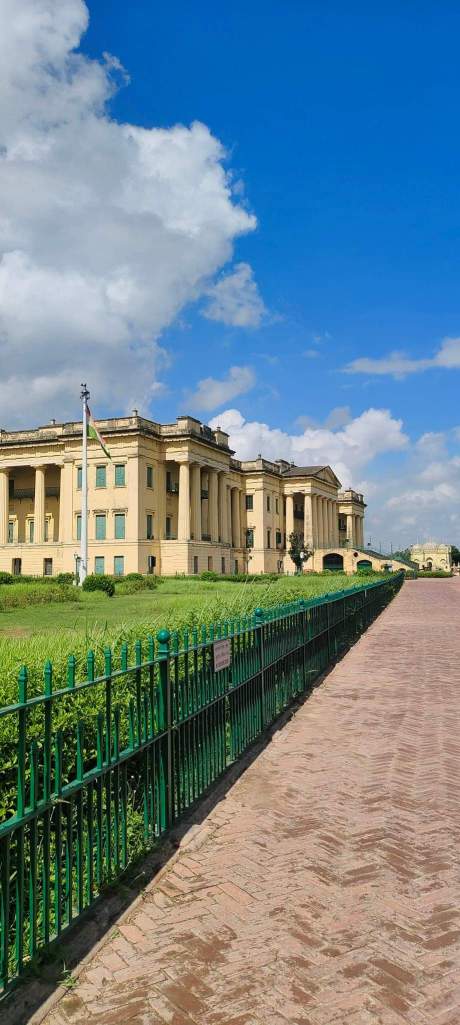

The lawn in front of the palace is meticulously manicured with multiple date trees lining up the pathways and boundary walls. Many flowering and non flowering plants also adds to the beauty of the whole place. The whole palace, its grounds and surrounding, all were in a bright mix of Yellow and Green.

As we climbed up the stairs of the Palace, the huge entrance looked imposing and inviting at the same time. Photos simply can’t do justice to the surreal feeling. Time to enter the museum to get immersed in the history even further.
The Museum:
The palace was in a very derelict state up until 1970, when the Archaeological Survey of India took it under its control and converted it into a museum. For whatever reason photography is prohibited inside the museum, so I can only describe what I saw in words.
Artifacts in the Museum:
The Museum of Hazarduari Palace is said to be the largest museum by the ASI and it has a total of 20 galleries. Statues, rare books, ancient maps and manuscripts, ‘farmans’, metal artefacts, oil paintings and a lot of weapons used in various wars in and around the area all find place in the museum.
Crystal Chandelier:
A huge chandelier, hangs from the ceiling of the darbaar hall, wows anyone visiting the musesum. It was gifted to the Nawab by queen Victoria, and was lit using 1001 candles back in the day, and now a days it uses 97 bulbs to be fully lit.
Silver Throne:
The silver Throne upon which the Nawabs sat and presided over durbaars is also present inside the museum, directly beneath the chandelier.
The Dager of betrayal:
You can see the dagger with which Muhammad Ali Beg, son of Mir Jaffer executed Siraj Ud Daulah in one of the Galleries. The loss in battle of Pallasey and the eventual execution of Nawab Siraj Ud Dullah paved way for the British annexation of Bengal and what followed was 200 years of foreign rule on Indian soil. A very important historical artifact indeed.
The ivory palanquin:
Gallery no 3 houses the renowned ivory palanquin used by Zebunissa, the daughter of the Mughal emperor Aurangzeb (1658–1707 AD).
Other marvels in the same complex:
As our tour of the museum got over, we shifted our attention towards the other buildings within the complex. The highest structure visible in the whole area is a big clock tower.
The Big Ben of Murshidabad
A 25ft tall tower with clocks on all four sides, is fondly known as the Big Ben of Murshidabad, locally known as Ghori Ghor. The true purpose of this clock tower is not fully known, while some say it acted as an aide to the sailors on the Bhagirathi river, which passes nearby, while some say, it was used by the nawab during Durbaars to decide when to start and when to end the meetings.

Whatever the purpose of its origin might be, after a few centuries also, it’s still an imposing structure. Unfortunately the clock doesn’t work and both the minute and hour hands point towards the ground.
Nizamat Imambara
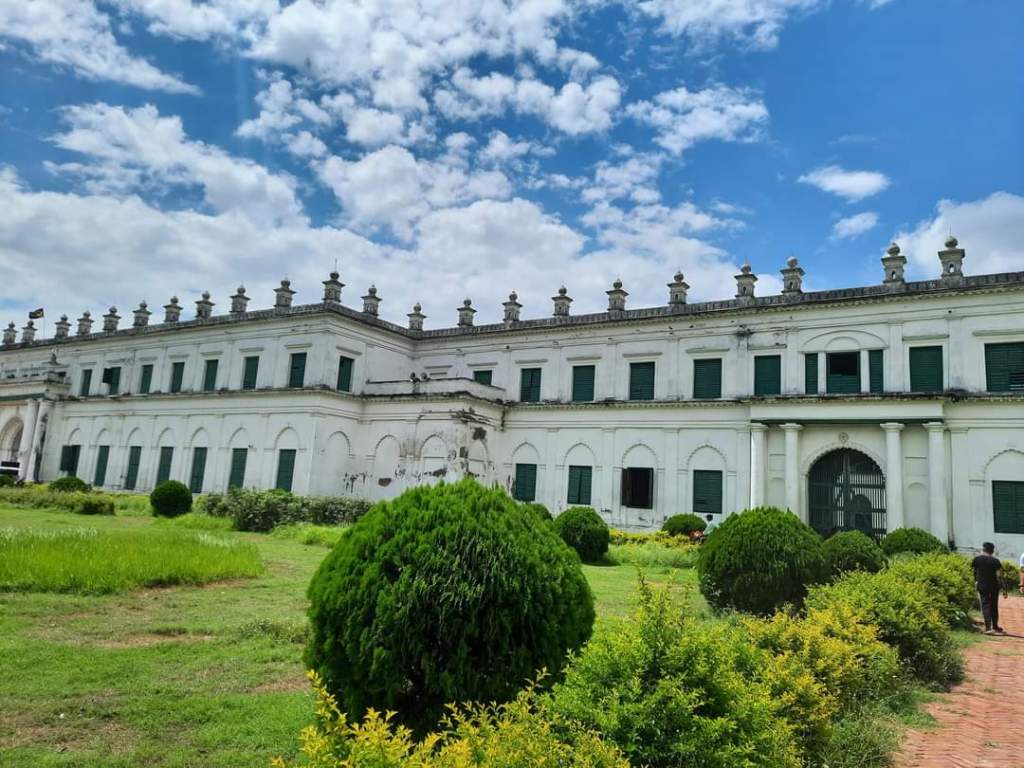

The original Imambara was made of wood and was part of the Nizamat Fort. It was destroyed in a fire in the year 1846, after which this new brick and mortar structure was erected in the same location. This Imambara is believed to be the biggest one in whole of India. The imambara however remains closed through the year and opens for a few days during Muharram.
The whole Imambara was built from scratch and nothing from the old one were used. However one mosque, called Madina Mosque, which survived the fire, finds place within the premises.
Madina Mosque
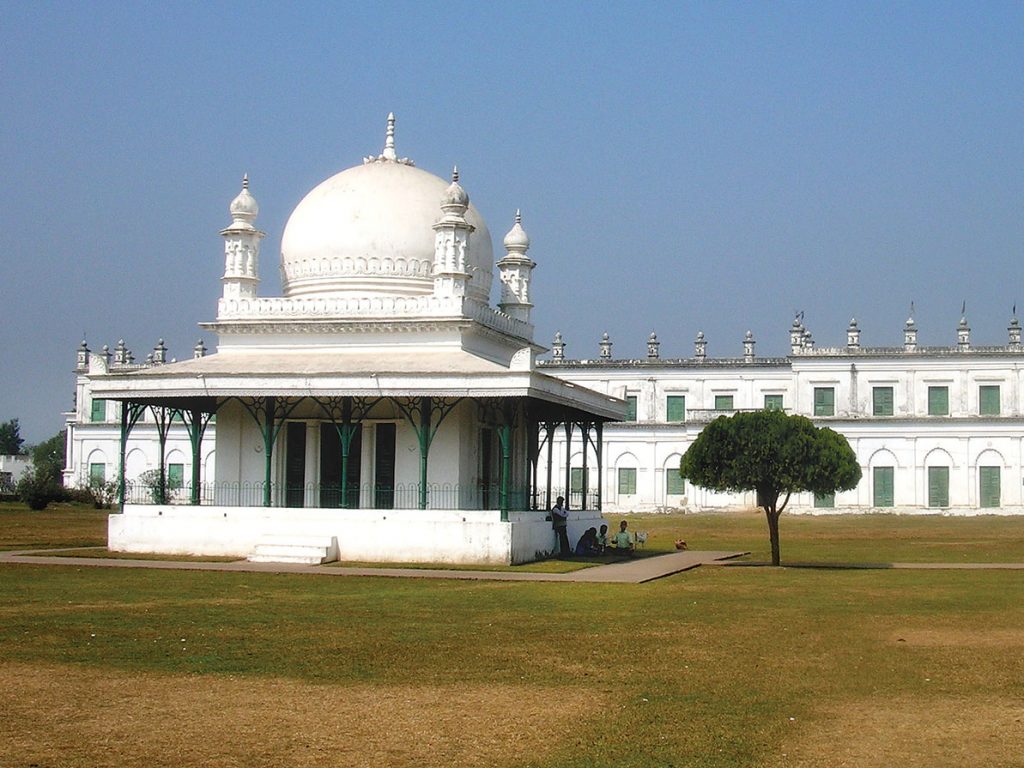
This mosque was a creation of Nawab Siraj ud-Daulah, and it is one of the oldest structures still standing in the whole complex. It is believed that the Nawab, had personally gone to Mecca, and brought along with him some soil from there. He had it mixed in the foundation of this mosque, thus giving an opportunity to the poorer members of the local Muslim community to have an experience of Hajj.
Bacchawali Tope
There is a massive cannon stationed right in front of that palace. That is not something unusual, as canons and palaces go hand in hand. But this cannon was something special.

Bacchawali Tope, translates to the canon of childbirth. This name was conferred upon it because apparently the one time it was fired, the explosion was so massive that it induced childbirth in many pregnant women around the area. The canon needs 18 kg gunpowder for one round of firing, so I can imagine why it would have produced such a big boom.
Conclusion:
This concluded my tour of Hazarduari Palace, and I had nothing but awe in my heart. When we think of palaces and forts in India, the only images that come to our mind are the grand palaces and forts of Rajasthan. Places like Hazarduari palace has somewhat remained obscure, and hidden away in the pages of history textbooks.
Even though the palace and Murshidabad itself is quite popular among Bengalis, but for the rest of India, it’s still pretty much unknown. This amazing Palace/Museum deserves much more attention and footfalls.
 East Indian Traveller
